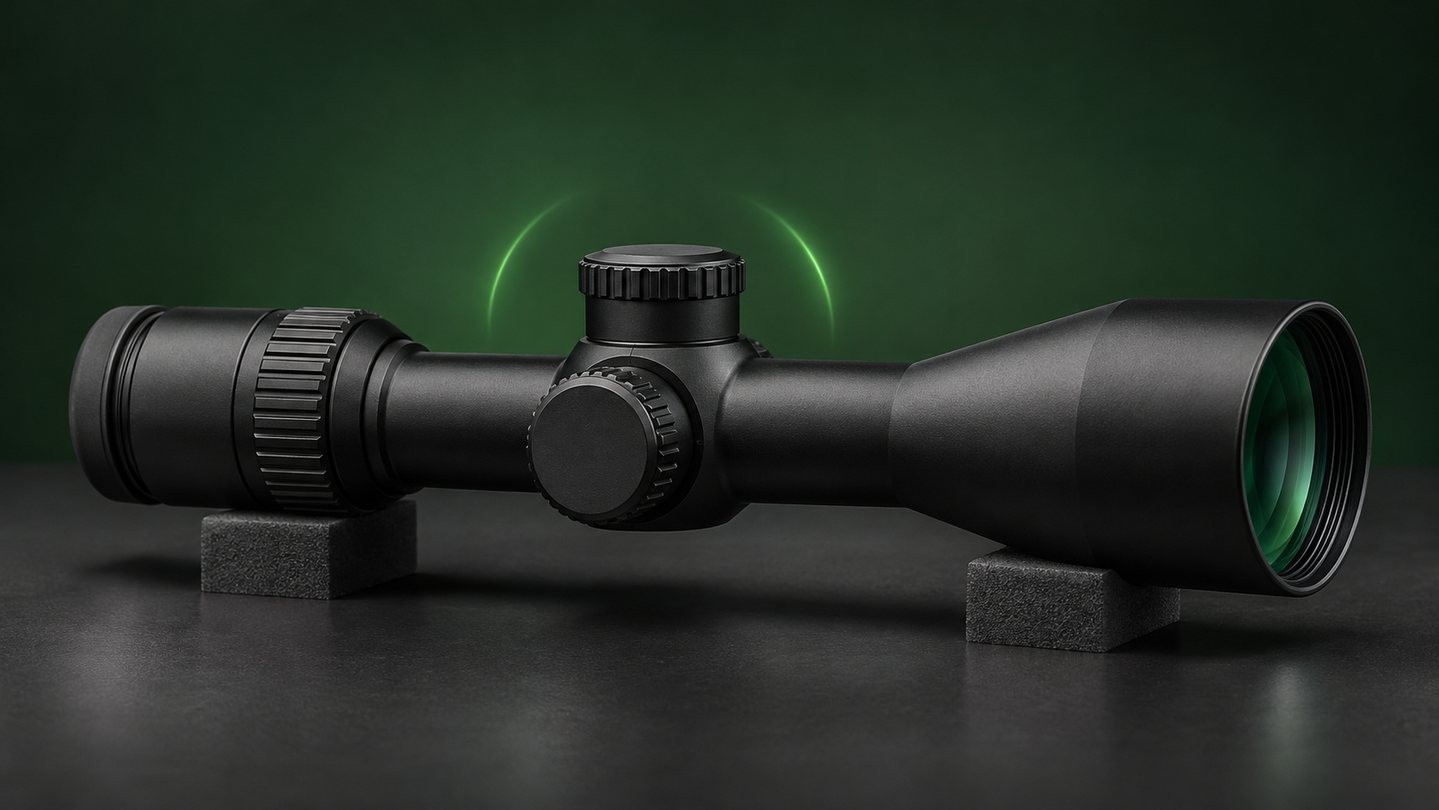
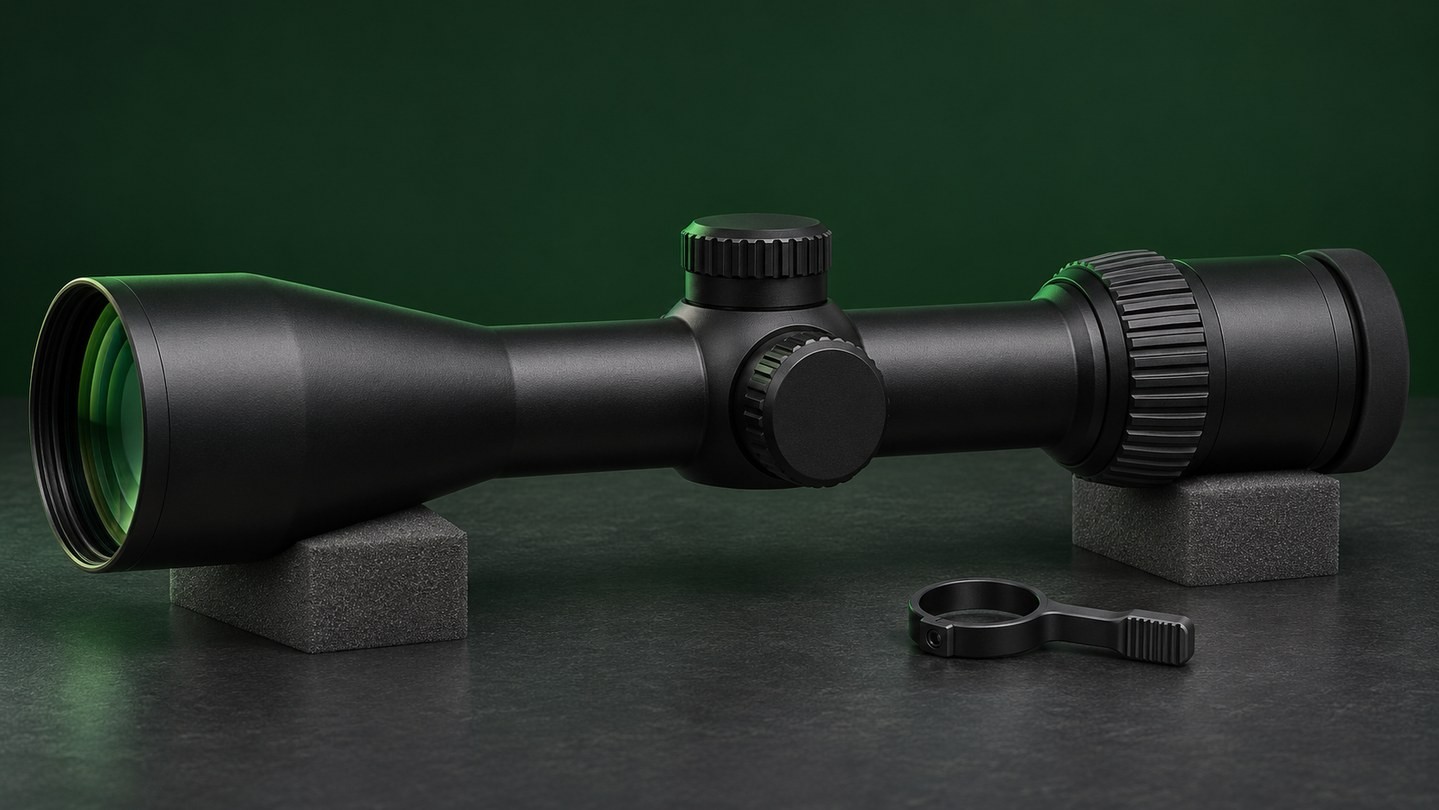
A 3–15x rifle scope has a 5:1 zoom ratio. Does that make it a 5x scope? No. It can be set from 3x to 15x magnification; the number five only describes the relationship between those two endpoints.
This distinction sounds small, but it prevents a common comparison mistake. Zoom ratio tells you how wide the adjustable magnification range is. Magnification tells you how large the viewed scene appears at a particular setting. One cannot replace the other.
Once you separate those ideas, labels such as 3:1, 5:1, 6:1 and 8:1 become much easier to read—and much harder to mistake for complete measures of optical quality.
The Short Answer: Zoom Ratio Is High Power Divided by Low Power
For a variable-power scope, calculate the zoom ratio by dividing the highest stated magnification by the lowest:
Zoom ratio = maximum magnification ÷ minimum magnification
That gives familiar examples:
- 3–9x: 9 ÷ 3 = 3, so the zoom ratio is 3:1.
- 2–10x: 10 ÷ 2 = 5, so the zoom ratio is 5:1.
- 3–18x: 18 ÷ 3 = 6, so the zoom ratio is 6:1.
- 2–16x: 16 ÷ 2 = 8, so the zoom ratio is 8:1.
Manufacturers may write this as 5:1, “5x zoom” or “five-times zoom range.” In this context, all describe the span between the low and high settings. They do not mean the optic is permanently set to 5x.
If the model label itself is unfamiliar, begin with our guide to what rifle scope numbers mean. The numbers before the final “x” describe magnification; the number after it normally describes the objective-lens diameter in millimetres.
Zoom Ratio and Magnification Answer Different Questions
Magnification describes the apparent enlargement at the setting currently selected. At 3x, a viewed object appears roughly three times as large in angular terms as it does to the unaided eye. At 15x, it appears roughly fifteen times as large.
Zoom ratio does not describe either view by itself. It answers a different question: how far apart are the lowest and highest available settings?
That is why calling a 3–15x scope “a 5x scope” is misleading. Five is the ratio between 15 and 3. The actual selectable magnification range remains 3x through 15x.
The same logic applies when comparing fixed-power and variable-power scopes. A fixed 6x optic has one magnification, not an adjustable six-to-one range. “6x magnification” and “6:1 zoom ratio” are entirely different specifications.
The Same Zoom Ratio Can Produce Very Different Scopes
A ratio does not tell you where the magnification range starts. Consider four scopes that all use a 5:1 ratio:
Each high value is five times the low value, yet the scopes serve different viewing priorities. A 1–5x model emphasizes a low starting point. A 4–20x model gives up that low end in exchange for a much higher ceiling. The ratio alone cannot tell you which range is more useful.
The reverse is also true. Two scopes can share the same maximum magnification but use different ratios. A 3–18x is 6:1, while a 2–18x is 9:1. Both reach 18x, but one begins lower. That may change field of view, eye-position demands, optical design, size, weight and price—but none of those results can be assumed from the ratio alone.
Start by choosing useful endpoints. Only then ask whether the zoom ratio helps connect them.
What a Wider Zoom Ratio Can Give You
A wider ratio can put a broader set of magnification options into one optic. Leupold, for example, describes product families built around 3:1, 5:1 and 6:1 ranges. ZEISS and Swarovski Optik also market scopes by four-, six- or eight-times zoom ranges. Those labels are useful shorthand for the breadth of the adjustment span.
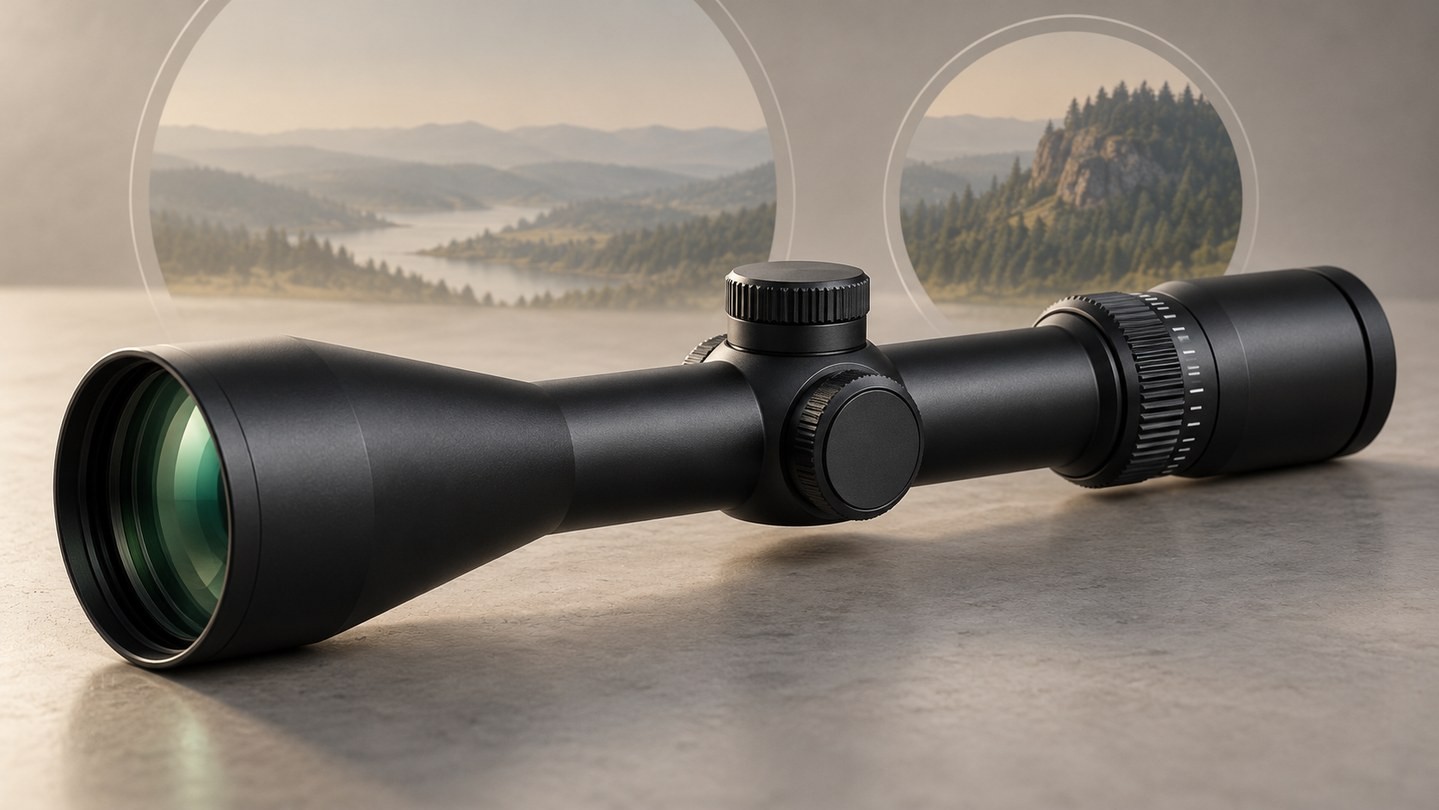
The practical benefit is flexibility. A lower setting can make it easier to locate a subject and retain surrounding context. A higher setting can enlarge fine detail when the scene, distance, stability and image quality support it. The power ring lets the user move between those priorities without changing the optic.
This is one reason wide-ratio LPVOs receive attention. A 1–10x range spans more settings than a 1–6x range. However, the larger ratio does not automatically make either end better. Our 1–6x vs 1–8x vs 1–10x LPVO comparison looks at the useful trade-offs rather than ranking the largest number first.
What Zoom Ratio Does Not Prove
A larger ratio is not an optical-quality score. By itself, it does not prove:
- a wider field of view at the same magnification;
- higher resolution or better edge detail;
- brighter low-light performance;
- a larger or more forgiving eye box;
- better distortion control;
- more accurate turret tracking;
- lower weight or shorter length;
- stronger mechanics or better sealing.
Those depend on the complete optical and mechanical design. A carefully executed 3:1 scope can be more useful than a poorly balanced 8:1 design, just as a wider range can be genuinely valuable when the manufacturer manages the compromises well.
Price is not encoded in the ratio either. More ambitious zoom systems may be harder or more expensive to design, but the printed ratio does not tell you how successfully a particular product was executed. Compare actual testable specifications, manufacturer documentation and the view through the exact model.
Field of View Changes Within the Range
As magnification increases, field of view normally becomes narrower. The zoom ratio tells you the distance between the endpoints, but it does not give the field width at either one.
This matters when two scopes have the same ratio. A 1–5x and a 4–20x are both 5:1, yet their lowest settings cannot be expected to frame the same amount of the scene. Even two scopes with identical magnification labels can publish different field-of-view values because their optical designs differ.
Compare field of view at the same magnification and the same reference distance. Do not compare one model at low power with another at high power and attribute the difference to zoom ratio. Our rifle scope field-of-view guide explains how to read the values without mixing feet, metres and reference distances.
High Power Also Changes the Viewing Demands
Moving toward the top of a variable scope's range often makes several limitations easier to notice. The nominal exit pupil becomes smaller because objective diameter is being divided by a higher magnification. The view may feel less forgiving of small head-position errors. Shake, focus error, mirage and optical imperfections can become more obvious.
None of this means the high end is unusable. It means “reaches 20x” and “delivers a comfortable, detailed image at 20x in my conditions” are different claims.
The exit-pupil guide explains the basic geometry, while our article on resolution vs magnification explains why enlarging the image cannot create detail that the optical system did not resolve.
At the opposite end, a model beginning at 1x is not automatically identical to an unmagnified sight. Image scale, distortion, diopter setting and eye position still affect how natural the view feels. See what “true 1x” means on an LPVO before treating the low-end label as a complete description.
A Better Way to Compare Variable Scopes
Use the zoom ratio as one line in a comparison, not as the headline verdict. Work through these questions instead:
- What is the lowest magnification, and is it low enough for the intended view and distance?
- What is the highest magnification, and will the extra detail actually be usable?
- What is the field of view at comparable settings?
- How do eye relief and eye-box tolerance behave across the range?
- What exit pupil does the objective and magnification combination produce?
- Does the reticle remain useful at both ends, especially on an FFP design?
- Are focus, parallax and illumination controls appropriate for the range?
- Do size, weight, mounting length and price still fit the complete setup?
Then calculate the ratio as a quick summary of range breadth. It can reveal why a 3–18x covers a broader span than a 3–9x, but it cannot tell you whether either scope is clearer, easier to mount or more comfortable to use.
The cleanest rule is simple: magnification tells you the selectable powers; zoom ratio tells you how far apart the endpoints are. Choose the endpoints for the work you expect to do, then judge how well the complete scope performs between them.
Browse Sporting Optics only after comparing the actual magnification range, field of view, eye relief, exit pupil, dimensions and reticle—not the zoom-ratio label by itself.


Leave a comment