Scope ring lapping is often described as either essential or outdated. Both claims are too broad. Lapping can improve contact in some ring-and-base systems, but many modern rings are designed to clamp correctly without it—and some manufacturers specifically advise against removing material.
The right answer depends on the ring design, the base, the condition of the components and the manufacturer’s instructions. Before using an abrasive bar, identify what problem you are trying to solve. A minor contact issue and a badly misaligned mounting system are not the same thing.
What scope ring lapping actually does
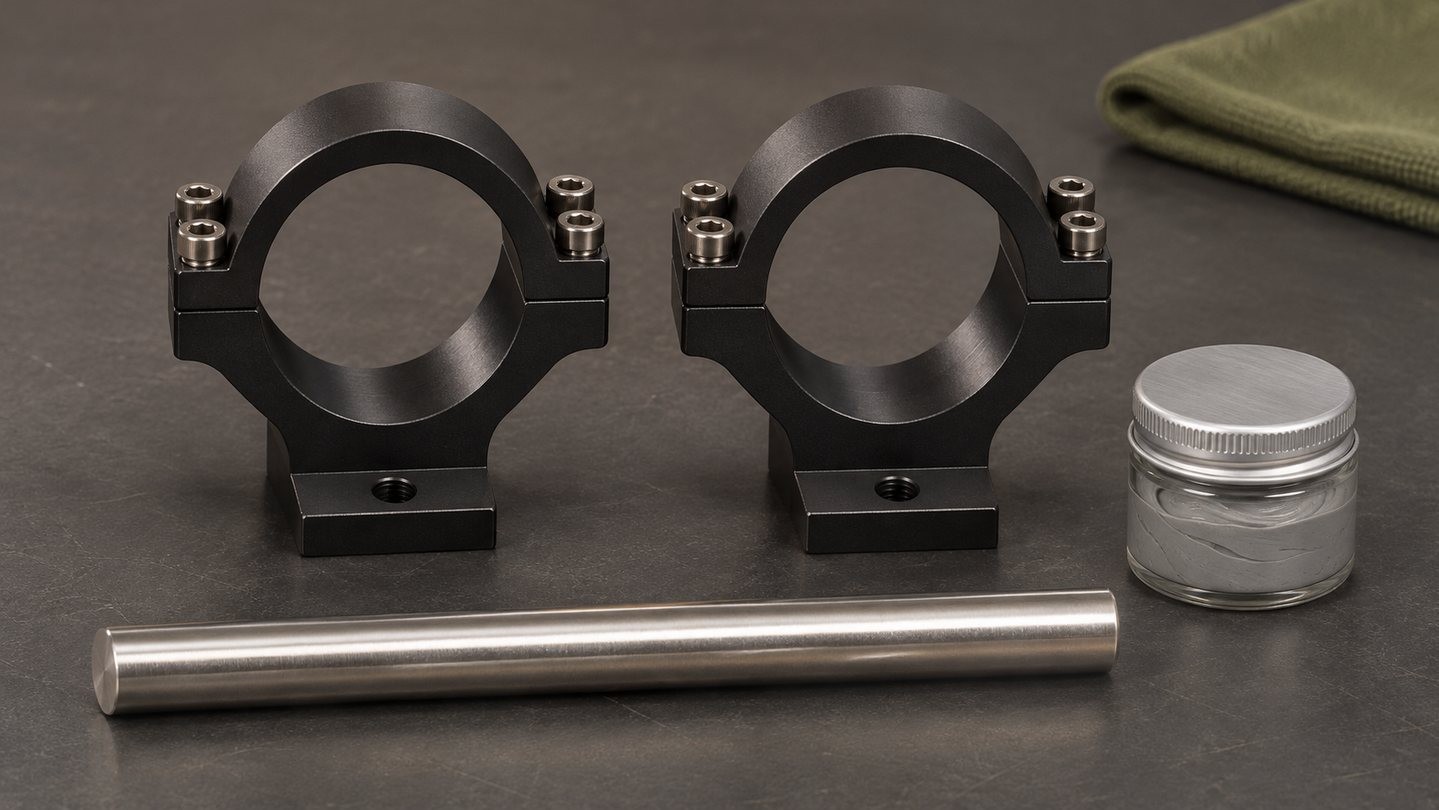
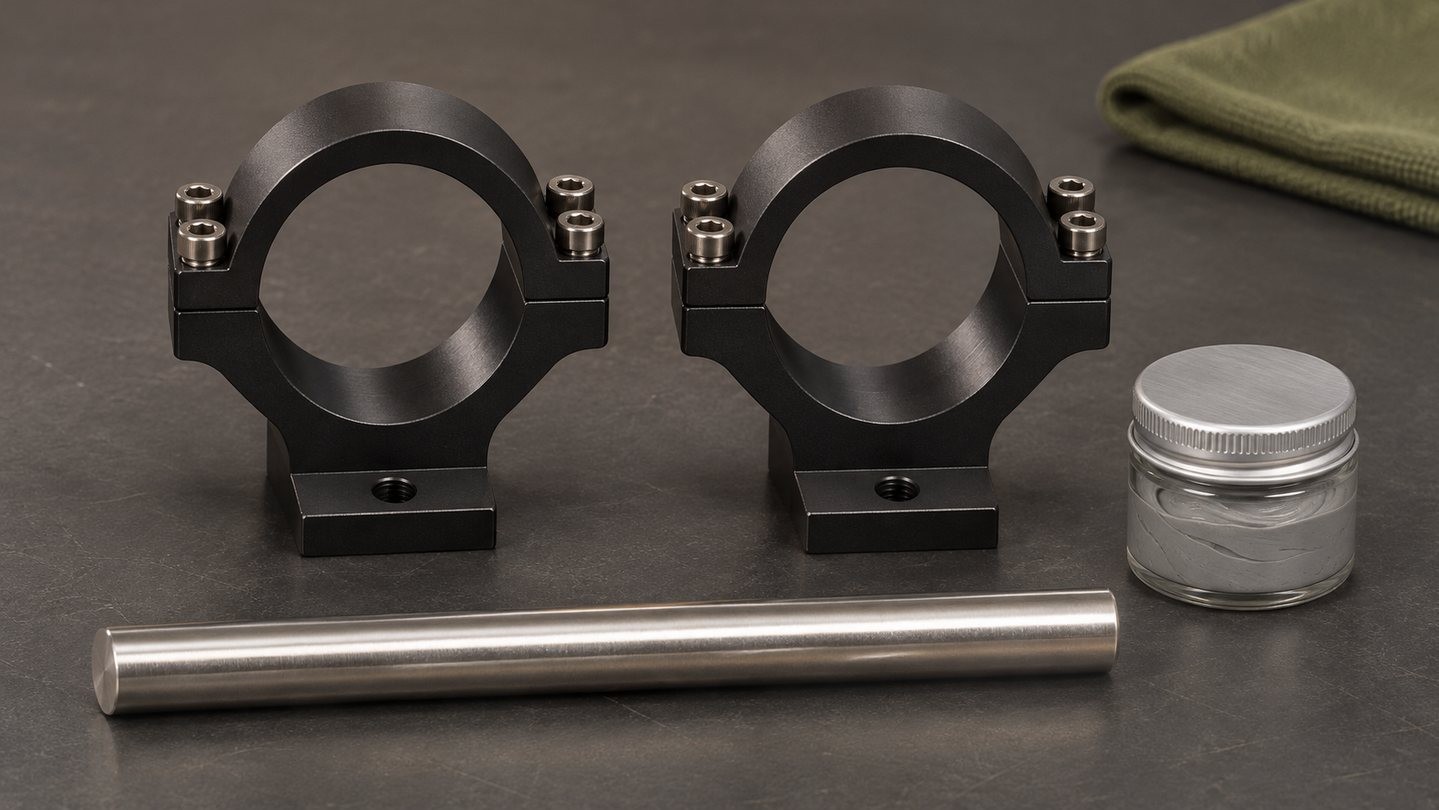
Lapping uses a correctly sized bar and a controlled abrasive process to remove small high spots from the inside surfaces of scope rings. The goal is to improve how evenly the rings contact the scope tube and, in suitable systems, reduce local pressure points.
It is a material-removal process. Once metal has been removed, it cannot be put back. That makes lapping different from checking alignment, repositioning a base or replacing an incompatible part.
Why lapping is not a universal requirement
Modern rings vary widely in geometry and manufacturing method. A well-made base and ring set may already provide adequate alignment and contact. In that case, lapping adds work and removes finish without solving a real problem.
Manufacturer guidance also differs. Warne states that its rings do not need lapping, while Vortex strongly recommends lapping for at least one specific Tactical ring used with a conventional riflescope. These positions are not contradictory: they apply to different products and designs.
Ring design changes the answer
Horizontally split, vertically split and insert-style rings do not behave the same way when tightened. A procedure that is reasonable for one design can damage or distort another.
- Horizontally split rings: some traditional designs may benefit from lapping when their manufacturer allows it and alignment checks show a genuine need.
- Vertically split rings: some are designed to flex around the tube as the fasteners are tightened. Removing material can change that intended geometry.
- Insert-style or self-aligning rings: the inserts are intended to accommodate alignment; abrasive removal from the ring body is generally not part of their normal installation.
Our guide to vertical and horizontal split scope rings explains why the clamping direction matters.
When a manufacturer may recommend lapping
Lapping may be considered when the ring maker explicitly permits or recommends it, the correct base and rings are installed, and a careful alignment check shows a small contact issue that the procedure is designed to address.
Two-piece bases deserve particular attention because each base is installed separately. Vortex recommends checking this type of setup with alignment bars and lapping when necessary. Even then, the product instructions—not a generic online rule—should decide the process.
When lapping should be avoided
Do not lap a ring simply because a mark appears on the scope tube or because someone describes lapping as mandatory. First check the product instructions and the complete mounting system.
Avoid lapping when the manufacturer prohibits it, when the design relies on flexible or self-aligning parts, or when you cannot confirm that the bar matches the ring diameter. It should also be avoided as an attempt to hide a wrong base, a bent component, damaged threads or severe misalignment.
What lapping cannot repair
Lapping removes a small amount of material from the ring surfaces. It cannot make an incompatible base fit the receiver, straighten a damaged rail, correct a major height difference or restore a ring that has been distorted by excessive torque.
If alignment is visibly poor, stop and identify the source. Warne notes that serious misalignment can point to a larger issue that lapping will not fix. The safer solution may be to correct the base installation or replace the affected part.
Alignment bars help—but have limits
Alignment bars can reveal whether ring centres appear to meet, but they are a diagnostic aid rather than a universal pass-or-fail test. The result can be affected by ring design, the way the caps are tightened and the tolerances of the bars themselves.
Warne cautions that alignment bars may give a misleading result with vertically split rings. Use the tool only in the way the ring manufacturer describes, and do not treat a small visual difference as automatic permission to remove material.
A safer decision process before removing material
- Confirm that the base, ring diameter and ring height are correct for the scope and platform.
- Inspect the base and rings for damage, debris, burrs or uneven seating.
- Read the ring manufacturer’s current installation instructions.
- Check alignment only with a method suitable for that ring design.
- If the manufacturer allows lapping, decide whether the observed issue is minor enough for lapping to address.
- If the misalignment is large or the cause is unclear, stop and correct the underlying component or seek qualified help.
For related installation checks, see our guide to scope ring alignment and overtightening.
After installation: what to inspect
Whether the rings were lapped or not, the final installation should be checked for even gaps where the design calls for them, secure base fasteners, unobstructed controls and a scope tube that is not visibly pinched or marked by a sharp edge.
Light cosmetic marks do not automatically prove that the rings need lapping. Our article on scope ring marks separates normal finish contact from signs that deserve further inspection.
Always use the torque values and tightening sequence supplied for the exact mount and optic. There is no single number that is correct for every ring. Over-tightening can create the very tube stress that careful alignment is meant to avoid.
Follow the mount maker, not a universal rule
Scope ring lapping is a product-specific decision. It can be useful for certain traditional or adjustable systems, unnecessary for a well-aligned modern setup, and harmful to a design that depends on its original geometry.
Start with compatible components, correct installation and the current manufacturer instructions. If those instructions recommend lapping, follow their method. If they say the rings should not be lapped, do not substitute a generic procedure.




Leave a comment