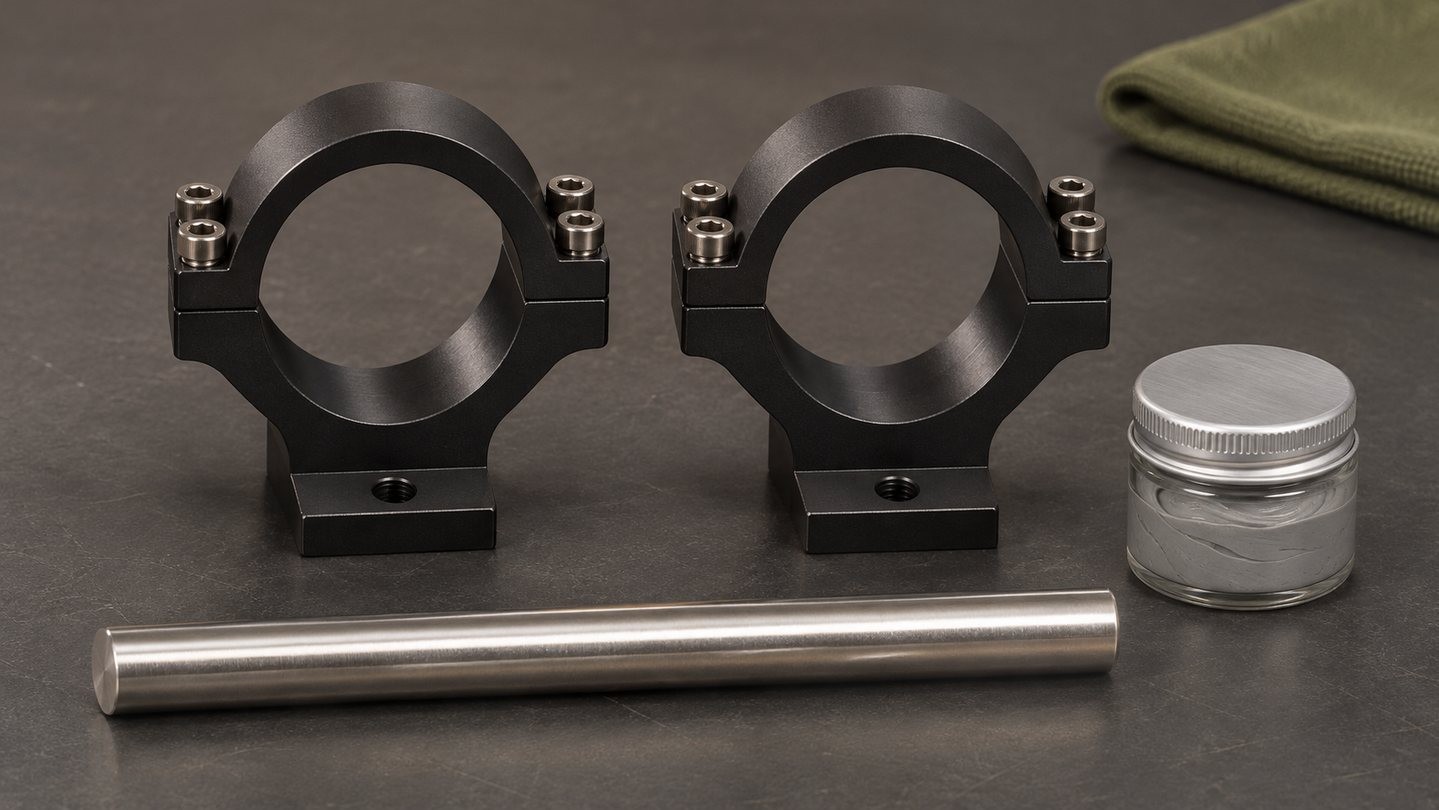
A scope can be held by two separate rings or by rings joined on a single base. Both approaches can work well. The meaningful differences are alignment, spacing, offset, height, weight and compatibility with the available rail or bases.
Why choose a one-piece mount?
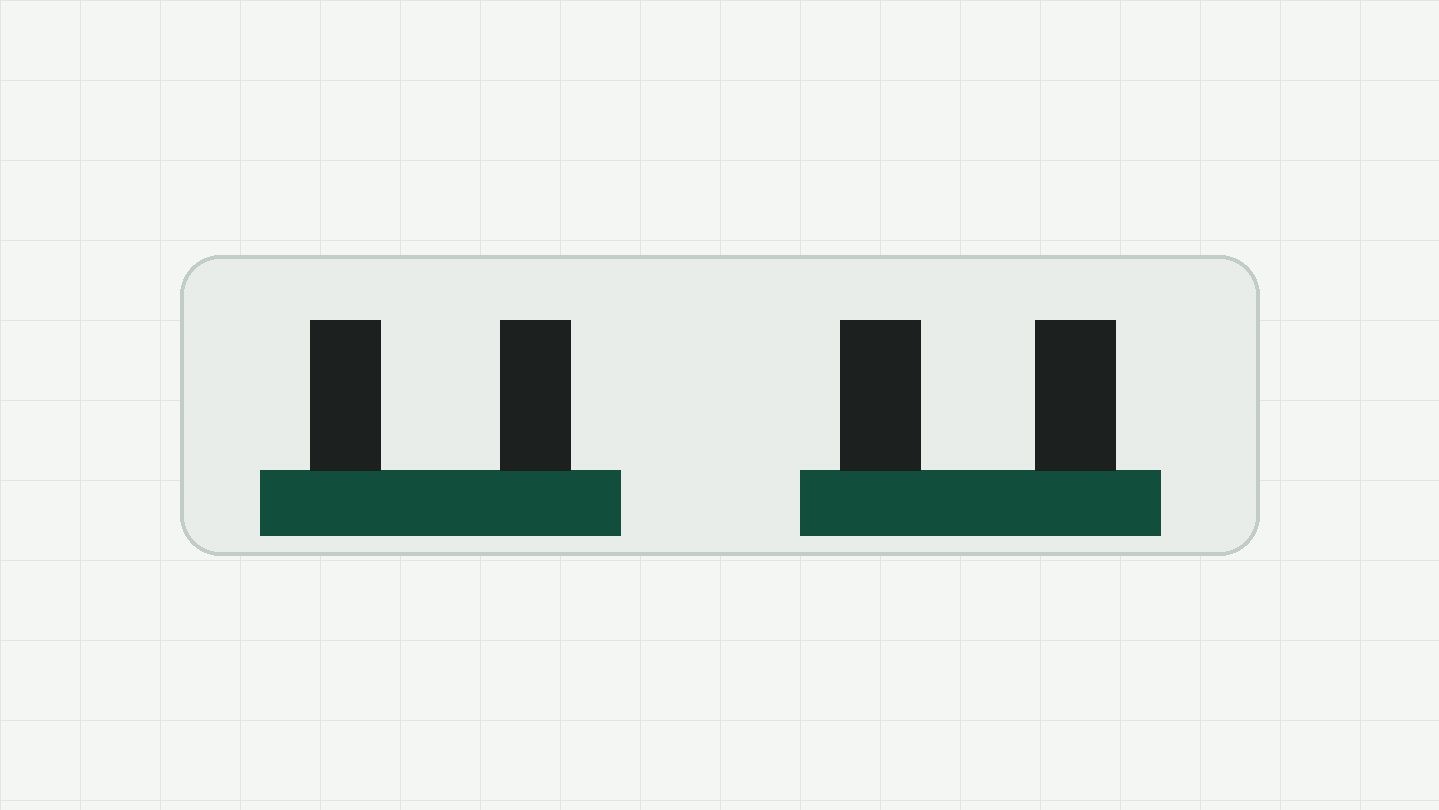
A one-piece mount fixes the relationship between its rings, reducing one alignment variable. Cantilever versions can move the scope forward while keeping the mounting base on the receiver rail. Installation and transfer between compatible rails may also be convenient.
The trade-offs are fixed ring spacing, a defined height and often more material. If the geometry does not fit the scope tube or eye-relief requirement, the integrated design provides fewer ways to adjust it.
Why choose separate rings?
Separate rings can be positioned to suit available tube sections and different base spacing. They may be lighter and lower in a suitable system. Their independent position means base alignment and installation deserve careful attention.
Start with the interface
Identify the base or rail, tube diameter and required height. A correct tube diameter alone does not establish compatibility. Ring width, objective clearance, bolt-handle clearance and usable tube length all matter.
Our scope tube guide explains why tube diameter is not a direct light-gathering rating, while the ring-height guide covers clearance and viewing position.
Eye relief decides position
A mount should place the scope where the user obtains a full field of view in a normal posture. Do not choose a mount solely because it looks compact or sits far forward. The available adjustment must match the scope’s straight tube sections and the user’s required eye relief.
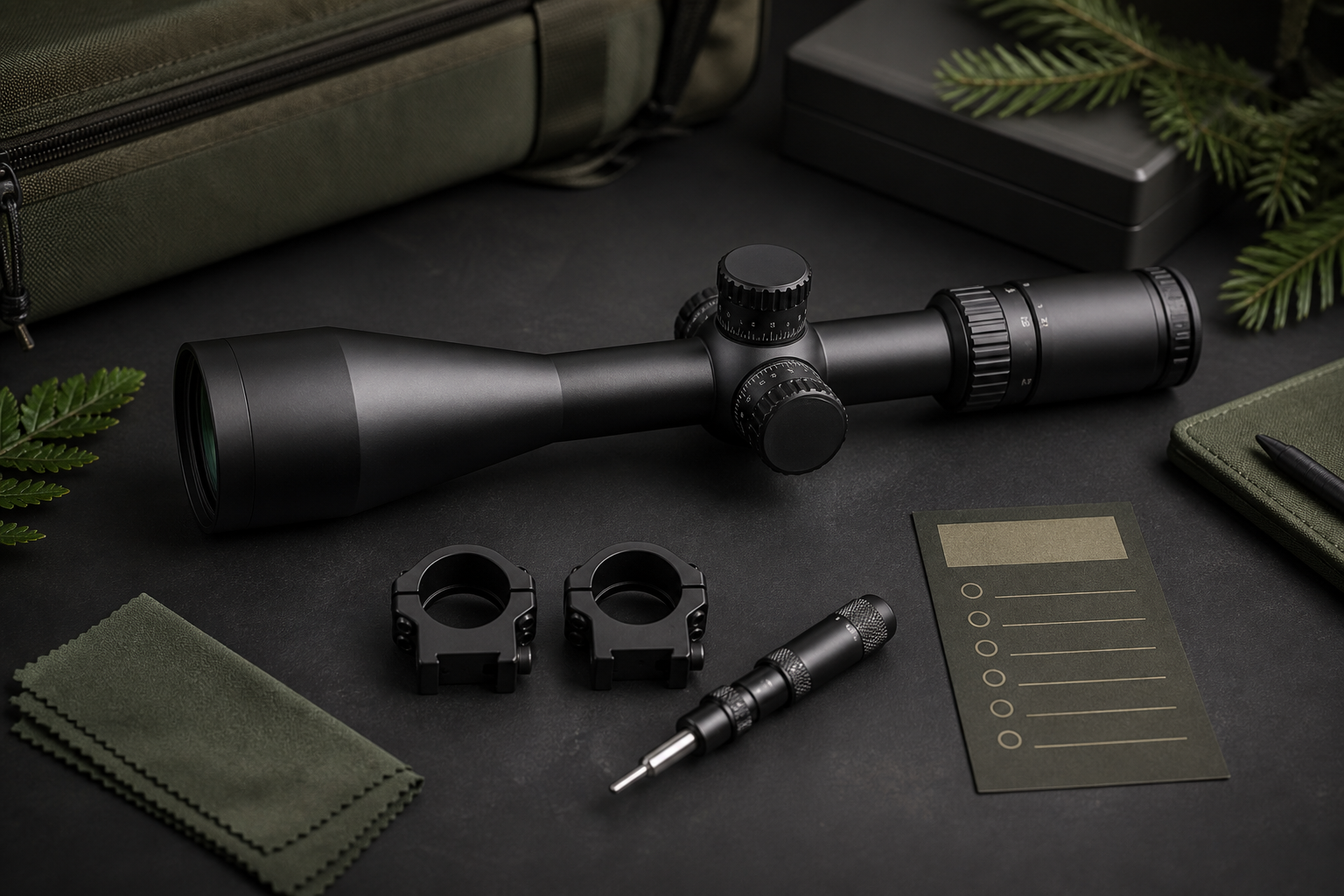
Decision checklist
- Which rail or base is present?
- What tube diameter and ring width are required?
- Does the objective clear while keeping a comfortable height?
- Is forward offset needed?
- Will fixed ring spacing fit the straight tube sections?
- Are manufacturer torque and installation instructions available?
A one-piece mount is not automatically stronger, and separate rings are not automatically more precise. Correct geometry and installation are more important than the category name.
For more category-level comparisons, browse Sporting Optics or continue with the USEEIN Buying Guides.


Leave a comment