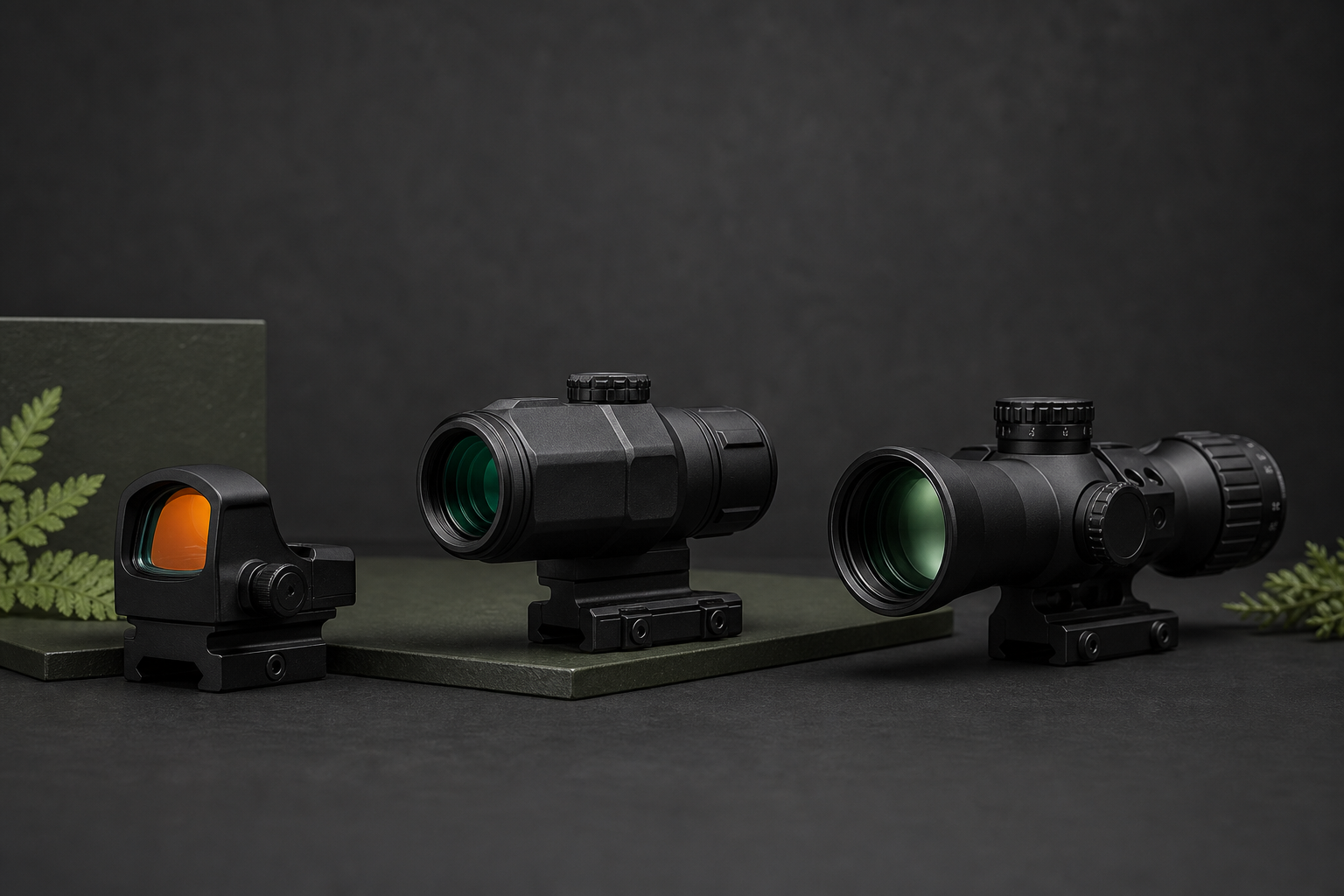
Choosing between a red dot sight, a prism scope and a low-power variable optic is easier when you begin with the way you expect to use the optic. Instead of asking which type is “best,” compare the viewing experience, distance range, size and controls that matter to your setup.
RED DOT SIGHTS: FAST, SIMPLE VIEWING
A red dot sight presents an illuminated aiming point without fixed optical magnification. The open viewing experience can feel natural at close distances, and many users appreciate the simple controls and compact size.
Consider a red dot when low weight, a generous viewing window and minimal adjustment are priorities. Check the brightness range in both daylight and low light. If you have astigmatism, the dot may appear irregular; viewing a real unit before purchase can be more useful than judging specifications alone.
Battery life varies by model and brightness setting. Some sights add motion activation, automatic brightness or solar assistance, but every feature should be understood before use. Also confirm the mounting footprint because visually similar sights may use different interfaces.
PRISM SCOPES: A DEFINED RETICLE IN A COMPACT BODY
A prism scope uses an optical prism and usually provides fixed magnification. Its etched reticle remains visible without illumination, while illumination can improve contrast in certain conditions.
Prism optics often suit users who want a more defined reticle, modest fixed magnification or an alternative to the projected dot of a reflex sight. The tradeoff is a more specific eye position. Eye relief and the viewing “eye box” should be checked carefully, especially if the optic will be used from varied positions.
Because the magnification is fixed, choose it around your most common distance rather than the longest distance you can imagine. A low-power prism can remain quick to view, while a higher-power prism may offer more detail but demand more deliberate positioning.
LPVOS: FLEXIBILITY THROUGH VARIABLE MAGNIFICATION
A low-power variable optic, often called an LPVO, combines a low-end setting with additional magnification for more distant viewing. It can cover a broad range of recreational and hunting needs, but it is generally larger and involves more controls.
At the lowest setting, compare true field of view, edge distortion and how forgiving the eye position feels. At the highest setting, check image brightness and whether the reticle remains useful. A wider magnification range does not automatically mean a better experience; optical quality, reticle design and mechanical consistency matter just as much.
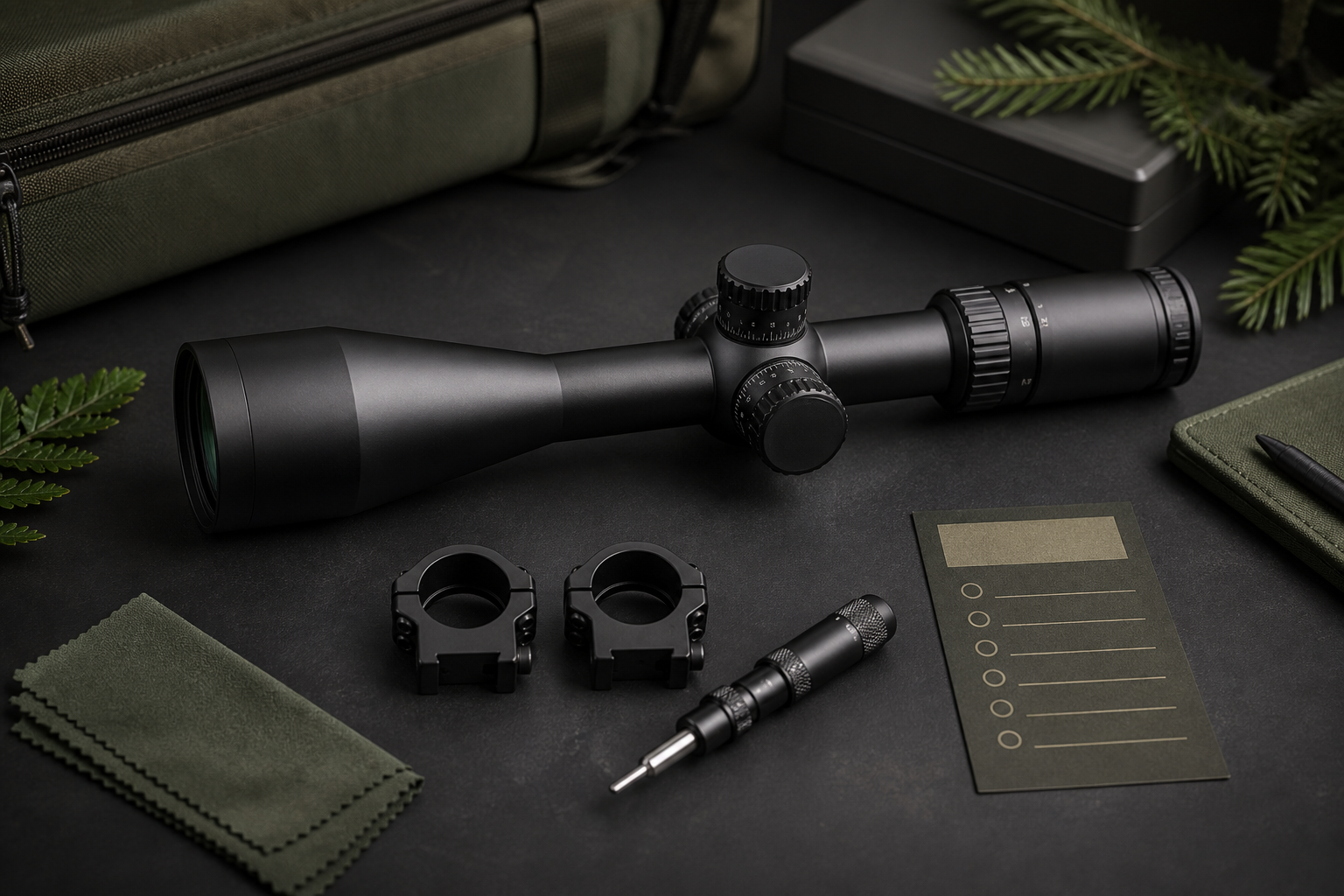
LPVOs also require a compatible mount, appropriate ring height and careful eye-relief setup. Include the weight of the mount when comparing the total system.
A PRACTICAL DECISION CHECKLIST
Choose a red dot when your priority is a compact, unmagnified viewing system with simple controls and a broad viewing window.
Choose a prism when you value an etched reticle, fixed magnification and a compact enclosed optical system, and you are comfortable with a defined eye position.
Choose an LPVO when you need variable magnification and are willing to accept additional size, weight and setup time in exchange for flexibility.
Before deciding, answer five questions:
1. What is the most common distance, not the maximum possible distance?
2. Do you prefer an illuminated point or an etched reticle?
3. How consistent is your eye position?
4. How much size and weight can the setup reasonably carry?
5. Which controls are you prepared to check and maintain?
SPECIFICATIONS SHOULD SUPPORT THE VIEWING EXPERIENCE
Numbers are useful, but they do not replace looking through an optic. Compare field of view, eye relief, reticle visibility, control feel and mounting compatibility. If possible, evaluate the optic in lighting similar to where it will normally be used.
The right choice is the optic that makes your normal viewing task clear and repeatable. Start with real use, then use specifications to confirm the decision.


Leave a comment