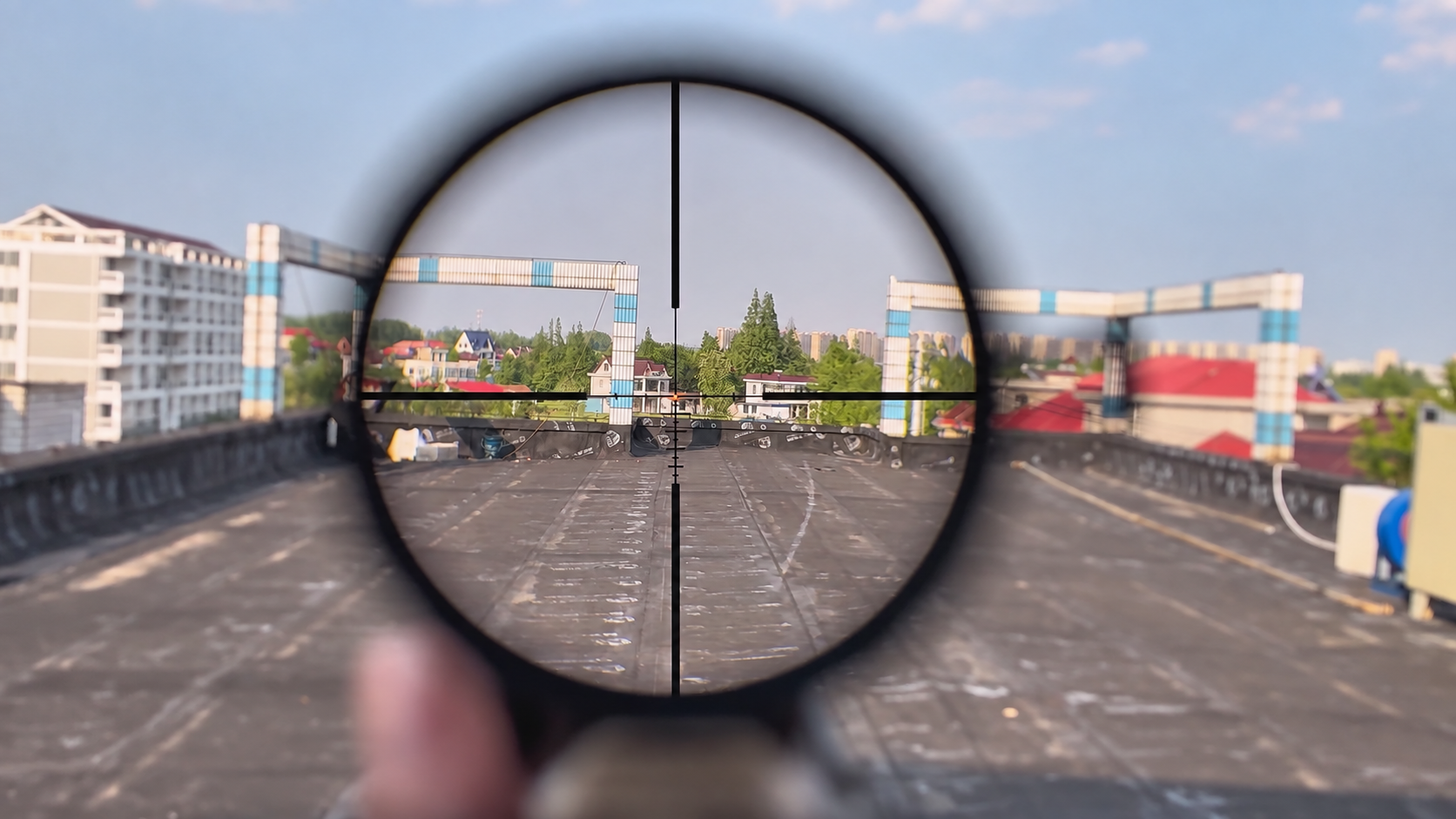
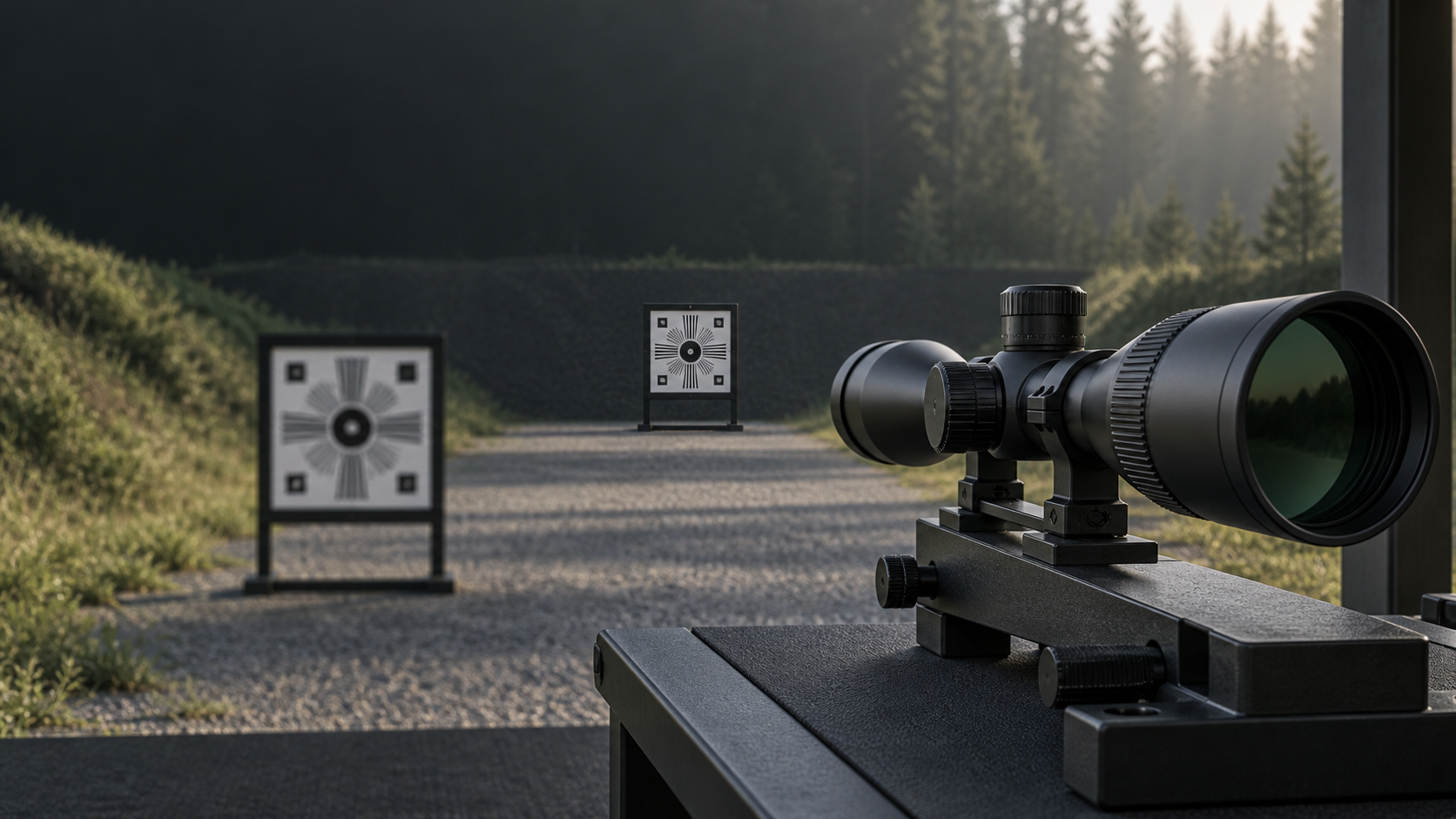
You settle in behind the scope, bring the target into view, and find a thick black ring around the image. Move your head a little and the ring shifts to one side. Move again and, suddenly, the whole view opens up.
That familiar effect is usually called scope shadow. It can be frustrating, but it rarely means there is anything wrong with the optic. Most of the time, your eye simply is not in the position the eyepiece was designed around.
Where the black edge comes from
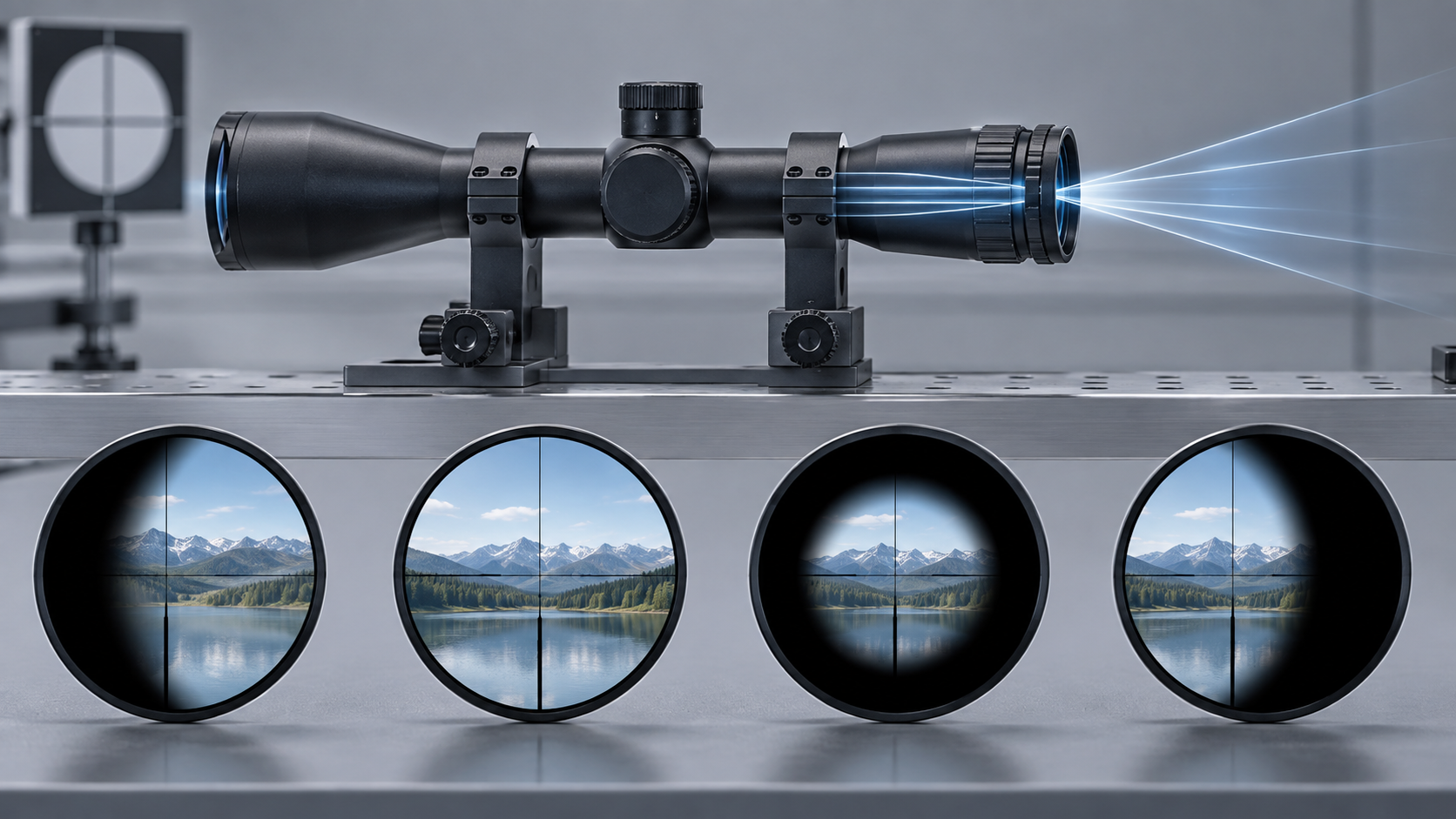
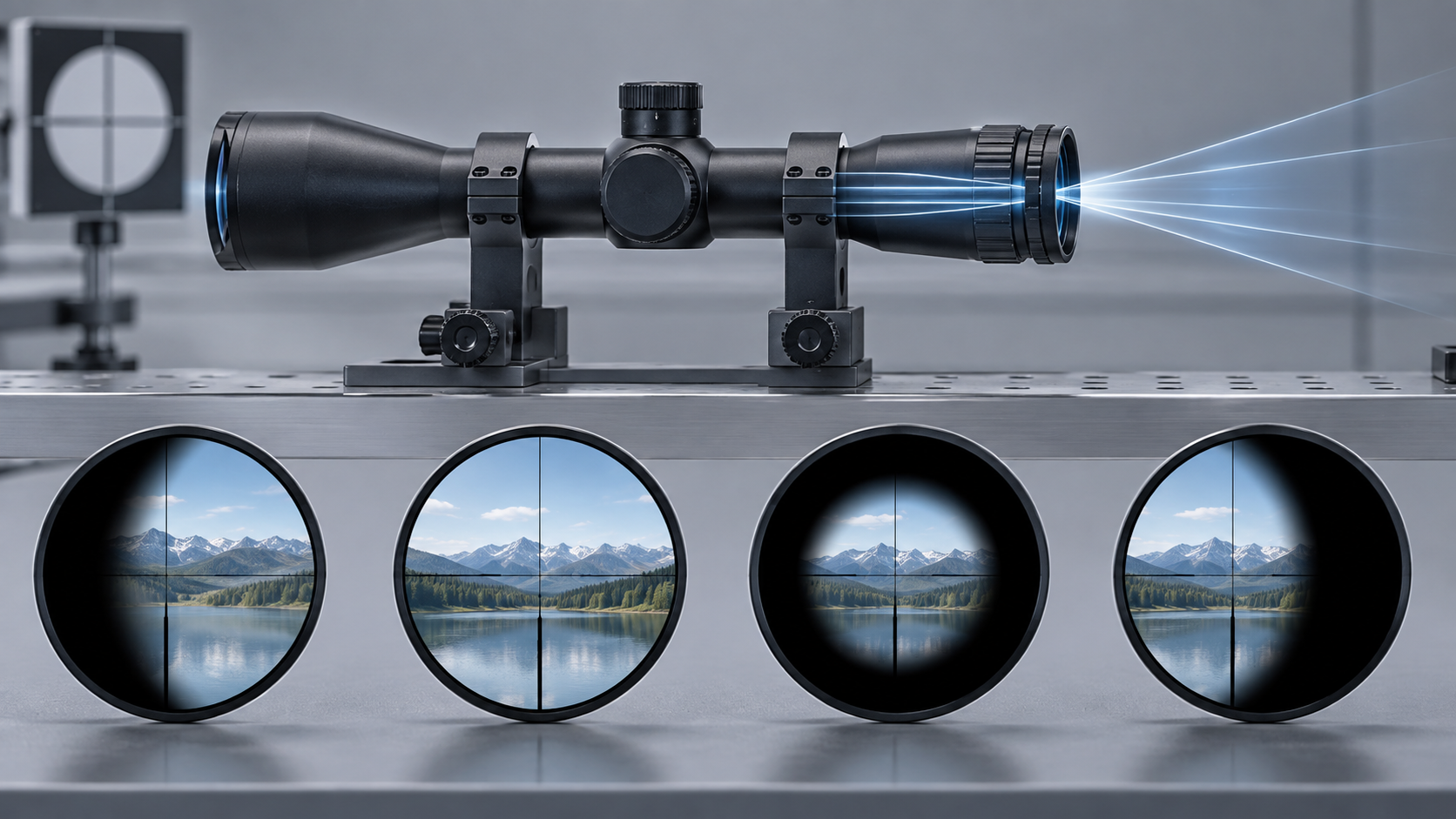
A scope does not send a usable image everywhere behind the eyepiece. It delivers the full view within a limited three-dimensional space often called the eye box. Your eye needs to be the right distance behind the scope and reasonably close to its optical centerline.
If you are too close or too far away, the image often looks smaller, with a fairly even dark ring around it. If your eye is off to the left, right, above or below the centerline, the shadow is more likely to appear as a crescent on one side.
The shape of the shadow is useful feedback. It tells you which way your eye needs to move.
What eye relief actually means
Eye relief is the distance from the rear eyepiece lens to the point where you can see the full field of view. Manufacturers usually list it in millimetres or inches. If an optic is rated at roughly 90 mm, for example, that is the distance at which the design is intended to present a complete image.
In practice, you are not trying to place your eye on a paper-thin measurement line. A well-designed optic gives you some room to move. The amount of front-to-back, side-to-side and vertical tolerance is what people are describing when they say an optic has a forgiving—or tight—eye box.
This is also why two scopes with similar published eye-relief figures can feel quite different in use. The number tells you the nominal viewing distance, not the whole story of how quickly the image appears when you bring the optic to your eye.
Why the problem often shows up at higher magnification
Many people first notice scope shadow when they turn the magnification up. The field of view is narrower, small changes in head position become easier to see, and the usable viewing position may feel less forgiving. A setup that looks effortless at low power can suddenly demand more precise alignment at the top of the range.
That does not automatically mean the scope has “bad” eye relief. It means the mounting position and your natural head position should be checked under the most demanding setting, not only at low power.
Set eye relief from the position you actually use
A scope can look perfectly placed on a workbench and still feel wrong in the field. Your head sits differently when you are standing, seated or prone, and heavy clothing can change your position again.
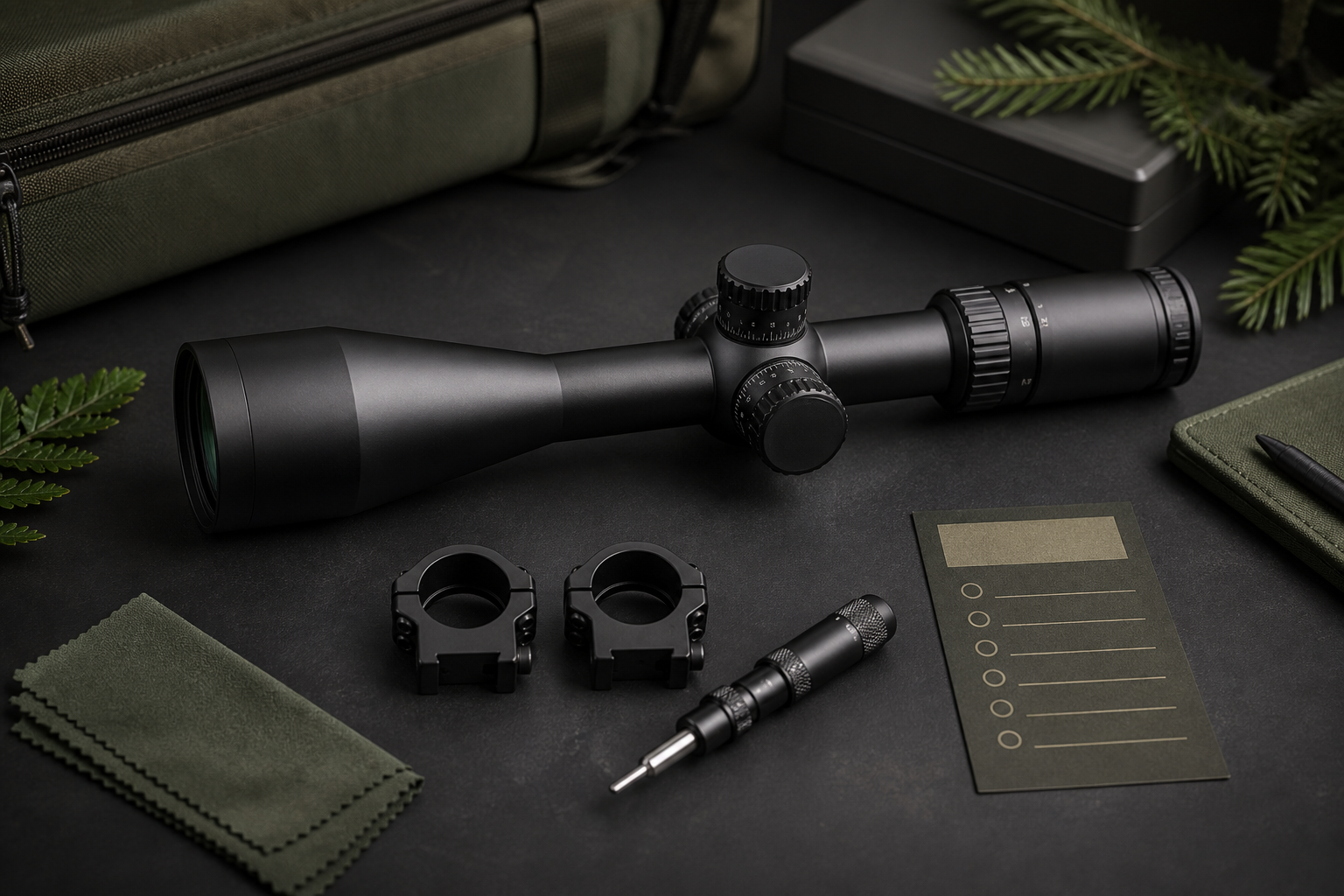
Start at the highest magnification. Take your normal viewing position, close your eyes for a moment, then relax into the setup without stretching your neck. When you open your eyes, you should see a full image immediately. If you need to crawl forward or pull your head back, the scope probably needs to move within the limits of the mount.
Once the front-to-back position feels natural, make small side-to-side and vertical adjustments until any remaining crescent disappears. Then check the result again at low, medium and maximum power.
Leave enough clearance between the eyepiece and your face for the intended use. On equipment subject to recoil, that is a safety consideration as well as a comfort issue.
Do not try to fix eye relief with the wrong control
Several adjustments affect what you see, but they solve different problems.
The eyepiece diopter is there to make the reticle look sharp to your eye. Side focus or an adjustable objective is used to focus at different distances and manage parallax. Neither one can correct a scope that is mounted too far forward or too far back.
A quick diagnosis is often enough:
- An even black ring: move slightly forward or backward.
- A dark crescent on one side: move your eye toward the center of the view.
- A sharp target but blurry reticle: adjust the diopter.
- Apparent target movement against the reticle as your eye moves: check parallax adjustment and eye centering.
The takeaway
When a black ring appears, treat it as positioning feedback before blaming the glass. Find the correct front-to-back distance, center your eye, and make sure the scope reaches that position without forcing your posture.
Eye relief is an important specification, but viewing comfort also depends on the practical eye box, field of view and the overall eyepiece design. Whenever possible, evaluate an optic from a natural position and at the magnification you expect to use most.
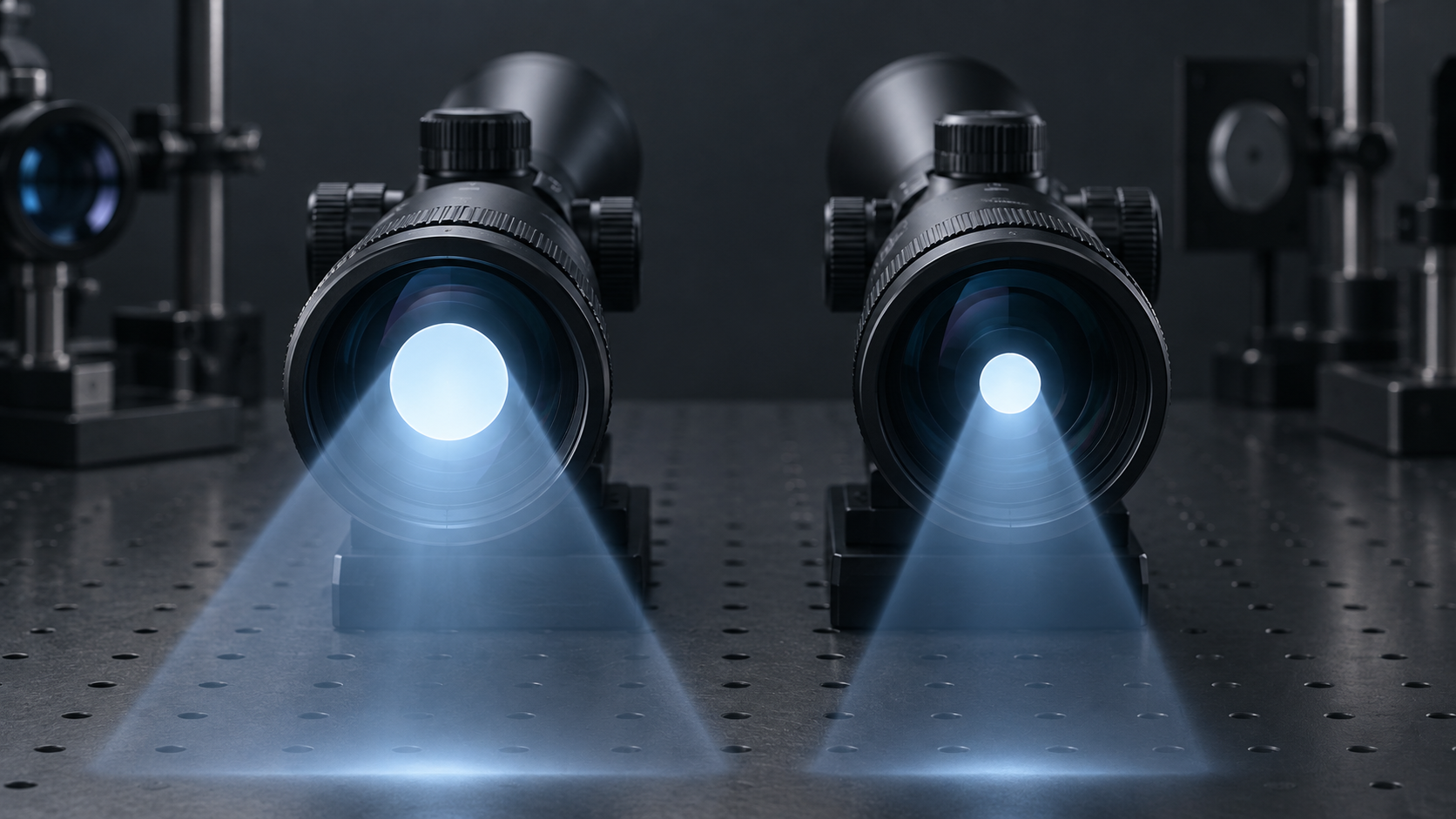
Eye relief should not be confused with exit pupil. Our separate guide to exit pupil and magnification explains how the diameter of the light beam changes as magnification increases.
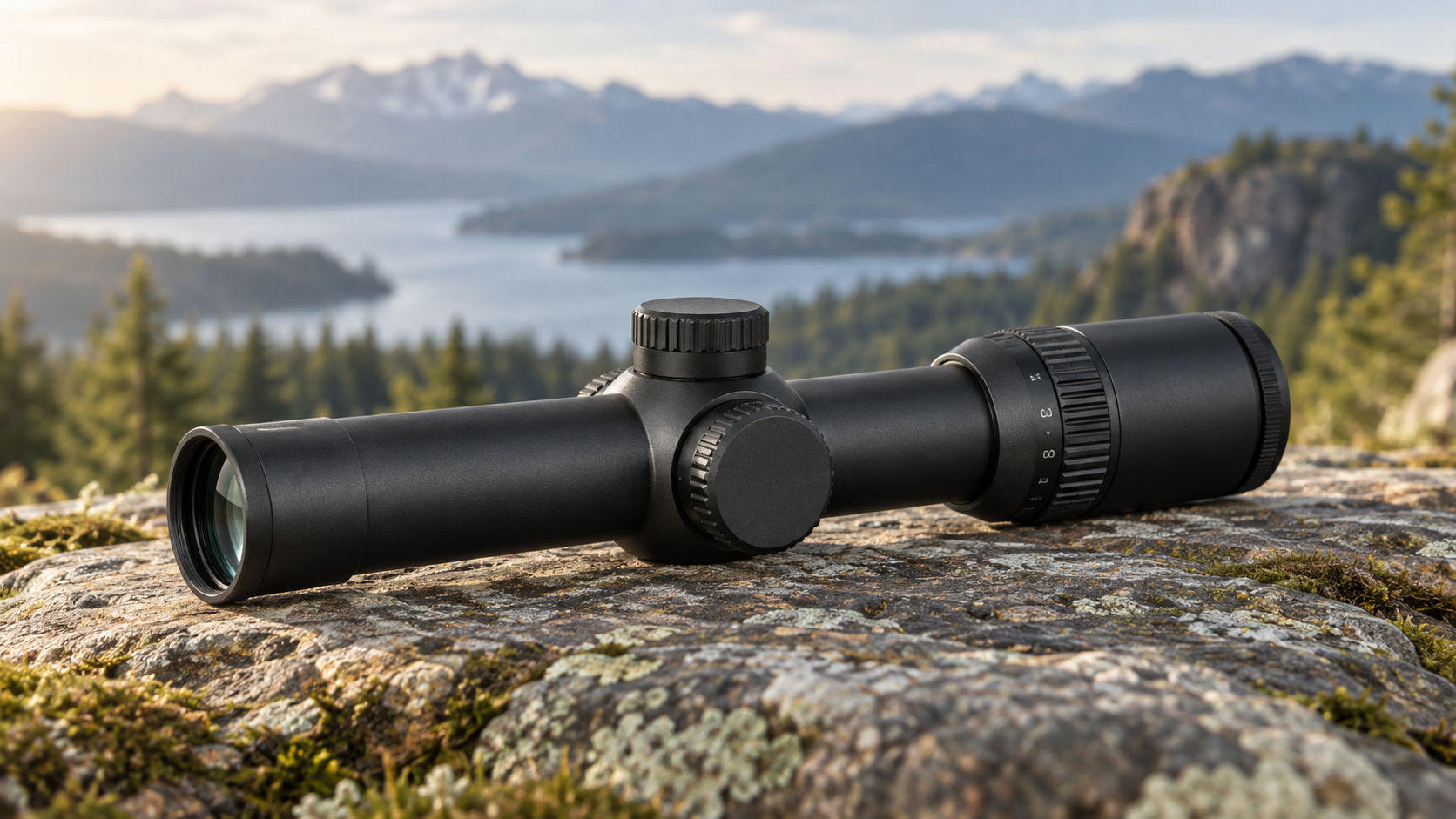
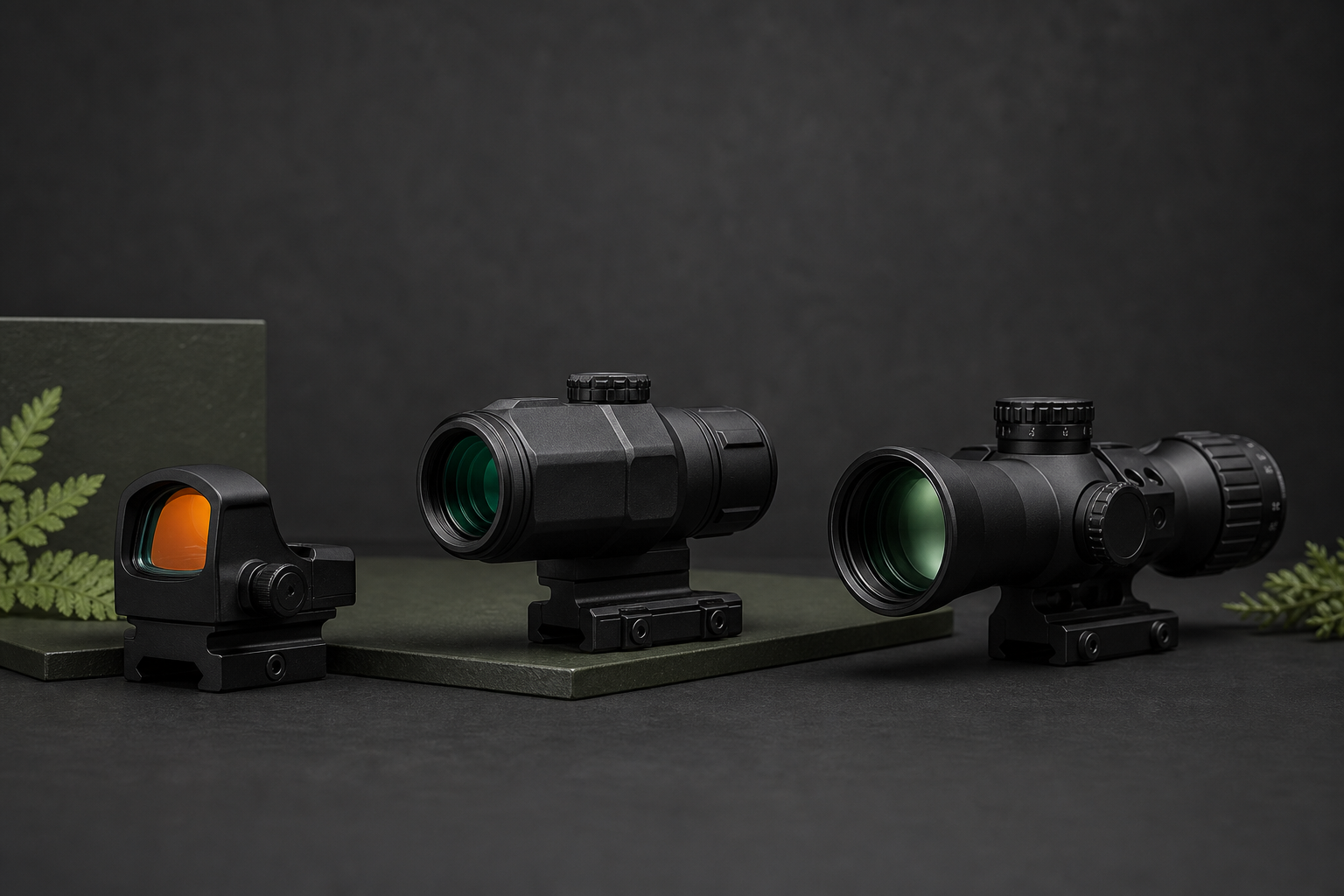
You can explore our sporting optics and compare eye relief, magnification and other setup-related specifications before choosing a model.


Leave a comment