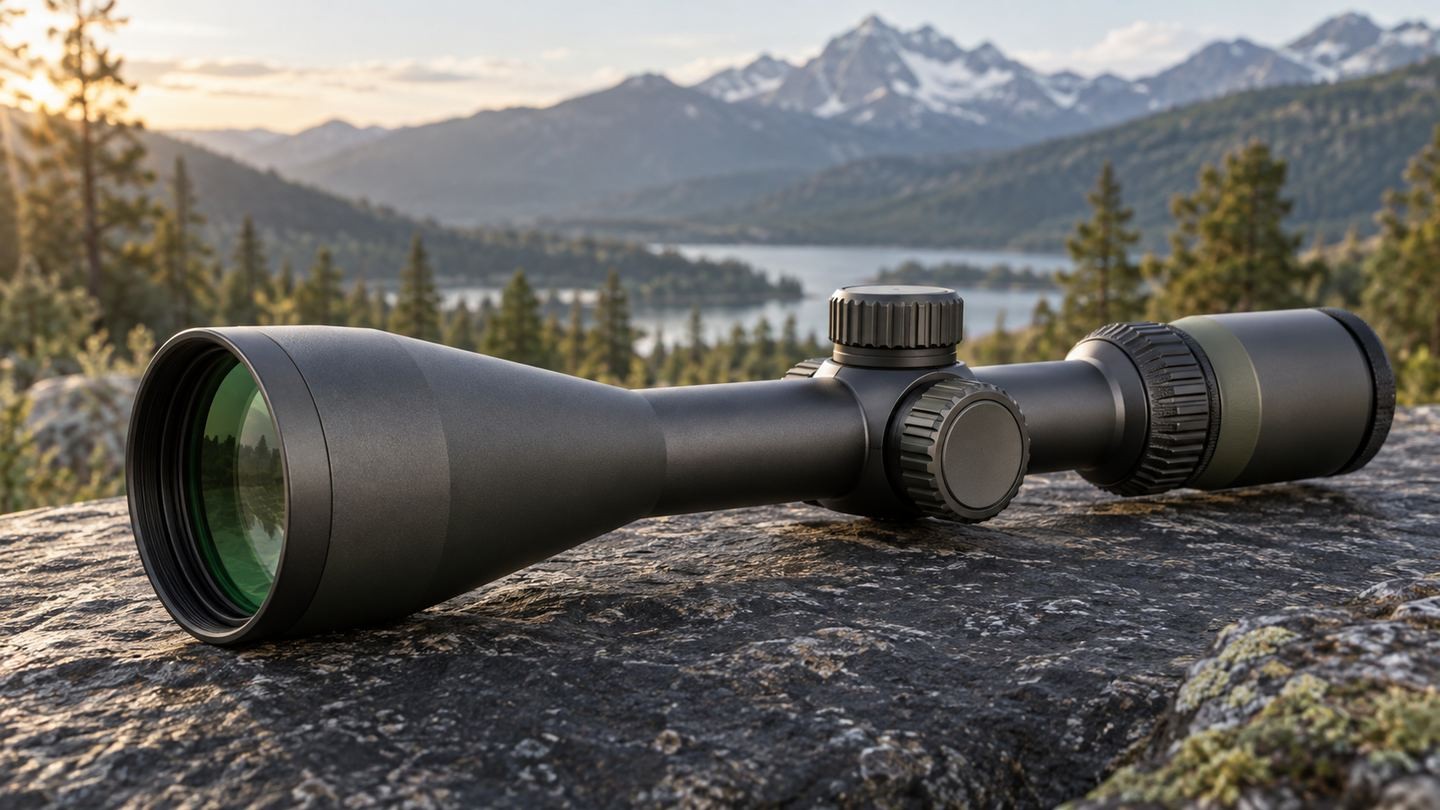
Pick up almost any rifle scope listing and you will find a string such as 3–9×40. It looks like a model code, but it tells you two useful things right away: how much the scope can magnify the view and the diameter of its front objective lens. It does not tell you how far you can see.
Read the label from left to right
In 3–9×40, the 3–9× is the variable magnification range. Turn the power ring to view at roughly three times the apparent size at the low end or nine times at the high end. The 40 is the objective lens diameter in millimetres. That is the lens at the front of the scope, facing the scene.
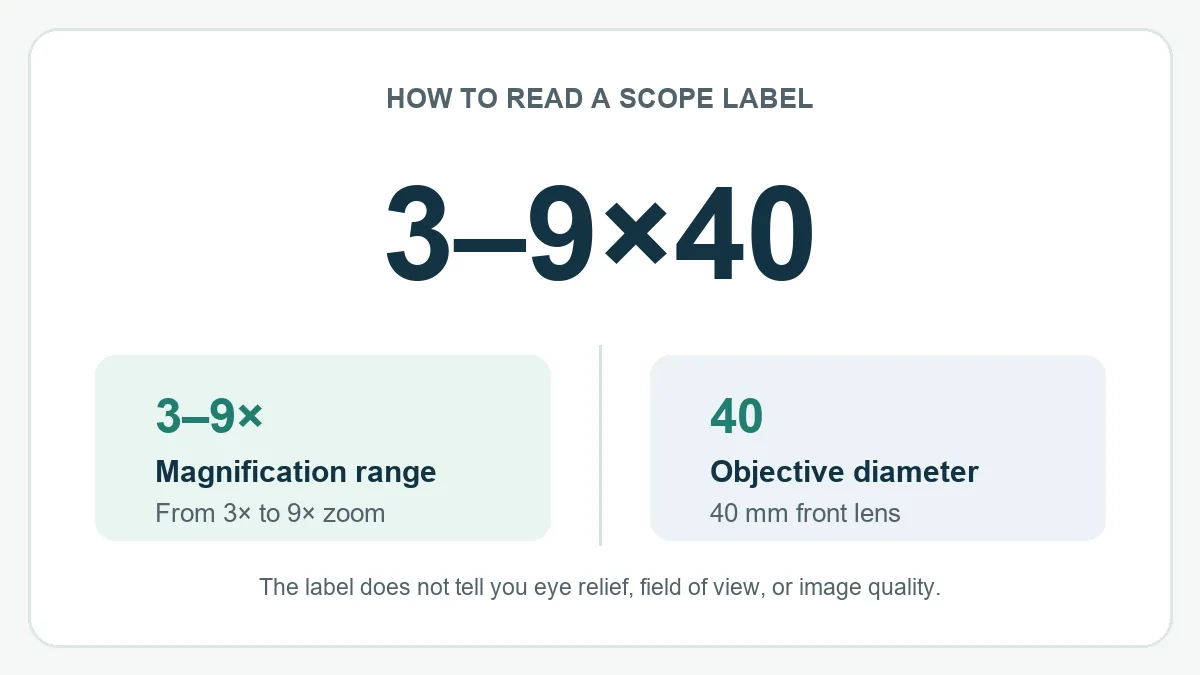
The first numbers describe power; the number after × describes the front lens diameter.
A fixed-power scope has just one magnification number. For example, 4×32 means 4× magnification and a 32 mm objective. A 1–6×24 adjusts from 1× to 6× and has a 24 mm objective. The pattern is the same; only the range changes.
What the magnification numbers actually change
At higher power, a distant detail occupies more of your view. That can help with careful observation, but it also narrows the visible scene and makes movement and imperfect eye position more noticeable. More power is not a promise of a clearer image, and it is not a distance rating. Glass quality, focus, light, atmosphere and how steadily you hold the optic still matter.
If you are deciding between ranges rather than decoding a label, our beginner’s magnification guide starts with the distances and tasks you actually use. For low-power variables, the 1–6× vs 1–8× vs 1–10× comparison looks at the trade-offs beyond the biggest number.
What the objective number does—and does not—say
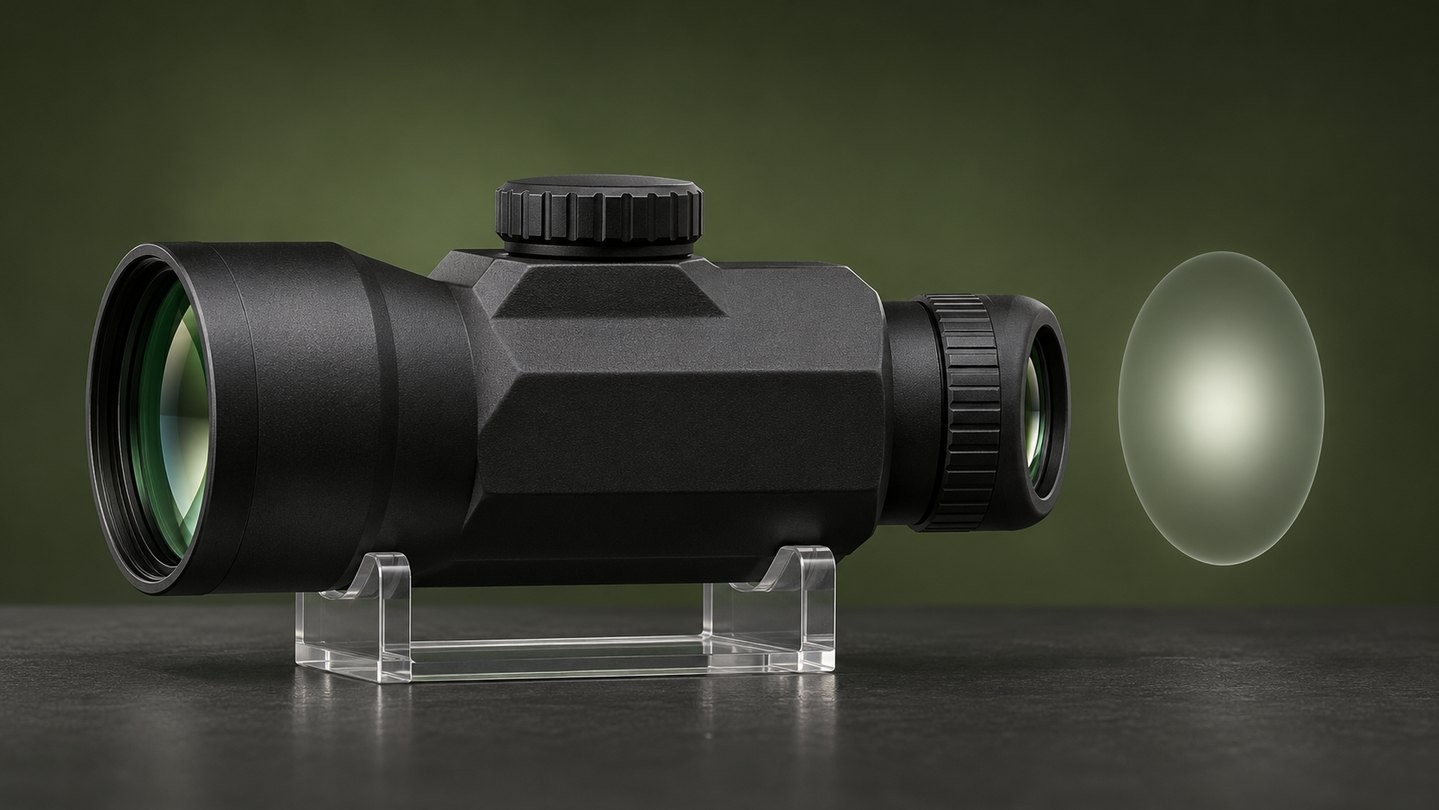
A 50 mm objective has a larger opening than a 40 mm objective, so it can collect more incoming light under comparable conditions. But the last number alone cannot tell you how bright the final image will look. Magnification changes the exit pupil, while lens coatings, transmission, optical design and your own eye also affect what you see. Our exit pupil explanation walks through that relationship without turning one specification into a quality score.
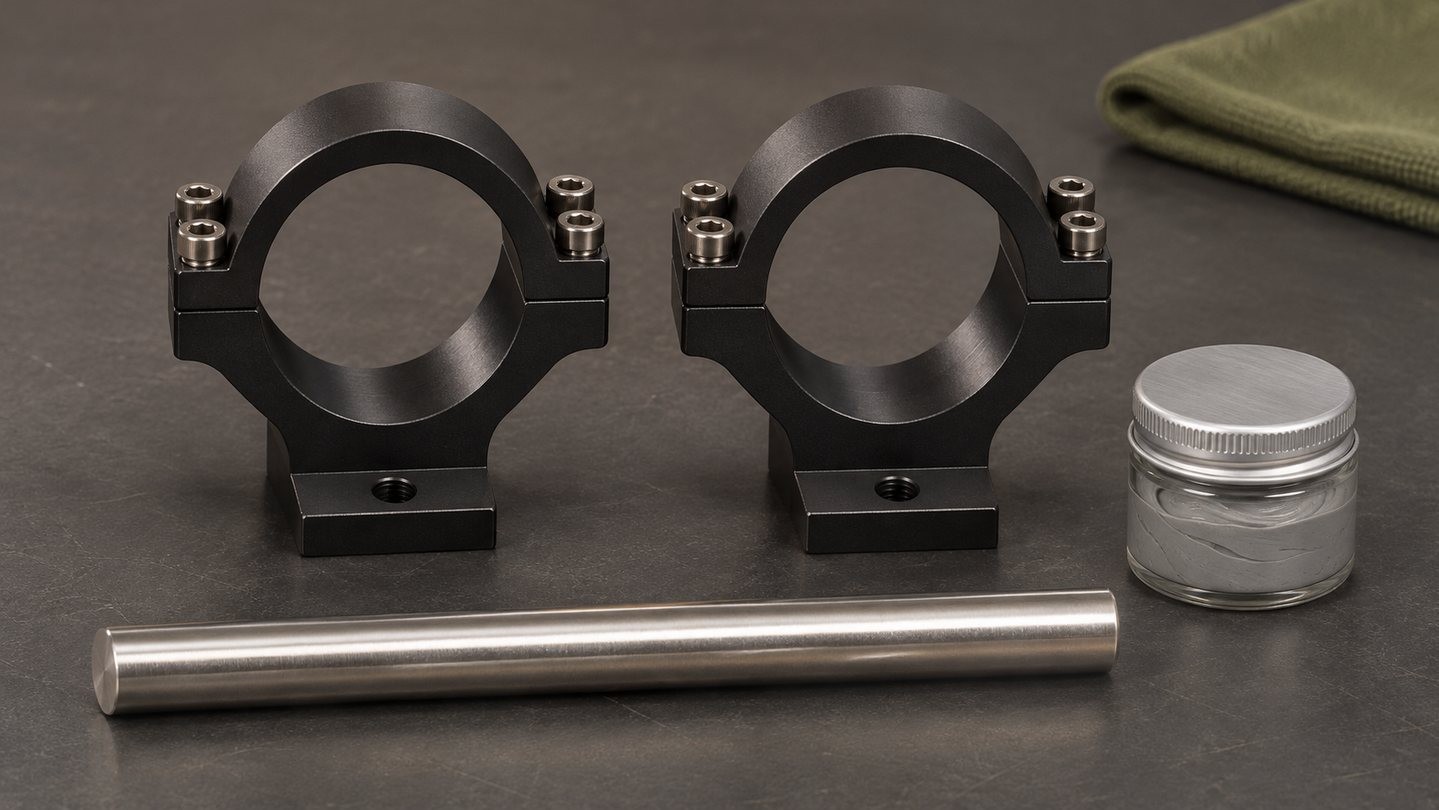
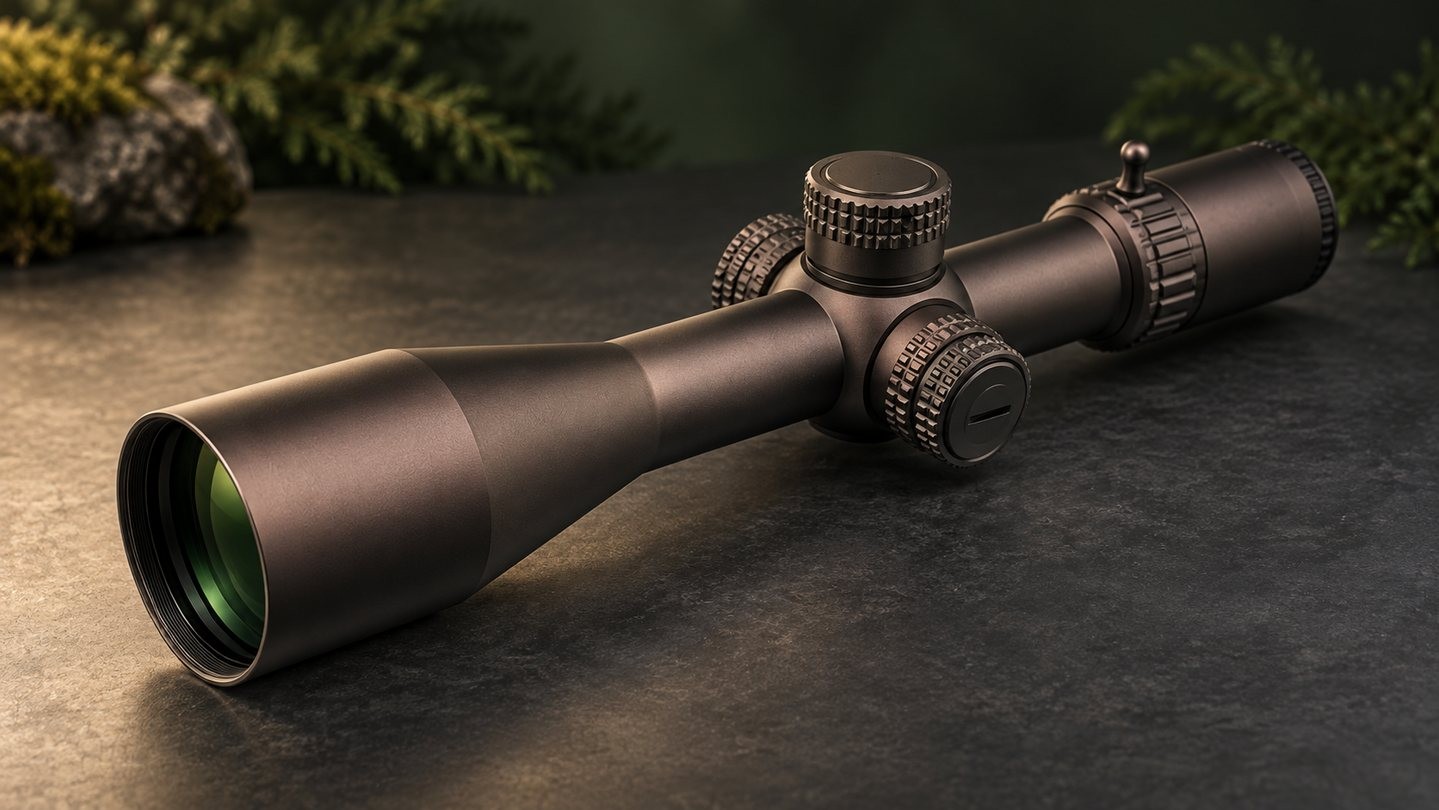
A larger objective can also change the physical fit. The outside of the objective bell is wider than the stated lens diameter, and sufficient clearance may call for different ring height. Check the actual dimensions and mounting arrangement rather than assuming that every “40” or “50” fits the same way.
Numbers elsewhere on the scope are a different story
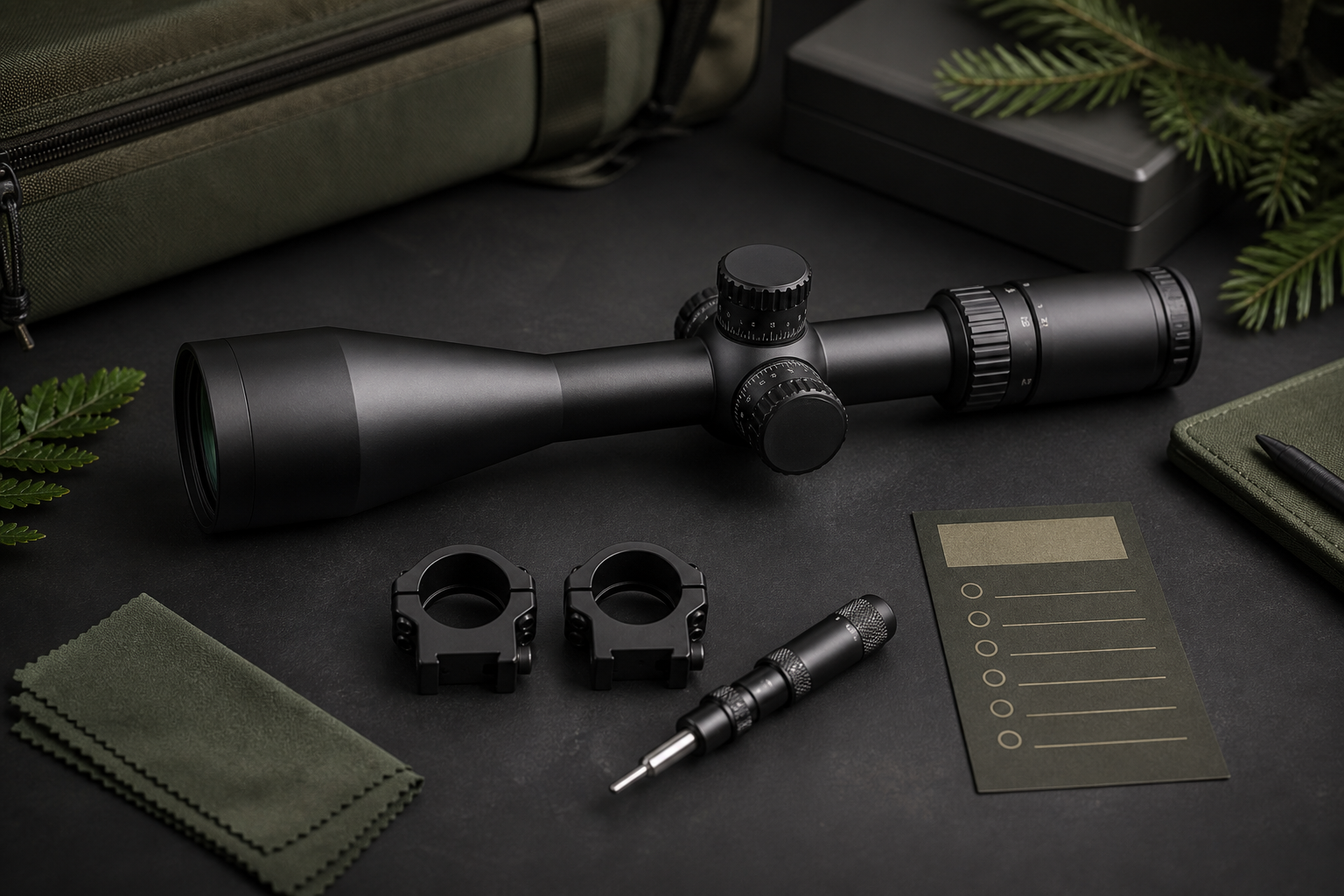
Do not confuse the 40 mm objective in 3–9×40 with a 30 mm main tube. Main-tube diameter is a separate mounting and construction specification, usually listed in the detailed specs. It is not a third number hidden in the magnification label, and a larger tube does not automatically mean a brighter sight picture.
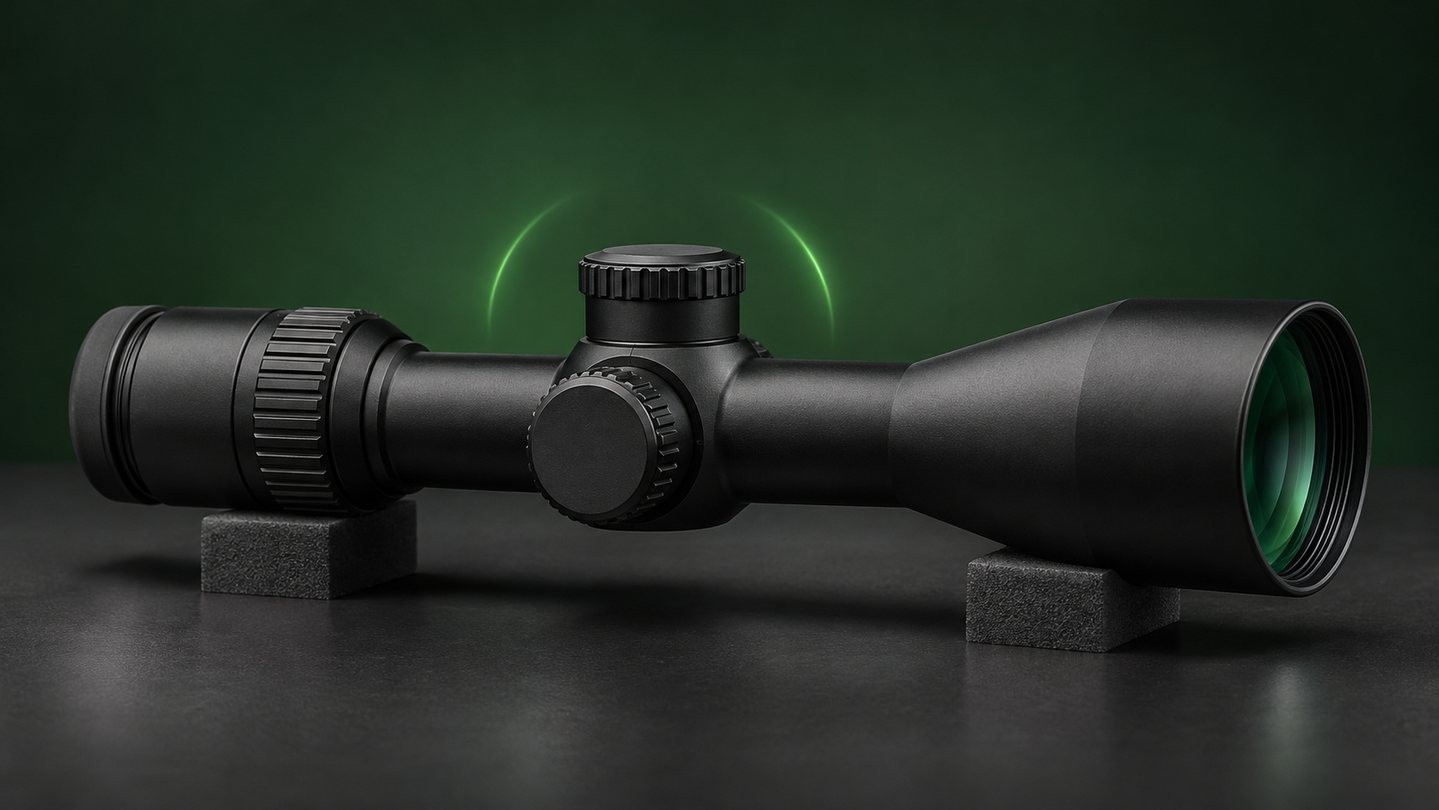
You may also see numbers on the adjustment turrets. Those describe how an adjustment is measured—often MOA or MRAD—and sometimes how much each click moves the reticle. They are not magnification settings. If that is the marking you are trying to decode, see our MOA vs MRAD guide.
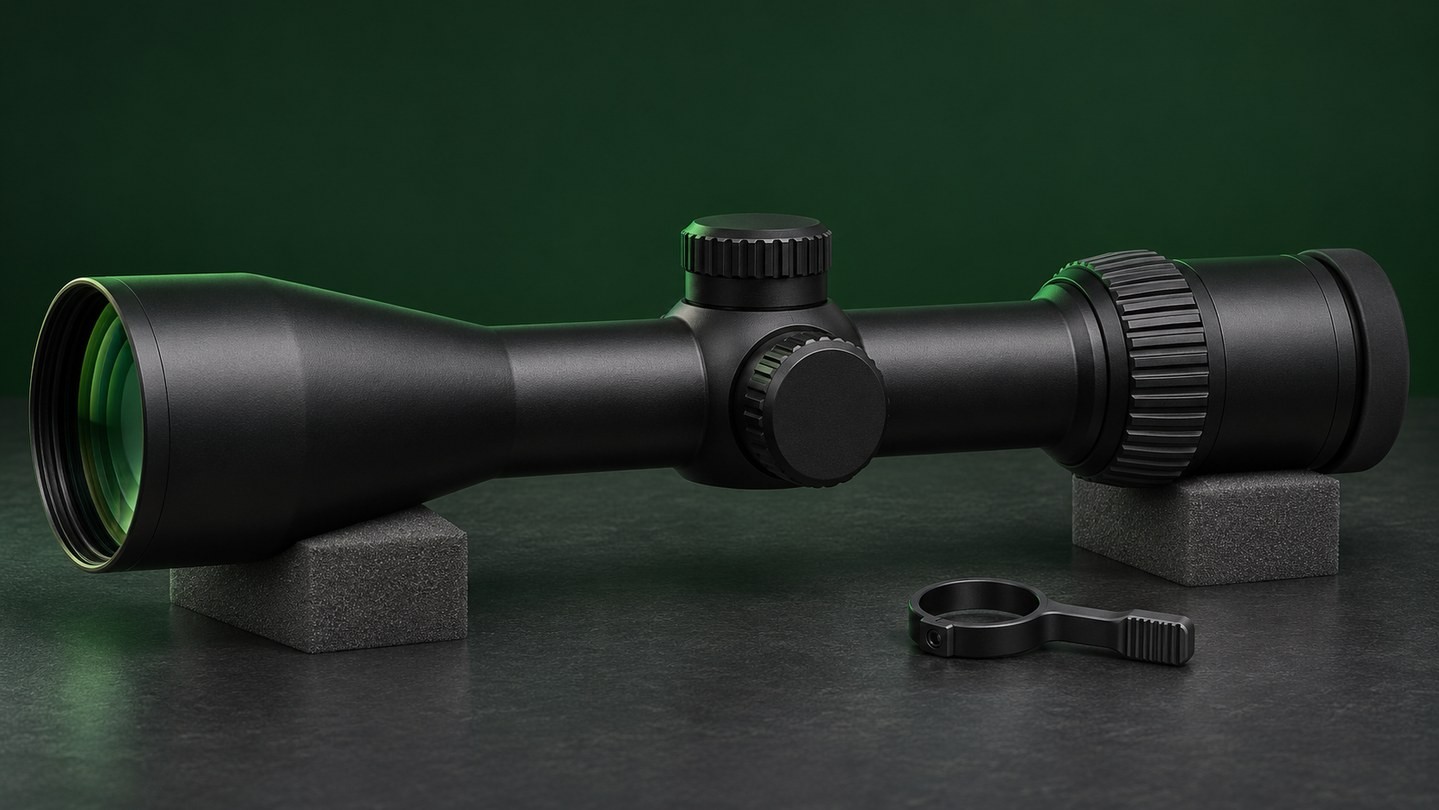
Finally, eye relief is measured separately: it is the distance from your eye to the rear lens at which you can see the full image. It is not the 40 in 3–9×40. If the view has a dark ring or crescent, our eye relief guide explains what to check.
A quick way to compare two labels
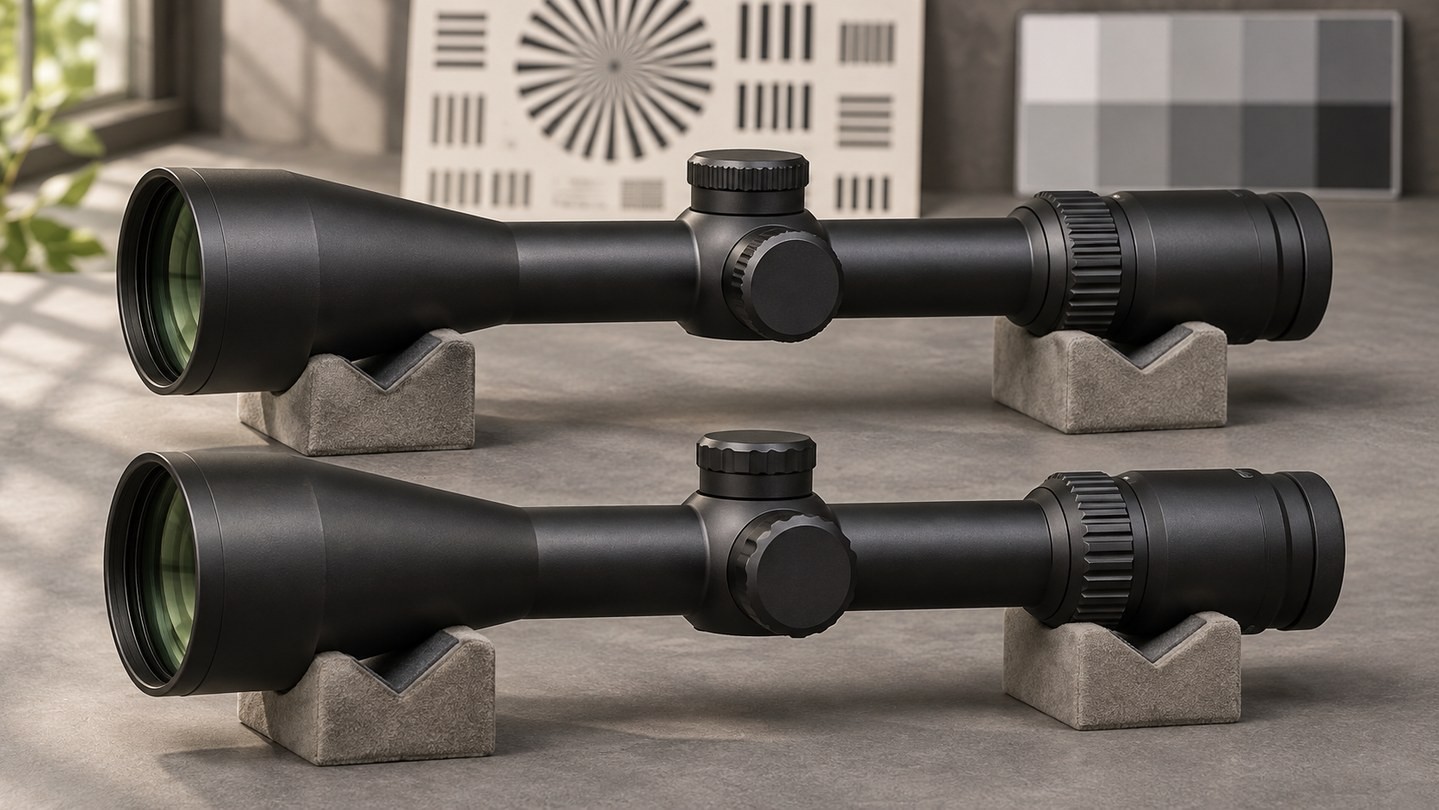
Read 3–9×40 and 4–16×50 as two separate questions: which magnification range suits your normal viewing, and which objective size and physical package suit the light and mounting conditions? Neither label tells the whole story. Before choosing, look at field of view, eye relief, exit pupil across the range, weight, mounting clearance and image quality in the individual model.
Keep the label simple
Numbers before × describe magnification. The number after × is the objective lens diameter in millimetres. Everything else deserves its own specification check.
EXPLORE BUYING GUIDES →


Leave a comment