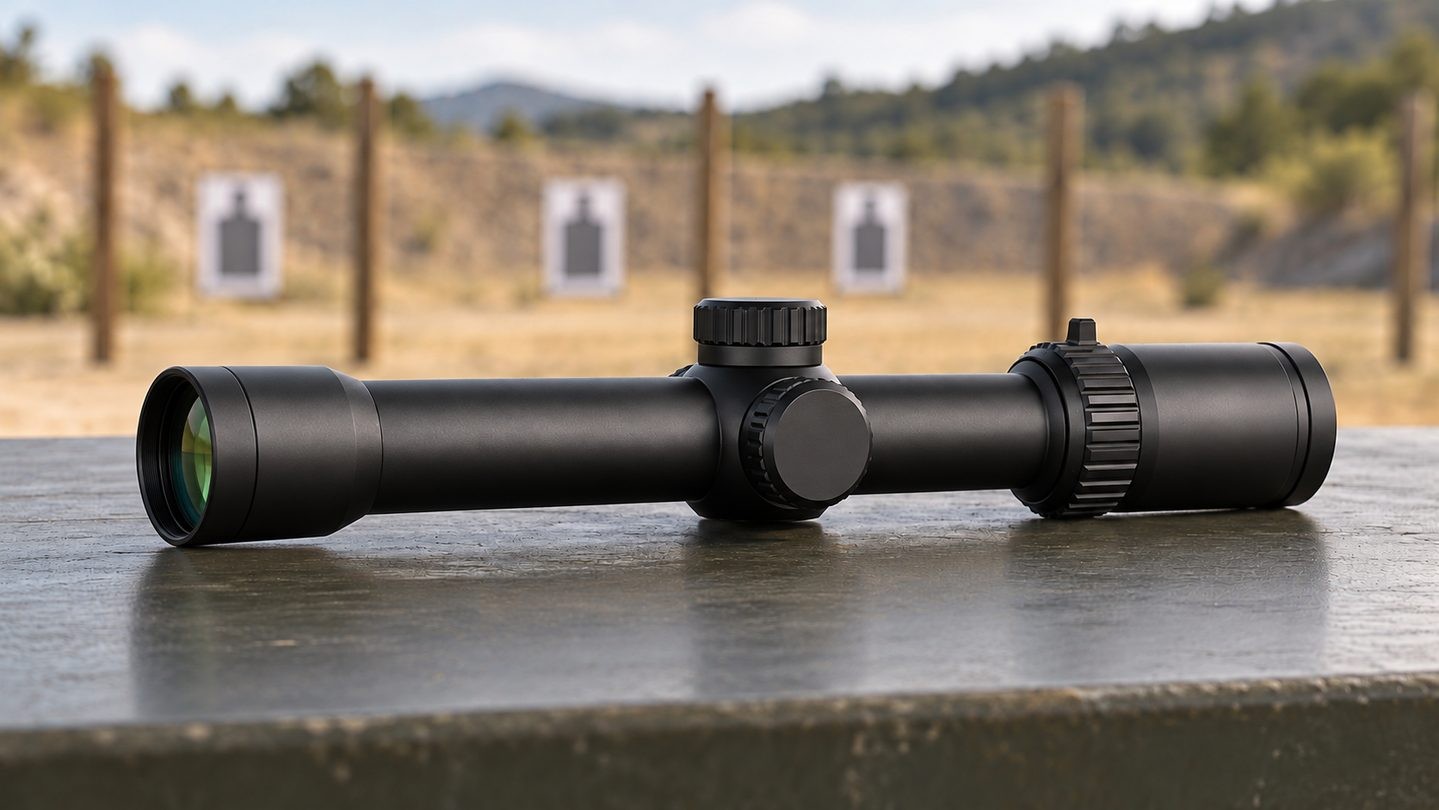
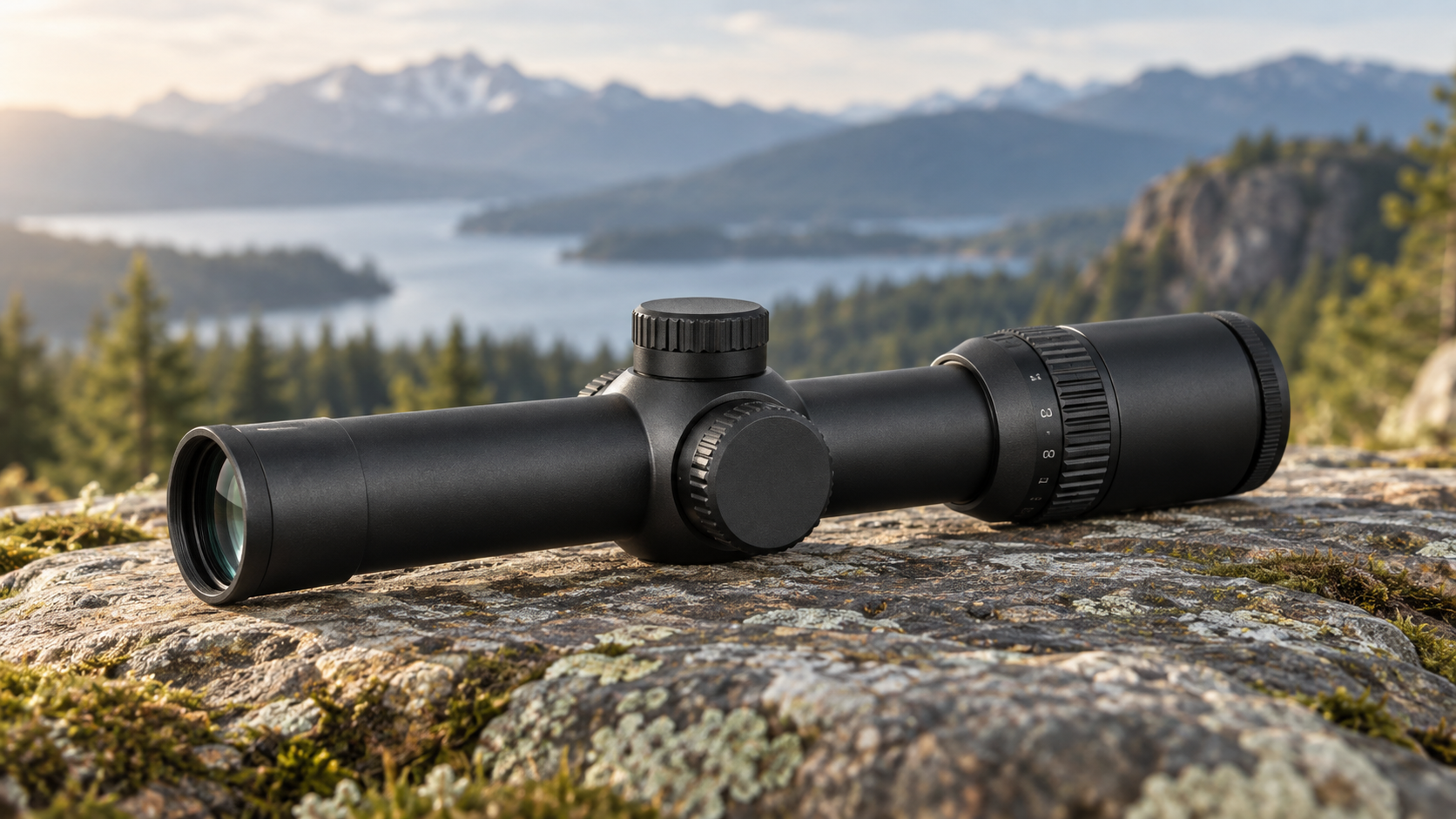
An LPVO can be marked 1–6x, 1–8x or 1–10x and still look slightly unusual at its lowest setting. Straight lines may bend near the edge. One eye may see the scene at a subtly different scale from the other. The view may feel natural when your head is centered, then become less comfortable as you move off axis.
That does not automatically mean the scope is defective or that the “1x” marking is false. True 1x describes angular magnification, not a promise that looking through a multi-lens riflescope will feel identical to looking through open air or a red dot sight.
Understanding that distinction makes it much easier to evaluate an LPVO without chasing the wrong problem.
What true 1x actually describes
At a true 1x setting, the optic is intended to present the target at approximately the same angular size as the unaided view. A sign, target frame or tree viewed through the scope should not appear deliberately enlarged in the way it does at 2x or 4x.
The word “approximately” matters in practical use. The magnification ring has a mechanical stop, the optical system has manufacturing tolerances, and your eyes are part of the viewing system. A small difference in apparent scale can be noticeable when one eye looks through the scope while the other eye looks around it.
True 1x also says nothing by itself about field of view, edge distortion, eye box, illumination brightness or how quickly the sight picture appears. Those qualities help determine how natural an LPVO feels at low power, but they are not all contained in the single “1x” number.
Why true 1x does not feel like a red dot
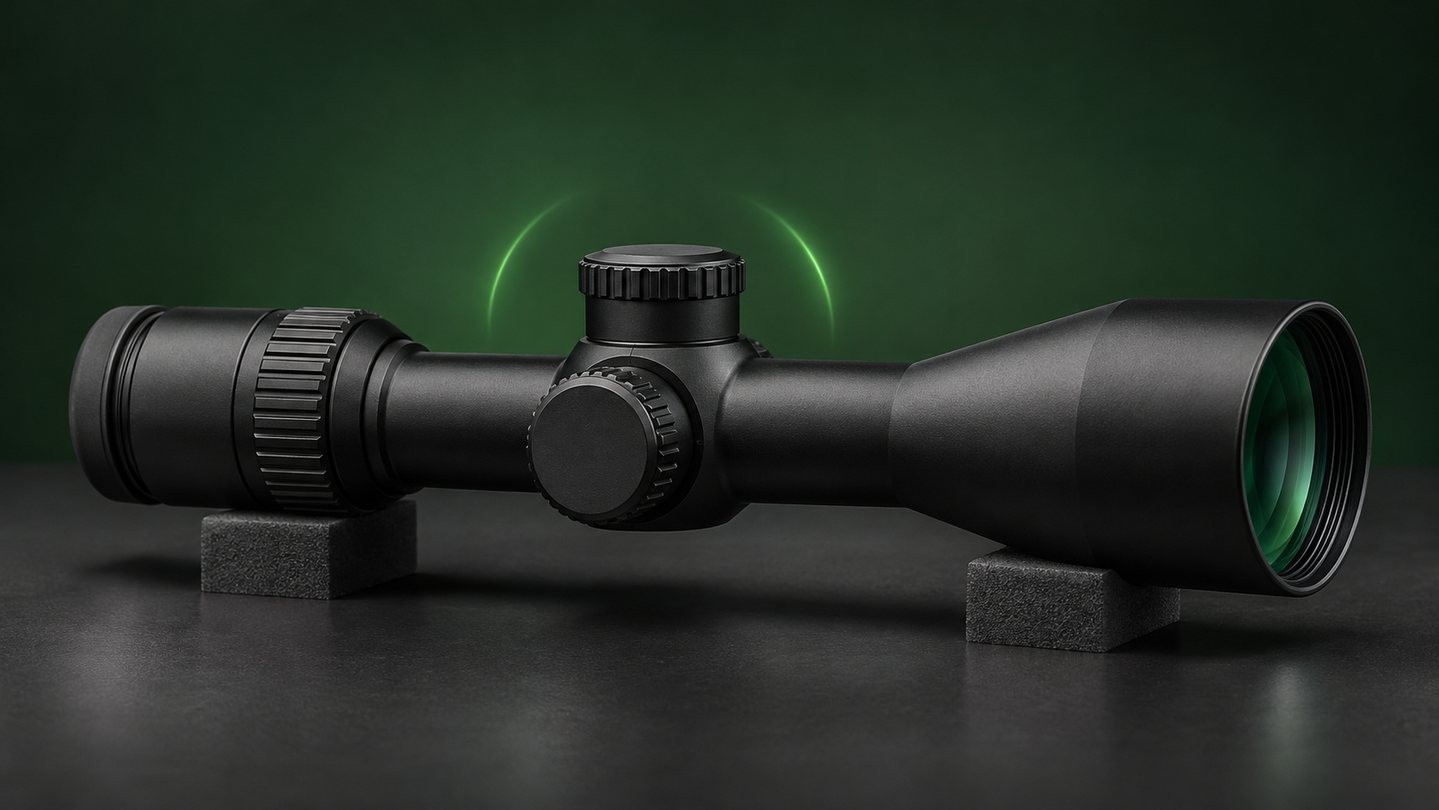
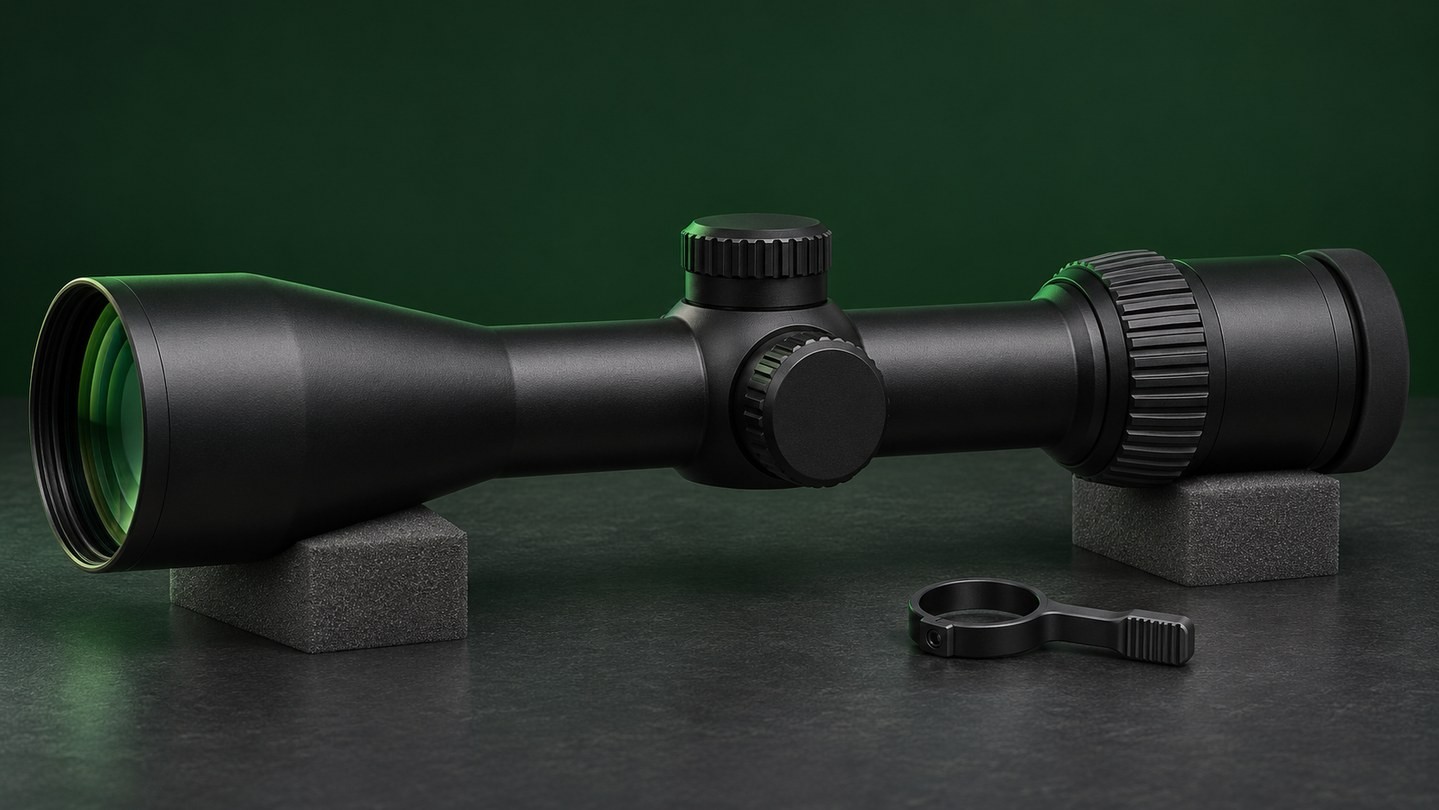
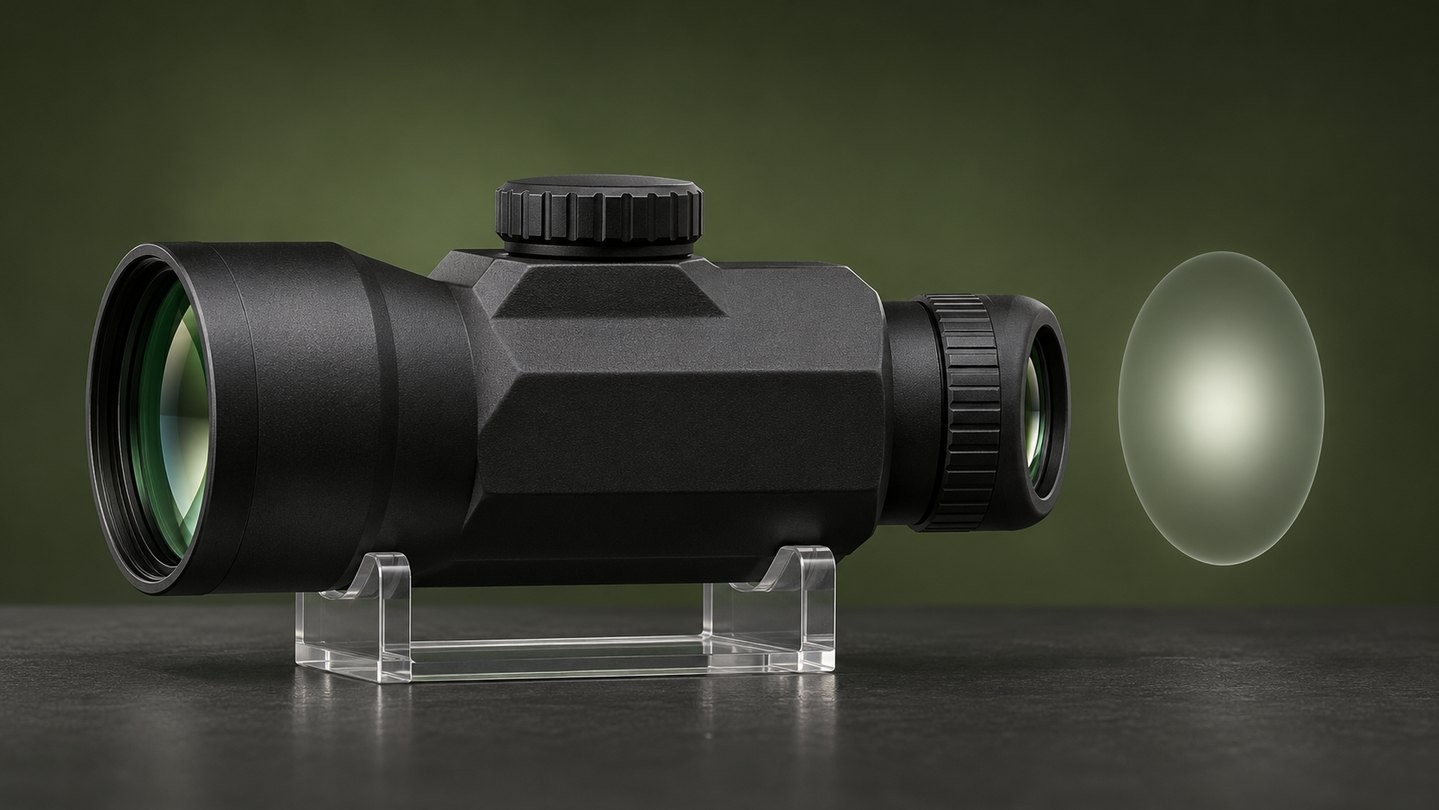
A red dot sight lets you look through a relatively simple window while a projected aiming point appears in the view. An LPVO forms an image through an objective lens, erector system and eyepiece. Even at 1x, your eye must remain within the scope’s usable eye relief and eye box.
That difference explains several familiar sensations:
- The scope body creates a visible circular boundary around the image.
- Moving your head too far forward, backward or sideways introduces scope shadow.
- Optical distortion can make motion near the edge look different from motion in the center.
- A mismatch between the two eyes can make the combined view feel slightly stretched or compressed.
A well-designed and correctly adjusted LPVO can feel very natural at 1x, but it still behaves like a magnified optic. It should not be judged solely by whether it disappears from awareness exactly like a red dot window.
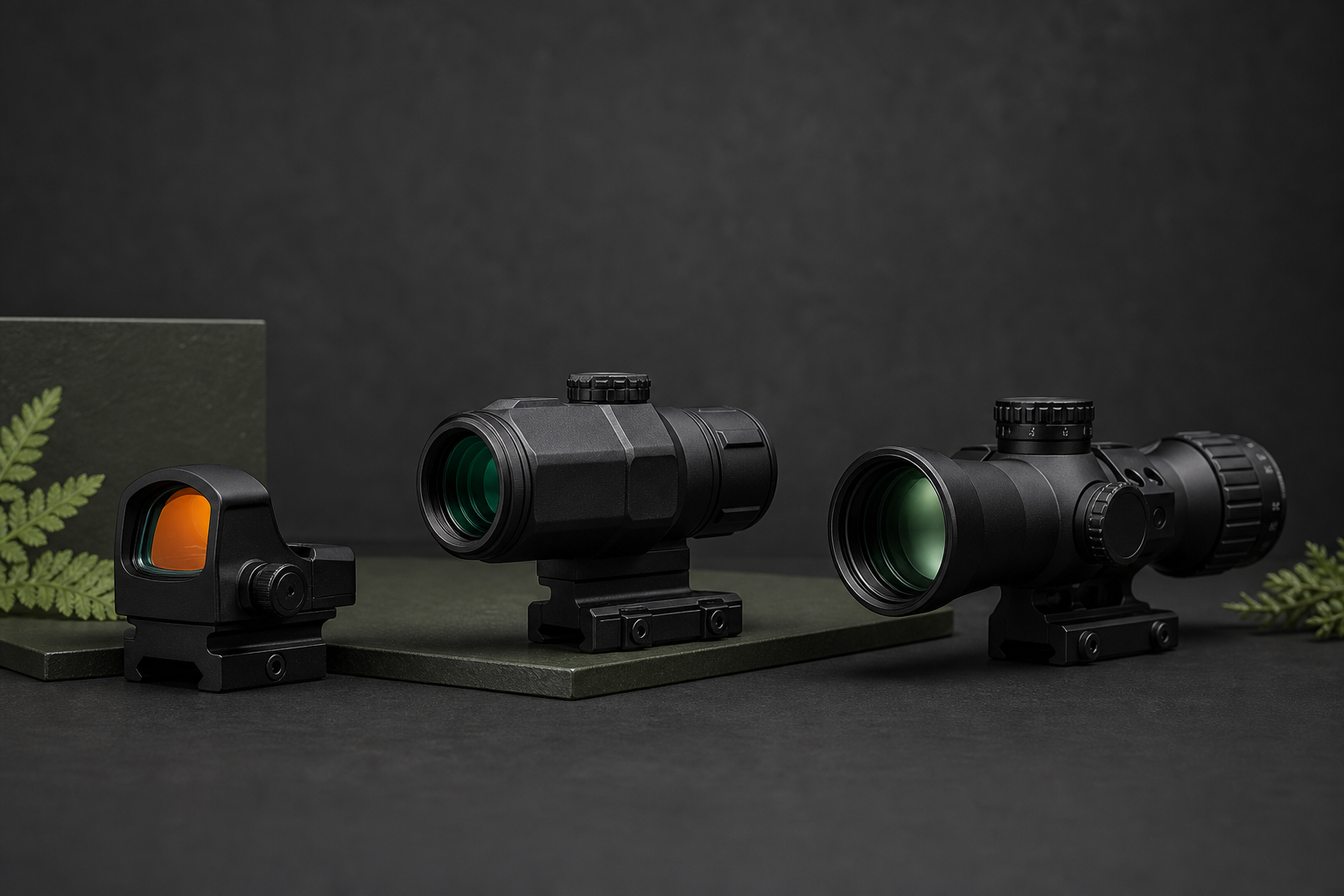
If you are deciding between the two systems, our magnifier vs LPVO comparison explains the broader trade-off without treating either design as universally better.
Distortion can change the impression of magnification
Optical designers control how straight lines, proportions and movement are rendered across the image. No complex optical system is perfectly neutral everywhere. Barrel distortion can make lines bow outward, while pincushion distortion can pull them inward. The effect is usually easiest to notice near the edge of the field.
At 1x, this distortion can create a “fishbowl” sensation when you pan across a room or move the optic past a fence, doorway or other straight reference. The center may look correctly scaled while the outer field appears to move at a different rate. That is an image-geometry issue, not necessarily extra magnification across the whole view.
The practical question is not whether you can find any distortion while inspecting a wall. It is whether the central view remains usable and whether edge behavior becomes distracting in your normal position. Our guide to rifle-scope image distortion looks at barrel, pincushion and bent-edge effects in more detail.
Set the diopter before judging the 1x view
The eyepiece diopter compensates for the observer’s vision so the reticle appears sharp. On an LPVO, its setting can also influence how closely the low-power image seems to match the unaided view. This is why two people can look through the same scope and disagree about whether its 1x setting feels natural.
Start by setting the reticle focus correctly:
- Turn illumination down or off so glow does not hide the reticle edge.
- Look at a bright, plain background rather than a detailed target.
- Glance through the scope briefly and adjust the diopter until the reticle appears immediately crisp.
- Look away between checks so your eye does not continually accommodate to a poor setting.
- Return the scope to its lowest power and compare the central image with the unaided view.
Do not keep turning the diopter simply to sharpen a target at a particular distance. Reticle focus, target focus and parallax are related parts of the viewing experience, but they are not the same adjustment. The focus, diopter and parallax guide separates their jobs.
Eye position and mounting still matter at 1x
Low power is usually more forgiving than high power, but an LPVO still has a defined eye-relief range. If the scope is mounted too far forward or backward for your normal position, you may crane your neck to find the full view. That makes the optic feel slow or unusually sensitive even when the optical 1x setting is correct.
Evaluate the scope from the position you will actually use, with a repeatable cheek position and the magnification ring at its lowest stop. Look for a full circular field without a heavy black ring or one-sided crescent. Then move naturally rather than holding your head in a carefully staged showroom position.
If the image disappears with very small movements, you are evaluating eye-box tolerance as much as magnification. The rifle-scope eye box guide explains why a full view can become a black ring or crescent even when focus is correct.
A simple way to compare low-power views
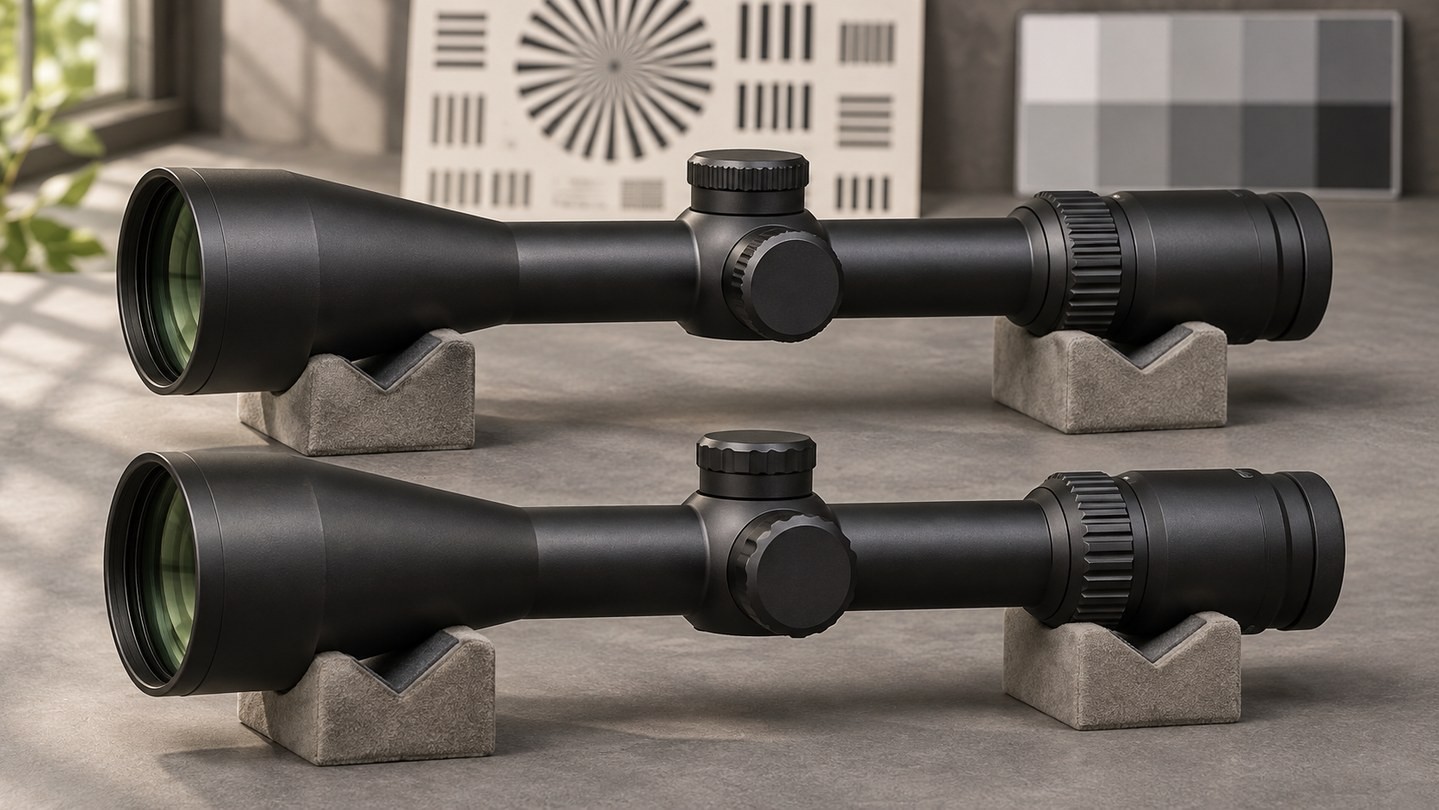
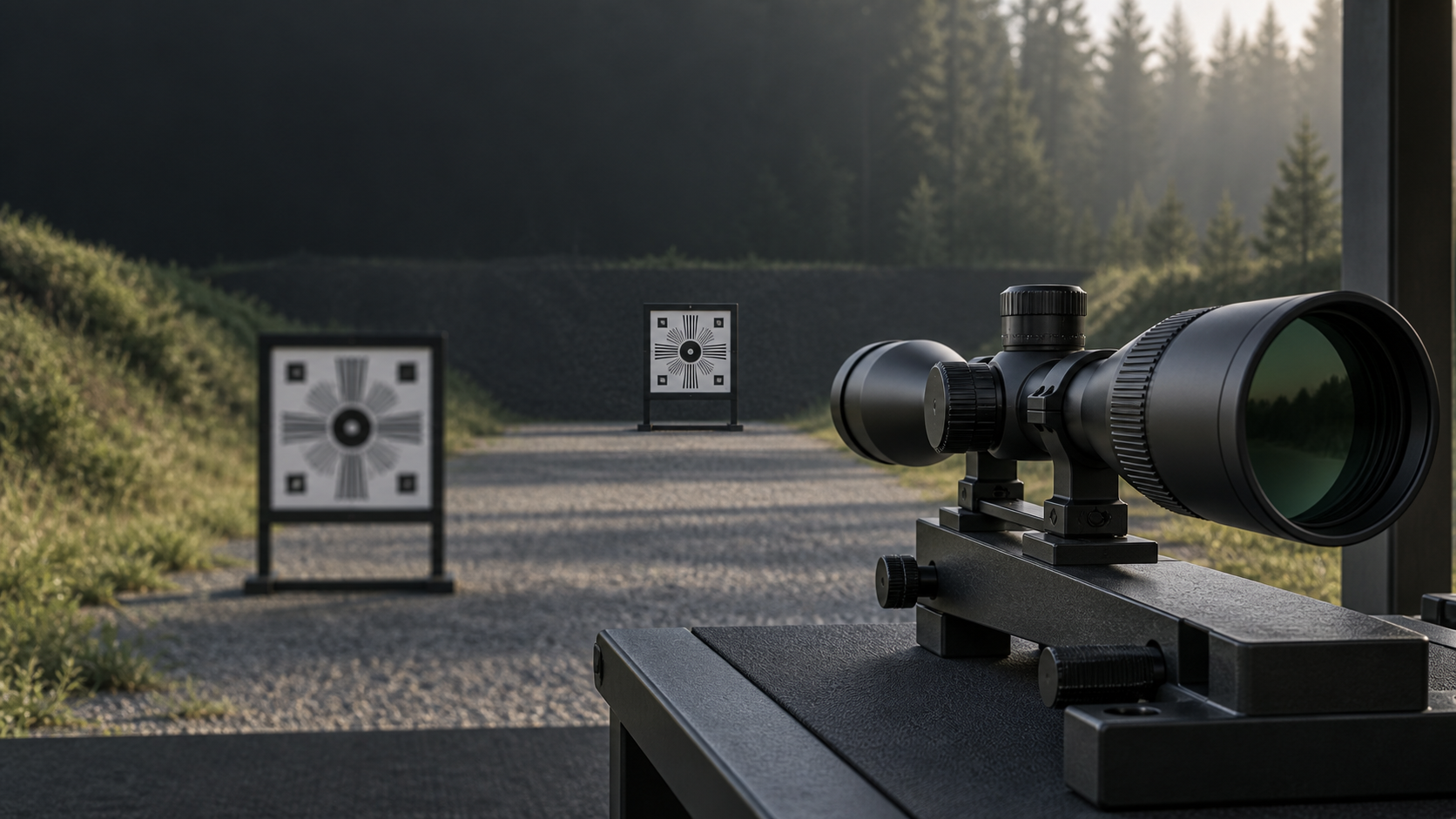
You do not need a laboratory to make a useful comparison. Place a detailed, flat reference with vertical and horizontal lines at a safe viewing distance. Set the optic to its lowest marked power, establish normal eye relief and compare:
- the size of the central reference through the scope and with the unaided eye;
- whether straight lines remain straight near the center and edge;
- how the image behaves when you pan slowly;
- how much head movement the full view allows;
- whether the reticle is immediately sharp after you look away and back.
Keep the comparison consistent. Changing distance, head position, diopter and magnification at the same time makes it difficult to identify what you are actually seeing. A phone camera can document the view, but it may add its own lens distortion and rarely represents the eye-box experience accurately.
What to compare before buying an LPVO
“True 1x” is useful, but it should be one line in a larger comparison. At the low end, consider central scale, edge distortion, field of view, eye-box tolerance and how clearly the reticle works with and without illumination. Across the rest of the range, also check resolution, exit pupil, reticle behavior and control effort.
A 1–10x model is not automatically better at 1x than a 1–6x model, and a higher price does not remove every optical compromise. Compare complete viewing systems, not only the magnification ratio printed on the box. Our 1–6x vs 1–8x vs 1–10x LPVO guide explains what the wider ranges add—and what they do not guarantee.
The useful conclusion is simple: true 1x means no intended angular enlargement at the lowest setting. It does not mean zero distortion, unlimited eye position or a red-dot-like viewing experience. Set the diopter, check the mount position and compare the whole field before deciding what the label means in practice.
For more category-level guidance, browse Sporting Optics or continue with the USEEIN Buying Guides.


Leave a comment