Two scopes can look similar in the product photos, yet one calls for 1-inch rings and the other for 30mm rings. That small line in the specifications is easy to miss—until you try to mount the scope. So what does tube diameter actually tell you, and is a bigger tube worth choosing?
The short answer: it tells you the outside diameter of the scope's main tube where the rings clamp. It matters immediately for mounting compatibility. It may also give a designer more room inside the scope, but it does not, by itself, guarantee a brighter picture or a better scope.
First, which part is the “tube”?
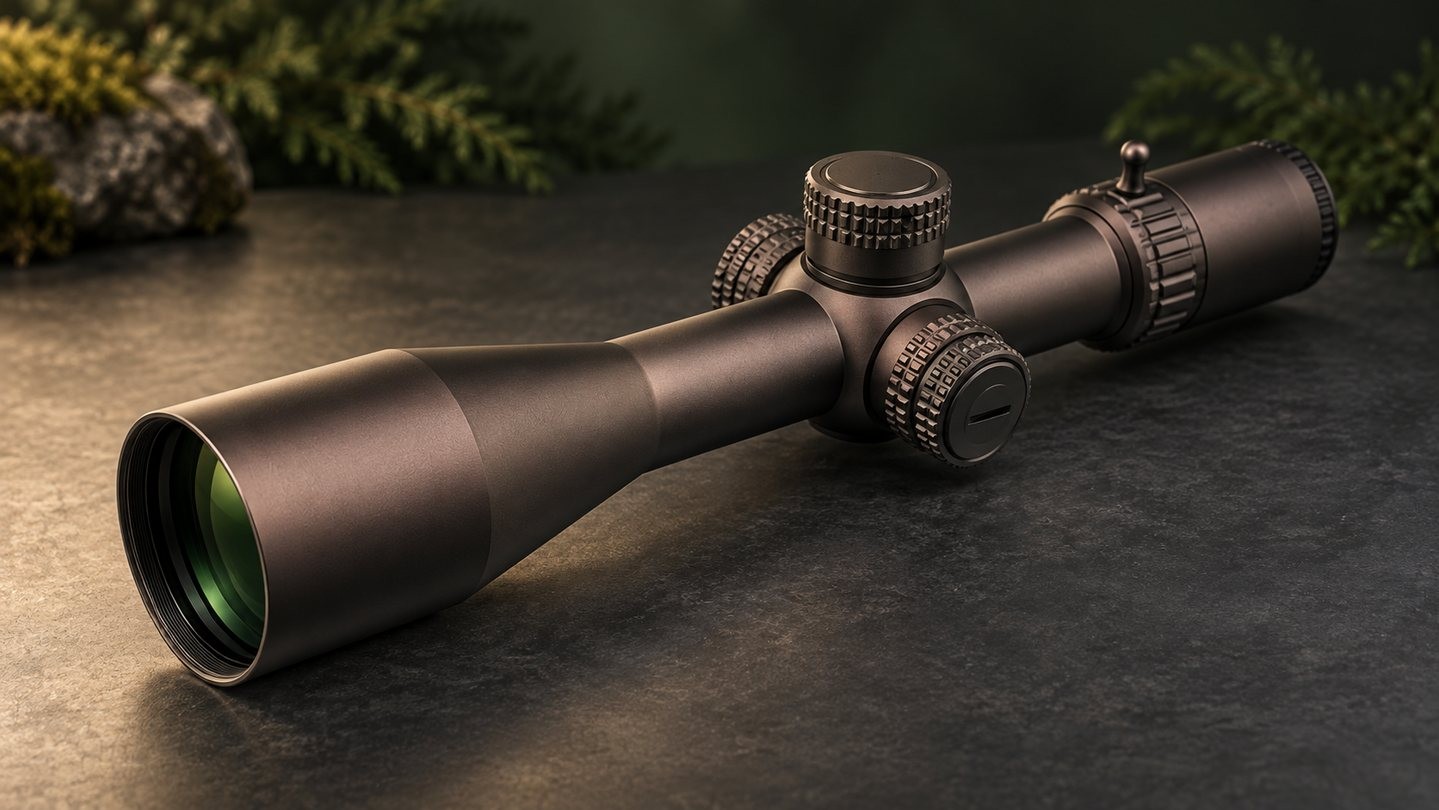
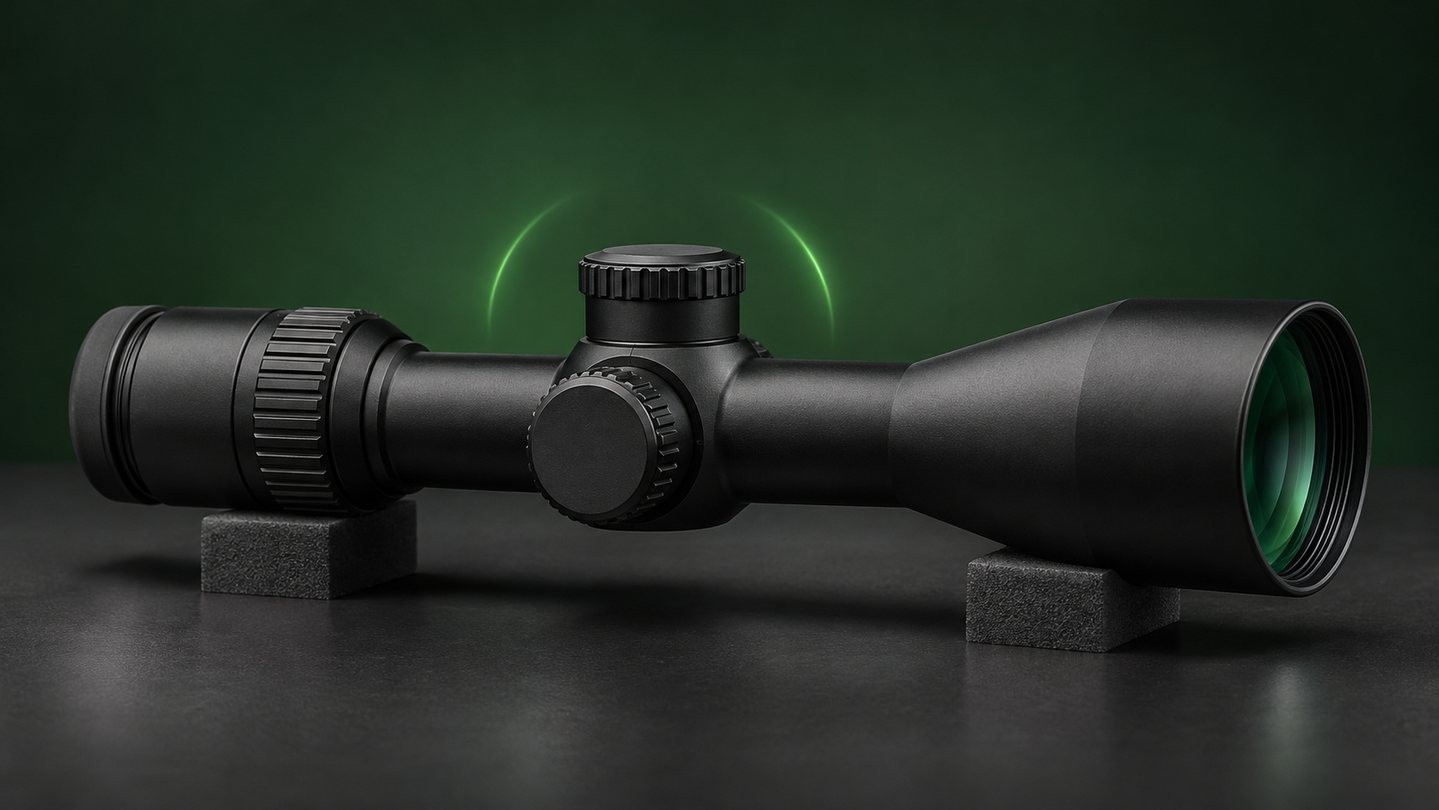
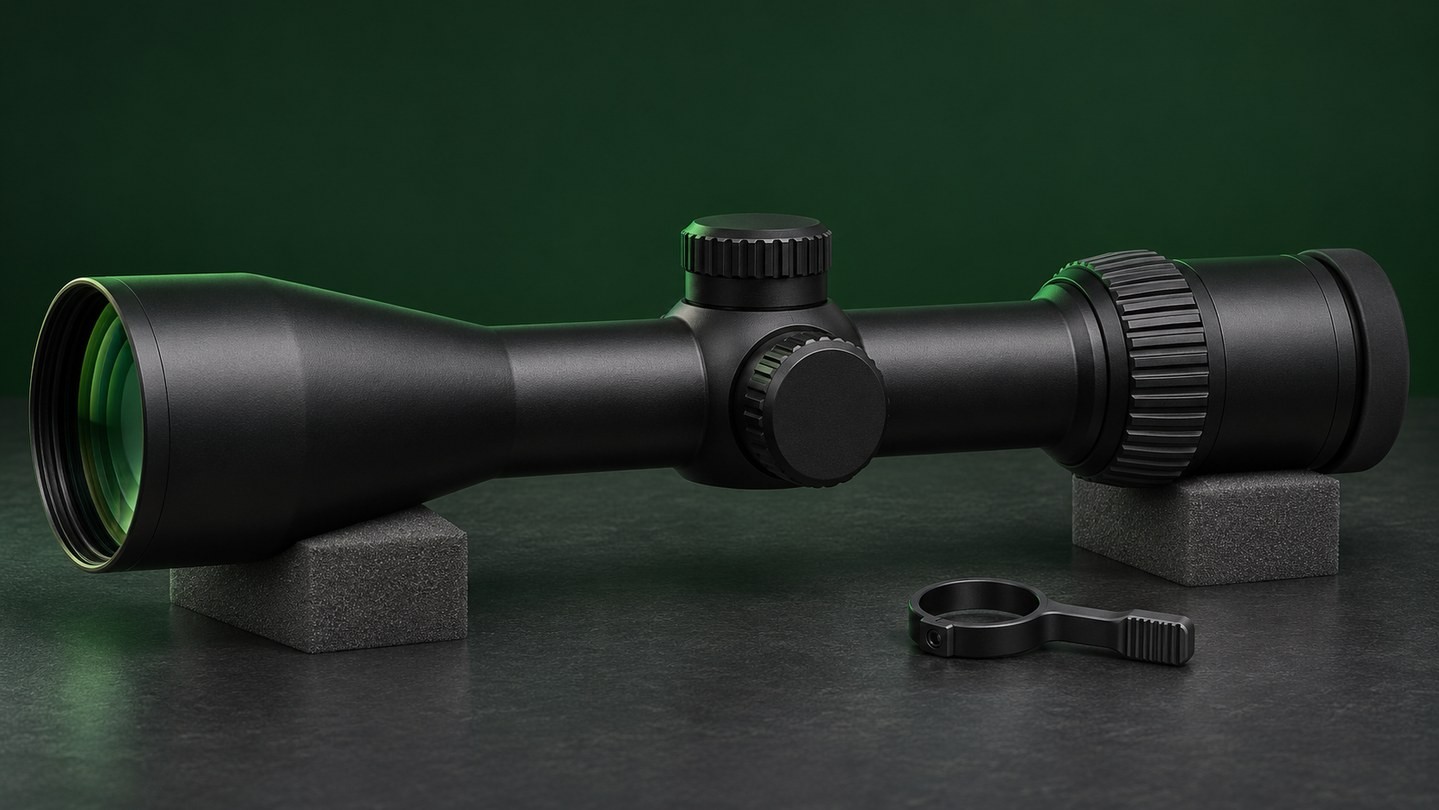
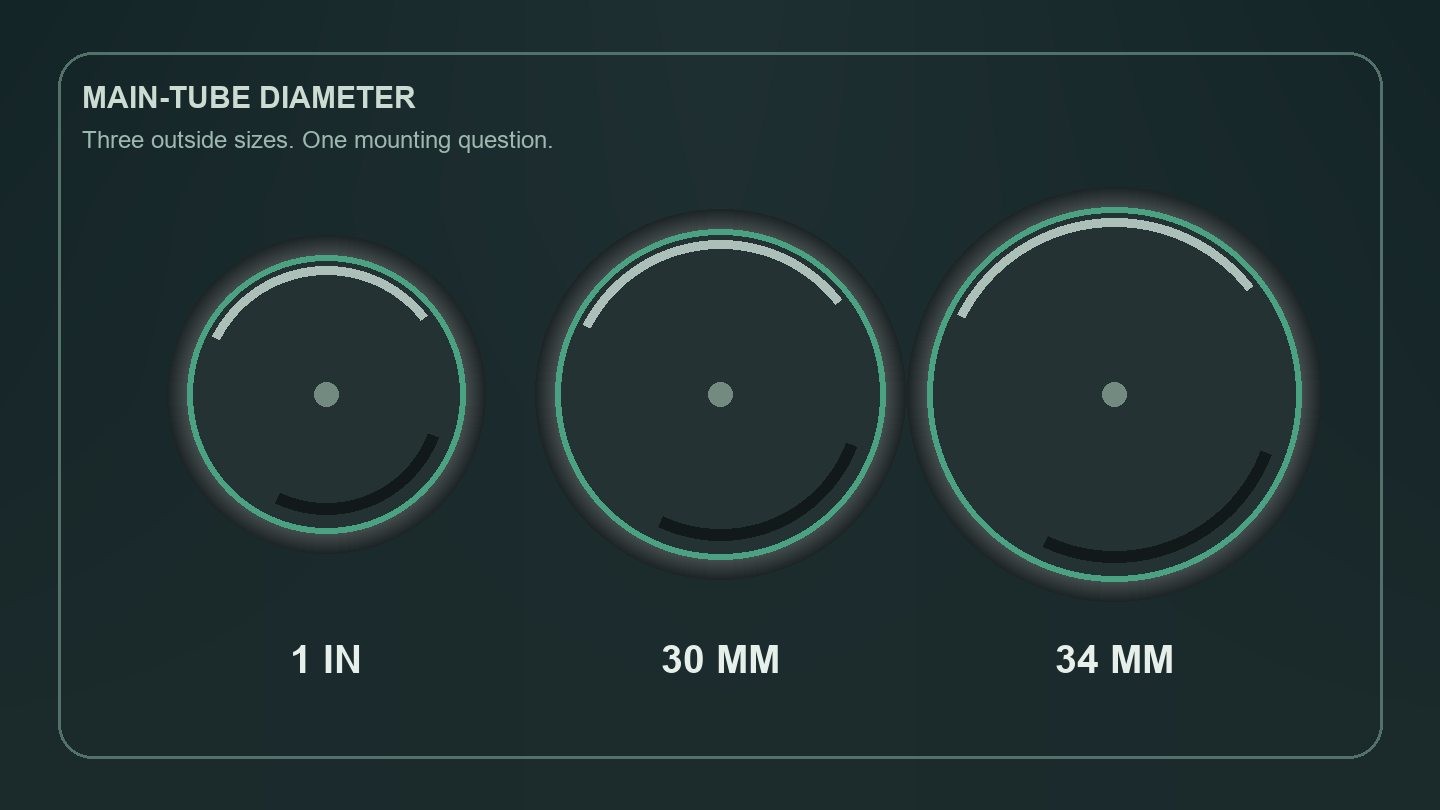
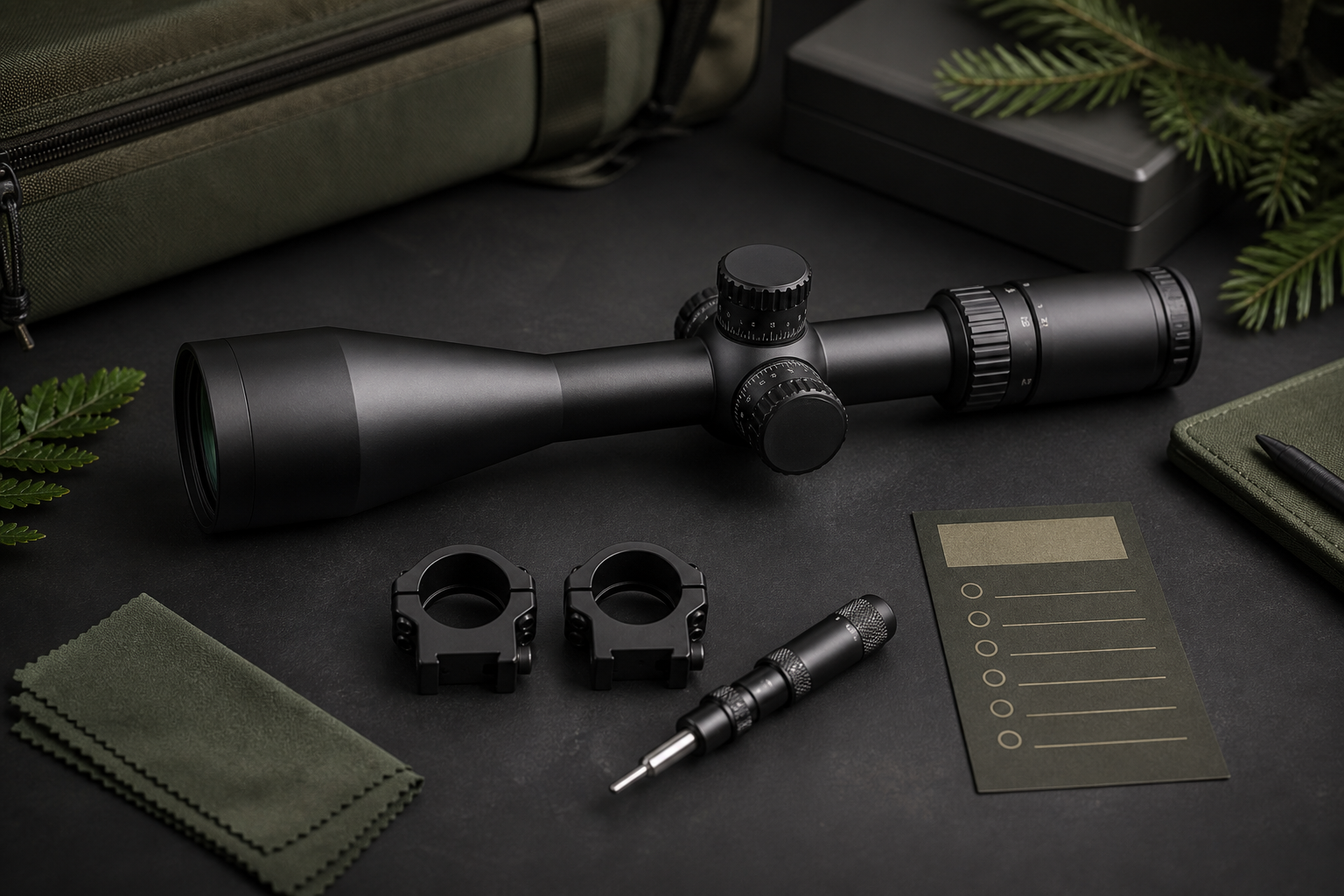
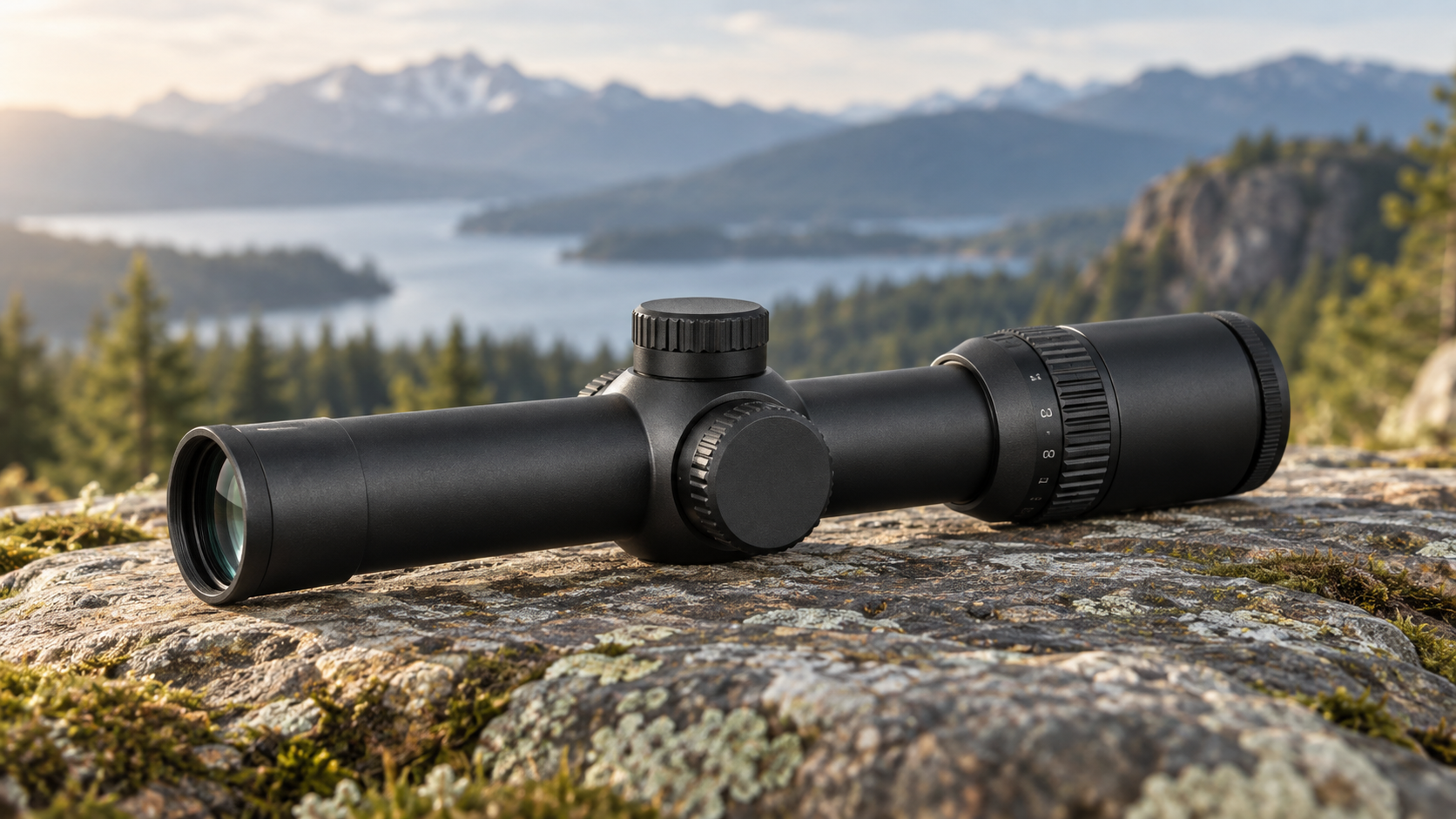
The main tube is the straight central section of a riflescope, between the eyepiece and objective bell. Its diameter is usually listed separately from magnification and objective size. Common specifications are 1 inch (25.4mm), 30mm, and 34mm.
For example, the 40 in a 3–9×40 label refers to the nominal objective-lens diameter in millimeters—not the main tube. A 3–9×40 scope could have a 1-inch or 30mm main tube; you need to check that model's full specification. If the model name is unfamiliar, start with our guide to rifle scope numbers.
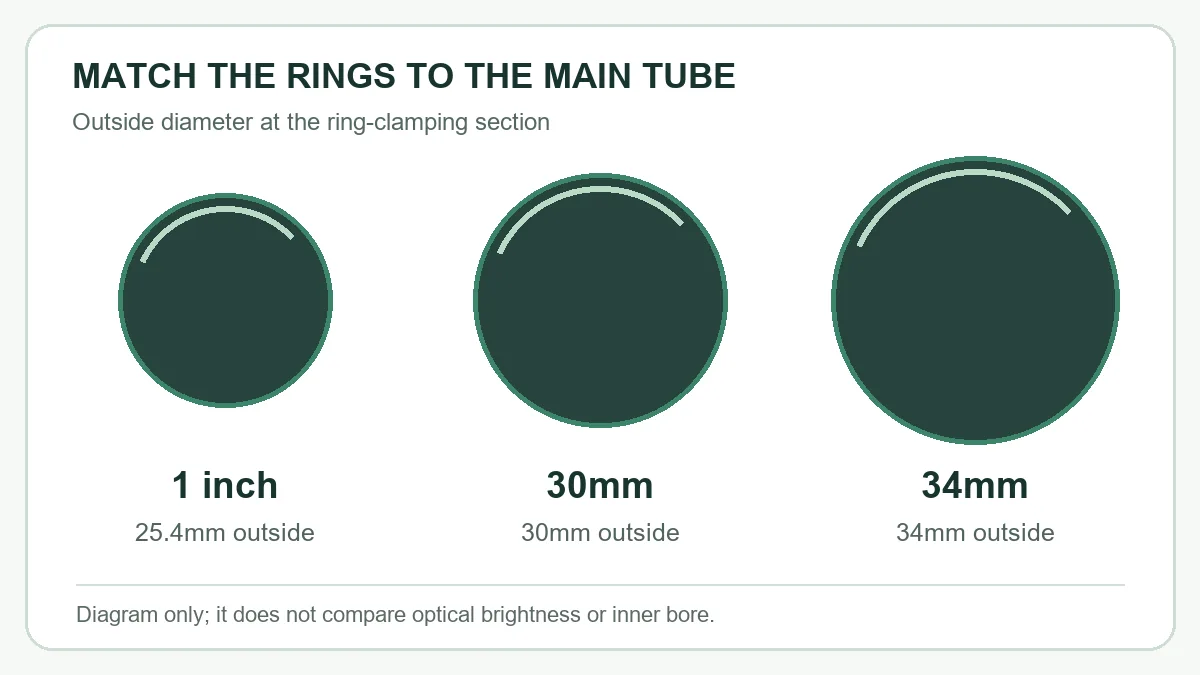
Outside diameters shown to scale. Illustration only; not an internal-bore or optical-performance comparison.
The difference that matters right away: ring fit
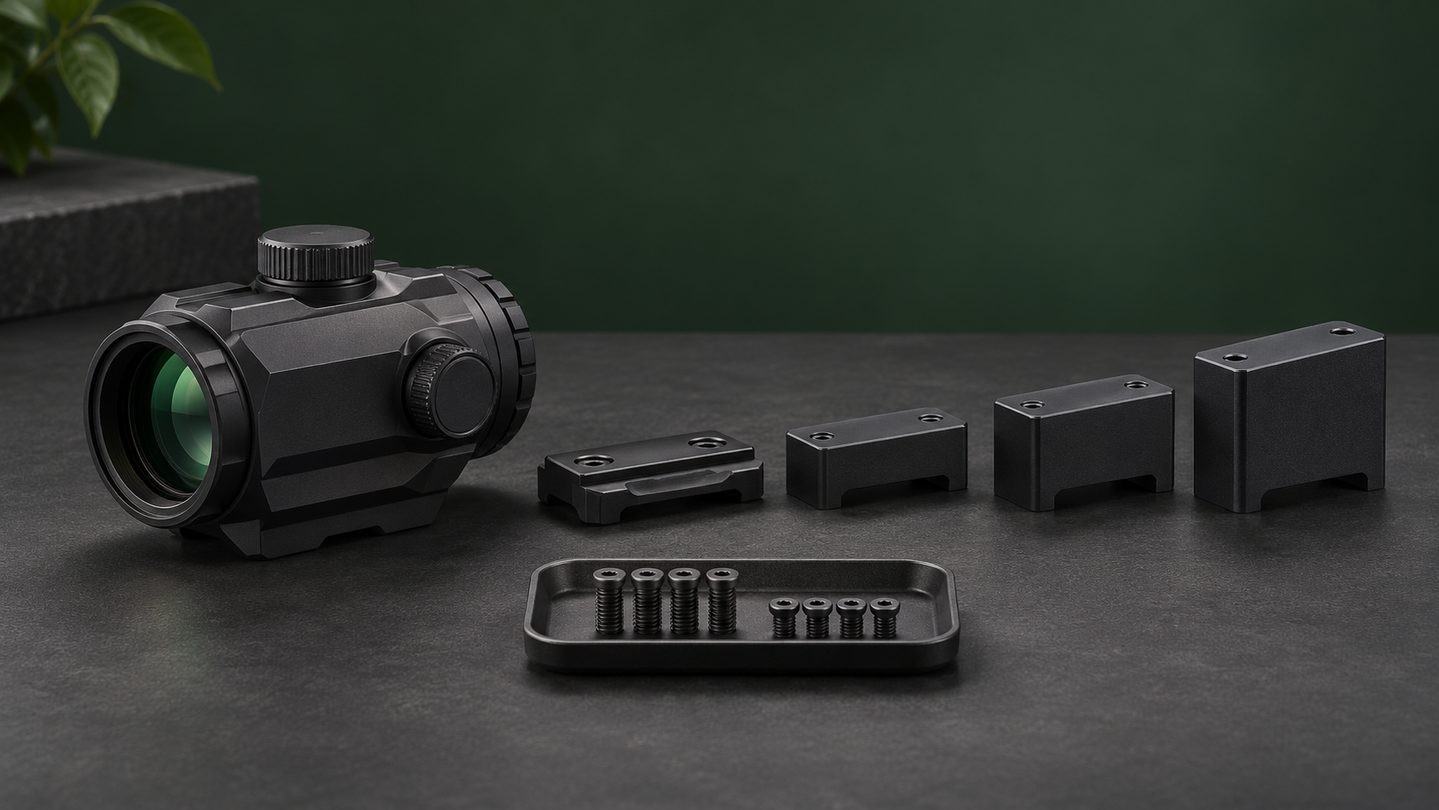
Scope rings must match the main-tube diameter. A 30mm ring is not a substitute for a 1-inch ring, and a 34mm tube needs 34mm rings. Do not rely on tightening an oversized ring harder or forcing an undersized one around the scope. Check the ring manufacturer's fit instructions before buying.
Diameter is only one mounting choice. You also need the right ring or mount height for the scope's objective housing and the rest of your setup. A larger objective bell may need more clearance, but tube diameter alone does not tell you which height to buy. Check the actual outside dimensions and mounting guidance for the specific scope and mount.
Does a larger tube make the image brighter?
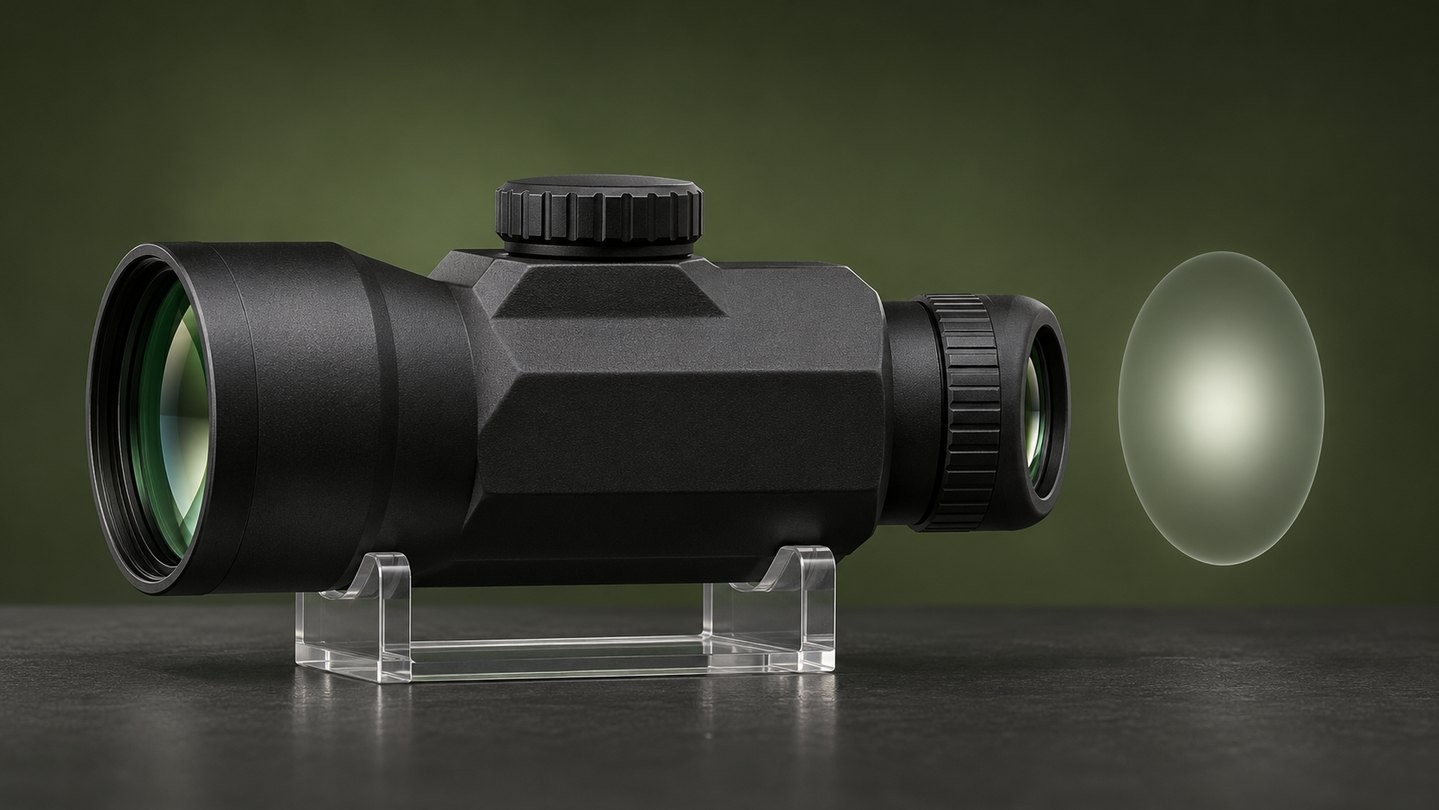
No—not as a rule. The 30mm or 34mm figure measures the main tube's exterior, not the amount of light delivered to your eye. Lens design, coatings, magnification, objective size, and exit pupil all matter to the view you see. A well-designed 1-inch scope can look better in low light than a poorly designed larger-tube scope.
This is an easy mix-up because “bigger” sounds like “more light.” It is better to compare the actual optics than infer brightness from tube size. Our exit-pupil explainer covers one of the other numbers people often confuse with brightness.
What about adjustment travel and field of view?
A wider main tube can give the designer more internal space for the erector system and adjustments. That is design potential, not a promise. A 34mm scope does not automatically offer more usable elevation than every 30mm scope. Look up the published elevation and windage adjustment ranges for the exact models you are comparing—and check whether the number is total travel or available travel from your zero.
Field of view is another separate specification. Do not assume a 34mm scope shows a wider scene simply because its tube is wider. Compare the FOV figures at the same magnification and reference distance. We explain that comparison in our field-of-view guide.
So which size should a beginner choose?
Start with the scope that fits your use and budget, then match the mount to it. If two suitable models differ in tube size, compare these points rather than ranking the diameters on their own:
- Mount compatibility. Can you get correctly sized rings or a mount for your setup?
- Objective clearance and viewing position. Will the chosen mount height work with the actual scope dimensions and give you a comfortable view?
- Adjustment range. Does the published travel of this specific model meet your needs?
- The view itself. Compare image quality, eye relief, and field of view as separate characteristics.
- Overall size and cost. Check the finished scope and mounting system, not only one diameter on the spec sheet.
There is nothing inherently “beginner” about 1 inch or automatically “professional” about 34mm. The better choice is the complete scope-and-mount combination that fits the job. For a broader starting point, browse our Optics Buying Guides.


Leave a comment