You turn a scope up from 3× to 9×. The distant sign is easier to inspect, but the fence posts beside it disappear from the picture. Nothing has moved. You are simply seeing a narrower slice of the scene. That slice is the scope's field of view, or FOV.
Field of view is easy to overlook when two scopes have similar magnification ranges. It also explains why the most powerful setting is not always the most useful one.
What does “field of view at 100 yards” mean?
A riflescope's field of view is the width of the scene visible through it at a stated distance. In US specifications, you will often see it written as feet at 100 yards. If a spec sheet says 30 ft at 100 yd, it means the view spans roughly 30 feet across at a point 100 yards away. It does not mean the scope can see only 100 yards, or that it can resolve every detail within that width.
Other spec sheets use metres at 100 metres. The idea is the same, but the numbers are not directly comparable until you put them in the same units and at the same reference distance. Also check which magnification setting the figure belongs to. A variable-power scope may list one field of view at its lowest setting and another at its highest.
If the 3–9×40 label itself is still a mystery, our guide to rifle scope numbers explains the magnification range and objective diameter. Field of view is a separate specification; it is not encoded in the “40.”
Why does the view get narrower as you zoom in?
Increasing magnification makes an object occupy more of the image. The trade-off is that less of the surrounding scene fits into it. On the same variable scope, the low end normally gives you the broadest view; the high end gives you a closer look at a smaller area.
That is useful to remember when you are finding something in a busy landscape. Starting at lower power makes it easier to locate and follow a subject. Once you know where to look, you can turn up the magnification if the extra detail helps. More power is a tool, not a setting you have to use all the time. Our beginner's magnification guide looks at that decision in more detail.
There is a second nuance: magnification alone does not tell you the exact field of view of two different scopes. Optical design matters. Compare the published FOV figures at the same power and reference distance, rather than assuming that every scope marked 1–6×24 shows precisely the same width at 1× or 6×.
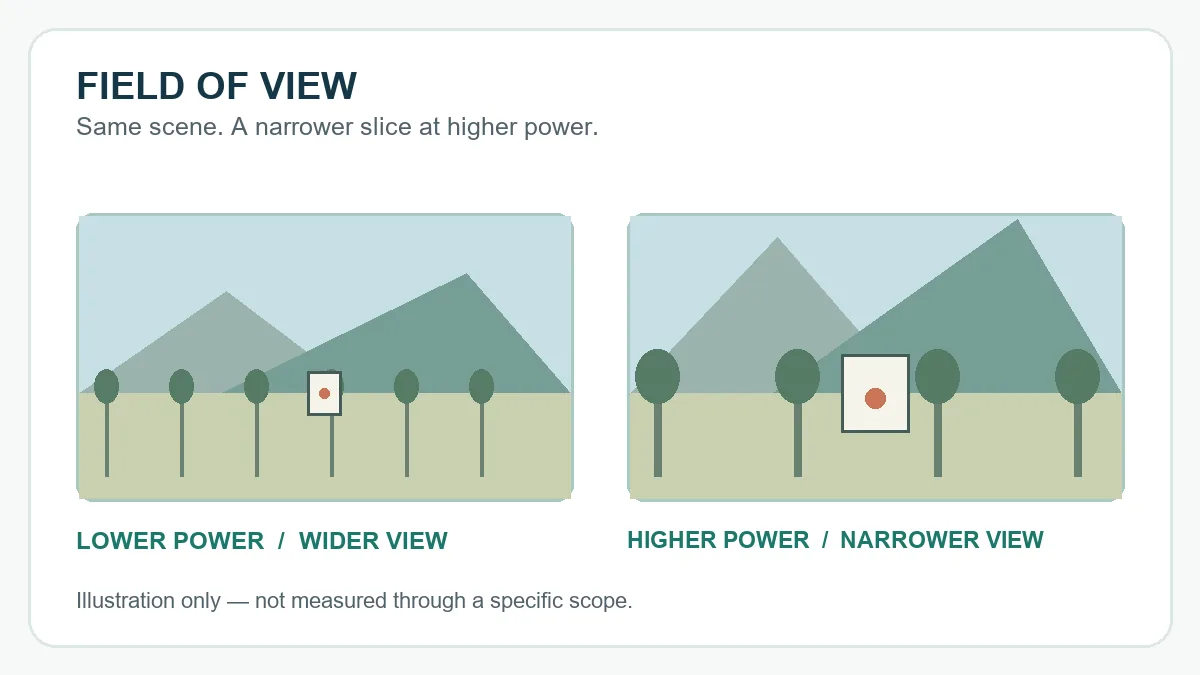
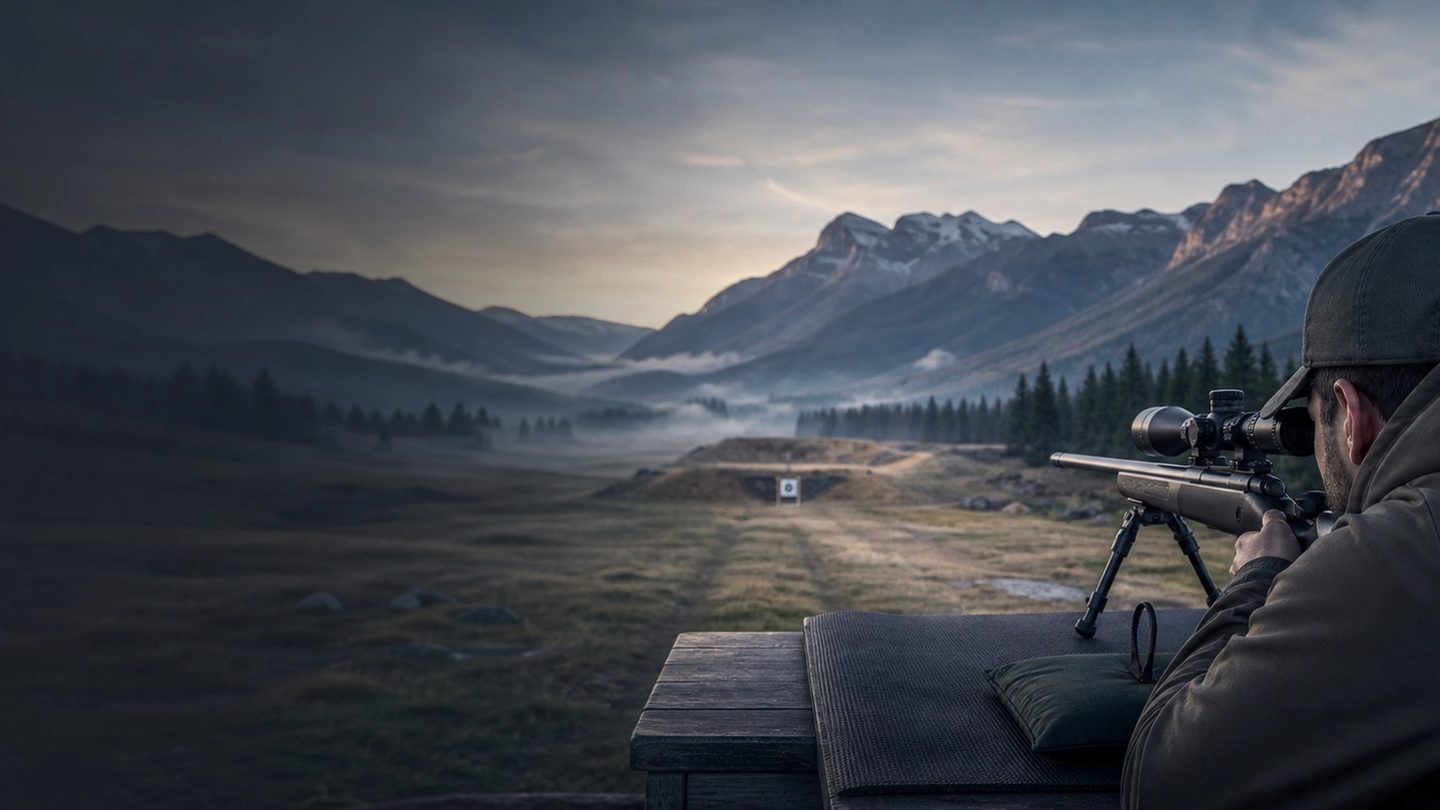
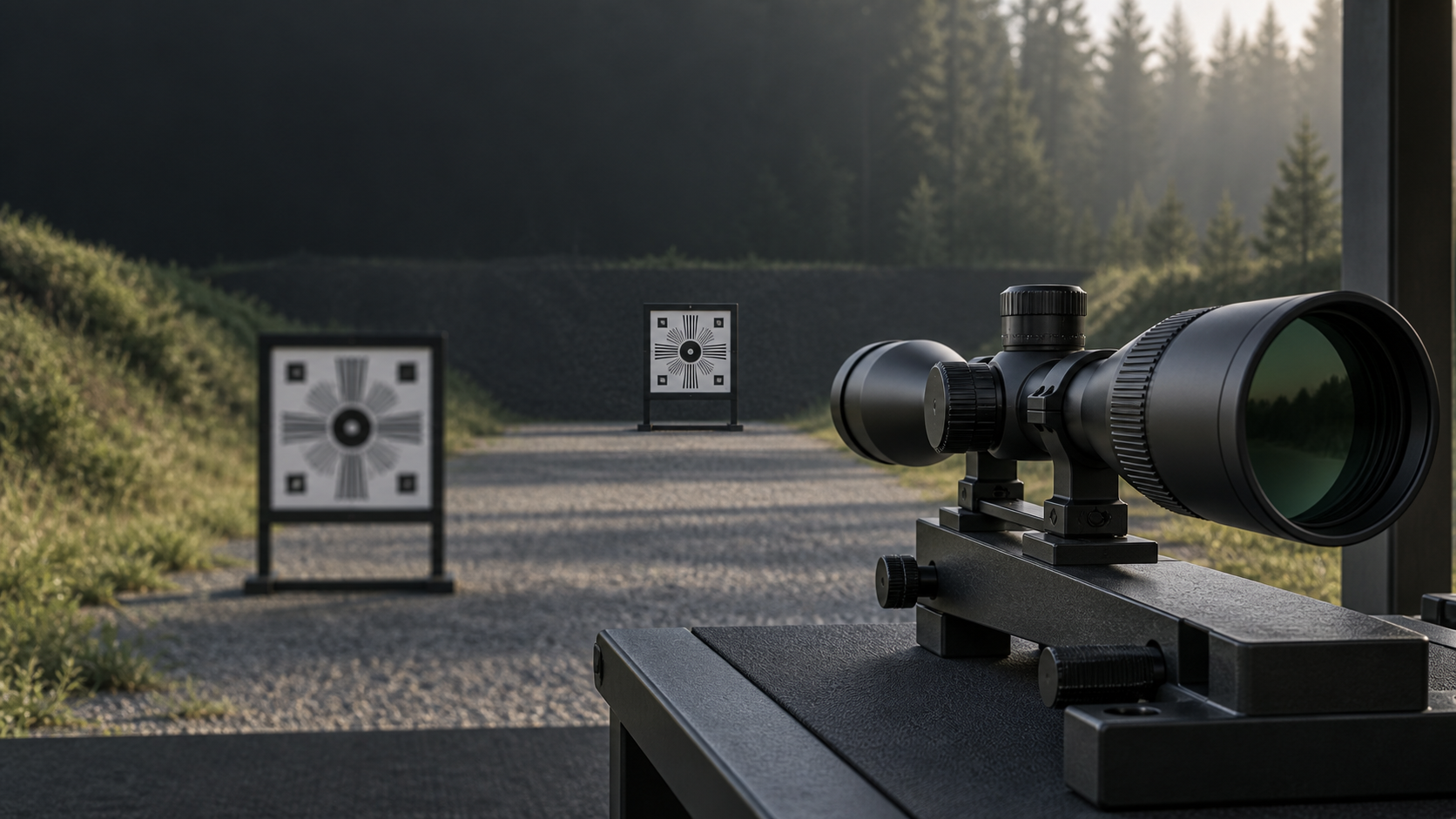
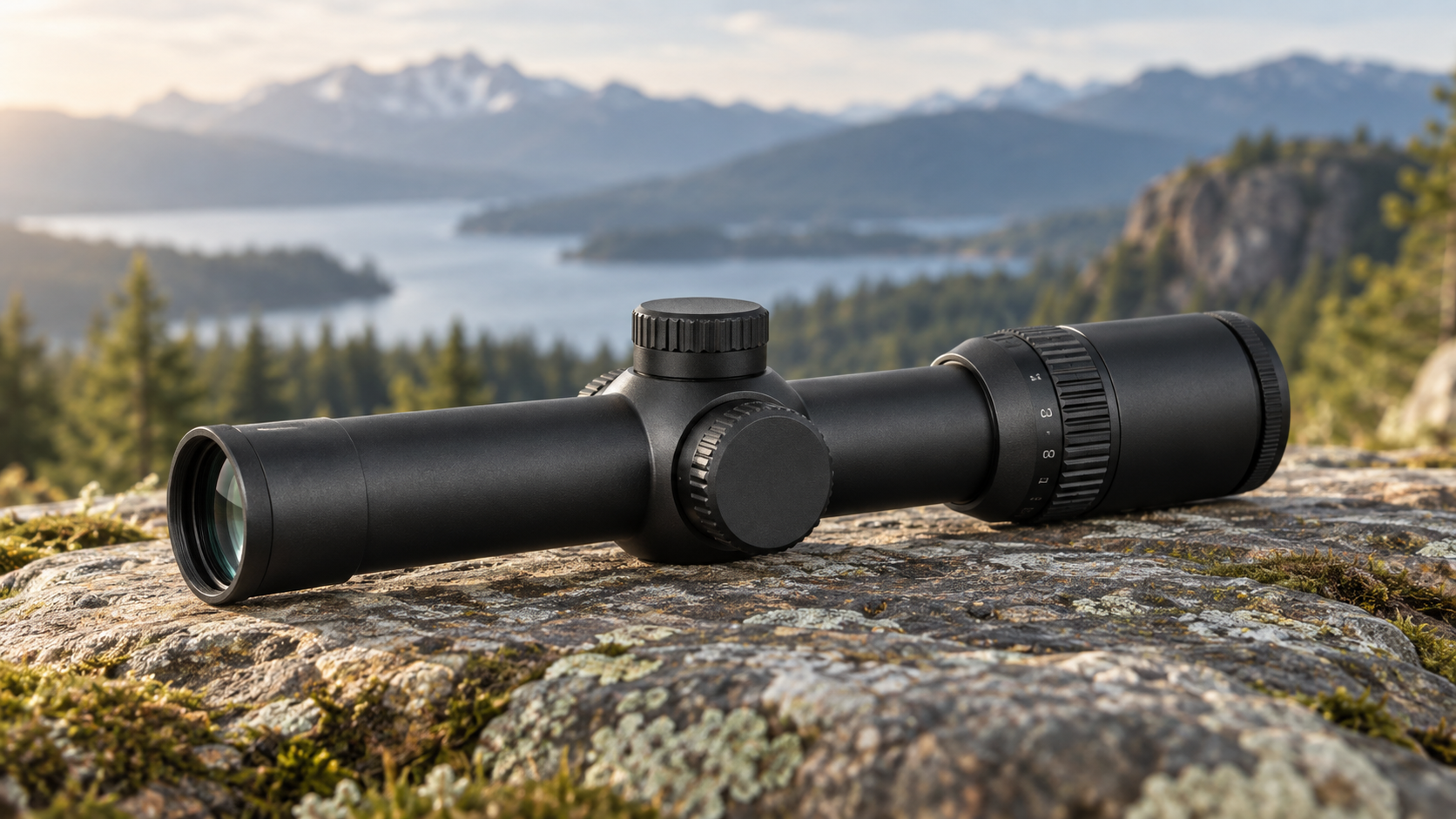
Illustration only; not a field-of-view measurement from a specific scope.
A narrow field of view is not the same as a black ring
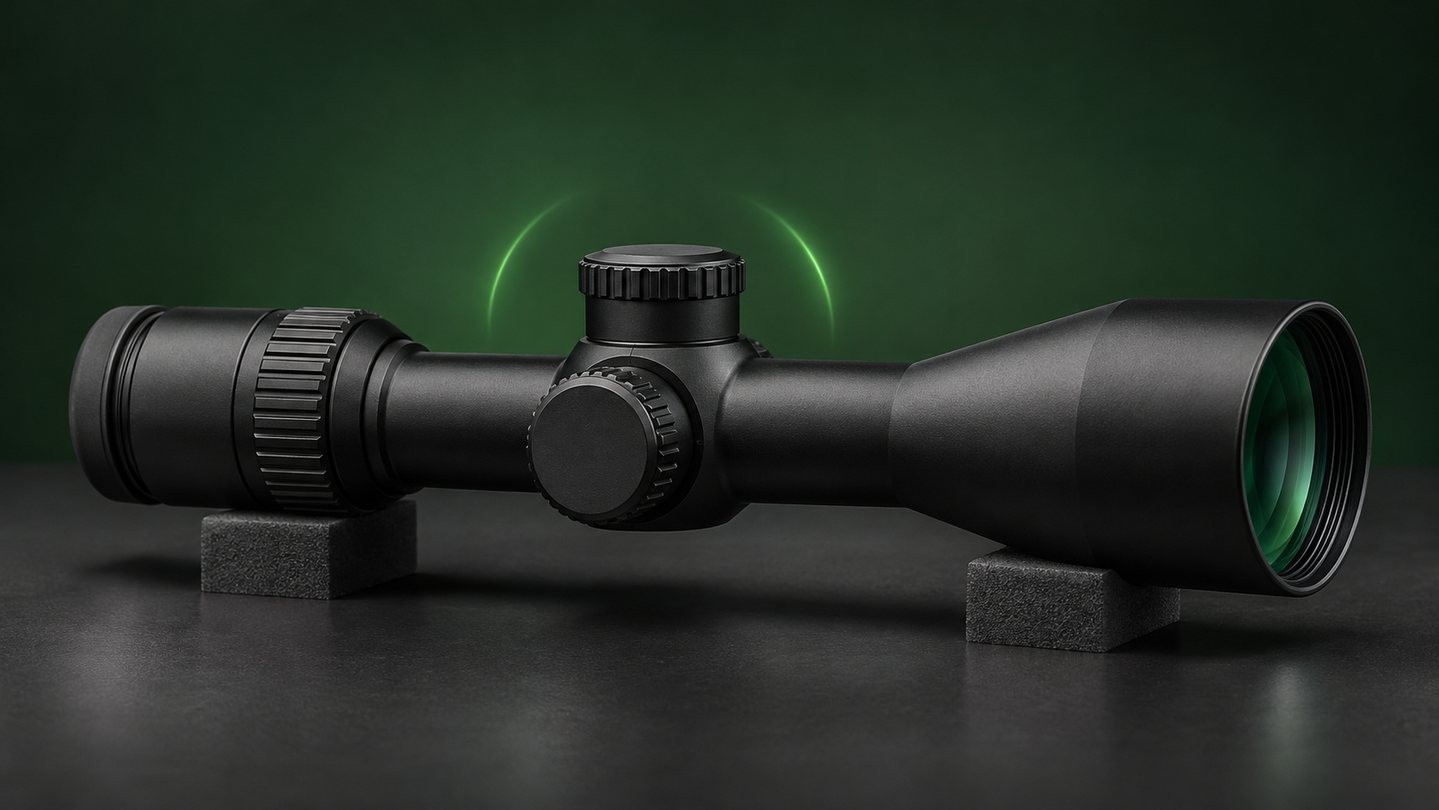
At higher power, the scene can feel tighter even when your eye is perfectly positioned. That is normal field-of-view behavior. A dark ring or crescent that cuts into the picture is different: it often means your eye is too close, too far away, or off-center behind the scope.
Moving your eye to recover the full circular image will not turn a 9× view into a 3× view. It simply lets you see the field of view the scope is already providing at that setting. If the edge of the picture goes black, see our eye relief and black-ring guide. Eye relief and eye-box comfort deserve their own checks when comparing scopes.
How to compare FOV figures without getting lost
When two scopes are on your shortlist, use this small check:
- Match the reference distance and units. Do not compare feet at 100 yards with metres at 100 metres as if the numbers were interchangeable.
- Match the magnification setting. Low-end FOV tells you about the broadest view; high-end FOV tells you about the most zoomed-in view. Comparing 1× on one scope with 3× on another answers a different question.
- Consider the view you actually use. A wider specification can be helpful, but it does not guarantee a clearer image, an easier eye box, or better edge quality. Those are separate qualities to check in the individual optic.
This matters especially with LPVOs. A 1–10× model gives you a higher ceiling than a 1–6×, but that alone tells you little about the view at the low end or how comfortable the top end feels. Our 1–6× vs 1–8× vs 1–10× comparison covers those broader trade-offs.
The practical takeaway
Field of view tells you how much of the scene fits in the image, not how far a scope can see. Lower power usually helps you find and follow what you are looking at; higher power helps you inspect a smaller part of it. Read the FOV numbers at matching settings, then treat eye position and image quality as separate questions.
For more plain-English help with the specifications around a scope, browse our Buying Guides.


Leave a comment