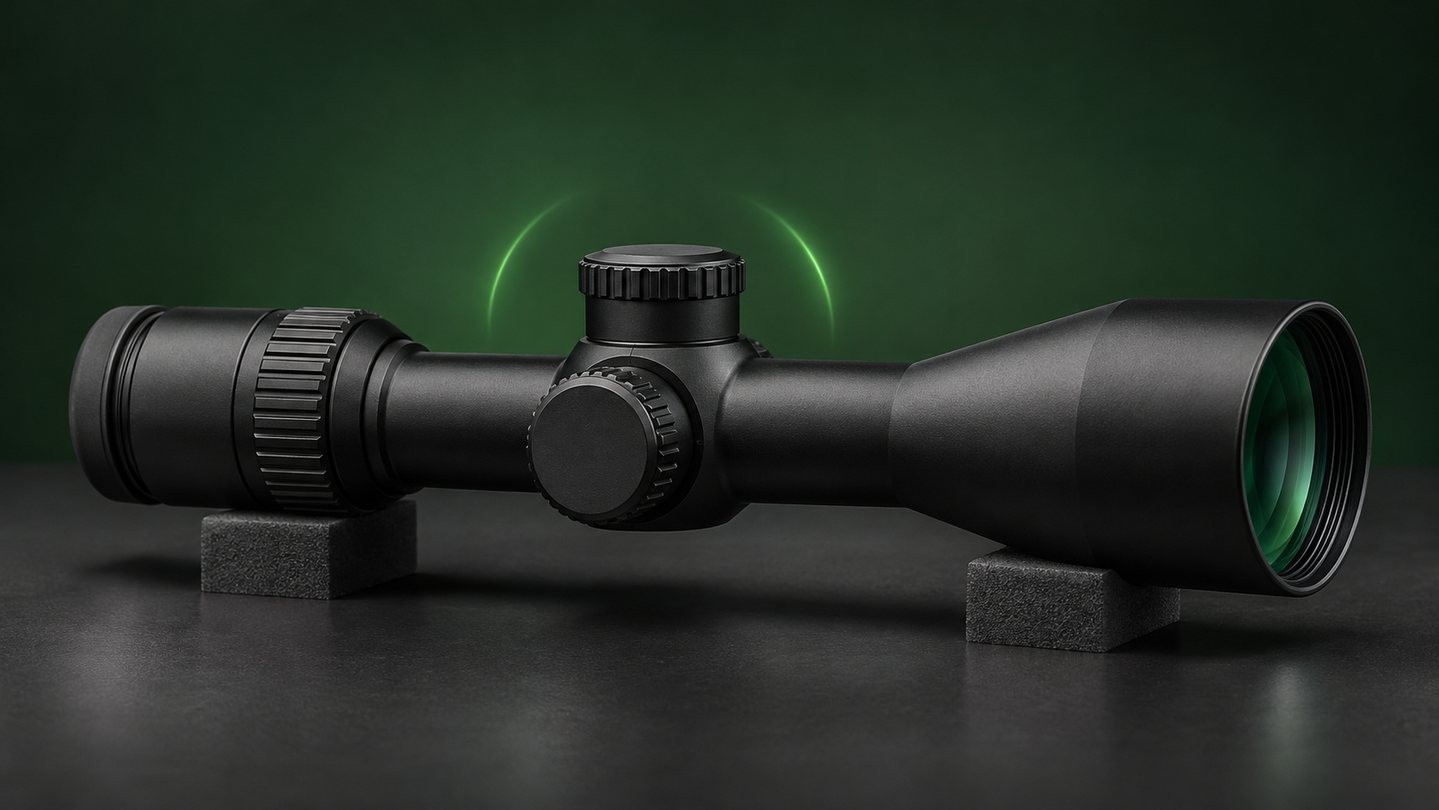
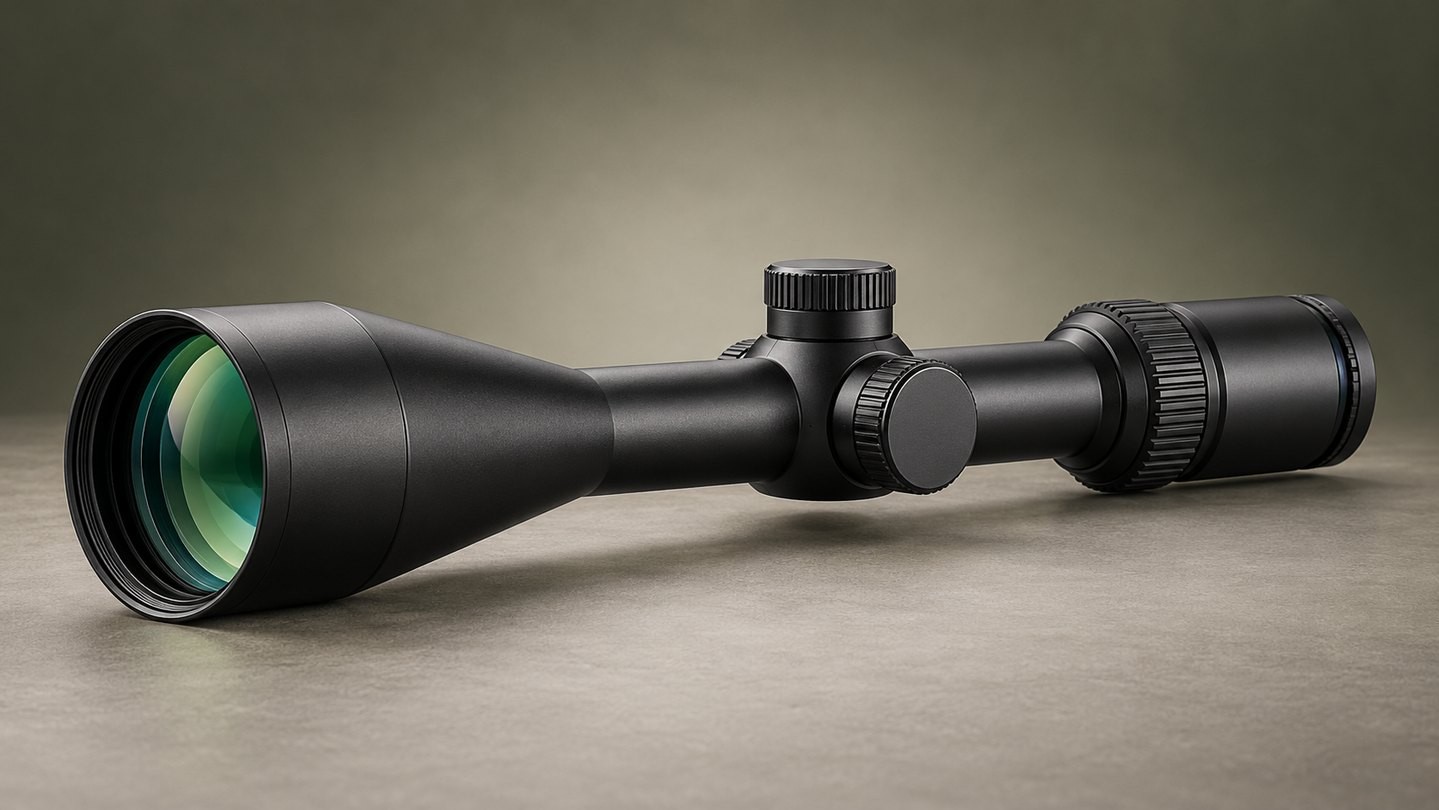
Pick up a rifle scope and the two ends are easy to tell apart. The larger bell normally faces the target; the smaller rear assembly sits closest to your eye. What each end actually does is less obvious.
The front is not a simple “brightness lens,” and the rear is not a standalone “magnification lens.” A scope forms the image as one optical system. Understanding the jobs of the objective, internal lens groups and eyepiece makes specifications easier to read—and makes common setup problems much easier to diagnose.
Which End Is Which?
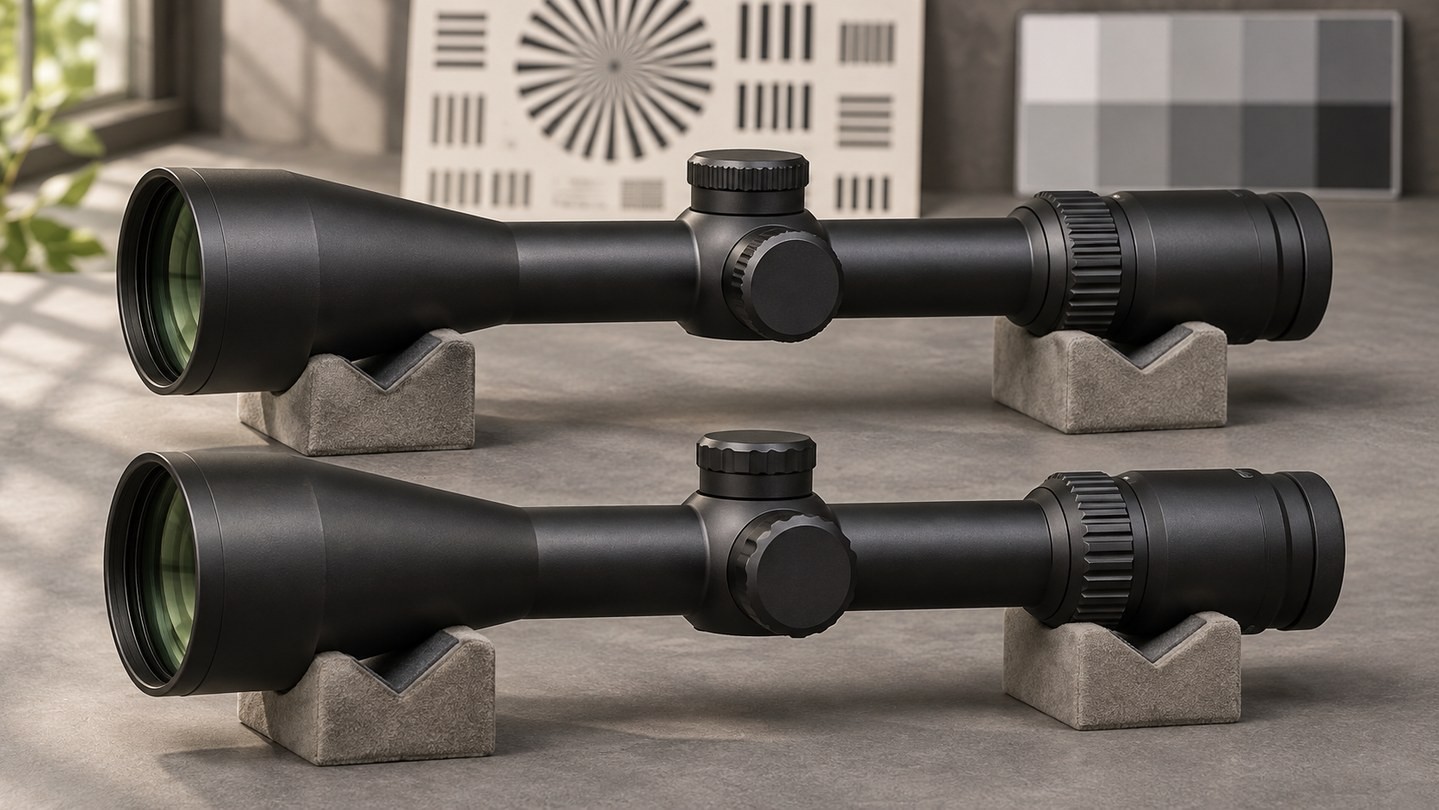
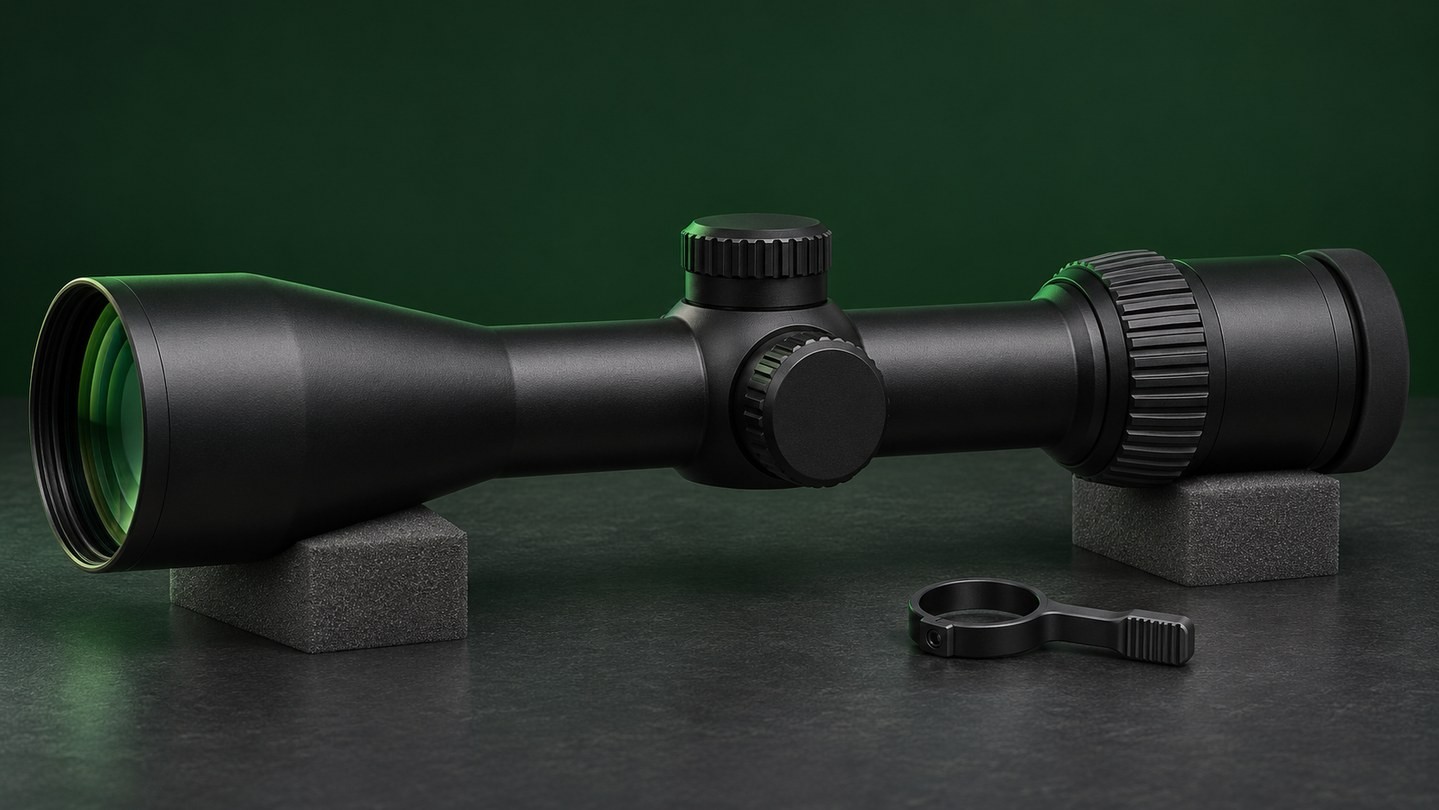
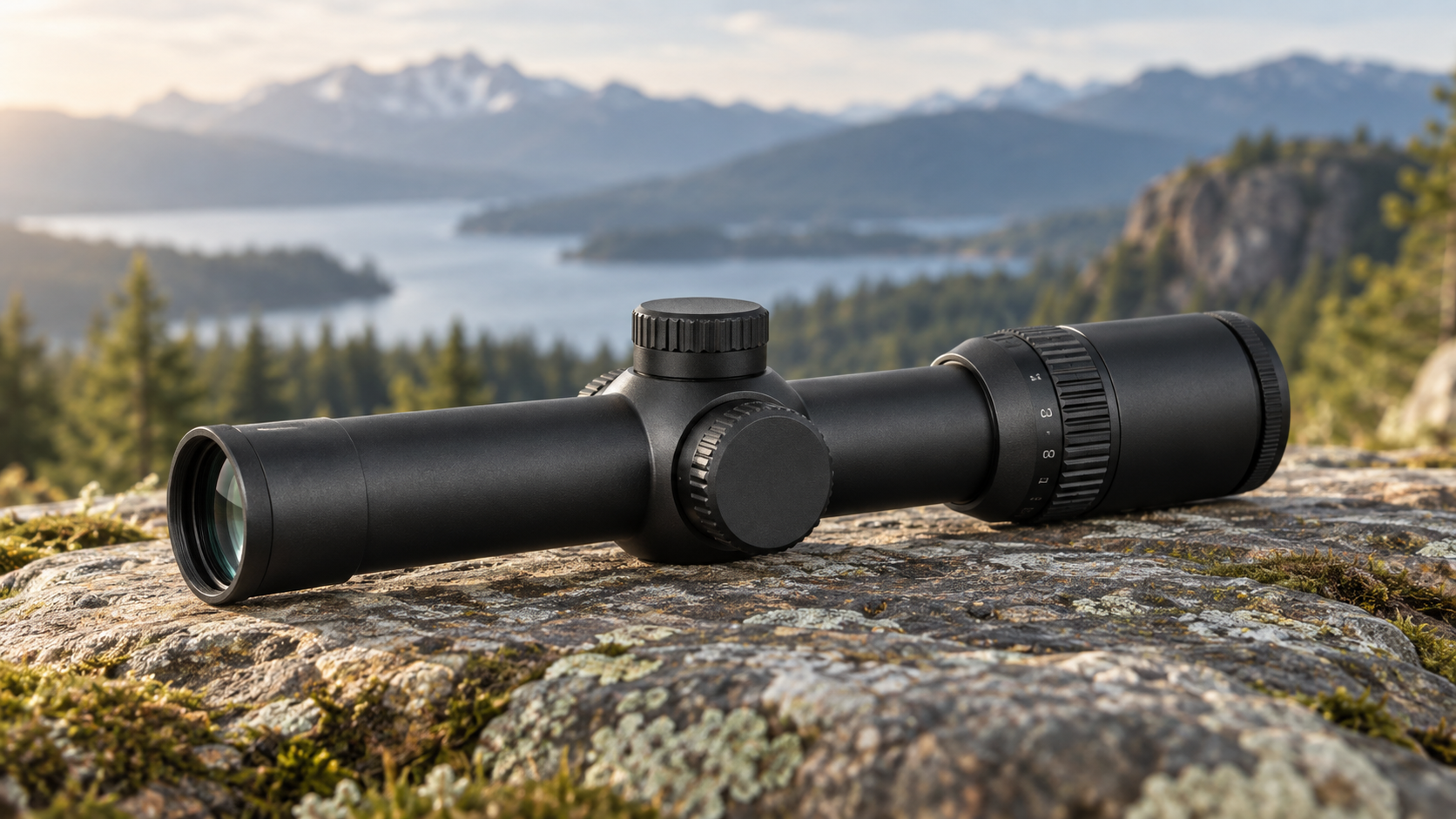
The objective lens is the front lens, nearest the object being viewed. On many hunting and precision scopes, it sits inside a visibly enlarged objective bell. On an LPVO or another compact design, the front may be much closer to the diameter of the main tube.
The ocular lens is the lens nearest your eye. It sits inside the eyepiece at the rear of the scope. Depending on the model, the eyepiece may also include a fast-focus diopter ring, a locking focus system and the power-selector ring immediately in front of it.
These names describe location, not the complete function of the optical system. The guide to rifle-scope numbers explains why a label such as 3–9×40 tells you the magnification range and objective diameter, but not the rear-lens diameter.
What The Objective Lens Actually Does
The objective is the first major lens group to receive light from the scene. It helps form the initial image that the scope's internal erector system then turns upright and magnifies.
A larger objective can support a larger exit pupil at a given magnification, but diameter alone does not guarantee a brighter or clearer view. Glass quality, coatings, internal baffling, optical design, magnification and ambient light all matter. Your eye can only use the light that the complete system delivers and that your pupil can accept.
That is why two scopes with the same objective diameter can still look different, and why a larger front bell may make little visible difference in bright daylight at low power. For a closer comparison of size, mounting and low-light trade-offs, see the guide to 40 mm, 44 mm, 50 mm and 56 mm objectives.
The familiar exit-pupil estimate—objective diameter divided by magnification—is useful for comparison, but it is not a complete image-quality score. Our exit-pupil guide explains both the calculation and its limits.
What The Ocular Lens And Eyepiece Do
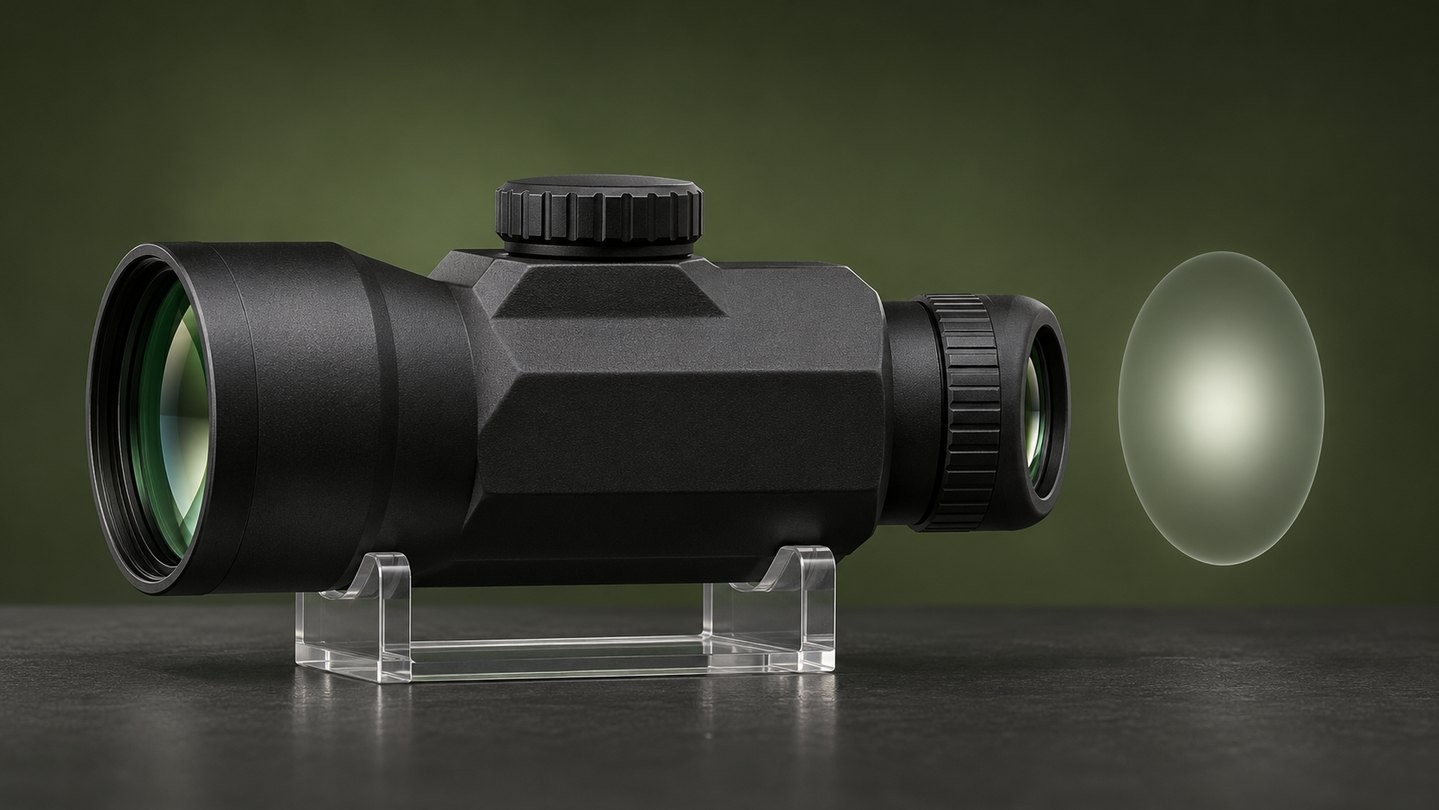
The ocular lens is the final lens nearest your eye. Working with the other lens groups, it presents the magnified, correctly oriented image at a usable viewing distance. The surrounding eyepiece also provides the diopter adjustment used to make the reticle look sharp for your eyesight.
This makes the rear assembly important for several parts of the viewing experience:
- how the finished image is presented to your eye;
- the designed eye-relief distance;
- the apparent field and edge behavior of the view;
- reticle focus through the diopter system;
- the physical clearance around the eyepiece and power ring.
Eye relief is measured from the eyepiece to the position where your eye receives the full image. It is not the distance from the objective, the main tube or the turret. If you see a dark ring because your head is too close or too far away, the eye-relief and black-ring guide covers the correct fore-and-aft check.
Why The Rear Lens Is Not “The Magnification Lens”
It is tempting to assign one job to each visible end: the objective gathers light and the ocular magnifies it. That shortcut is too simple for a modern variable-power scope.
Magnification comes from the relationship among multiple optical groups. The objective forms an image, the internal erector and zoom system changes image scale and orientation, and the ocular presents the result to your eye. Turning the power selector changes the internal zoom group; it does not simply move or reshape the rear glass.
This also explains why comparing ocular diameters by eye does not tell you which scope has more magnification, a larger field of view or a more forgiving eye box. Those are complete-system characteristics that should be checked in the specification sheet and, when possible, through actual use.
Diopter, Target Focus And Parallax Are Different Adjustments
The eyepiece diopter is for the reticle. Set it so the reticle appears crisp as soon as you look through the scope, using the manufacturer's procedure. It is not a general target-focus control.
Target focus and parallax are handled elsewhere. A scope may have a side-focus knob, an adjustable objective or a factory-set parallax distance. Turning the diopter repeatedly to sharpen targets at different ranges can leave the reticle incorrectly focused and make the setup inconsistent.
The focus, diopter and parallax guide separates these controls step by step. Always follow the instructions for the exact model because the recommended starting magnification and adjustment direction can differ.
How Each End Changes Fit And Setup
The objective end usually drives front clearance. A larger bell may require taller rings so it clears the rail, barrel contour and lens cap. The outside diameter of the bell—not merely the advertised objective-lens number—is the dimension that matters for physical clearance.
The ocular end affects rear clearance and head position. Check that the eyepiece, diopter ring and power selector do not interfere with the mount, receiver or other controls. Then establish eye relief in your normal position before fully tightening the rings.
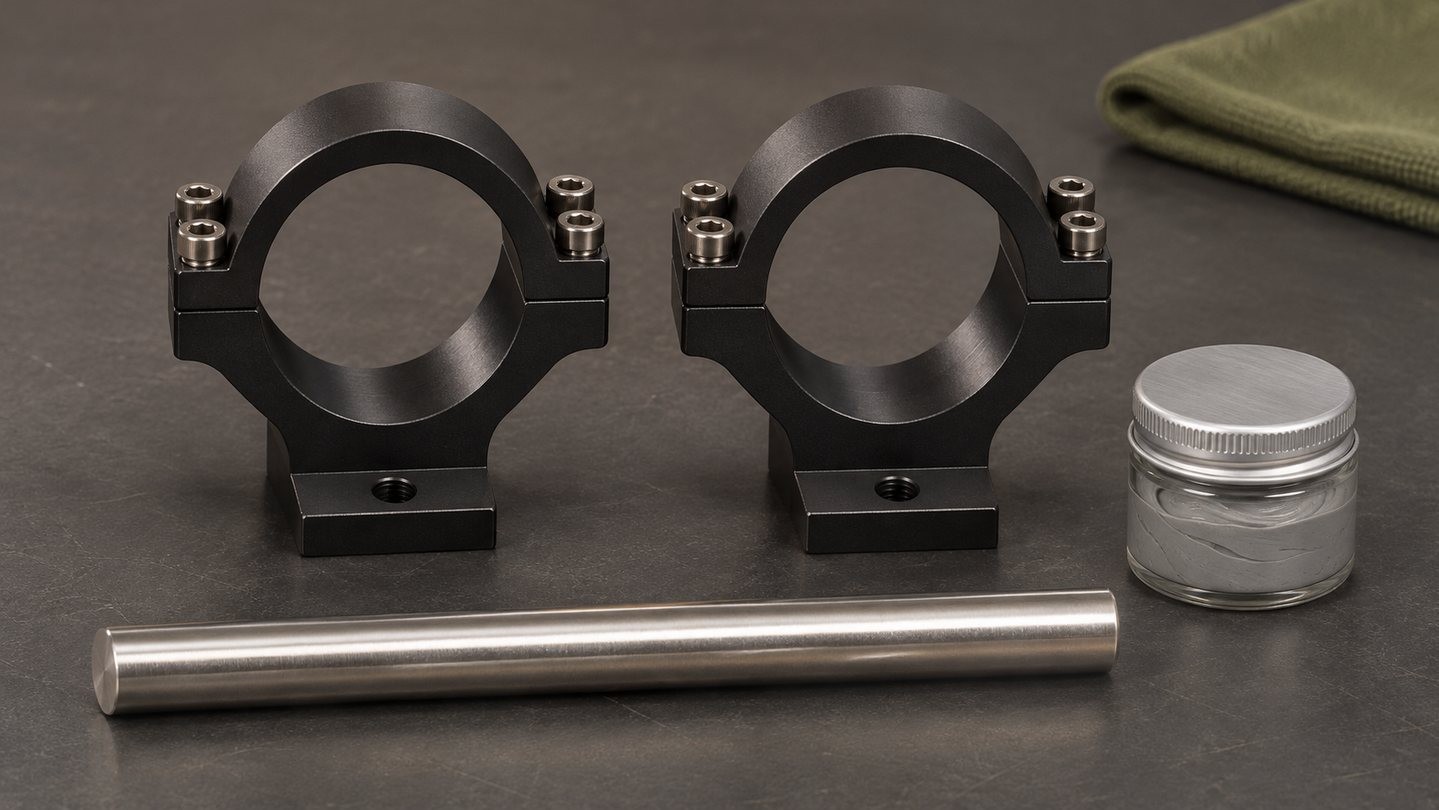
Do not use the ocular housing or objective bell as a ring-clamping surface unless the manufacturer explicitly designed it for that purpose. Scope rings normally clamp the straight main-tube sections. Main-tube diameter is a mounting specification, not the same thing as objective or ocular diameter.
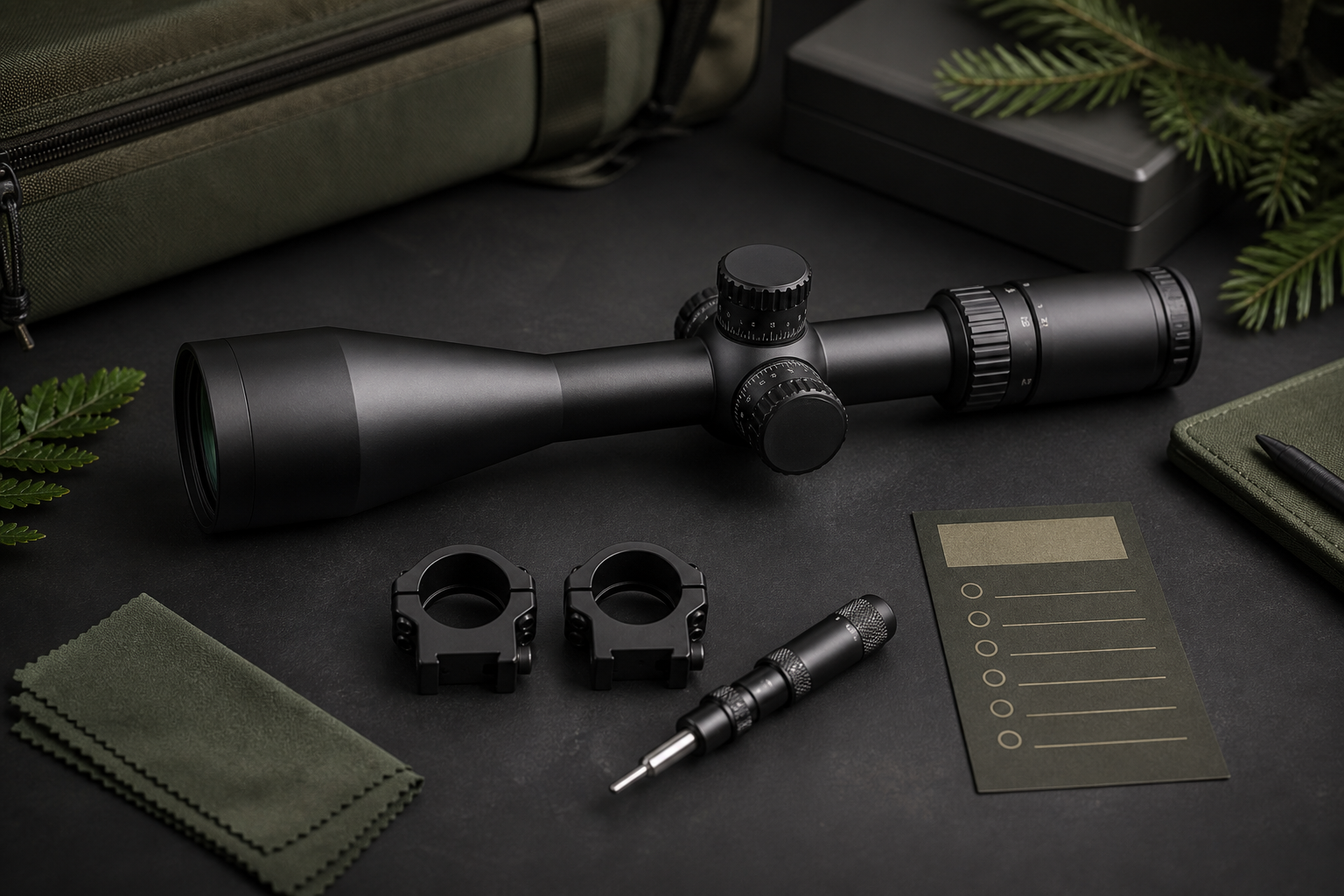
If you are planning ring height, use the scope ring-height guide and measure the actual outside dimensions of the installed parts, including caps.
A Quick Troubleshooting Guide
When the view does not look right, the location of the symptom can suggest what to check first:
- Reticle is blurry while the background looks acceptable: revisit the eyepiece diopter procedure.
- A black ring or crescent appears: check eye relief and eye position before blaming either lens.
- The full image disappears with small head movement: you are dealing with eye-box tolerance, which is broader than ocular diameter alone. See the rifle-scope eye-box guide.
- The target is soft or the reticle seems to move against it when your eye moves: check target focus and parallax adjustment for that distance.
- The front bell or lens cap touches the rail or barrel: reassess ring height and finished-objective clearance.
- The image seems dim only at high magnification: consider exit pupil, available light and complete optical quality rather than assuming the front or rear lens is defective.
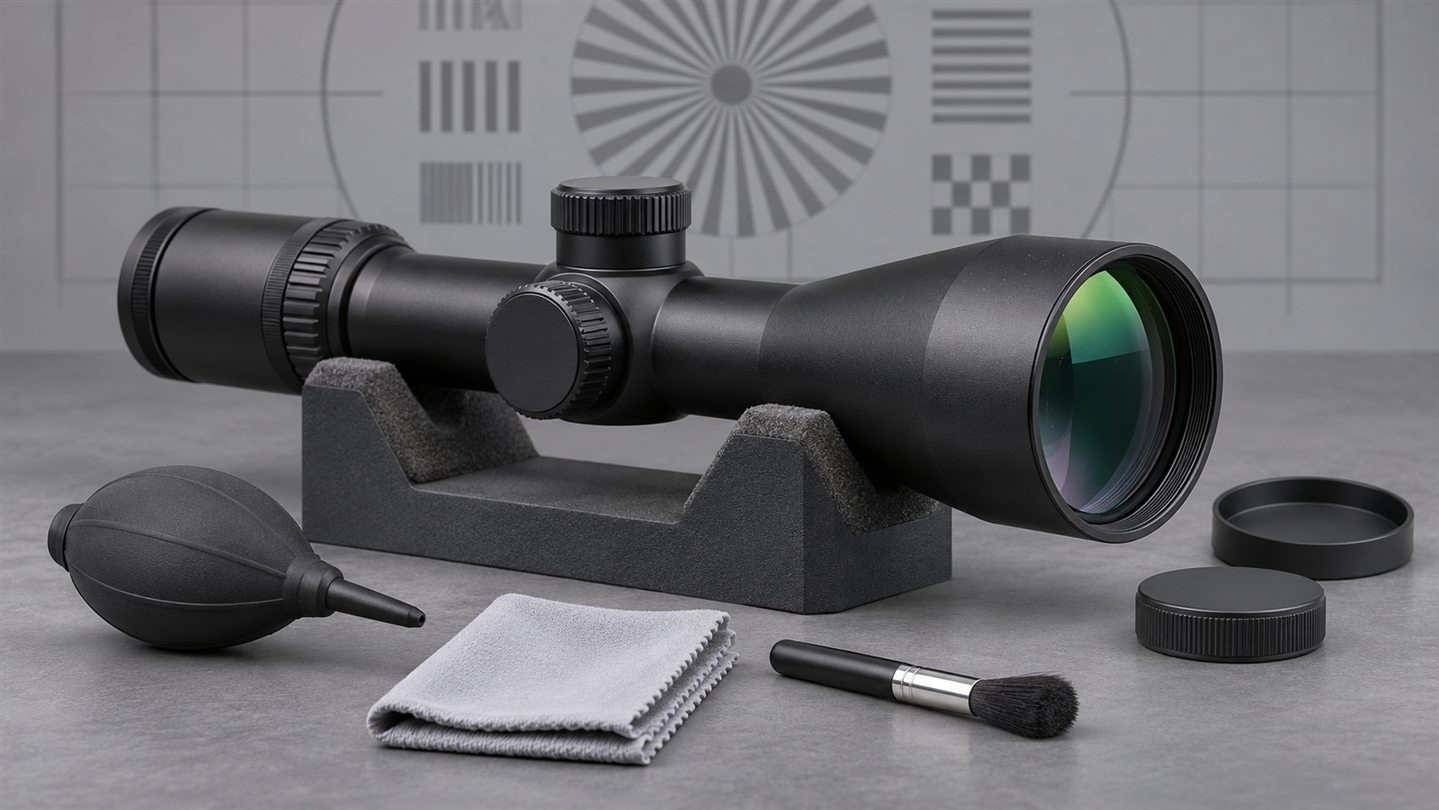
Clean both exposed lenses with the same careful sequence: remove loose particles first, then use suitable optical-cleaning tools. Do not treat the ocular lens as less delicate because it is smaller or closer to you.
What To Compare Before Buying
Start with the work the complete scope must do, then use individual dimensions to confirm fit:
- Choose a realistic magnification range and field of view.
- Check objective size against low-light needs, weight and mounting clearance.
- Check eye relief across the magnification range.
- Confirm the main-tube diameter matches the rings.
- Look for the eyepiece and power-ring dimensions if rear clearance is limited.
- Check whether parallax is fixed, side-adjustable or adjusted at the objective.
- Treat lens diameter, coatings and transmission claims as parts of one optical system—not independent guarantees.
The objective lens begins the image-forming path; the ocular lens delivers the finished view to your eye. Neither end works alone. Once you separate their roles from the main tube, zoom system, diopter and parallax controls, scope specifications become much easier to compare without relying on the size of one visible lens.
Browse Sporting Optics or continue with the rifle-scope light-transmission guide for a closer look at how the complete optical system affects the view.


Leave a comment