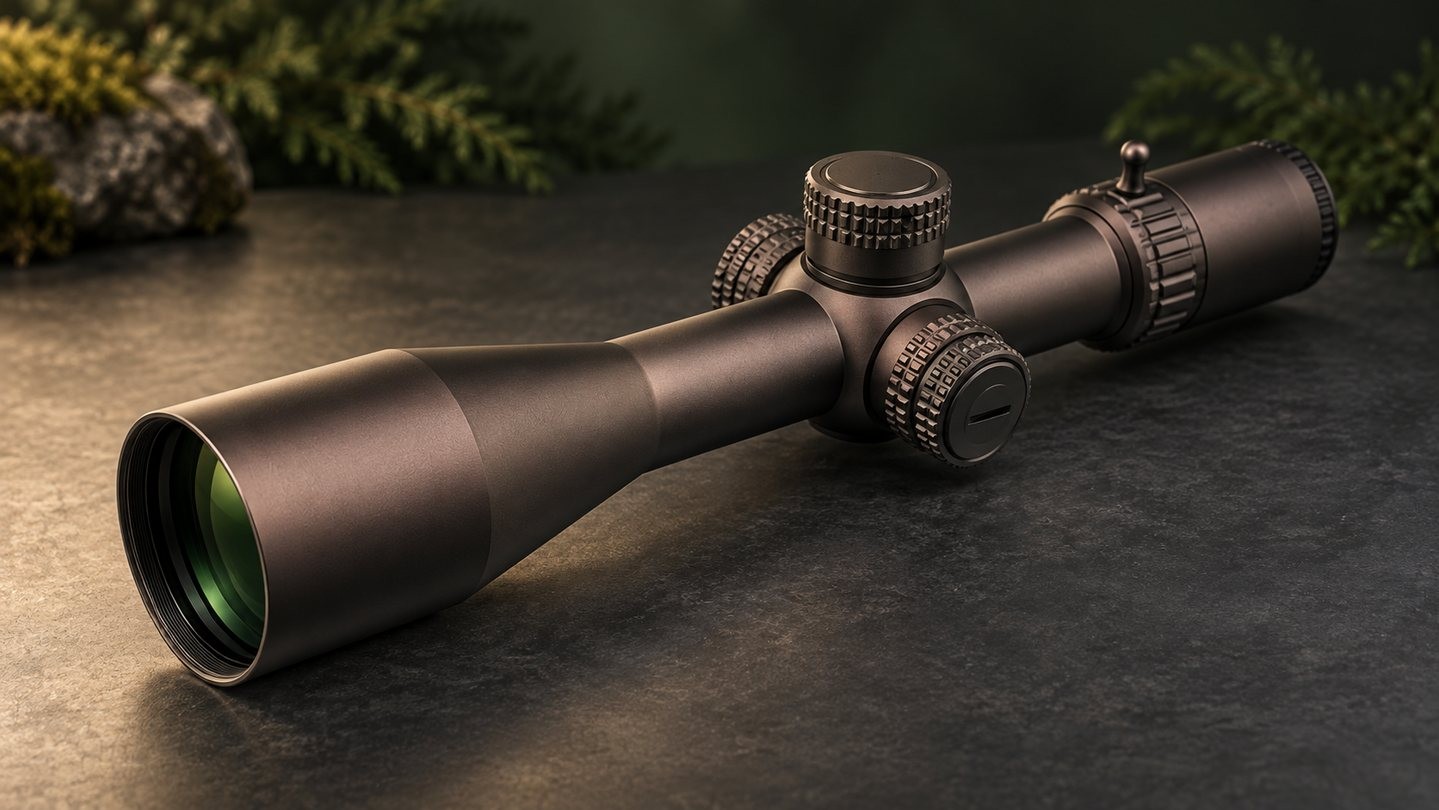
A 56 mm objective looks impressive on a specification sheet, but bigger is not automatically better. The objective diameter affects how much light the scope can accept and the size of the exit pupil available at a given magnification. It also affects the size of the objective bell, mounting height, weight and how the rifle feels in use.
For many setups, a 40 mm or 44 mm scope is the more balanced choice. A 50 mm or 56 mm objective begins to make more sense when higher magnification or low-light use matters enough to justify the extra bulk. The useful question is not “Which number is biggest?” but “What does that diameter change at the magnification I actually use?”
What the objective-lens number means
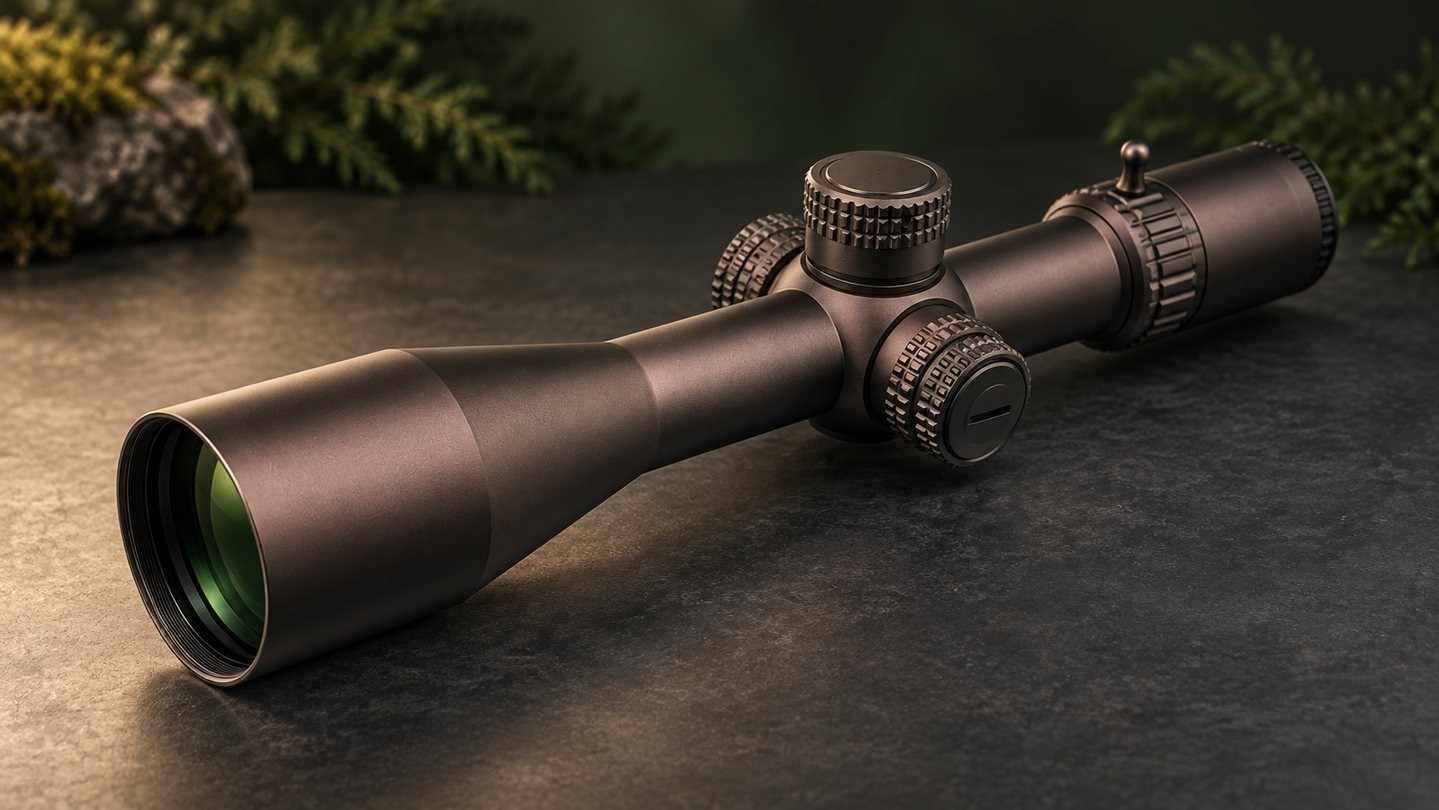
In a scope marked 3–9×40, the final number is the nominal objective-lens diameter in millimetres. It is not the outside diameter of the objective housing. The bell must be larger than the glass, so ring-height and clearance decisions need the scope maker’s outside dimensions rather than the name alone.
The objective diameter is also separate from the main tube diameter. A 30 mm tube does not mean a 30 mm objective, and moving from a 1-inch tube to a 30 mm or 34 mm tube does not automatically make the image brighter. The scope-tube guide explains what that middle section changes.
The connection between objective size and exit pupil
A useful first approximation is:
Exit pupil ≈ objective diameter ÷ magnification
At 10×, the nominal results are easy to compare:
- 40 mm objective: about 4.0 mm
- 44 mm objective: about 4.4 mm
- 50 mm objective: about 5.0 mm
- 56 mm objective: about 5.6 mm
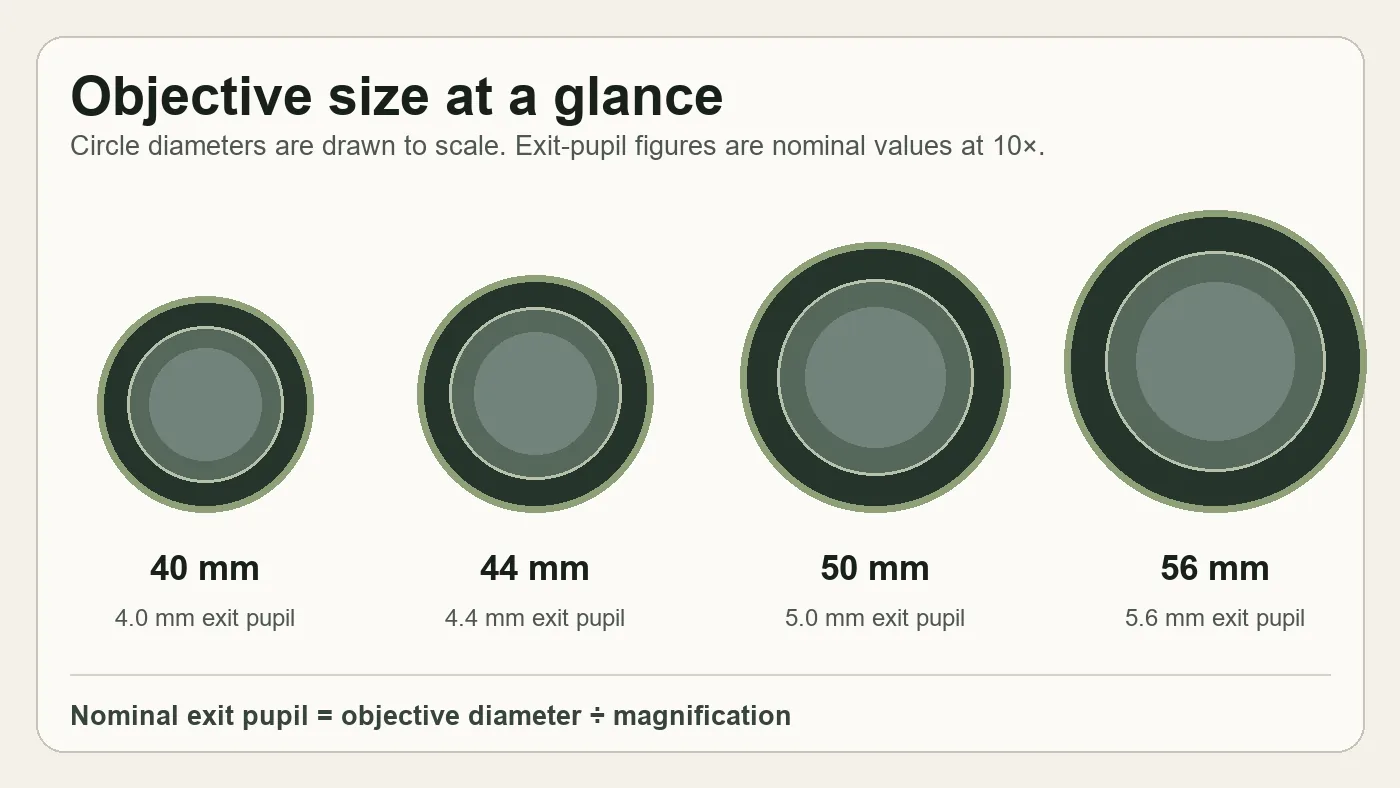
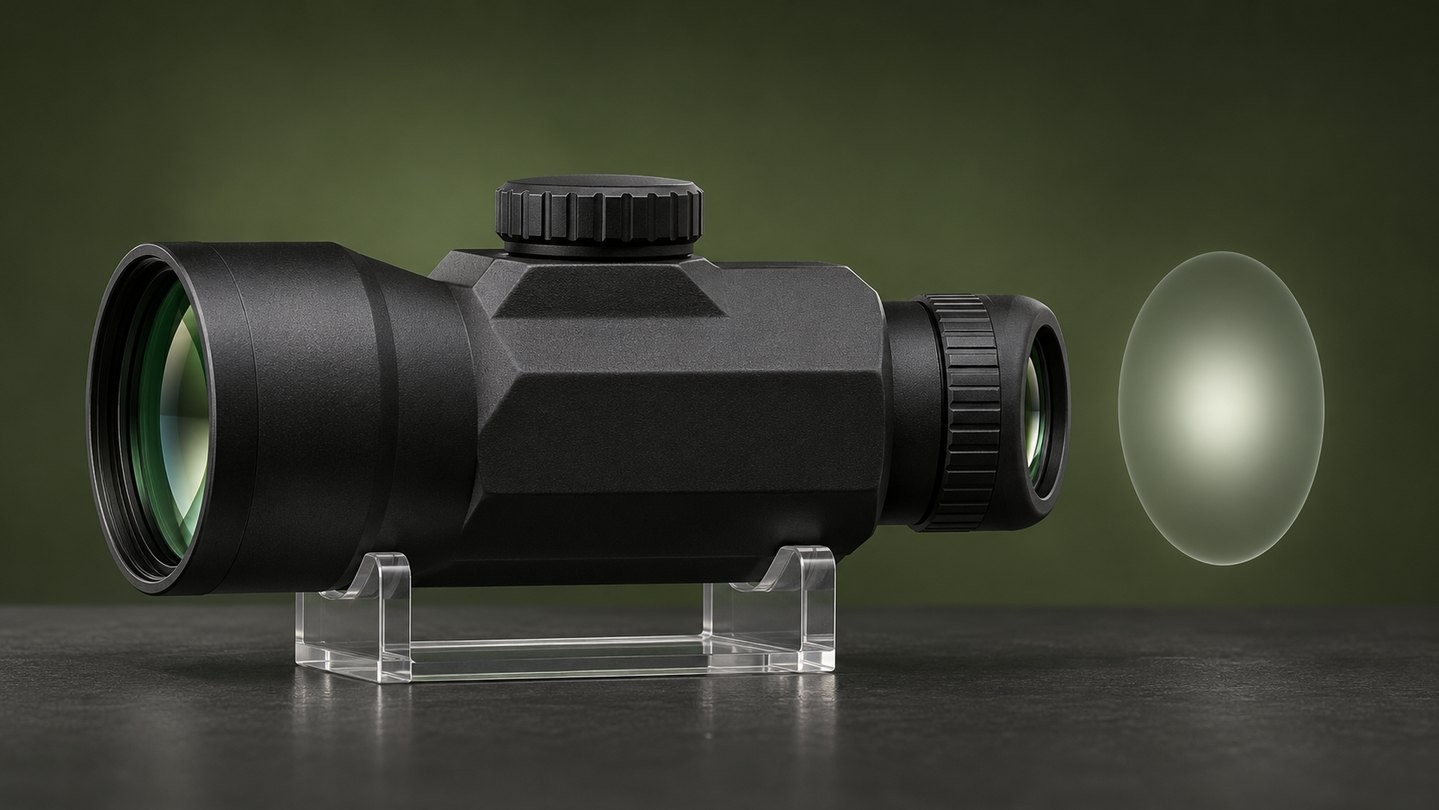
The circles are drawn to scale. The exit-pupil figures are nominal values at 10×, not a complete measure of image quality.
At 5×, those numbers double. In bright daylight, your eye may not use all of a very large exit pupil, so the practical difference can be small. As magnification rises or ambient light falls, the extra objective diameter can become more useful. For the full explanation, see our exit-pupil guide.
The formula is a comparison tool, not a complete performance test. Some variable scopes do not use the full nominal objective diameter at every magnification, and the final image also depends on optical design, glass, baffling and coatings.
40 mm: compact and often enough
A 40 mm objective has been a practical all-round size for good reason. It can provide a 4 mm nominal exit pupil at 10×, while usually keeping the objective bell modest. That often makes it easier to mount the scope low and maintain a natural cheek position.
It suits rifles where balance, carry weight and a compact profile matter more than squeezing every possible advantage from the last light of the day. It is not automatically a “budget” choice; optical quality matters more than diameter alone.
44 mm: a small step rather than a different class
A 44 mm objective sits close to 40 mm in practical terms. At the same magnification it produces a slightly larger nominal exit pupil, but the difference is modest. The attraction is often packaging: a manufacturer may gain some light-gathering area without moving to the larger bell associated with many 50 mm scopes.
Do not assume that every 44 mm model mounts as low as every 40 mm model. Compare the actual outside bell diameter and the shape of the scope, not just the number in its name.
50 mm: useful headroom at higher magnification
A 50 mm objective is a common middle ground for medium- and high-magnification scopes. At 10× it gives a nominal 5 mm exit pupil; at 20× that falls to 2.5 mm. That extra aperture can be useful when the scope spends more time above 10× or when the scene has low contrast.
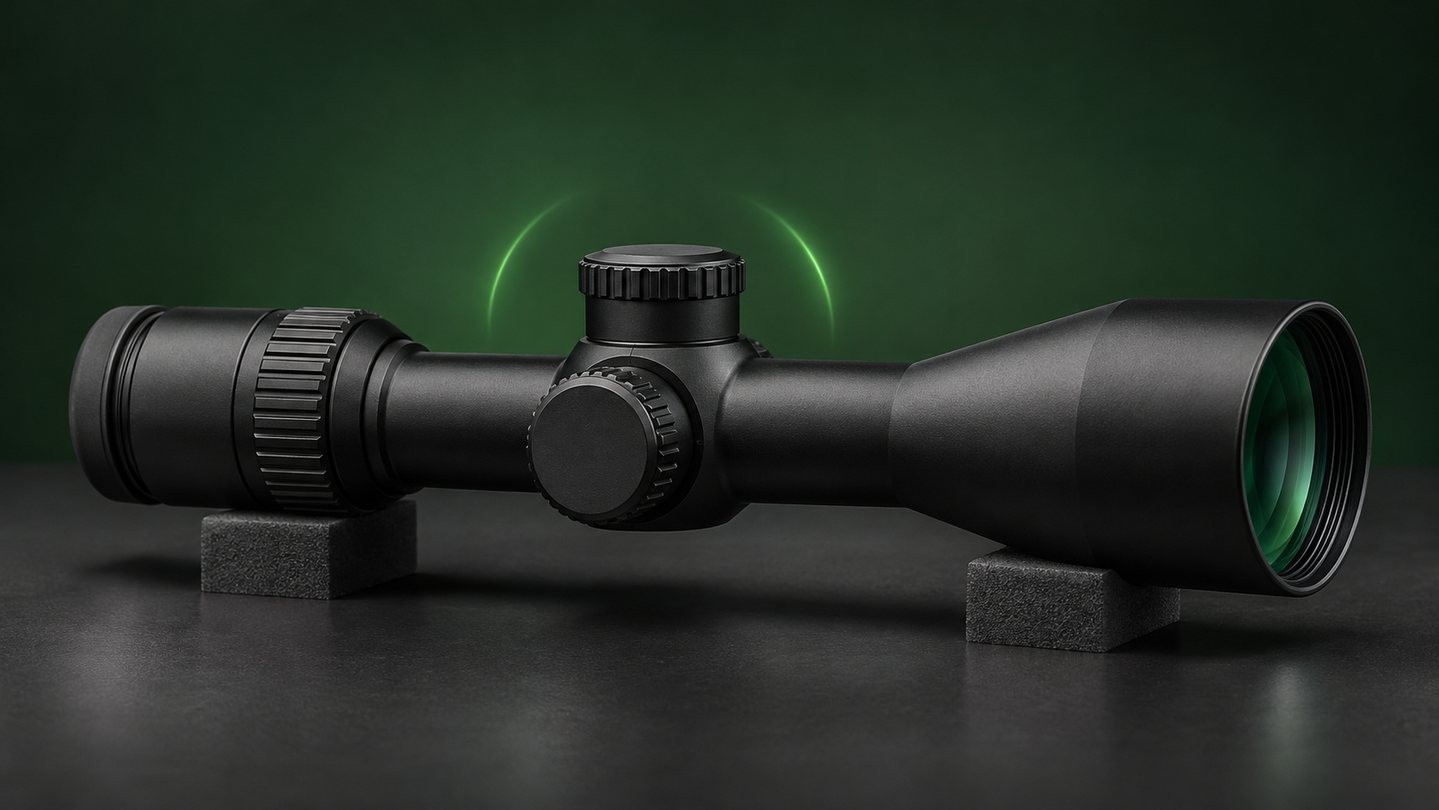
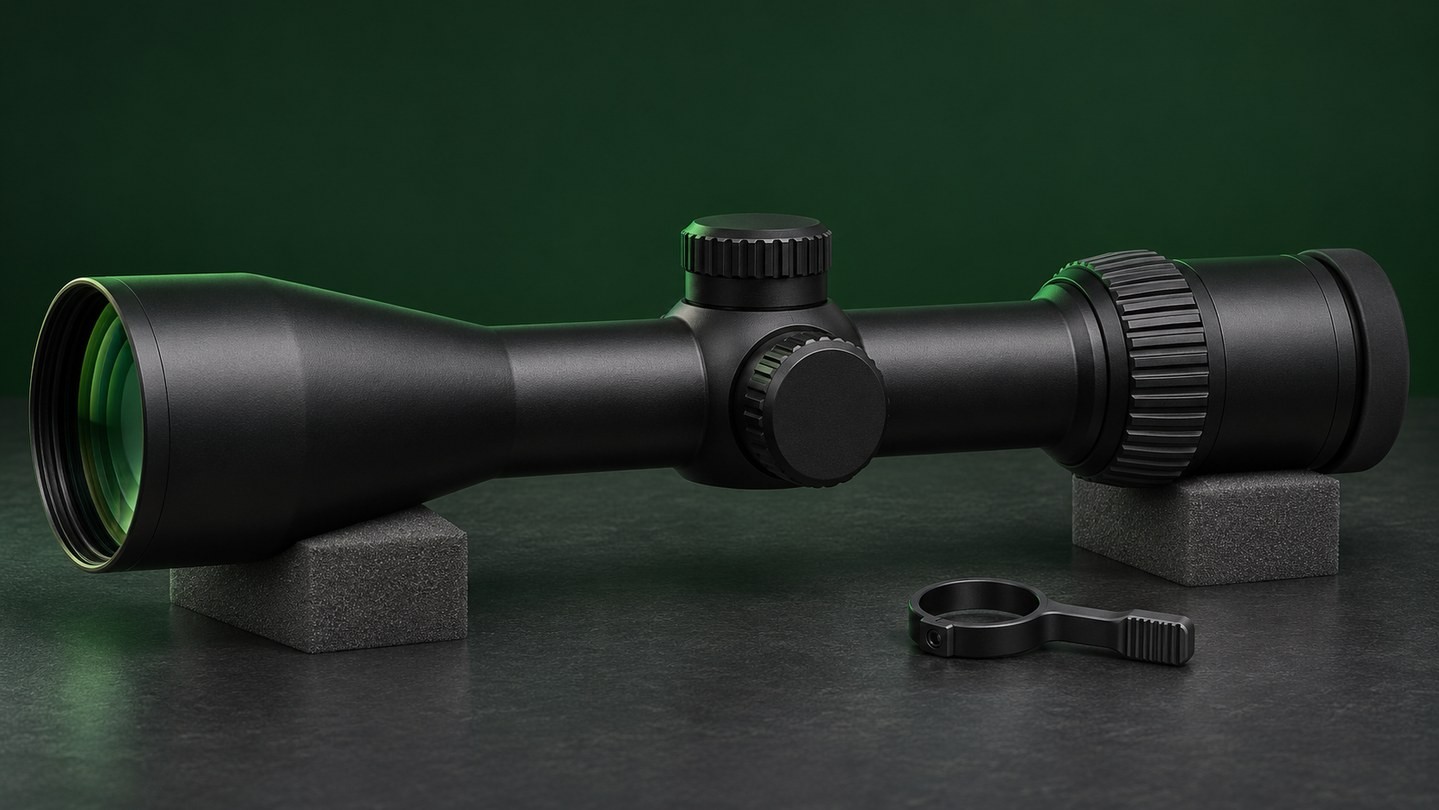
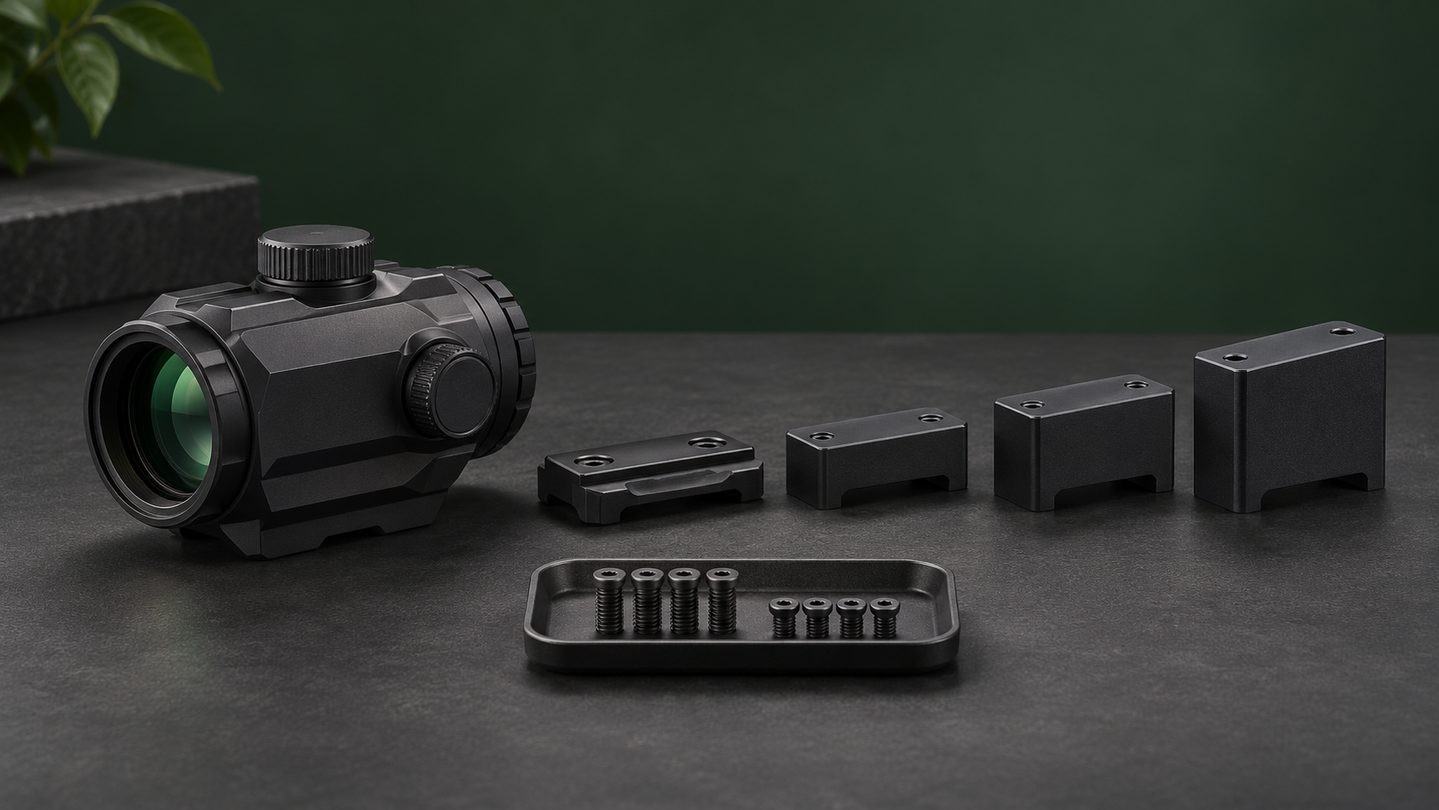
The trade-off is a larger objective housing. Depending on the rifle, rail and barrel contour, it may require taller rings. Before choosing the scope, check the complete mounting stack and not just whether the tube fits the rings.
56 mm: specialised rather than universally superior
A 56 mm objective can provide a larger exit pupil at the same magnification, which is valuable for scopes intended for high power or difficult light. At 14×, for example, the nominal exit pupil is 4 mm. A 40 mm objective at the same power is about 2.9 mm.
That benefit comes with a visibly larger bell and usually more mass. The scope may sit higher, require more clearance and feel less compact. A high mounting position can make a consistent cheek weld harder unless the stock is suited to it. Our scope ring-height guide covers the clearance and eye-position checks.
A larger objective does not guarantee a brighter image
Objective diameter sets part of the optical geometry, but it does not tell you how efficiently the whole scope handles light. Lens design, glass quality, internal reflections and anti-reflection coatings all matter. Two scopes with the same 50 mm label can produce noticeably different contrast and glare control.
This is why “fully multicoated” and “56 mm objective” should be read as separate pieces of information, not as a combined guarantee. The lens-coating guide explains what coating labels do—and do not—prove.
What objective size does not tell you
- Field of view: lens design and magnification determine it; a larger objective alone does not promise a wider scene.
- Resolution: diameter is not a grade for glass quality, focus accuracy or optical alignment.
- Low-light performance: objective size contributes, but transmission, contrast, exit pupil and the observer’s eye also matter.
- Mounting height: use the outside bell diameter, rail height and barrel clearance—not the nominal objective number alone.
- Comfort: eye relief, eyebox, stock fit and cheek position still decide whether the view is easy to acquire.
How to choose between 40, 44, 50 and 56 mm
Start with the magnification range and conditions you genuinely expect to use. A compact scope that stays mostly below 10× rarely needs a 56 mm objective. A high-power optic that regularly operates at 18× or more has a stronger case for 50 mm or 56 mm glass.
Then check the physical cost: outside bell diameter, ring height, overall weight and stock fit. If two scopes are otherwise comparable, the larger objective offers more exit-pupil headroom. If they differ in design and quality, diameter alone cannot decide the better view.
Finally, read the full scope designation rather than one number in isolation. Our guide to rifle scope numbers shows how magnification and objective size work together.
Choose the complete setup, not the largest number
Browse our Buying Guides for practical explanations of magnification, mounting and optical specifications—without relying on one feature alone.


Leave a comment