“Fully multicoated” sounds reassuring on a specification sheet, but it does not tell you everything about the view through a rifle scope. It describes where anti-reflection coatings are applied and, in broad terms, how many layers are used. It does not grade the glass, measure resolution or guarantee that two scopes with the same label will perform alike.
That distinction matters because a scope contains several air-to-glass surfaces. At each one, a small amount of light can reflect instead of continuing through the optical system. Good coatings are designed to reduce those reflections, helping more useful light reach your eye while controlling glare and ghost images.
What an anti-reflection coating actually does
Look at an uncoated window from an angle and you will see a reflection. A lens behaves in a similar way. Some incoming light passes through, while some bounces back from the surface. Inside a scope, reflections from several lens surfaces can add up and reduce contrast.
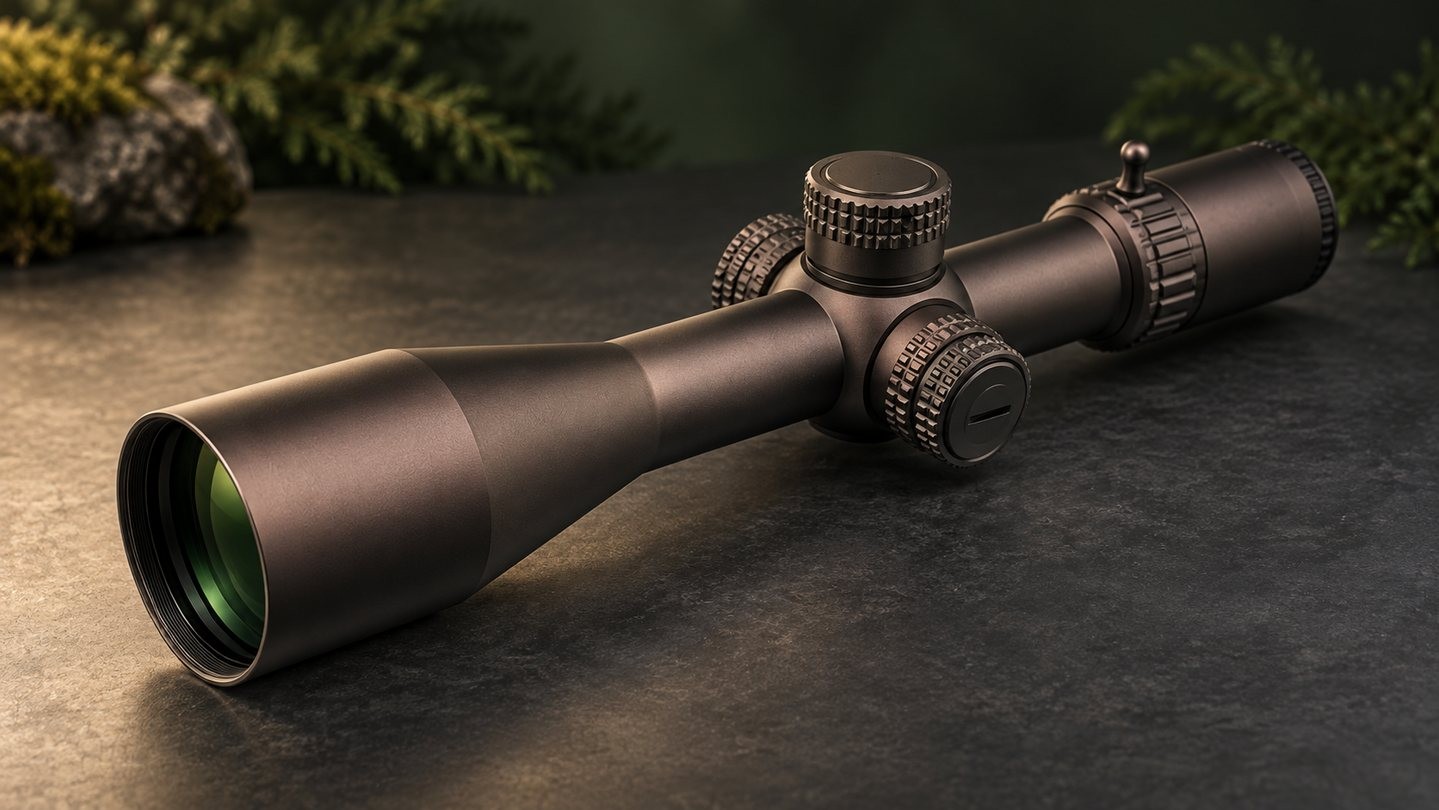
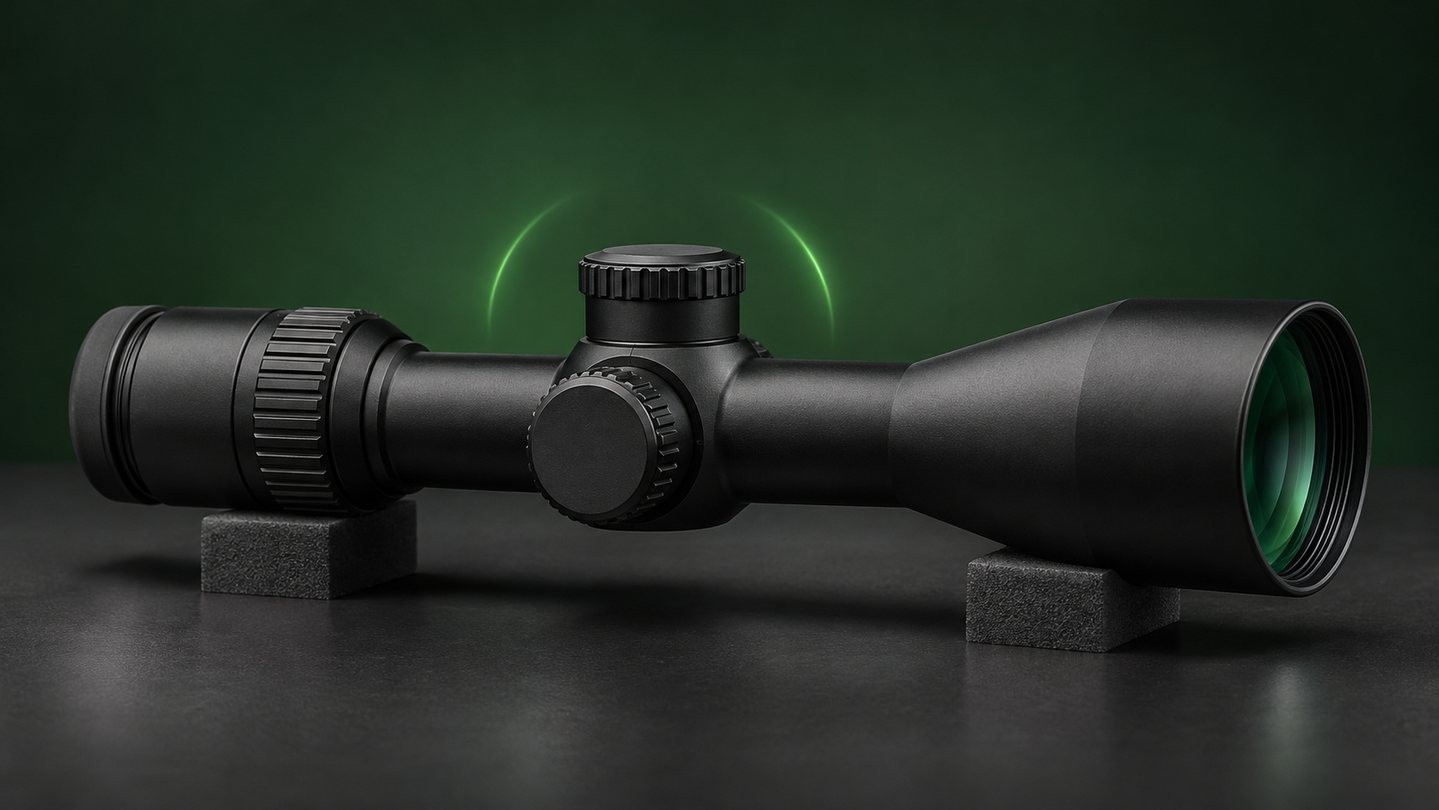
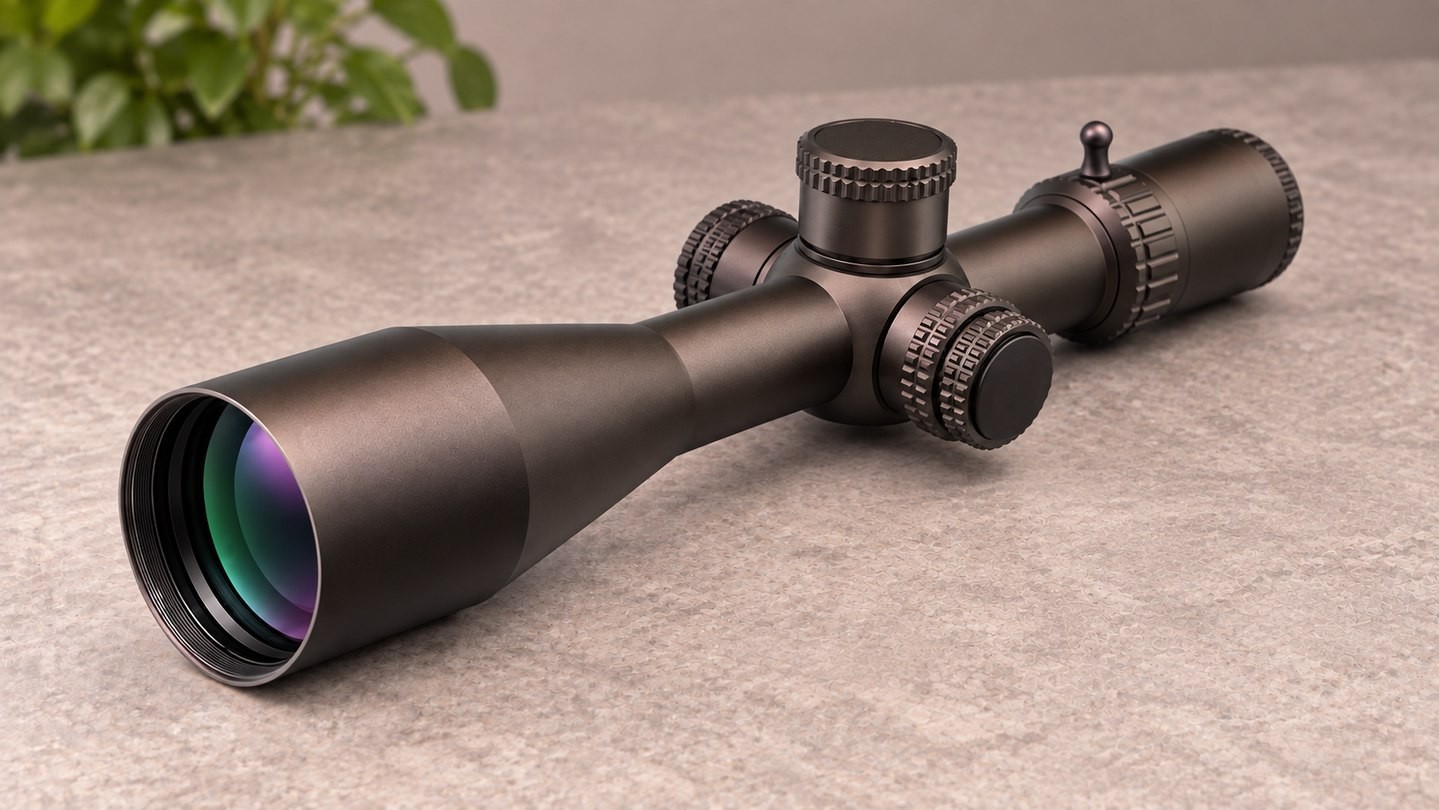
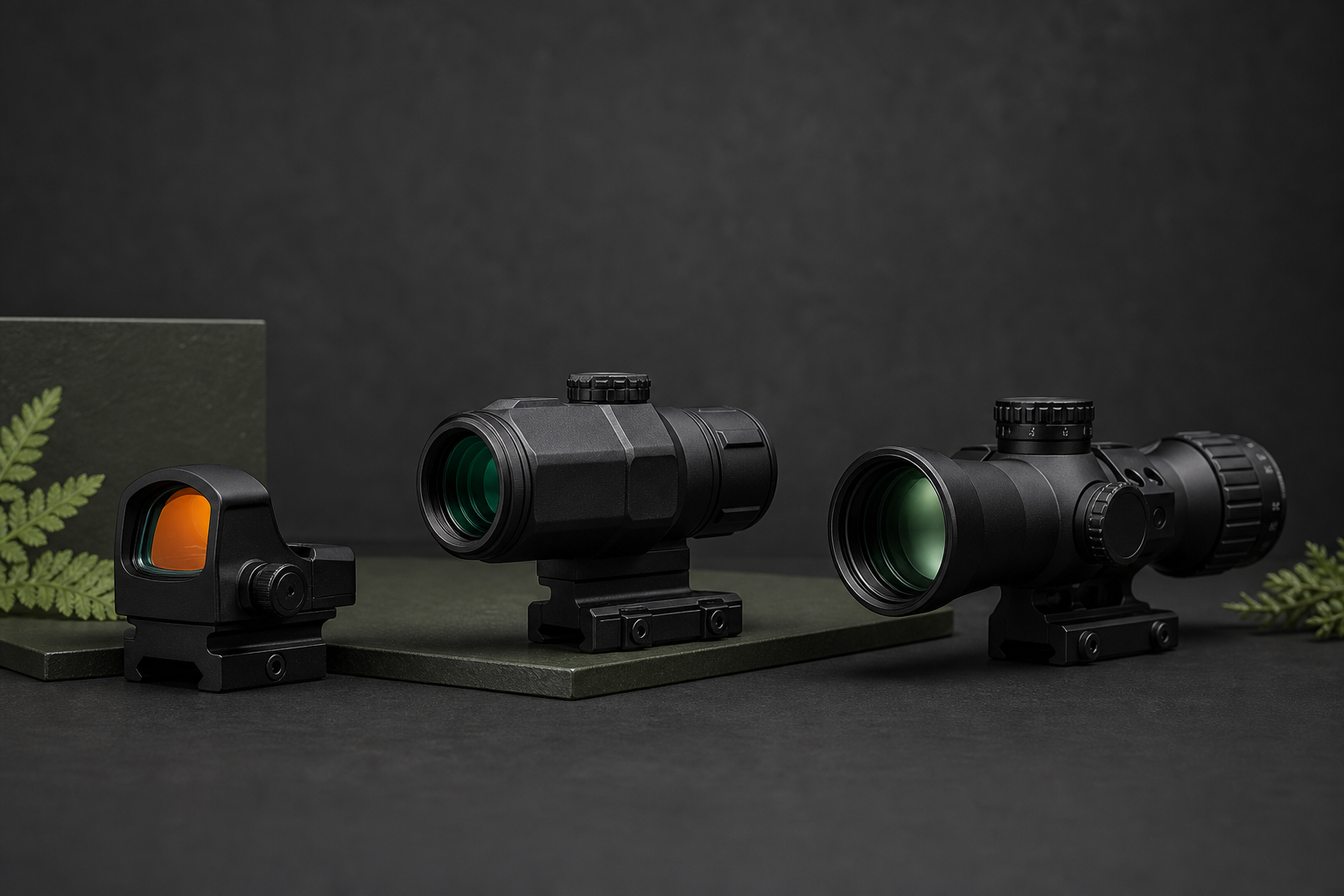
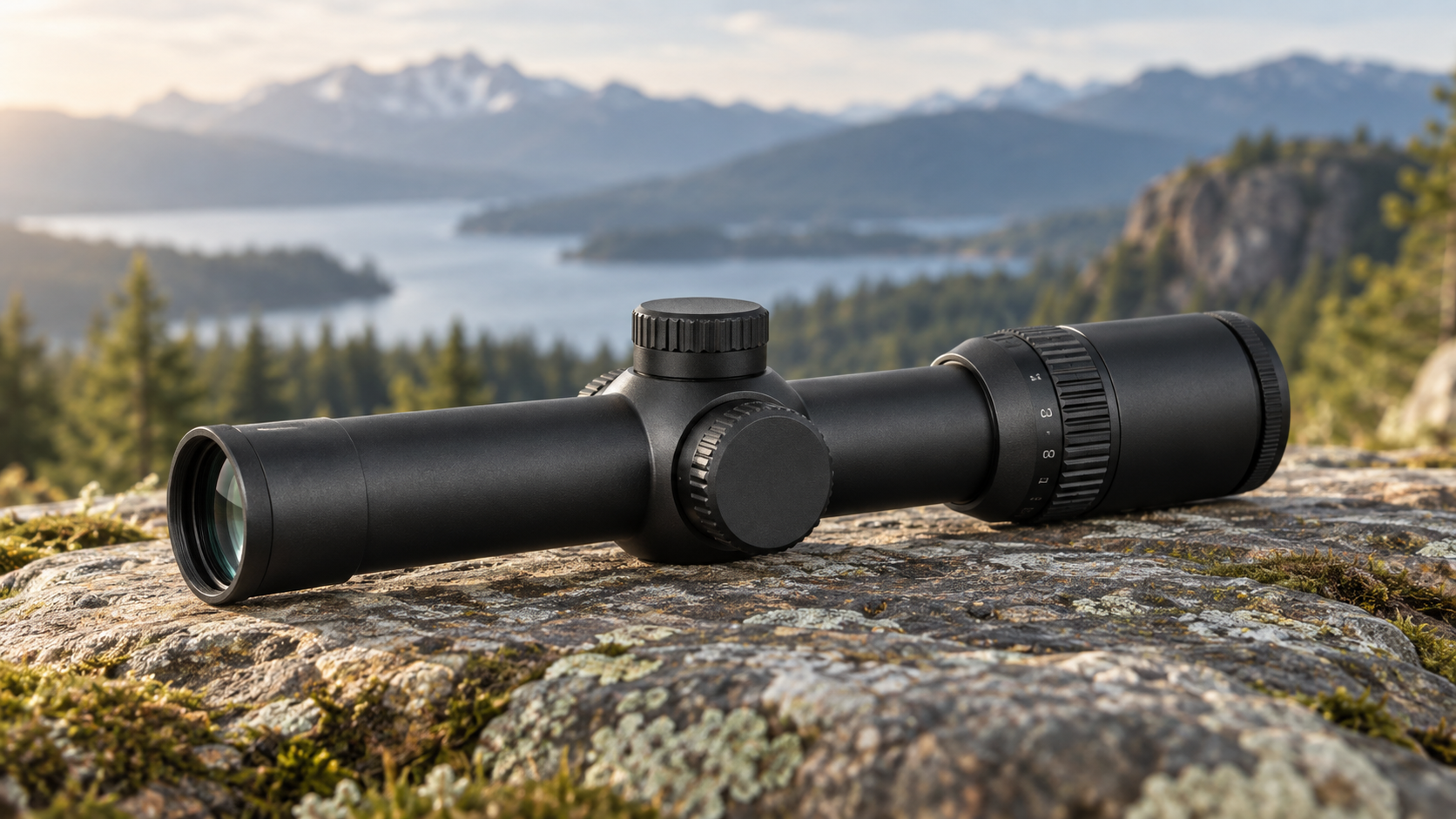
An anti-reflection coating is a very thin optical layer—or a stack of layers—engineered to reduce reflection across part of the visible spectrum. The coloured tint you see on an objective lens is usually reflected light left over after the coating has done its work. Green, purple, blue or amber reflections do not by themselves prove that one coating is better than another.
The practical aim is not to make the front lens look colourful. It is to transmit useful light, limit flare and preserve contrast through the complete optical path.
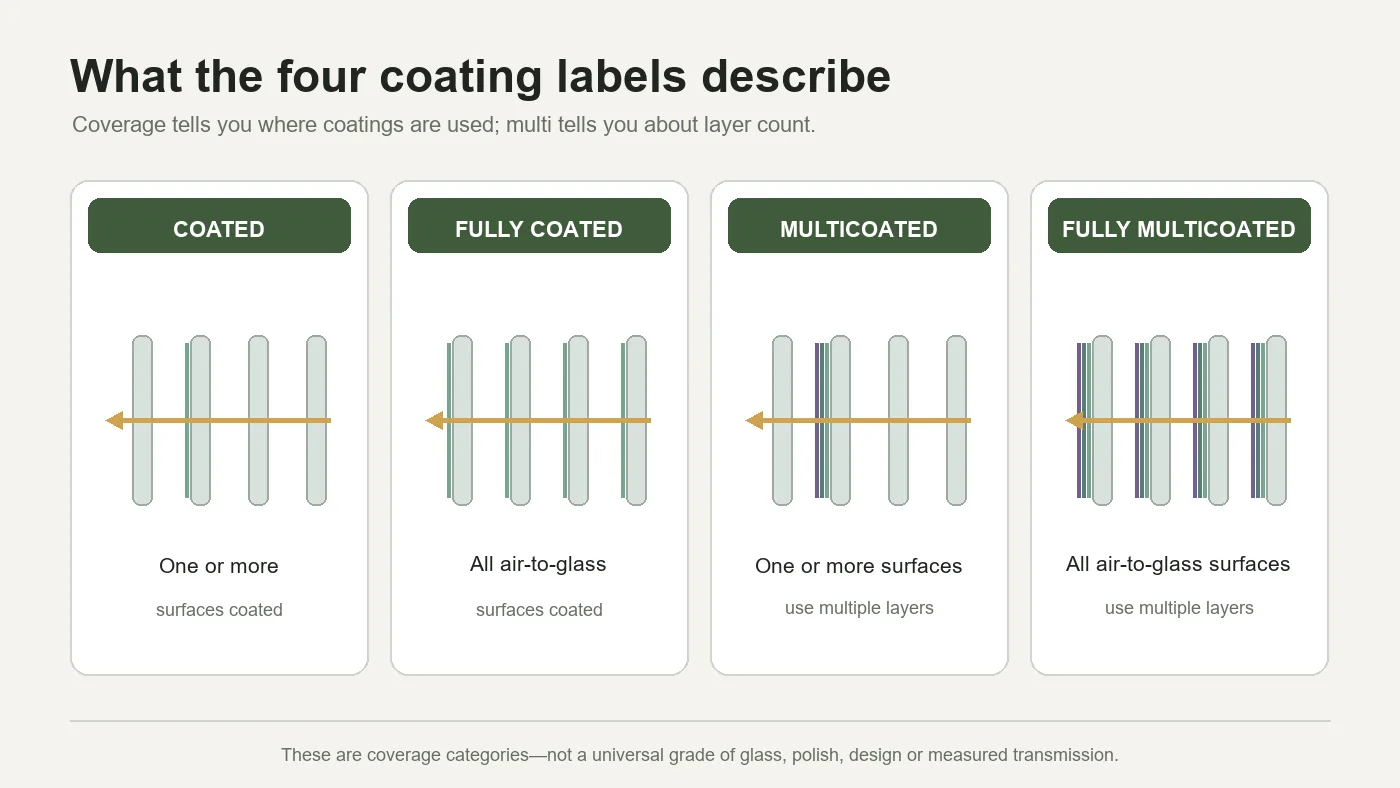
The terms describe coating coverage and layer count, not a universal performance grade. Manufacturers may use proprietary processes and different quality standards.
Coated, fully coated, multicoated and fully multicoated
The industry commonly uses four broad labels:
- Coated: one or more air-to-glass surfaces have an anti-reflection coating.
- Fully coated: all air-to-glass surfaces have a coating, commonly described as a single layer.
- Multicoated: one or more surfaces have multiple coating layers. Other surfaces may use a single layer or a different treatment.
- Fully multicoated: all air-to-glass surfaces have multiple anti-reflection coating layers.
The word fully is about coverage. The word multi is about multiple layers. That is why “multicoated” is not automatically the same as “fully multicoated.”
These definitions are useful when comparing specification sheets, but they are still categories rather than test results. They do not tell you the coating formula, how evenly it was deposited, the wavelengths it was optimised for or how the finished scope performs as a complete system.
Why more surfaces matter in a scope
A modern variable-power scope is not a single piece of glass. Light passes through the objective assembly, internal lens groups and the eyepiece before it reaches the exit pupil. Each air-to-glass boundary is another opportunity for reflection.
Reducing reflection across the system can improve apparent brightness and contrast, especially when the scene contains both dark and bright areas. It can also help control veiling glare—the washed-out look caused by stray light—when you are viewing near a bright sky or another strong light source.
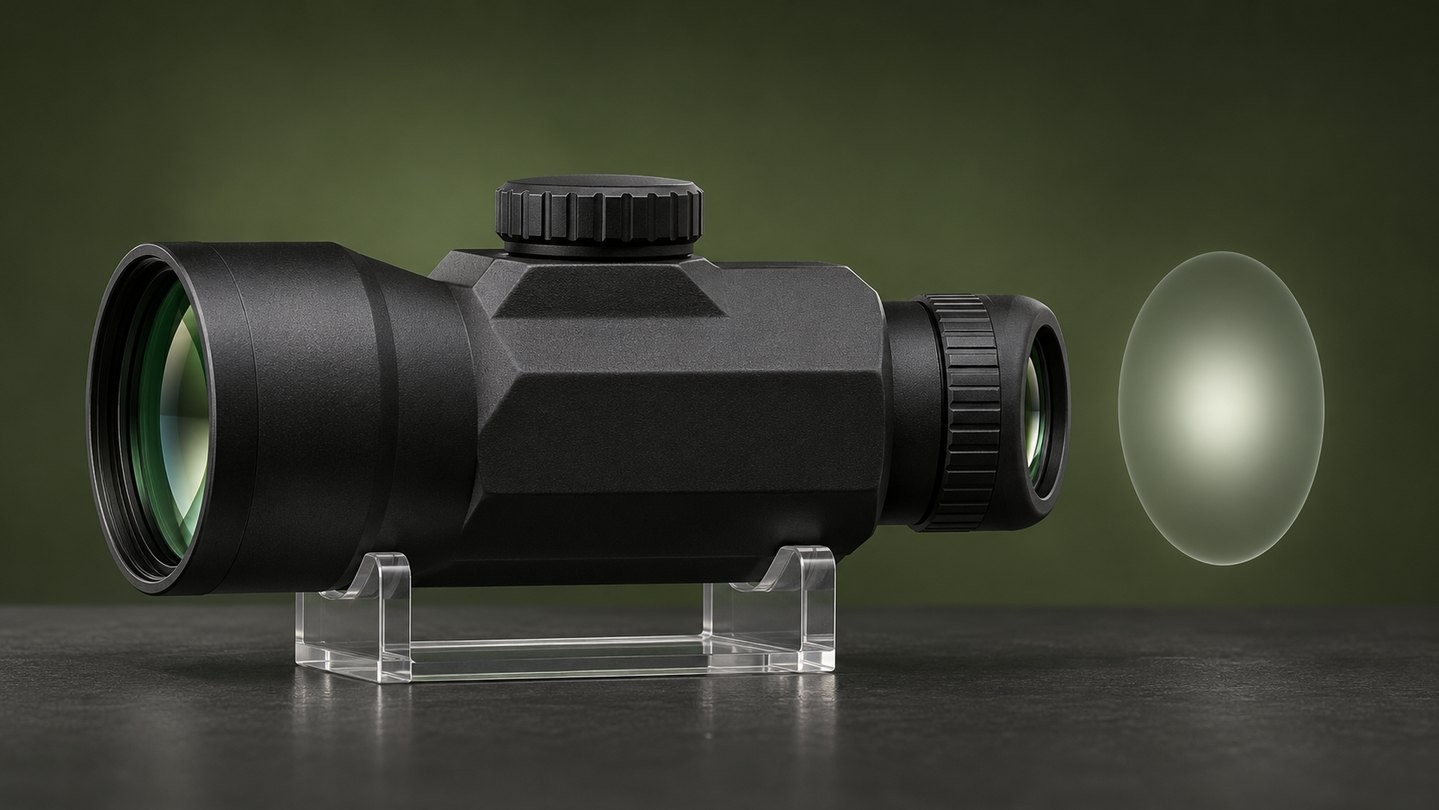
This is separate from the amount of light defined by the scope’s geometry. Objective diameter and magnification determine the nominal exit pupil. Coatings influence how efficiently the optical system handles the light available to it; they do not change a 4 mm exit pupil into a 6 mm one.
Fully multicoated does not mean “best at everything”
It is reasonable to prefer fully multicoated optics when the rest of the comparison is equal. In real products, the rest is rarely equal.
Image quality also depends on glass selection, lens design, polish, alignment, internal baffling, mechanical tolerances and quality control. Resolution, colour rendering, edge performance and flare resistance cannot be predicted from one coating label alone. A carefully designed scope with well-applied coatings can outperform another scope that uses the same marketing term but weaker glass or poorer assembly.
Nor does “fully multicoated” tell you the exact light-transmission percentage. A credible percentage needs a stated test method and wavelength range. Treat an unsupported transmission number as a claim to verify, not as a universal consequence of the label.
Protective exterior coatings are a different feature
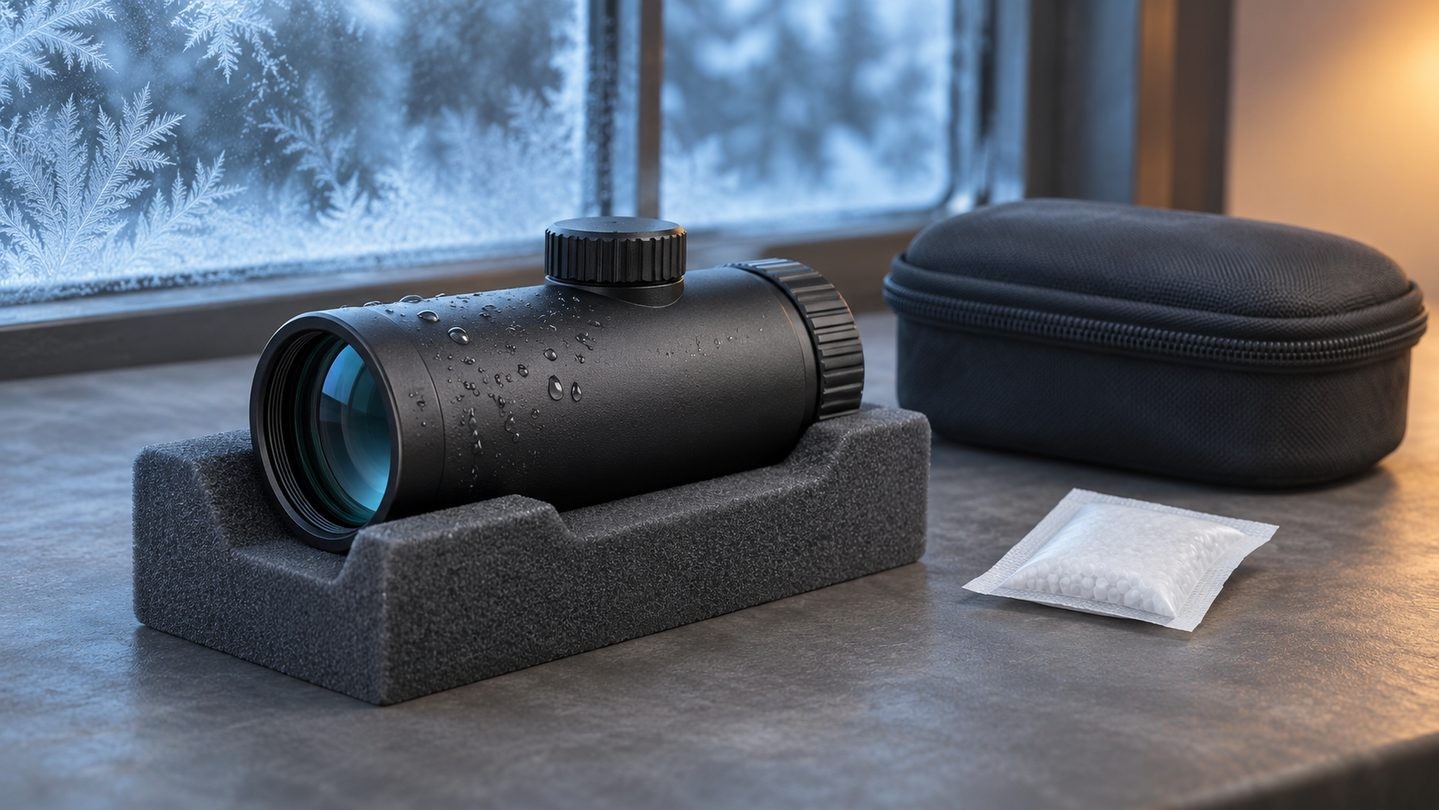
Some scopes also advertise an exterior coating that repels water, oil, fingerprints or dust. That is not the same job as an anti-reflection coating.
An anti-reflection stack manages light at an optical surface. A protective top coating is intended to make the exposed lens easier to keep clear or more resistant to contamination. The two can be used together, but a water-repellent claim does not prove that every internal surface is multicoated—and a fully multicoated specification does not automatically promise a hydrophobic exterior layer.
Can you judge coatings by their colour?
Only in a very limited way. A faint coloured reflection can show that some kind of coating is present, but the hue is not a simple quality scale. Different coating designs can reflect different residual colours while still transmitting visible light efficiently.
A bright mirror-like reflection may suggest higher surface reflection, but shop lighting, viewing angle, lens curvature and the surfaces behind the objective can all change what you see. Avoid choosing between two scopes simply because one has a stronger green or purple tint.
What to compare instead of reading one label
Use the coating line as one part of a broader check:
- Is the specification clear about fully multicoated optics, or does it use a vague phrase?
- Does the image retain contrast when a bright light source sits near, but not inside, the field?
- Can you resolve fine detail in the centre and toward the edge?
- Does colour look neutral enough for your use?
- Are the objective and eyepiece surfaces cleanly finished, without obvious coating defects?
- Does the complete scope suit your required magnification, eye relief and field of view?
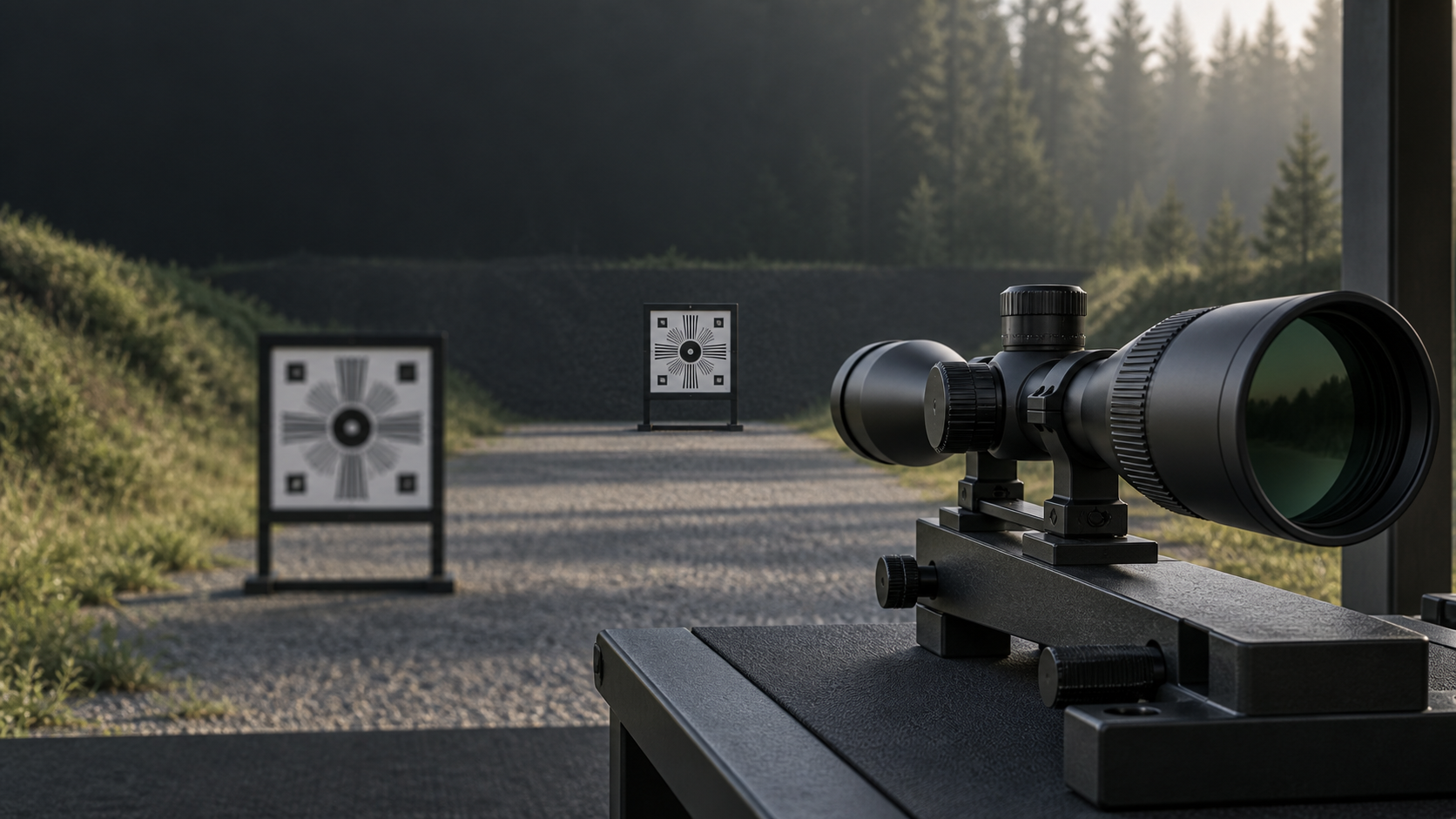
If you can compare optics in person, look through them in the same conditions and at the same magnification. A bright showroom is a poor test of low-contrast detail. More importantly, never look at the sun through a scope or any other optic.
The useful takeaway
“Fully multicoated” is meaningful: it normally indicates multiple anti-reflection layers on all air-to-glass surfaces. It is a stronger coverage description than “coated” or “multicoated.” But it remains one line in a larger optical design.
Read it as evidence of the intended coating coverage, not as a substitute for evaluating clarity, contrast, controls, dimensions and fit. If you are comparing the rest of those specifications, the guide to rifle scope numbers is a useful place to continue.
Compare the complete specification
Our Buying Guides explain the other scope terms that matter in everyday use, without sending you to a specific product.


Leave a comment