You've matched the rings to your scope's main tube. Now comes the less obvious choice: low, medium, or high? The number on the scope—say, 3–9×40—won't answer that on its own. It tells you the objective lens diameter, not the outside size of the objective housing or where that housing will sit above your particular rifle.
The right ring height does two jobs. It gives the scope enough room to clear the rifle, and it puts the eyepiece where you can see through it comfortably. Neither job is helped by choosing the lowest rings simply because “lower is better.”
Ring diameter and ring height are different choices
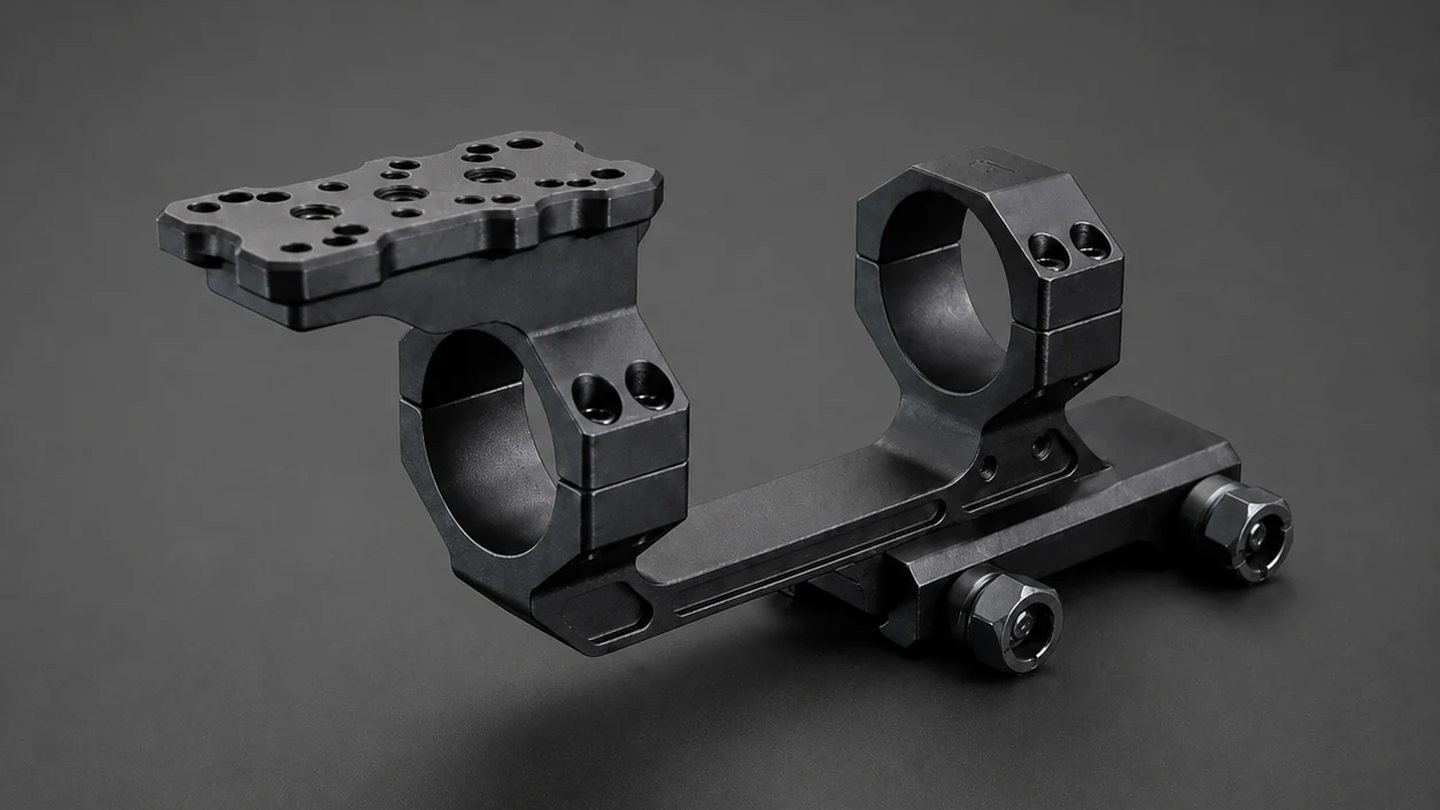
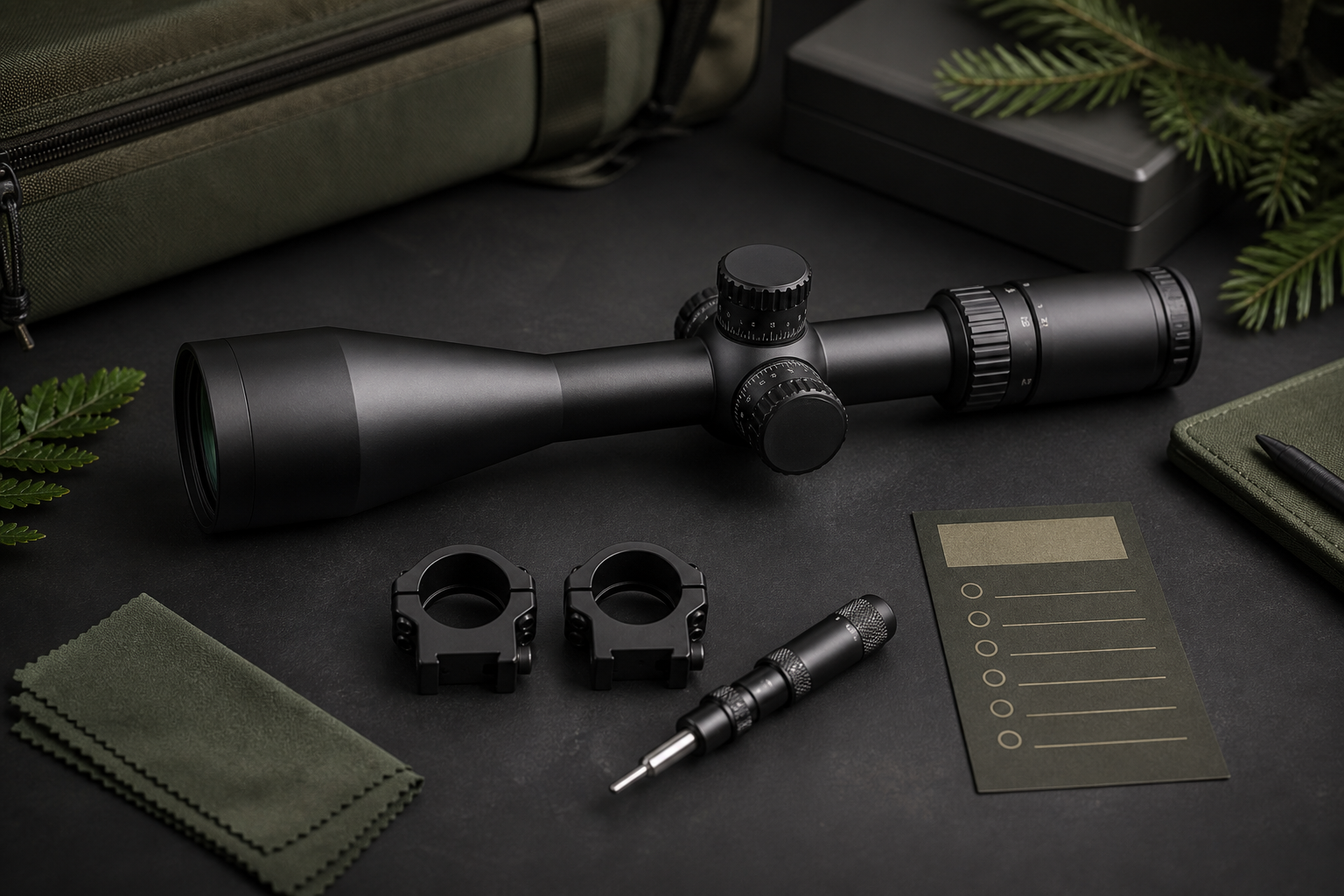
Ring diameter is the inside diameter of the ring that holds the scope's main tube. A 30mm main tube needs 30mm rings; ring height does not change that fit. If you are still sorting out tube sizes, our guide to 1-inch, 30mm, and 34mm scope tubes covers the distinction.
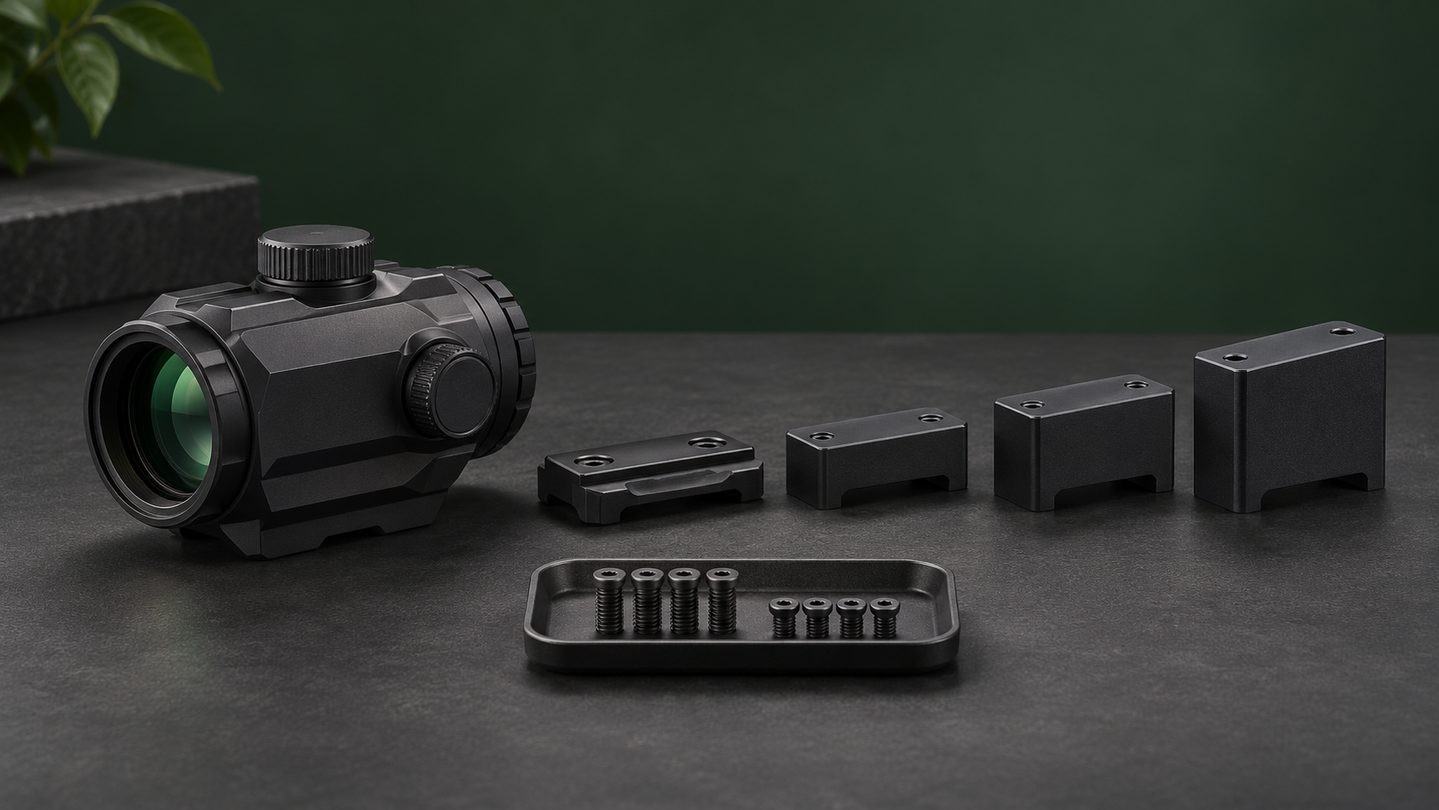
Ring height describes how far the mounted scope sits above its base or rail. Be careful when comparing numbers: makers may specify height from different reference points, and a “medium” from one range is not necessarily the same height as a “medium” from another. Compare the actual dimensions and the diagram for the rings you intend to buy.
Check what has to clear
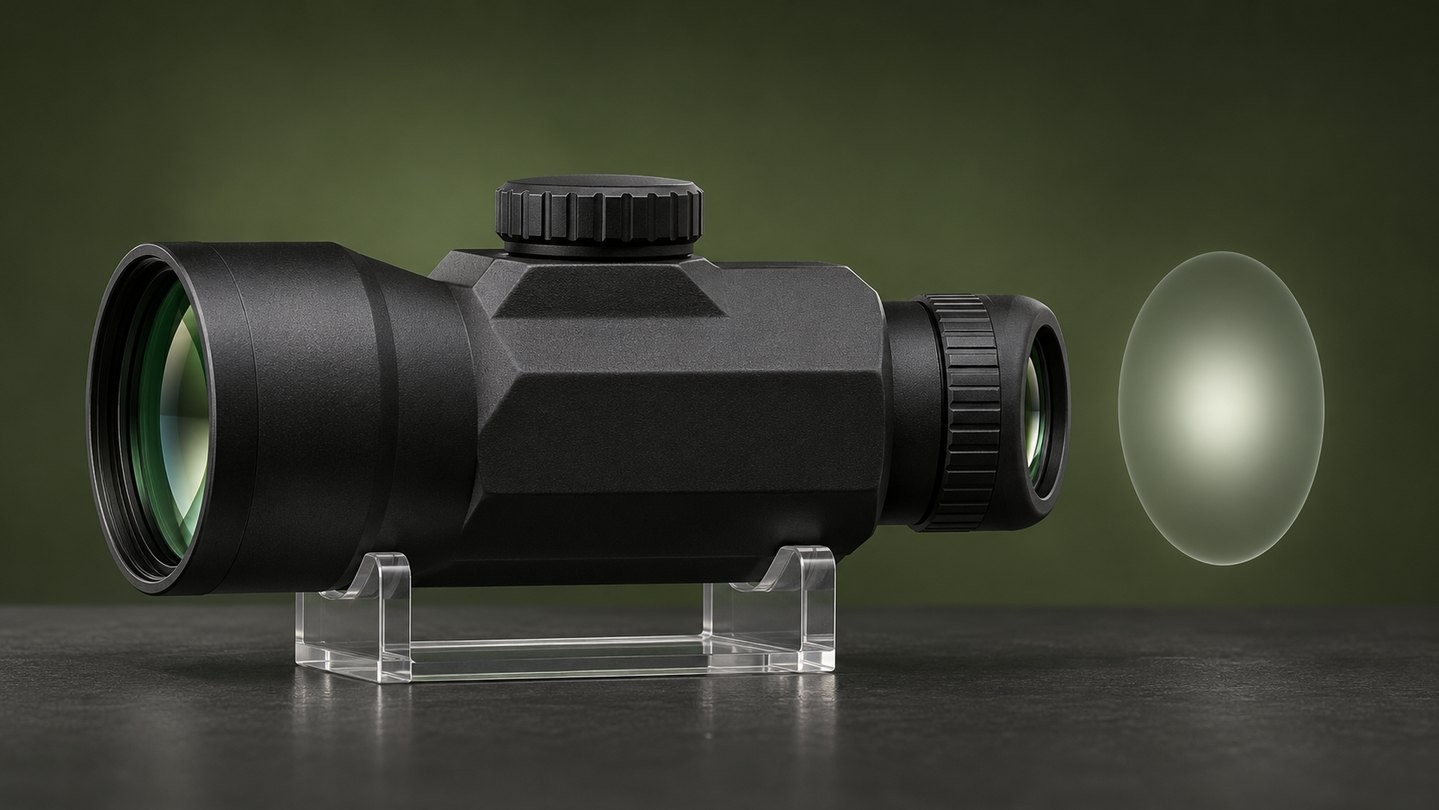
Start with the objective end of the scope. A 40mm objective lens is inside a housing that is wider than 40mm, so the lens number alone is not a reliable clearance measurement. Look for the scope maker's outside dimensions, then consider the barrel, rail, handguard, and any other part beneath the scope on your setup. The base or rail adds height too.
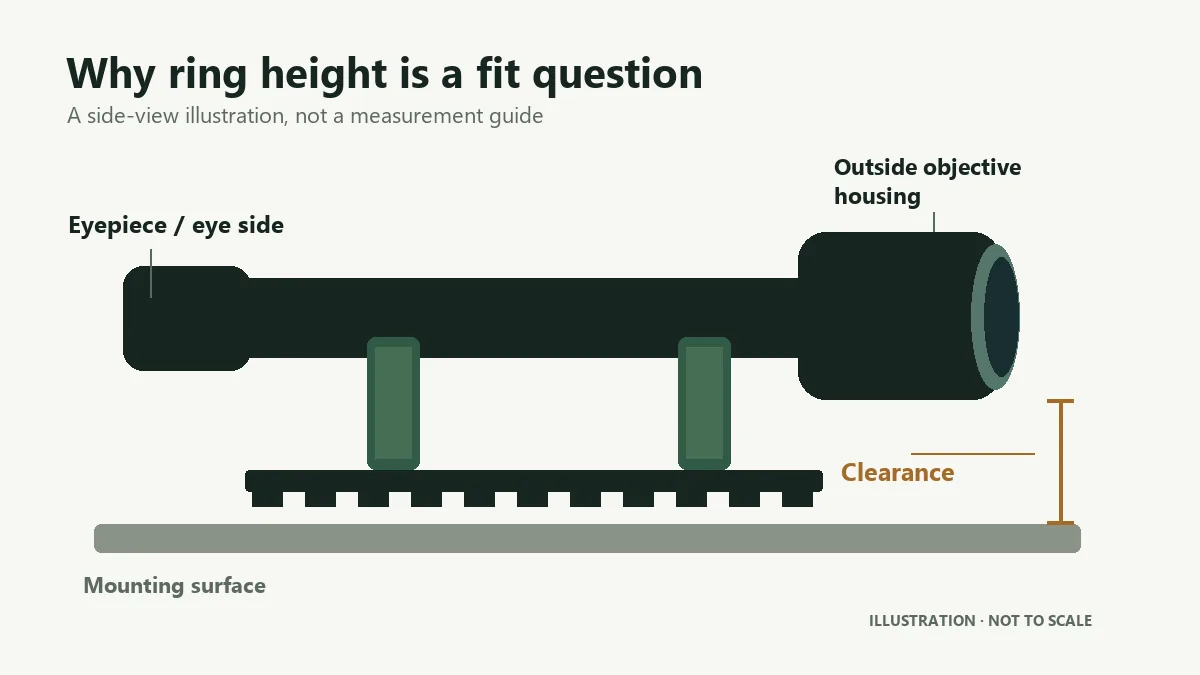
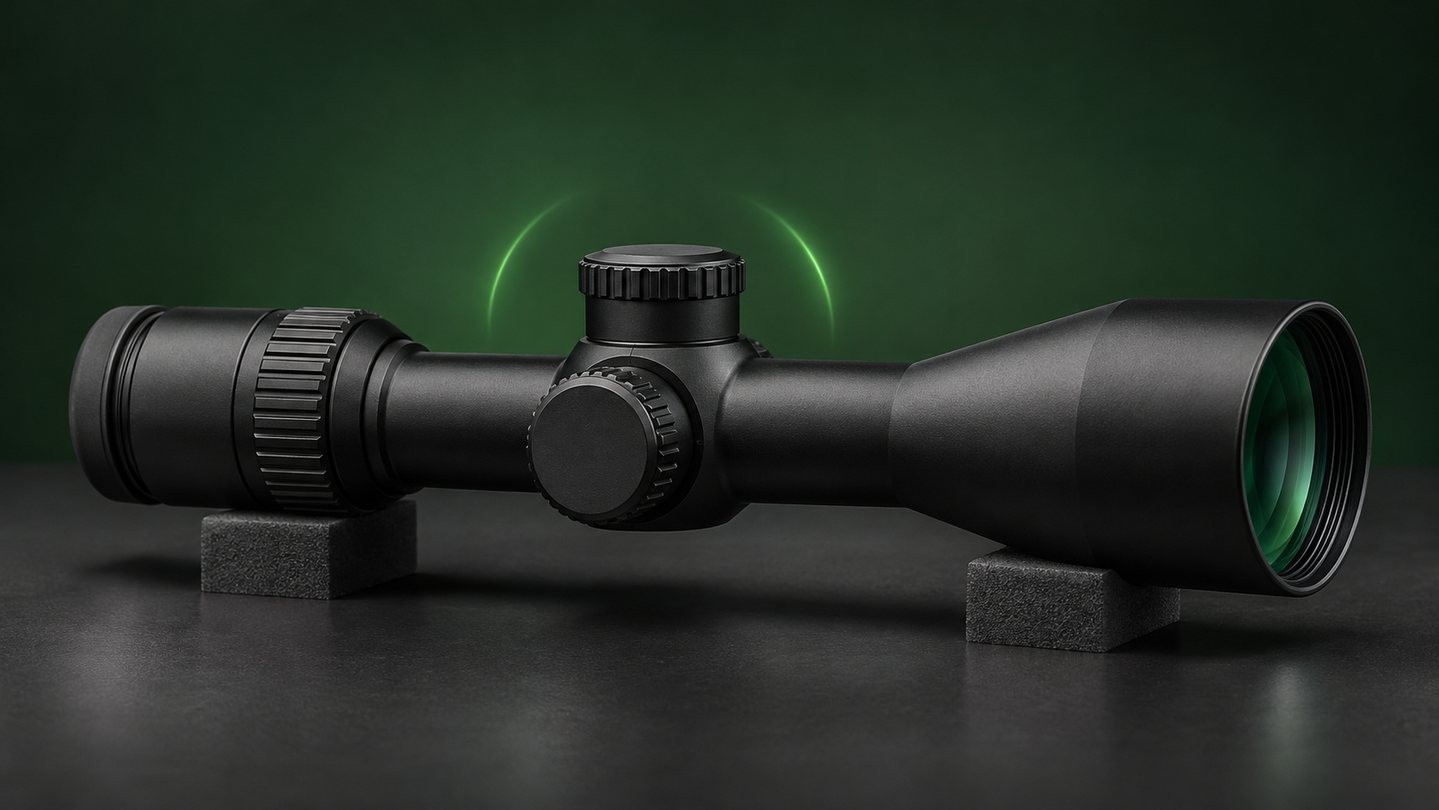
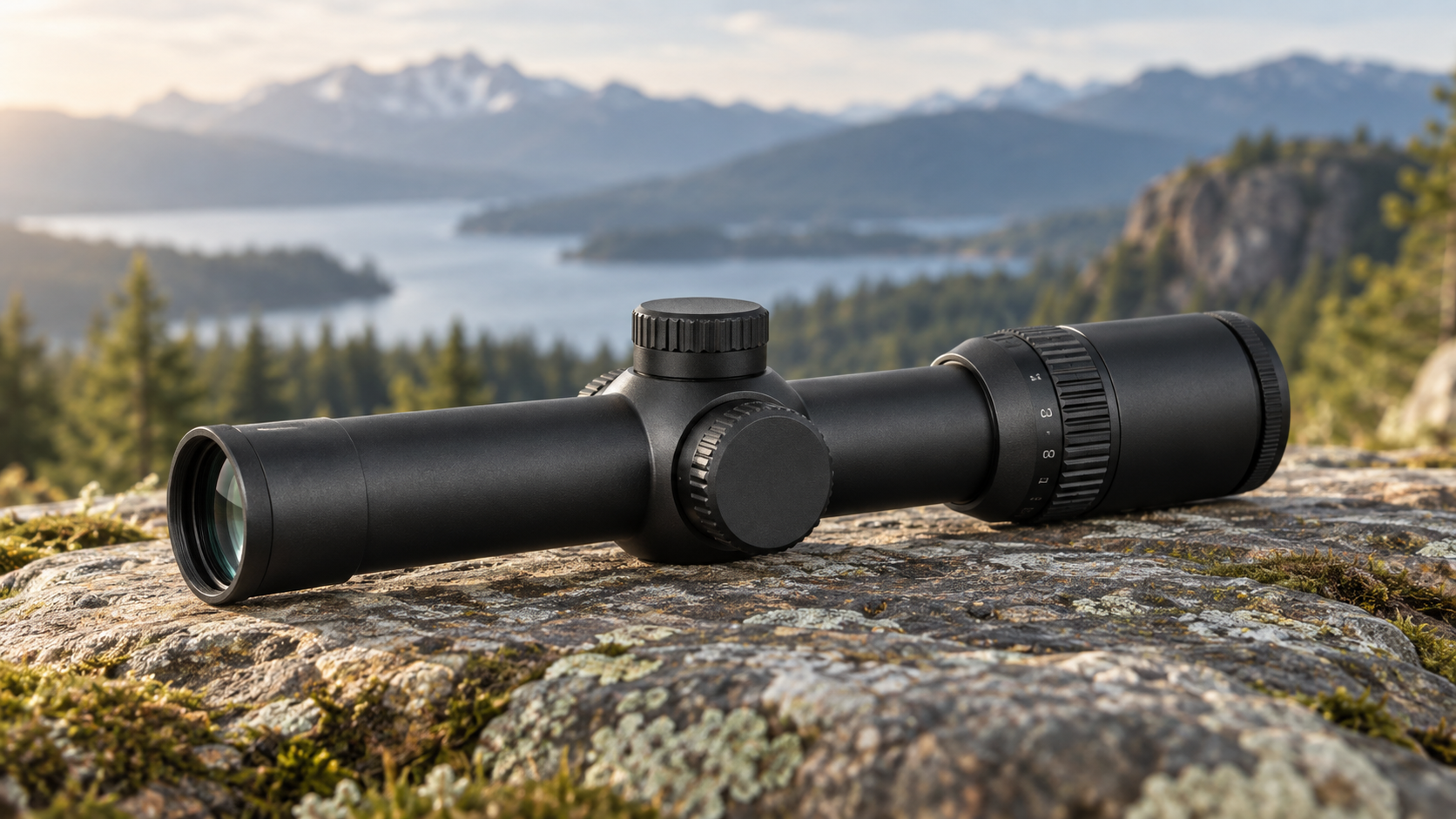
Illustration only—not a measured setup or a ring-height recommendation.
Don't stop at the objective. Check the eyepiece and other parts of the scope against the action, bolt handle, and controls where relevant. A combination that looks fine from one side may still interfere with something you need to operate. There is no single ring-height chart that accounts for every scope body, base, and rifle.
If the objective size itself is unfamiliar, this guide to rifle-scope numbers explains what the figure after the × sign actually means.
Then check your natural eye position
Clearance is only half the fit. With the rifle in your normal, safe viewing position, your eye should meet the scope without having to lift your head awkwardly or press your face down to find the image. Stock shape and your own build matter here, so the best height for one person or rifle may feel wrong on another.
Height and eye relief are related, but they are not the same adjustment. Ring height moves the scope vertically. Moving the scope forward or back helps set the distance between your eye and the eyepiece. If you see a dark ring around the image, check your eye position rather than assuming taller rings are the fix. Our eye-relief and black-ring guide explains that symptom in more detail.
A practical way to narrow the choice
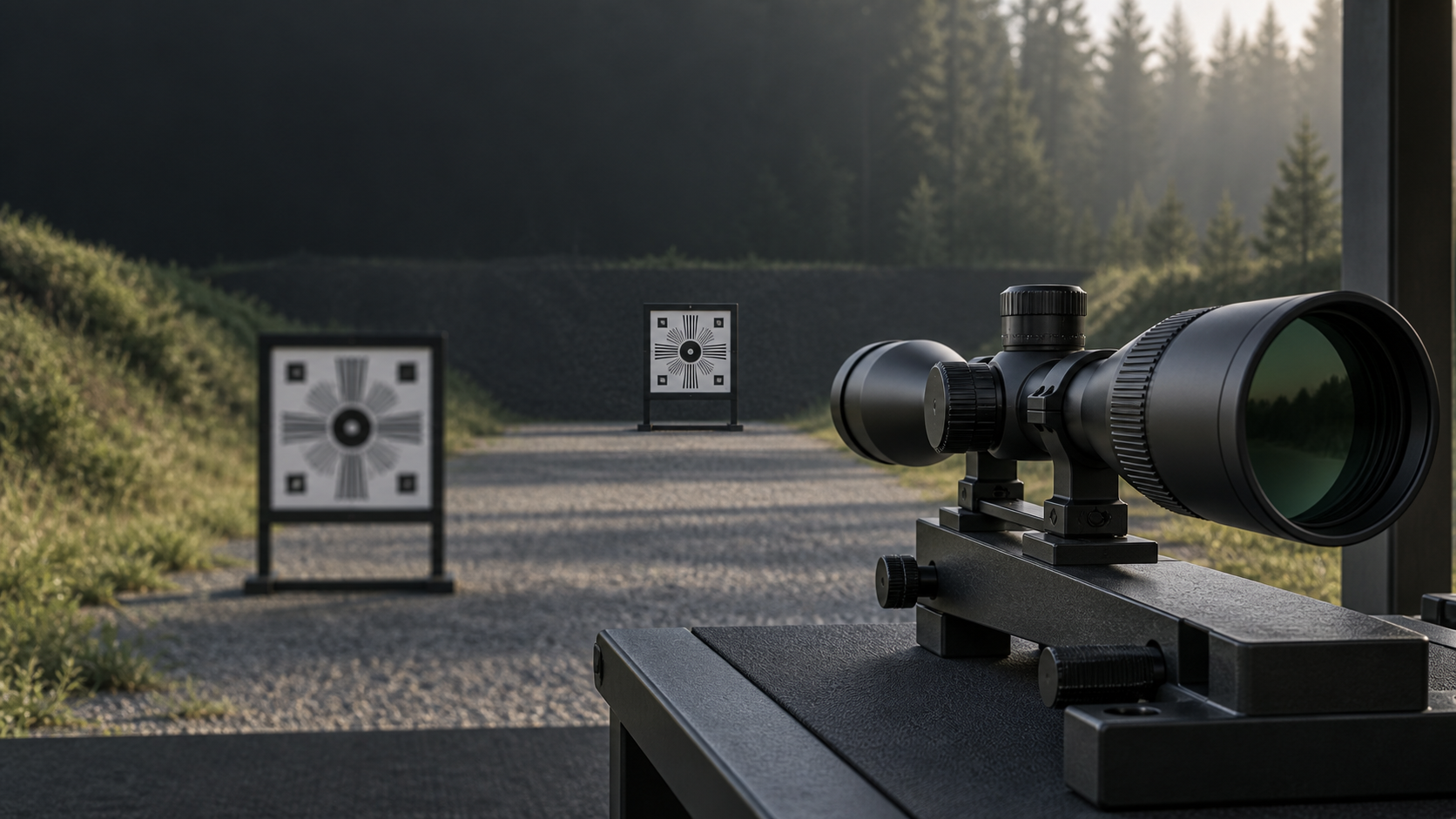
Before ordering, confirm the main-tube diameter, the mount or base interface, and the scope's outside dimensions. Use the ring maker's height drawing—not only its low/medium/high label—to judge whether the objective and eyepiece will clear your setup. If the parts are available to you, a careful dry fit is more informative than a generic chart: look for clearance and a comfortable, repeatable view before final installation.
Once you have the right combination, follow the scope and mount manufacturers' installation instructions. Torque values and assembly details belong to the specific parts you are using; a number taken from a different ring set is no substitute.
The useful rule is simple: choose a height that clears the rifle and suits your eye position. The lowest possible mount is not automatically the most comfortable, and extra height is not a cure for a scope placed too far forward or back. For more help choosing the rest of a setup, browse our Buying Guides.


Leave a comment