A scope can look bright on a spec sheet and still feel disappointing when the light gets difficult. That is because light transmission matters, but it is only one part of the image you see.
The percentage is useful when it comes from a clearly defined test. On its own, however, it does not tell you which wavelengths were measured, whether the figure is a peak or an average, or how well the scope controls glare and preserves contrast. Those details can matter more than a small difference between two headline numbers.
What does light transmission mean?
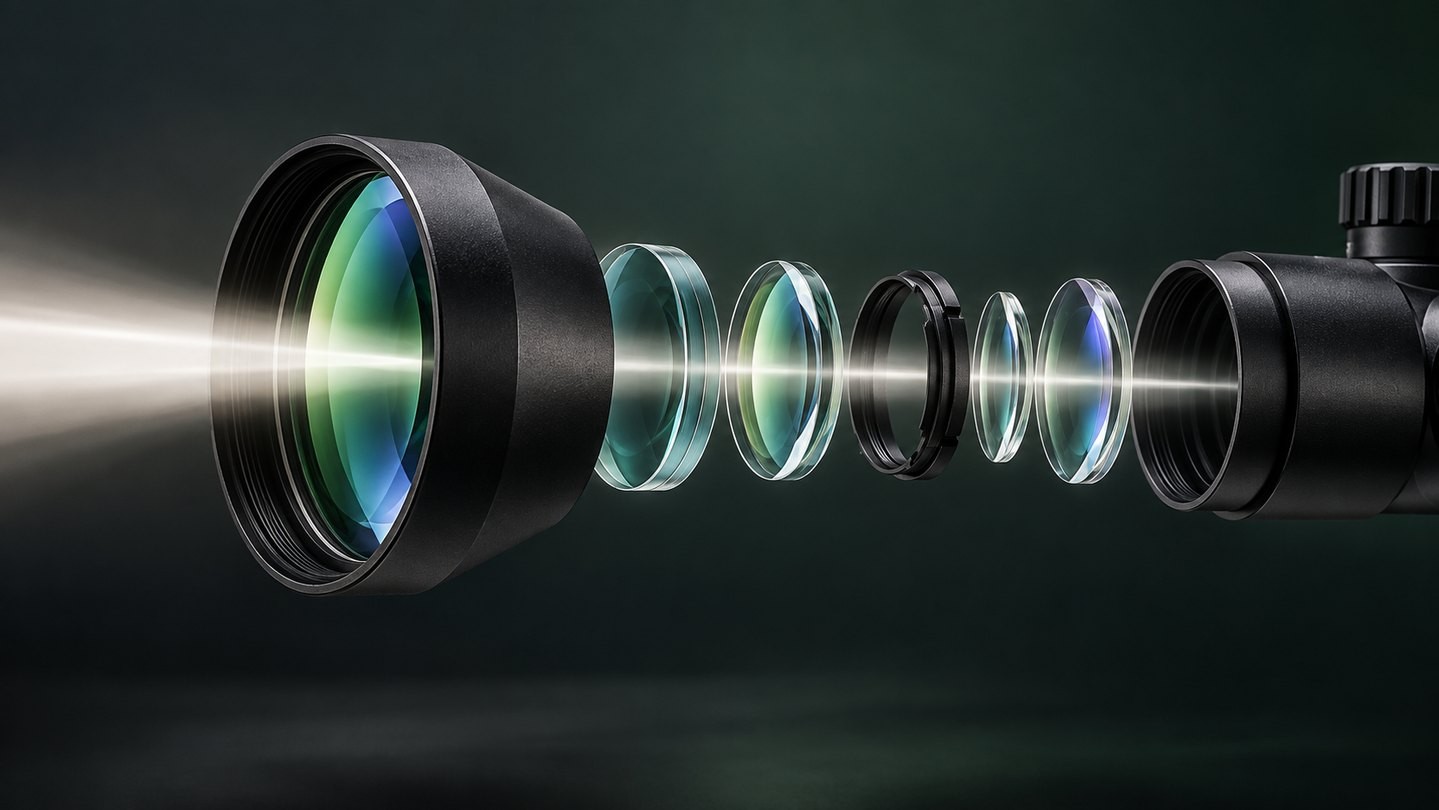
Light transmission describes how much of the light entering an optical system comes out the other side. In a rifle scope, incoming light passes through several glass elements and a number of air-to-glass surfaces before it reaches your eye. At each stage, some light can be reflected, absorbed, or scattered.
Anti-reflective coatings help reduce those losses. That is especially important in a multi-element optical system, where small reflections at many surfaces can add up. Better control of reflections can also reduce ghost images and improve contrast, so the benefit is not limited to making the view look brighter.
Our guide to rifle scope lens coatings explains the difference between coated, fully coated, multicoated, and fully multicoated optics in more detail.
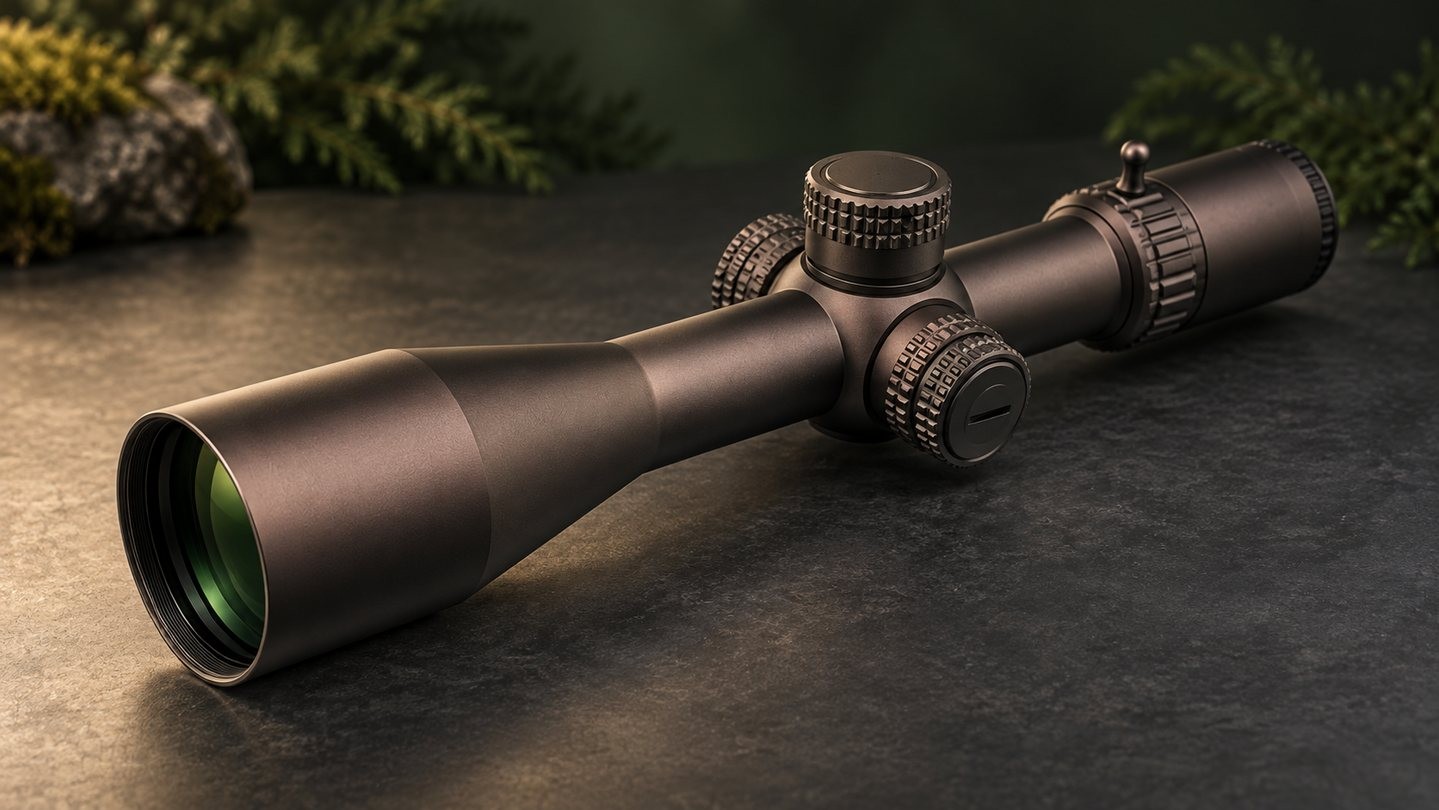
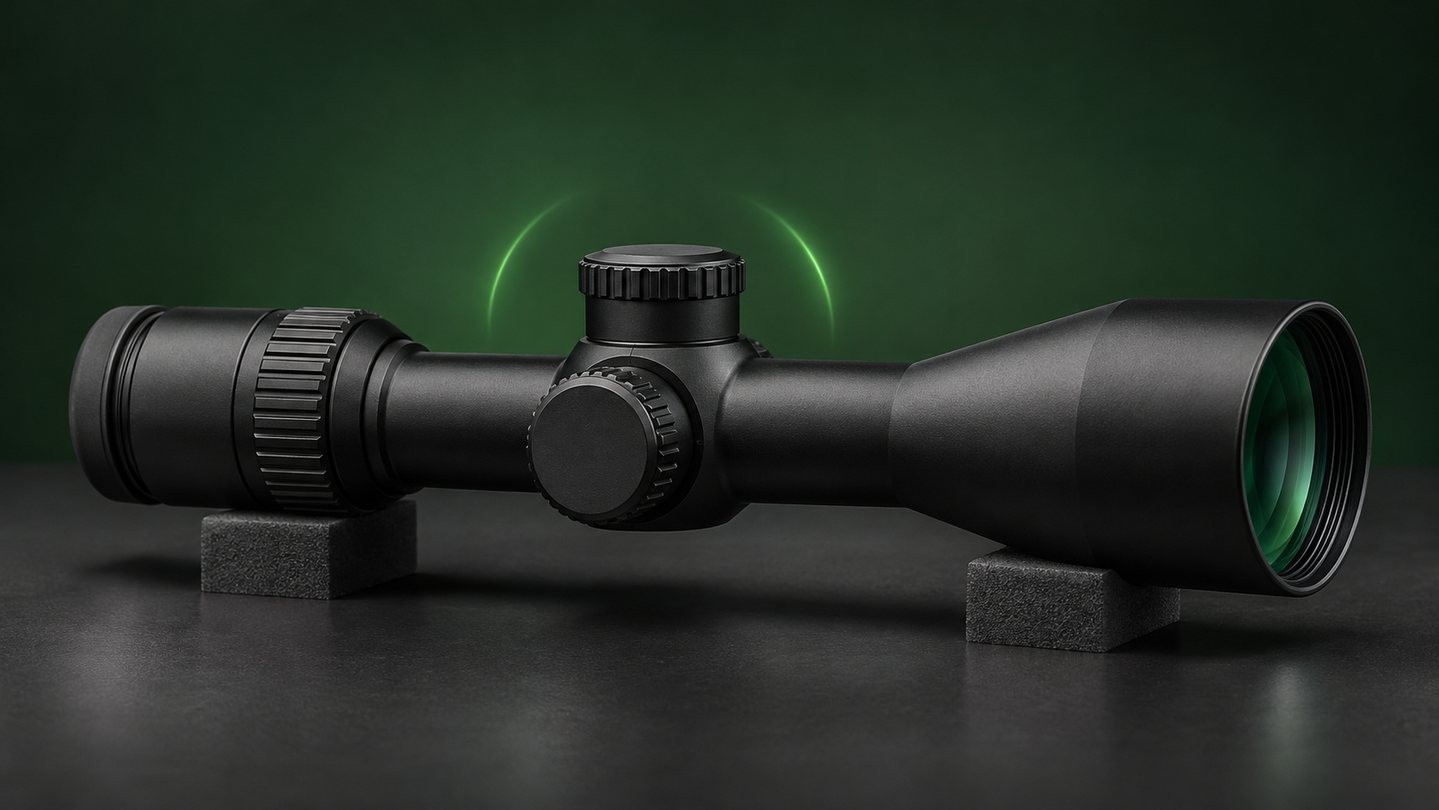
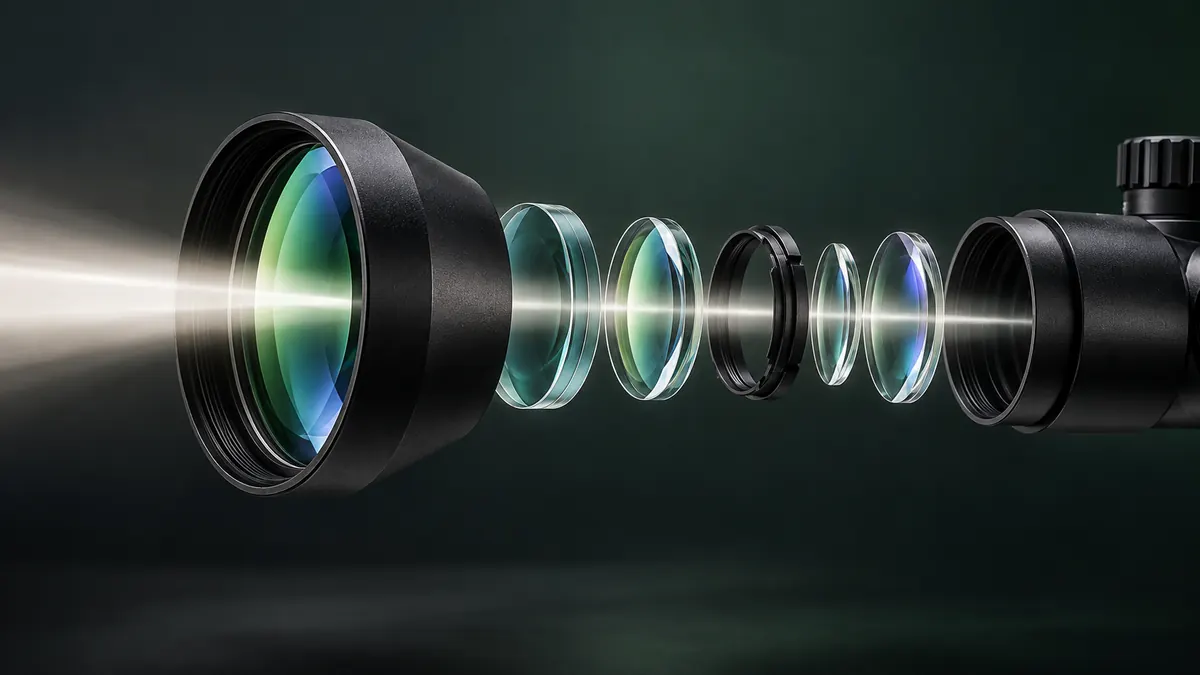 Illustration: coatings and optical design help manage transmission and reflections across a multi-element system. This is not a laboratory measurement of a specific scope.
Why one percentage can be misleading
Suppose two scopes are advertised with similar transmission figures. That does not automatically mean their images will look the same.
Transmission changes with wavelength. An optical system may pass green light differently from blue or red light, and the human eye does not respond to every wavelength equally under every lighting condition. A single peak value can therefore describe a different thing from an average taken across the visible spectrum.
Testing methods may differ as well. One figure may describe a complete optical system, while another may refer to a coating, an individual glass element, or performance near a selected wavelength. Unless the manufacturer explains the method, direct comparison is risky.
This is why a claim such as “95% transmission” should be treated as one piece of information, not a complete score for optical quality. A percentage becomes more useful when the maker states whether it is measured through the whole scope, over which spectral range, and under what conditions.
Brightness, contrast, and glare are different jobs
A useful image needs more than raw throughput. Consider a target near a bright sky, reflective water, or low sun. Stray light inside the scope can wash out dark detail even when a large amount of light reaches your eye.
Good internal baffling, edge blackening, lens geometry, and coatings all help control that unwanted light. The result can be a view that appears clearer and easier to read, even if the transmission figure changes very little. Contrast lets nearby tones remain distinct; resolution preserves fine detail; glare control stops bright off-axis light from veiling the image.
These qualities interact, but they are not interchangeable. A bright, low-contrast image can reveal less useful detail than a slightly dimmer image with better flare control.
Objective size and exit pupil still matter
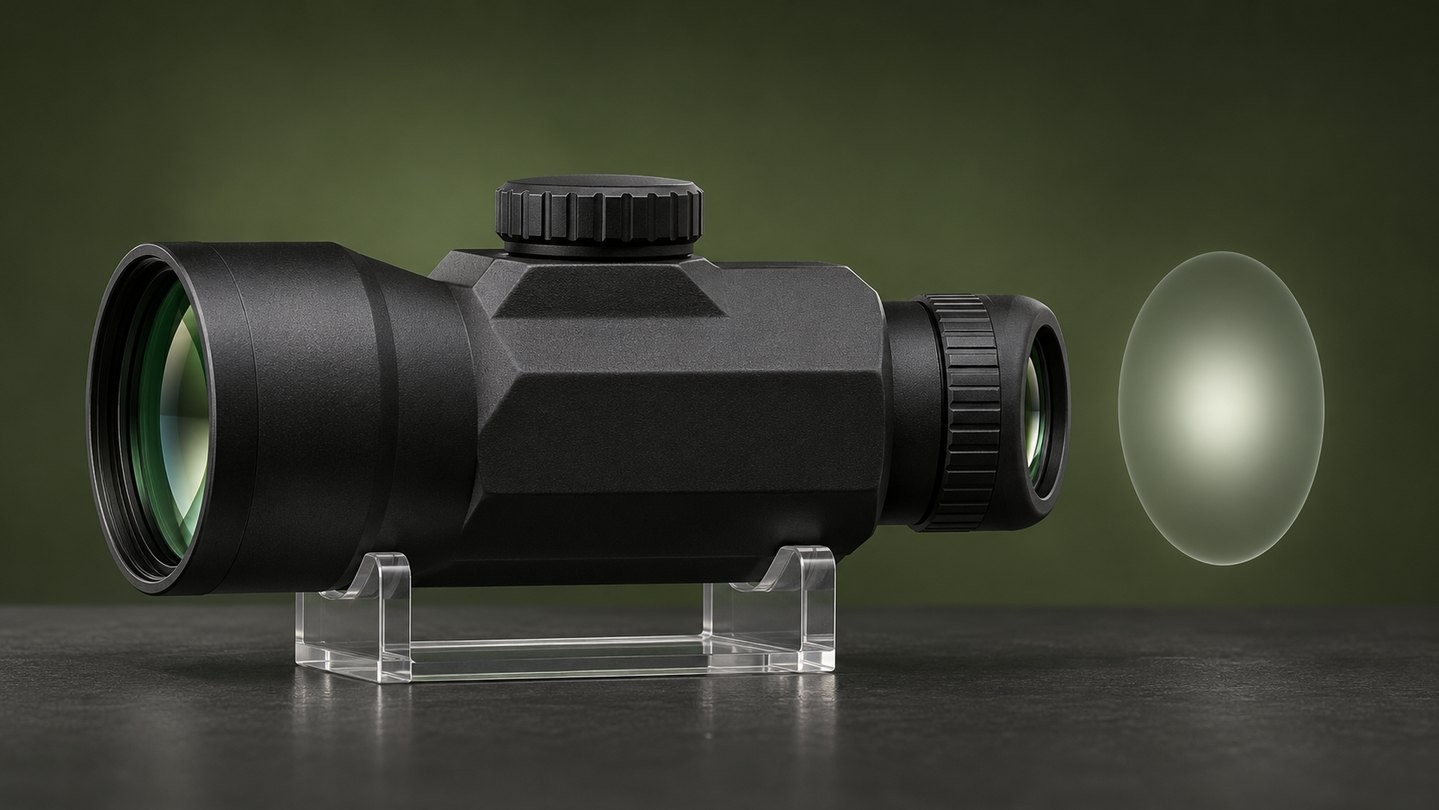
Light transmission is an efficiency measurement. It does not tell you how large the beam leaving the eyepiece will be.
Exit pupil is calculated by dividing the objective diameter by magnification. A 50 mm scope at 10× has a nominal 5 mm exit pupil; at 20×, it is 2.5 mm. The scope has not suddenly lost half its transmission, but the beam delivered to your eye is narrower.
That is why increasing magnification can make the view feel less forgiving or less bright in low light, even though the coatings have not changed. Our exit-pupil guide covers the calculation and its practical limits. If you are comparing larger front lenses, see the guide to 40 mm, 44 mm, 50 mm, and 56 mm objectives.
Does ED glass increase light transmission?
ED glass and light transmission describe different properties. Extra-low-dispersion glass is used to help control chromatic aberration—the colour fringing caused when different wavelengths do not focus at exactly the same point. It can improve colour correction and fine-detail rendering, but the letters “ED” do not guarantee a particular transmission percentage.
A well-designed scope may use ED elements, effective broadband coatings, careful baffling, and suitable lens geometry together. Judging any one label in isolation misses the way the complete optical system works. Our article on ED glass and chromatic aberration explains that distinction.
How to compare scopes more sensibly
Start with specifications, but do not stop there. When a transmission figure is published, look for context:
- Is it a complete-system measurement or a lens/coating value?
- Is it a peak, an average, or a weighted value across the visible spectrum?
- Does the manufacturer identify the measurement range or standard?
- Are glare control, contrast, and colour fidelity discussed separately?
- Are you comparing the scopes at the same magnification and in the same light?
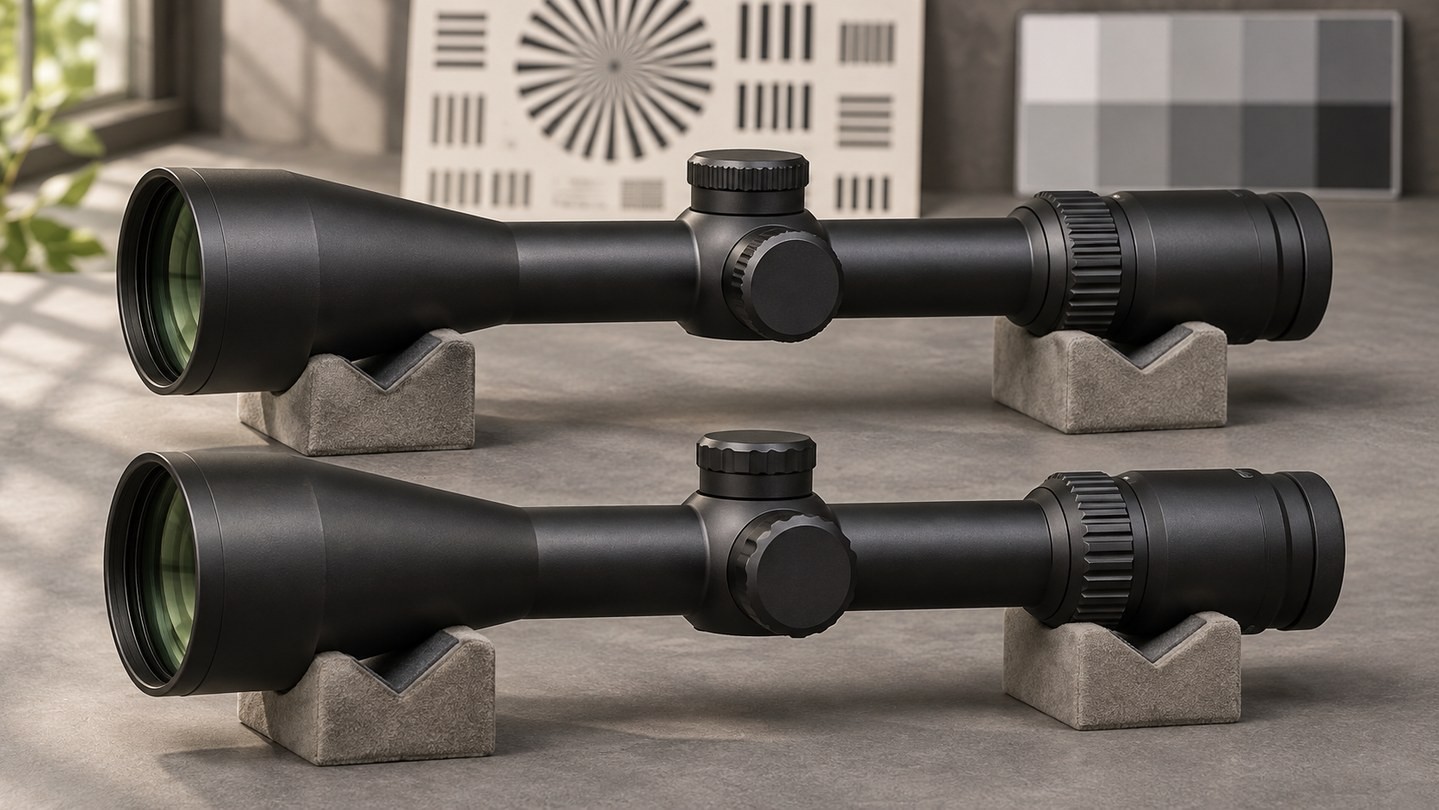
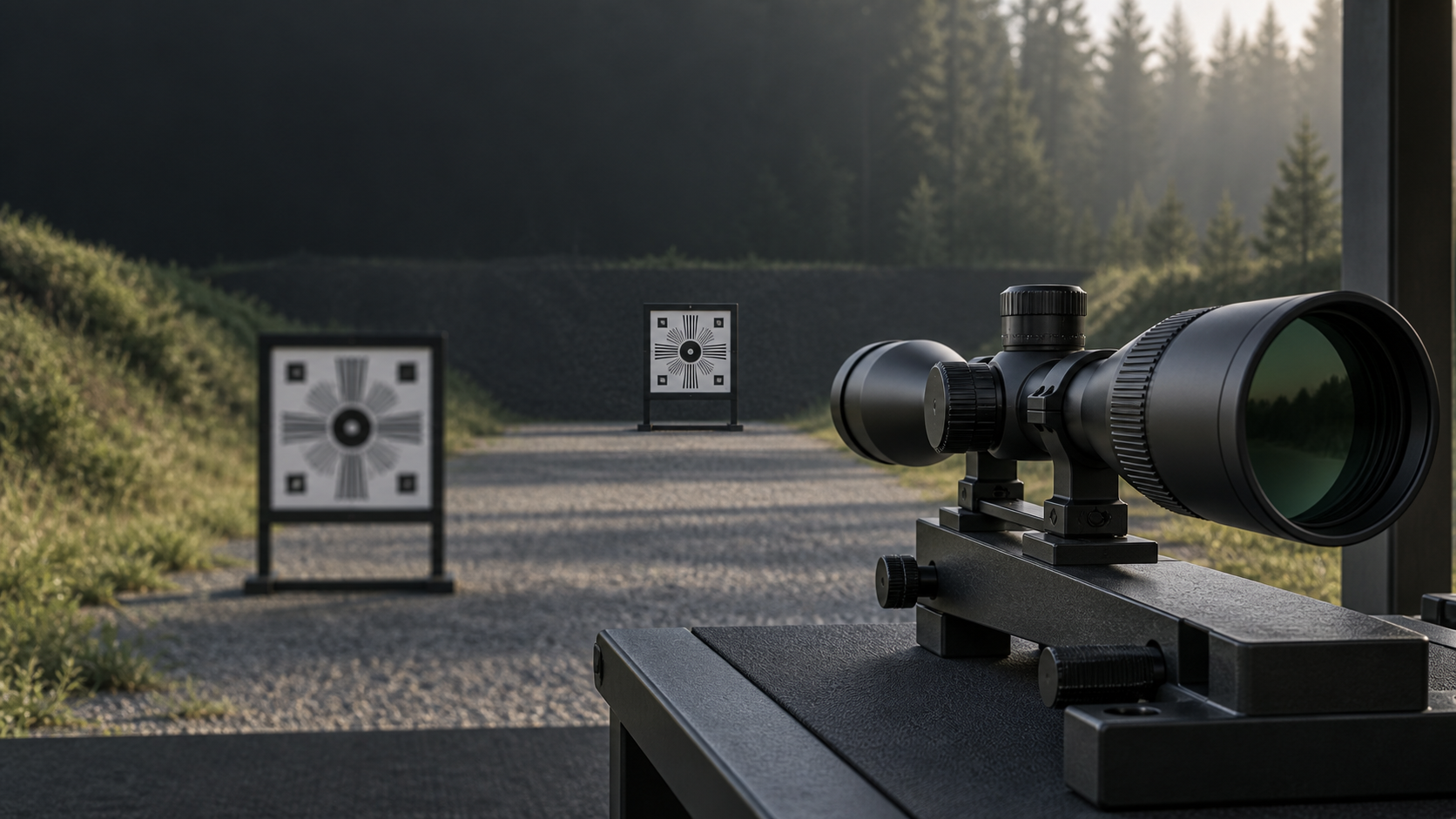
For a practical side-by-side check, set both scopes to the same power and look at the same detailed scene. Use a shaded subject with a brighter area nearby rather than pointing the optics at the sun. Check whether fine edges remain distinct, whether shadows turn flat and grey, and whether colour looks natural. Repeat the comparison as the ambient light changes.
Keep eye position consistent too. A dark crescent or black ring is usually an alignment or eyebox issue, not proof of poor transmission. The eyebox guide will help separate those symptoms.
What should you take from the number?
Light transmission is a real and meaningful optical property, but the percentage needs a definition. It tells you how efficiently light passes through a measured system under stated conditions. It does not, by itself, tell you how sharp the image is, how well the scope handles glare, how natural the colour looks, or how comfortable the view will be at high magnification.
Use the number as supporting evidence. Give more weight to a transparent test method, consistent performance across the visible spectrum, and a balanced image with useful contrast. In the field or at the range, the view you can read confidently matters more than the largest percentage printed in a product description.
For more plain-language optics explanations, browse the USEEIN Buying Guides.


Leave a comment