Rain on the outside of an optic does not automatically mean water has entered it. The first job is simpler: get it out of the weather, remove exterior moisture without grinding dirt into the glass, and let the housing dry before closing it in a case. If moisture appears inside a sealed optical path, stop home treatment and contact the maker.
Check the manual before handling controls
Find the exact model and its care instructions. “Waterproof” describes a tested design under stated conditions, not permission to ignore wet caps, damaged seals or storage in a damp bag. Our guide to waterproof, fogproof and IP claims explains why the wording matters.
Do not assume every control should be operated while wet. Nikon's fieldscope manual, for example, cautions against turning its focusing ring when the instrument has been exposed to rain. That instruction belongs to those models; check your own manual for the appropriate limits. Keep a newly wet optic away from unnecessary adjustments until you know what its maker permits.
Remove surface water gently
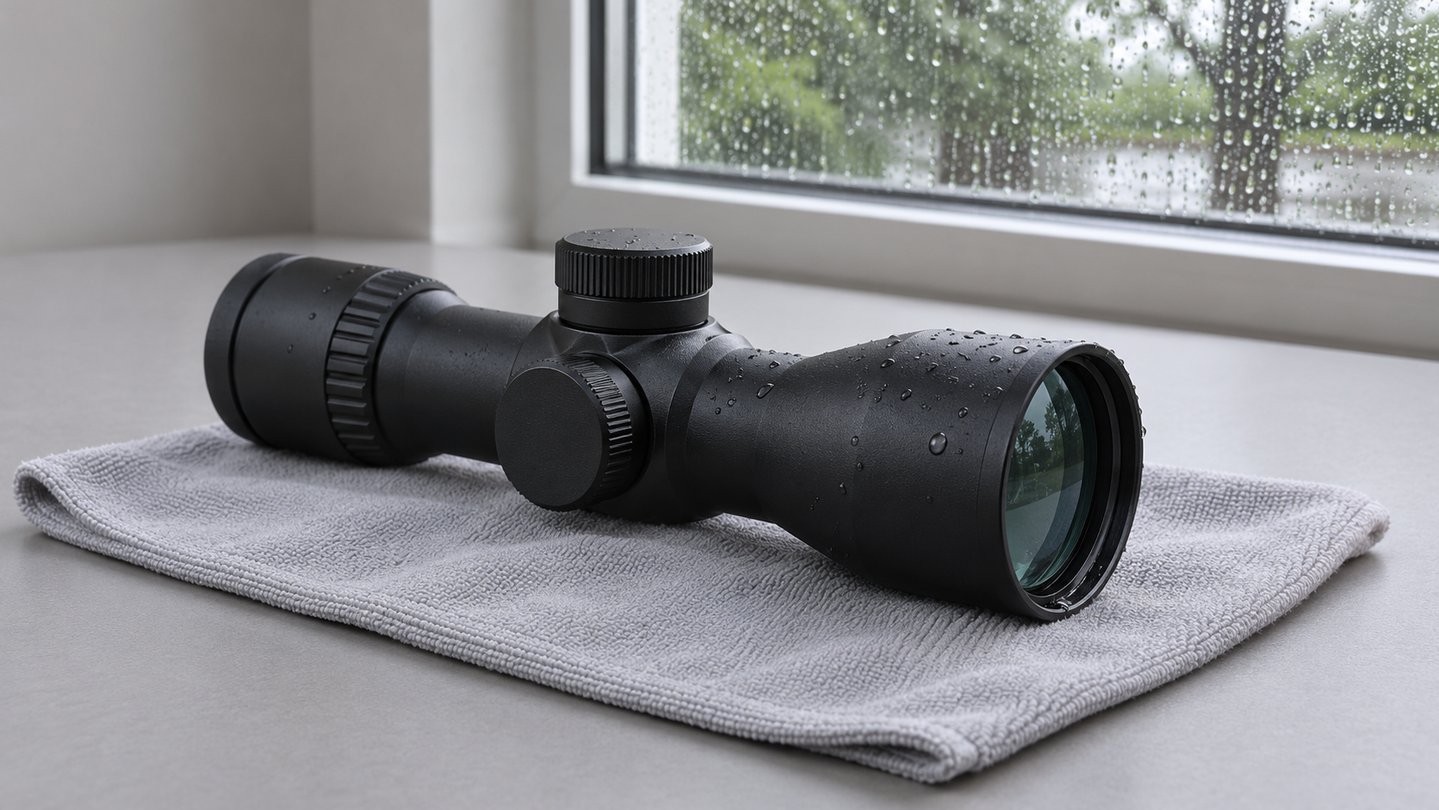
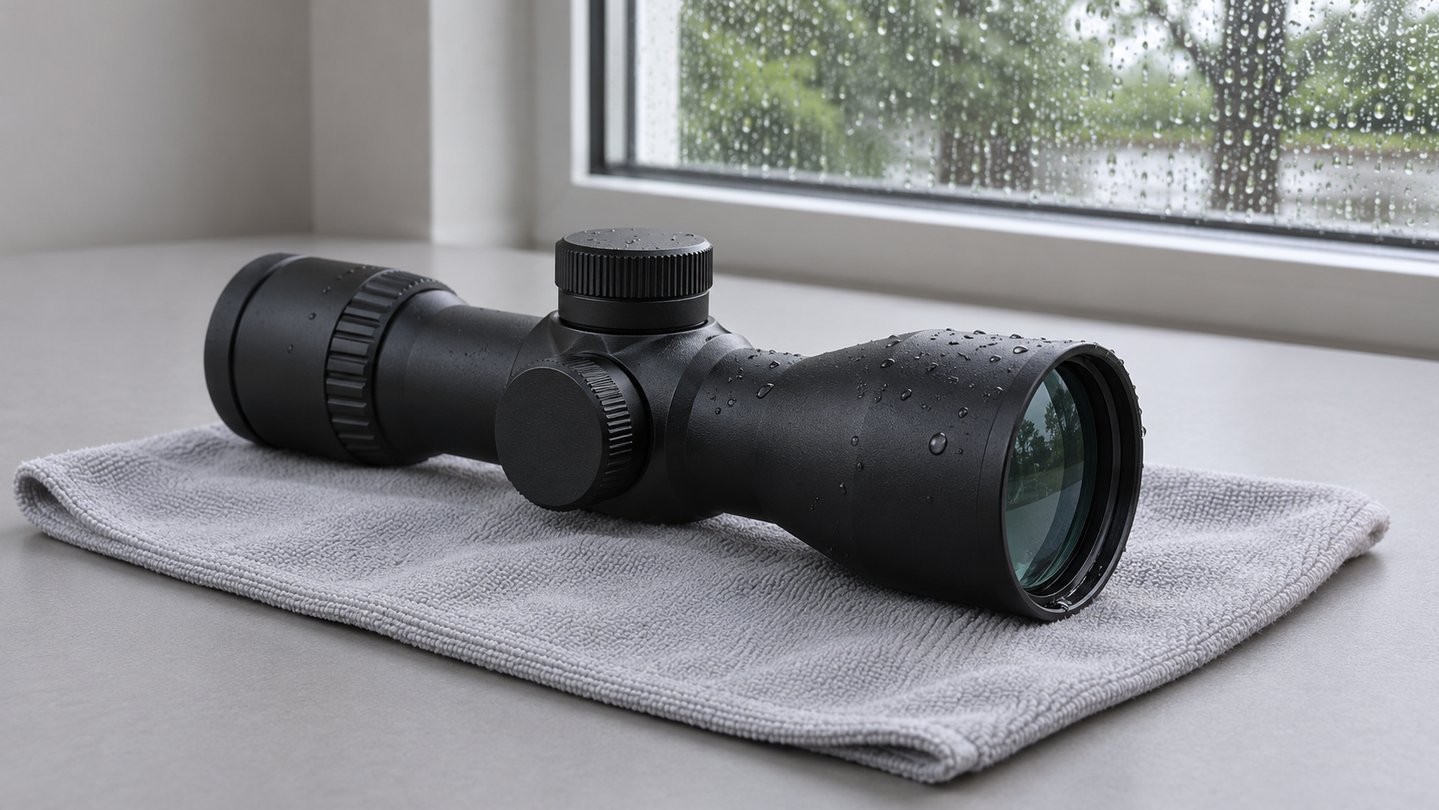
Set the optic on a clean, dry cloth in a sheltered place. Blot visible water from the exterior body with a soft, clean cloth. Pay attention to seams and the outside of caps, but do not push cloth, cotton swabs or compressed air into gaps. If grit or mud is present, lift loose particles away before wiping. Rubbing a sandy droplet across a coated lens can create damage that the rain itself did not cause.
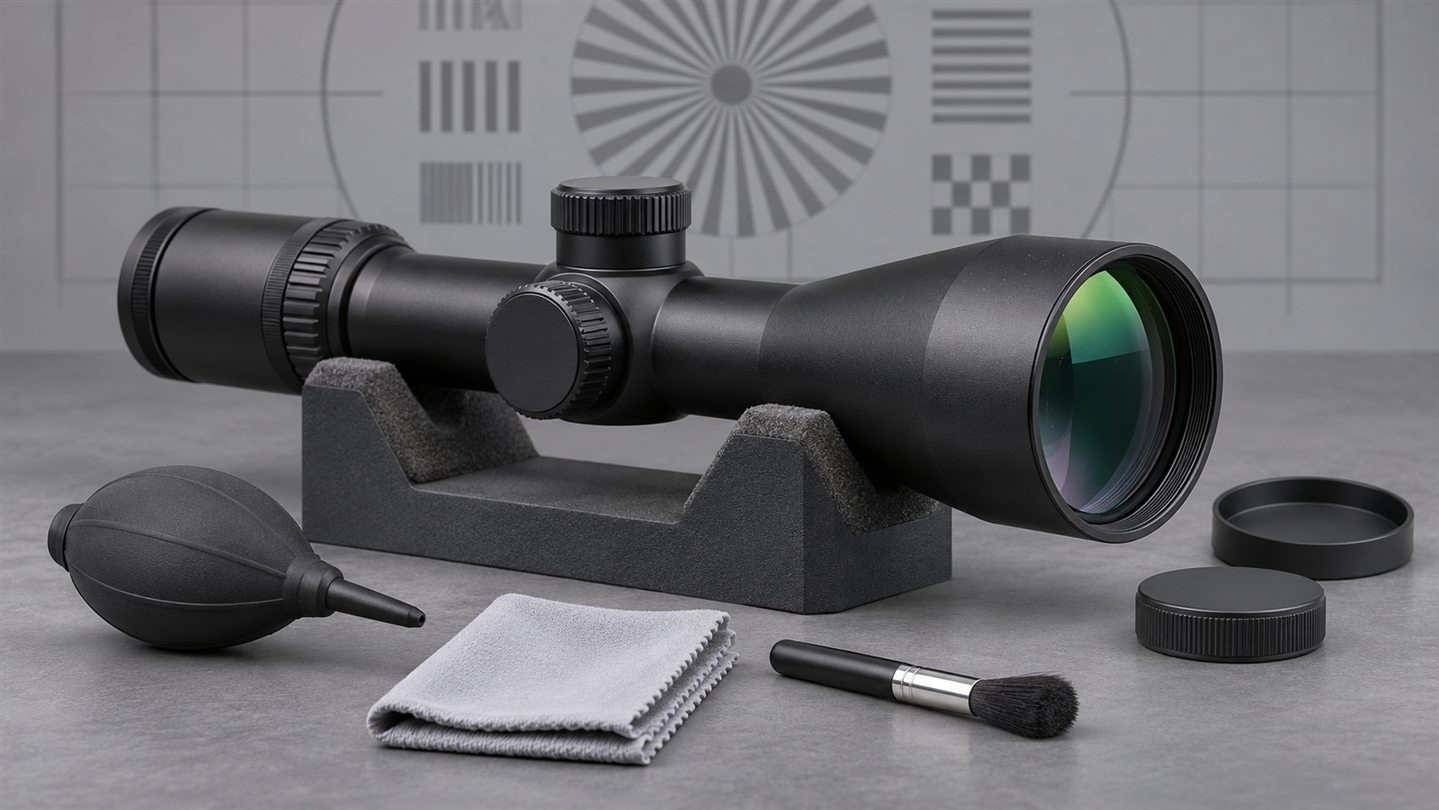
Treat the glass as a separate surface. Let large droplets run off or touch the edge of a clean lens tissue to absorb them; avoid dragging a dry cloth over particles. Then follow the model's lens-care instructions. Our particle-first scope-lens cleaning guide covers the careful cleaning sequence. Leupold's official cleaning guidance likewise separates body wipe-down from gentle lens cleaning. Use only a cleaning fluid approved for the optic if water marks remain.
Let the housing dry at room temperature
Leave the optic in a clean, ventilated indoor area until the exterior, caps and case-contact surfaces are dry. Nikon's fieldscope instructions specifically call for thorough room-temperature drying after use on a rainy day, followed by storage in a cool, dry place. Avoid a heater, hair dryer, direct hot sun or a closed hot vehicle. Fast heat is not a reliable way to remove water from a sealed assembly and may stress materials.
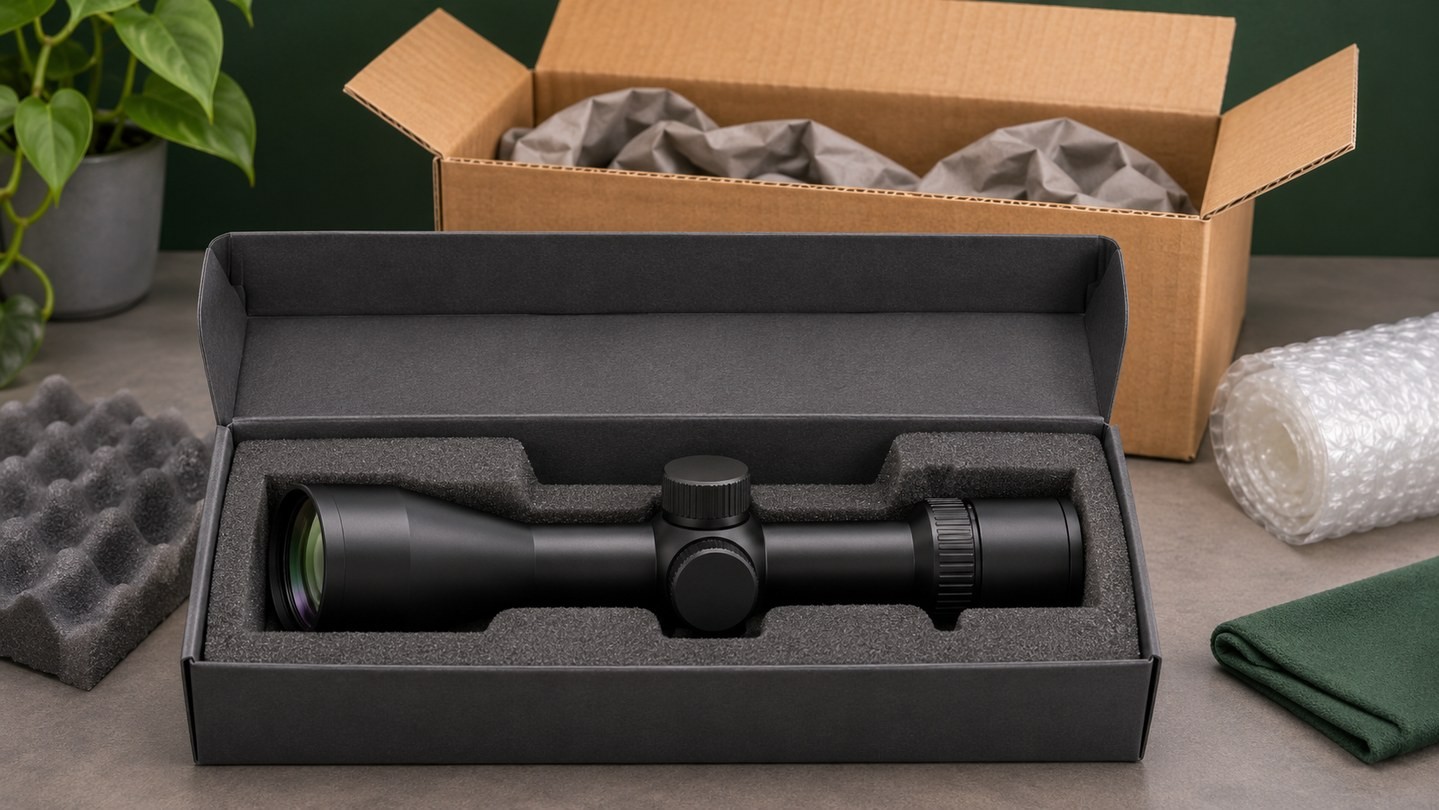
Keep a wet carrying pouch open separately. A dry optic placed back into damp foam or fabric can stay wet much longer than it would on a shelf. Before closing a case, touch-check its lining, straps and cap interiors for moisture. Our optics storage guide covers the longer-term dry-storage routine.
Distinguish outside fog from an internal problem
After moving between temperatures, moisture may condense on an outer lens even when the seals are intact. Wait for the optic to reach room temperature and inspect both lens surfaces in soft light. Exterior droplets or mist should be reachable without disassembly. A cloudy patch that stays behind the glass, moves between internal surfaces or reappears after the outside is dry deserves professional advice.
Do not loosen a lens cell, turret housing or sealed cap to “let it breathe.” Opening a sealed optic can make an uncertain problem worse and may affect service coverage. Our guide to exterior condensation and internal fogging gives a more detailed observation method. If you cannot tell where the moisture is, photograph it from both sides and ask the maker before further use.
Check only user-accessible areas
When the outside is dry, inspect the user-accessible battery cover or compartment only if the manual allows it. Look for water, residue or a damaged seal, and follow the exact model's battery-handling instructions. Do not probe electrical contacts or force a swollen tray. A fresh battery or a working light does not establish that moisture never entered the housing.
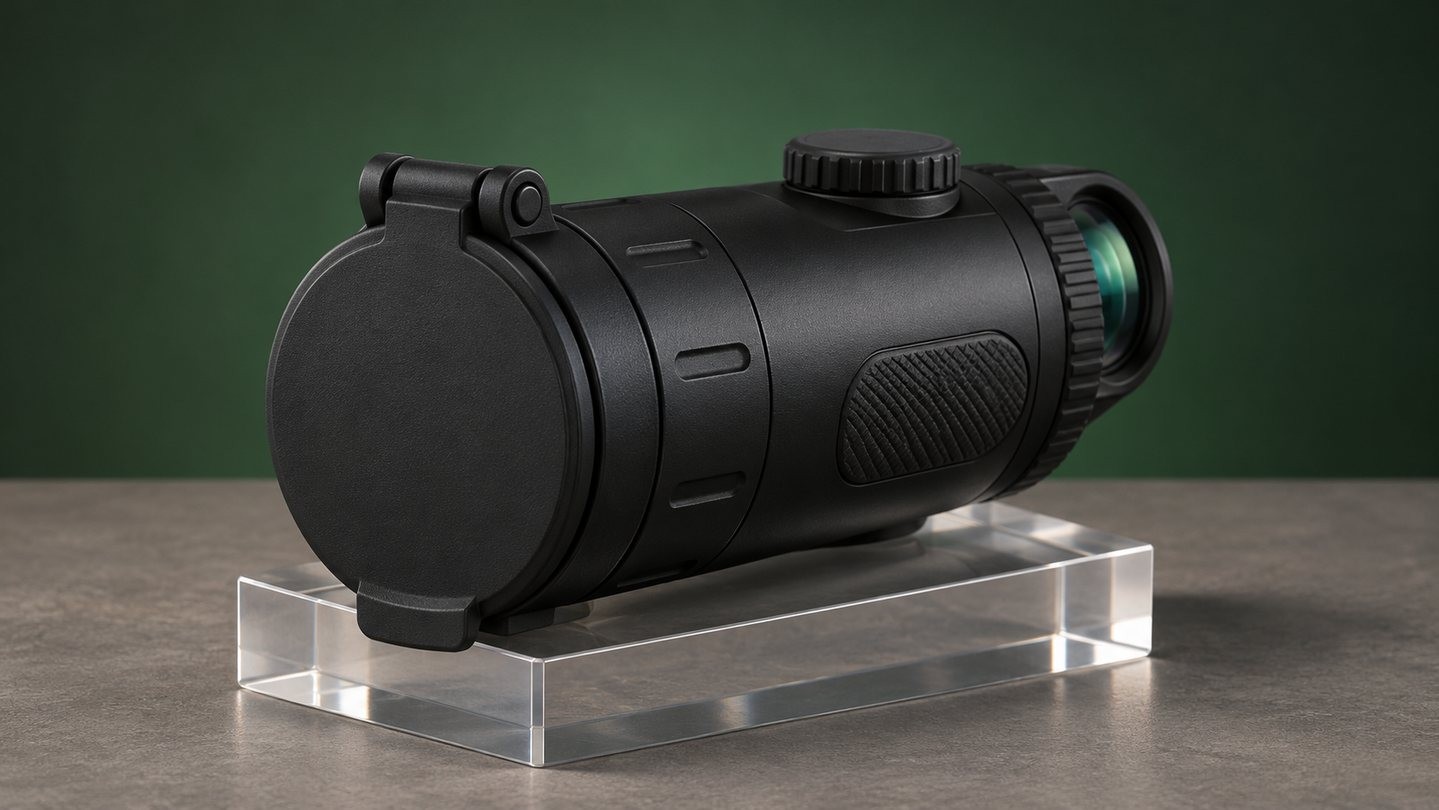
Check lens caps and other removable accessories separately. Let them dry before refitting. If a cap has a visible seal, confirm that it sits as the manual shows; avoid tightening harder than directed. For an optic exposed to immersion, salt water, a damaged seal or persistent electronic faults, contact the maker rather than relying on a home drying routine.
Recheck before storage or use
Once dry, inspect the outside for new stains, loose parts or a change in the view. Operate normal controls only as the manual permits. Record any intermittent illumination, unusual resistance or persistent haze with photos and a short description of the rain exposure. This is evidence for support, not proof of a failed seal or a passed waterproof test.
The practical sequence is shelter, blot, clear particles, dry at room temperature, inspect, then store in a dry case. If the issue is internal or returns after drying, stop and seek model-specific service advice. After cold-weather rain, also follow a gradual warm-up routine; our cold-weather optics care guide explains that separate condensation risk.




Leave a comment