Optics often spend more time stored than in use. A clean, dry cabinet can preserve them; a damp foam case with an old battery can create problems that remain hidden until the next outing.
Dry the optic before closing it away
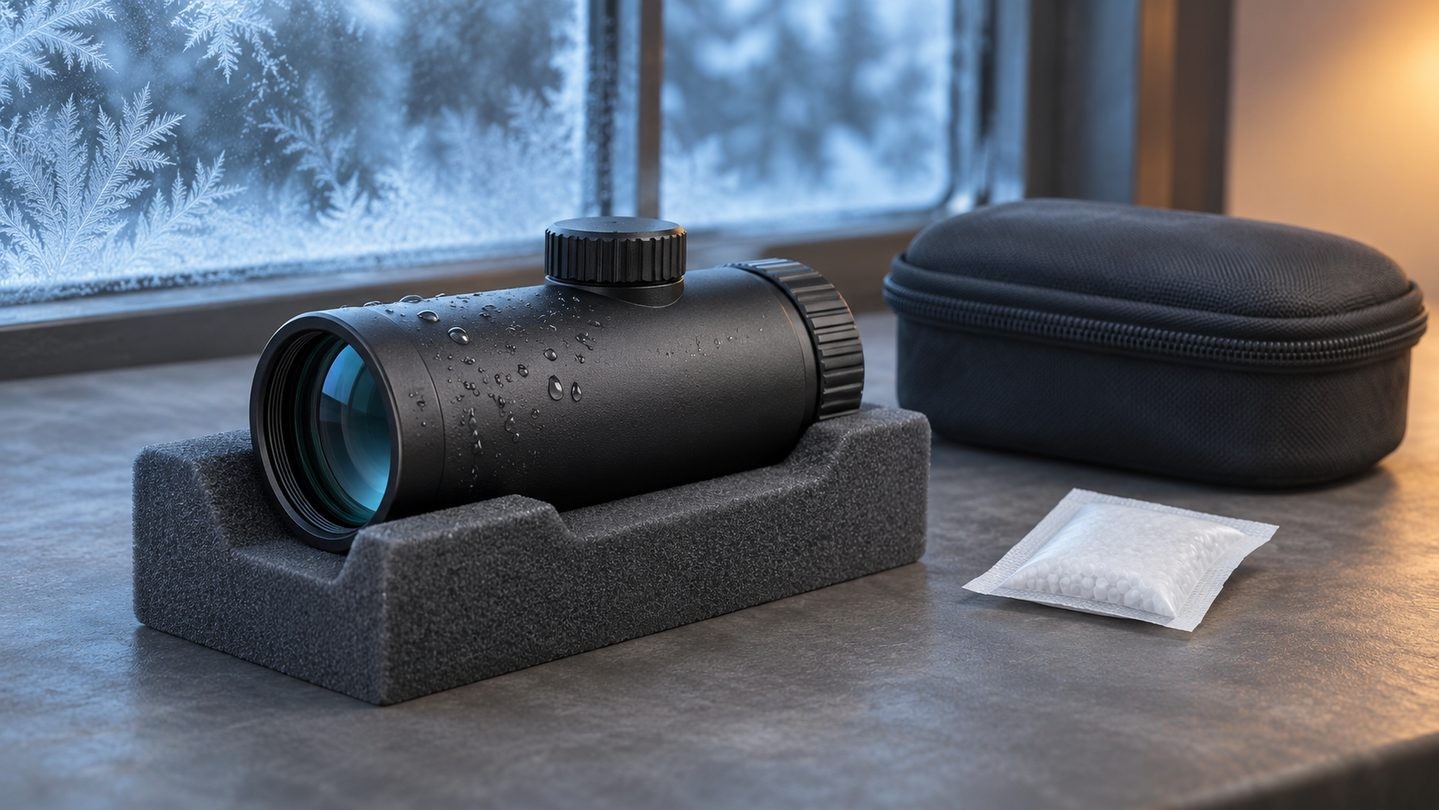
After rain, condensation or a large temperature change, wipe the exterior and allow the optic to reach a dry, stable condition before long-term storage. Closing moisture inside a case can affect metal surfaces, fasteners and accessories even when the optic itself is described as waterproof.
Use cases for protection, not permanent damp sealing
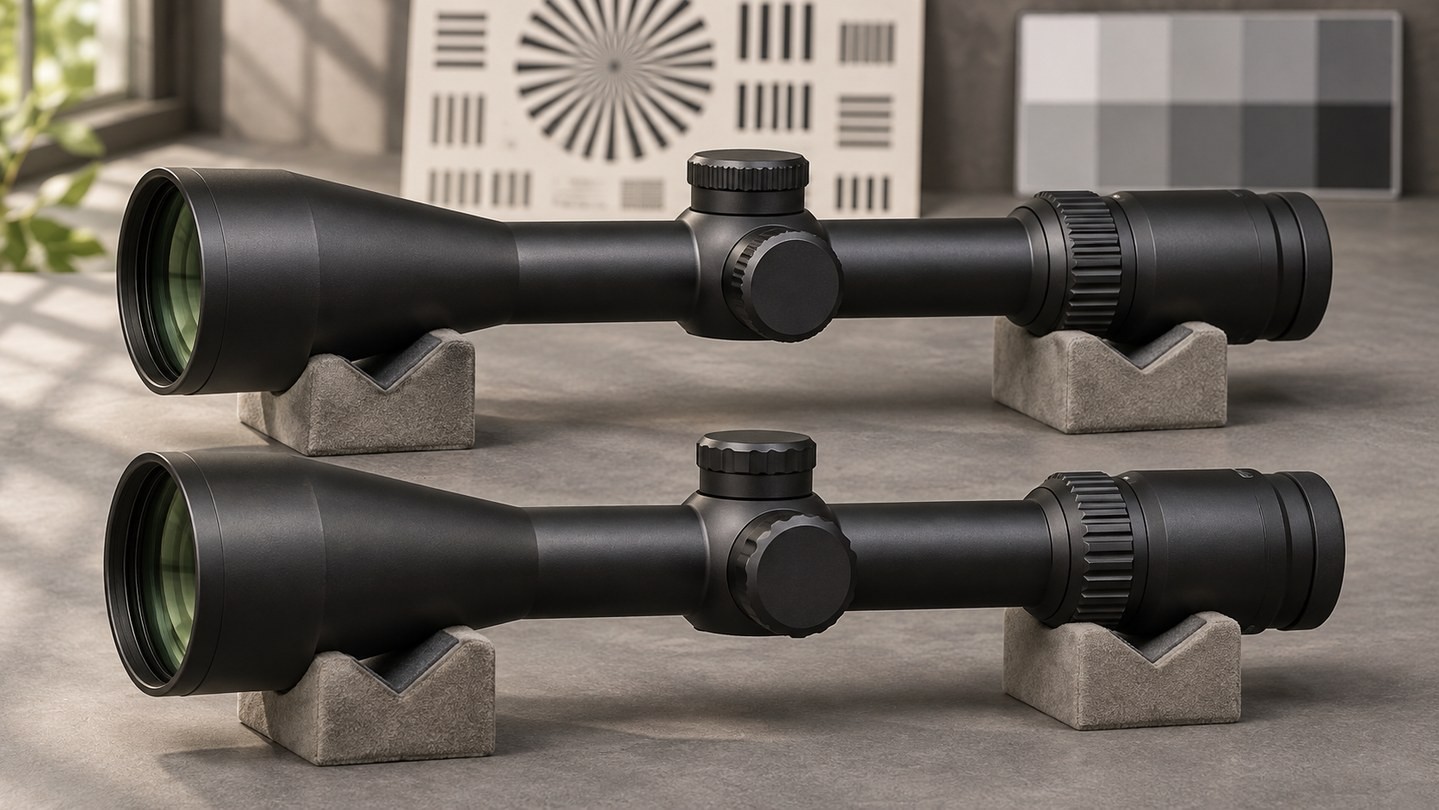
A fitted case protects against impact and dust during transport. Foam can also retain moisture. For longer storage, follow the manufacturer’s guidance and choose a ventilated, climate-stable location rather than assuming a sealed transport case is always ideal.
Manage batteries deliberately
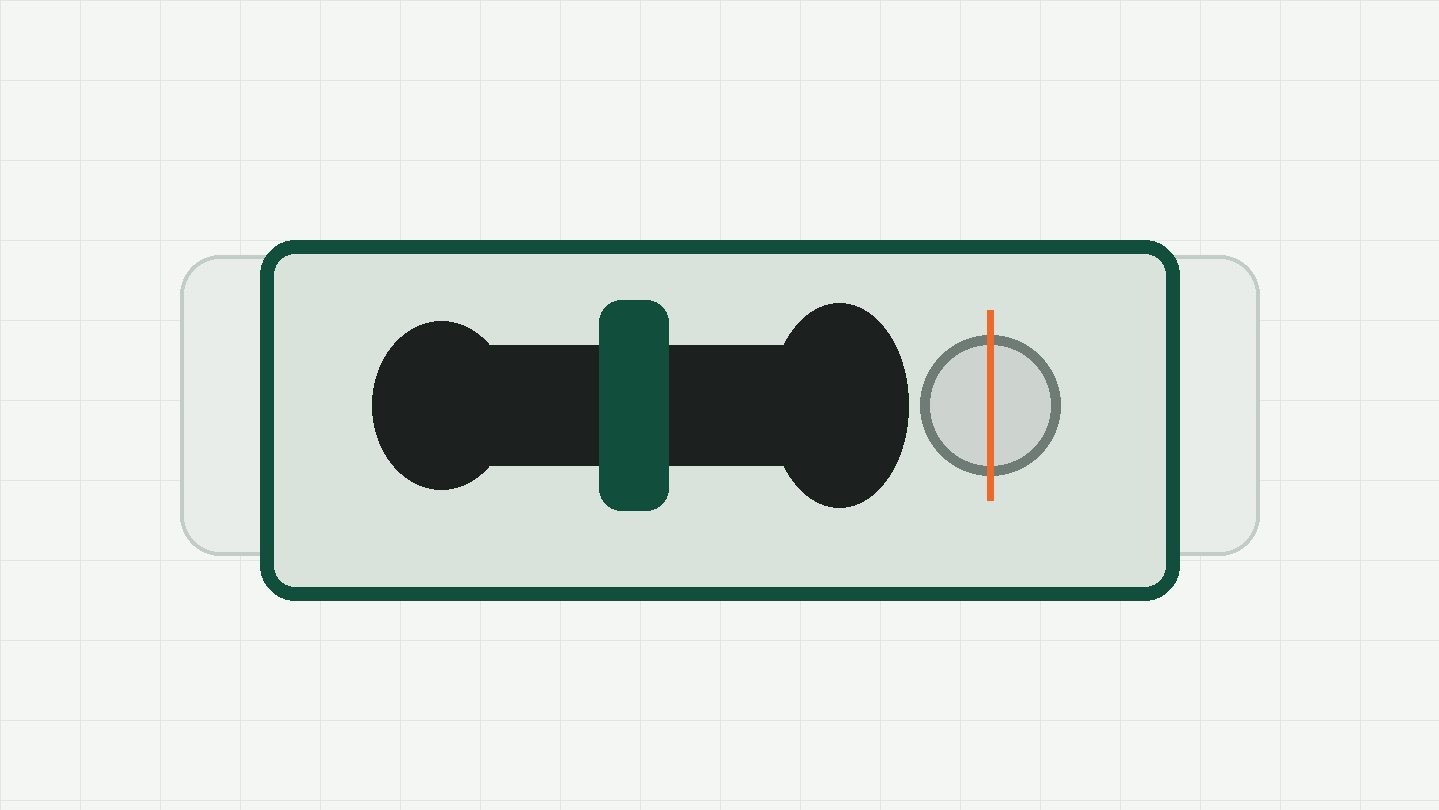
Check the manual for the exact electronic optic. For prolonged storage, many manufacturers recommend removing the battery to reduce leakage risk. Record the cell type and installation date, and keep spares correctly packaged so their terminals cannot short against metal.
When reinstalling, inspect the compartment, seal and cap. Replace a damaged O-ring or corroded part with the correct component rather than forcing the cap closed.
Protect lenses only after cleaning correctly
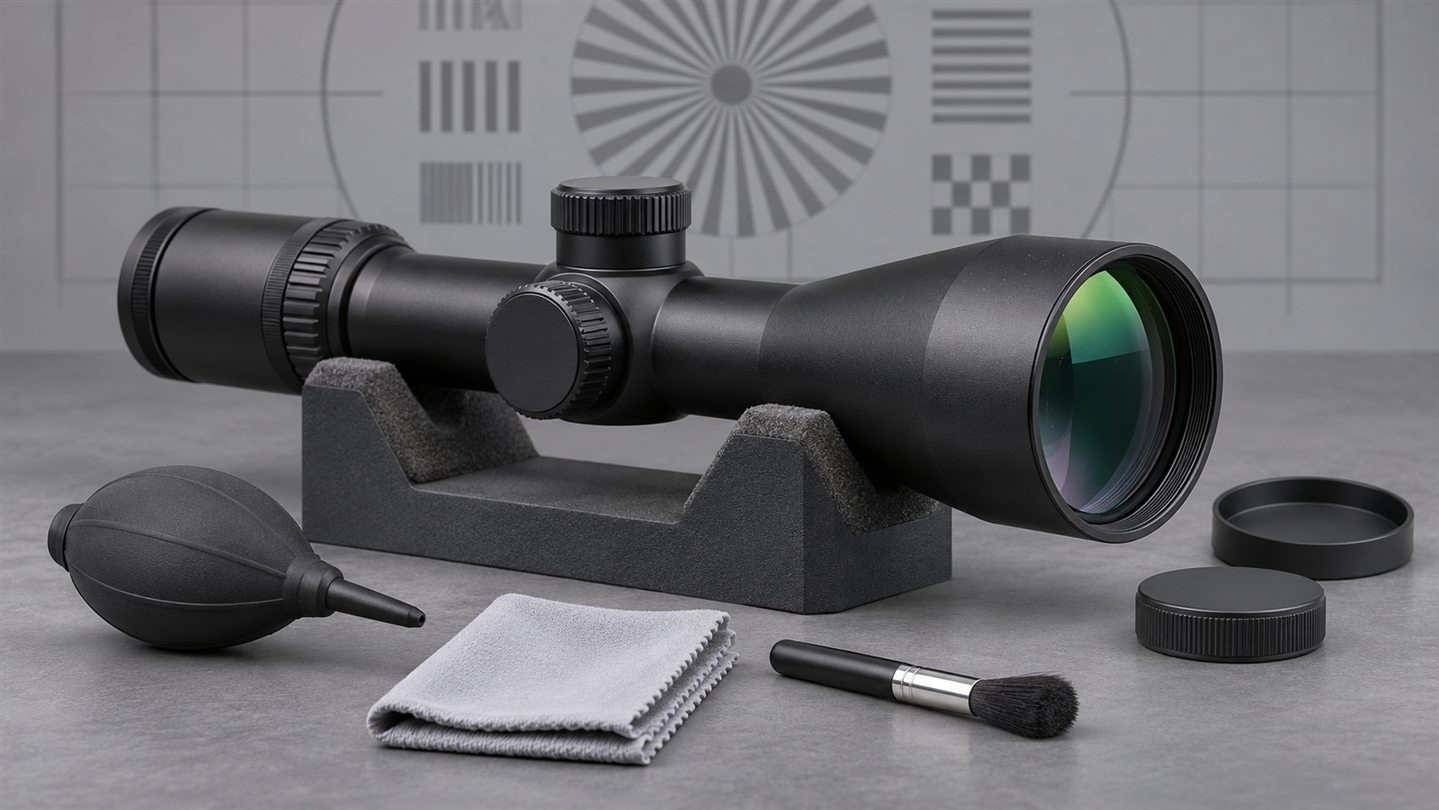
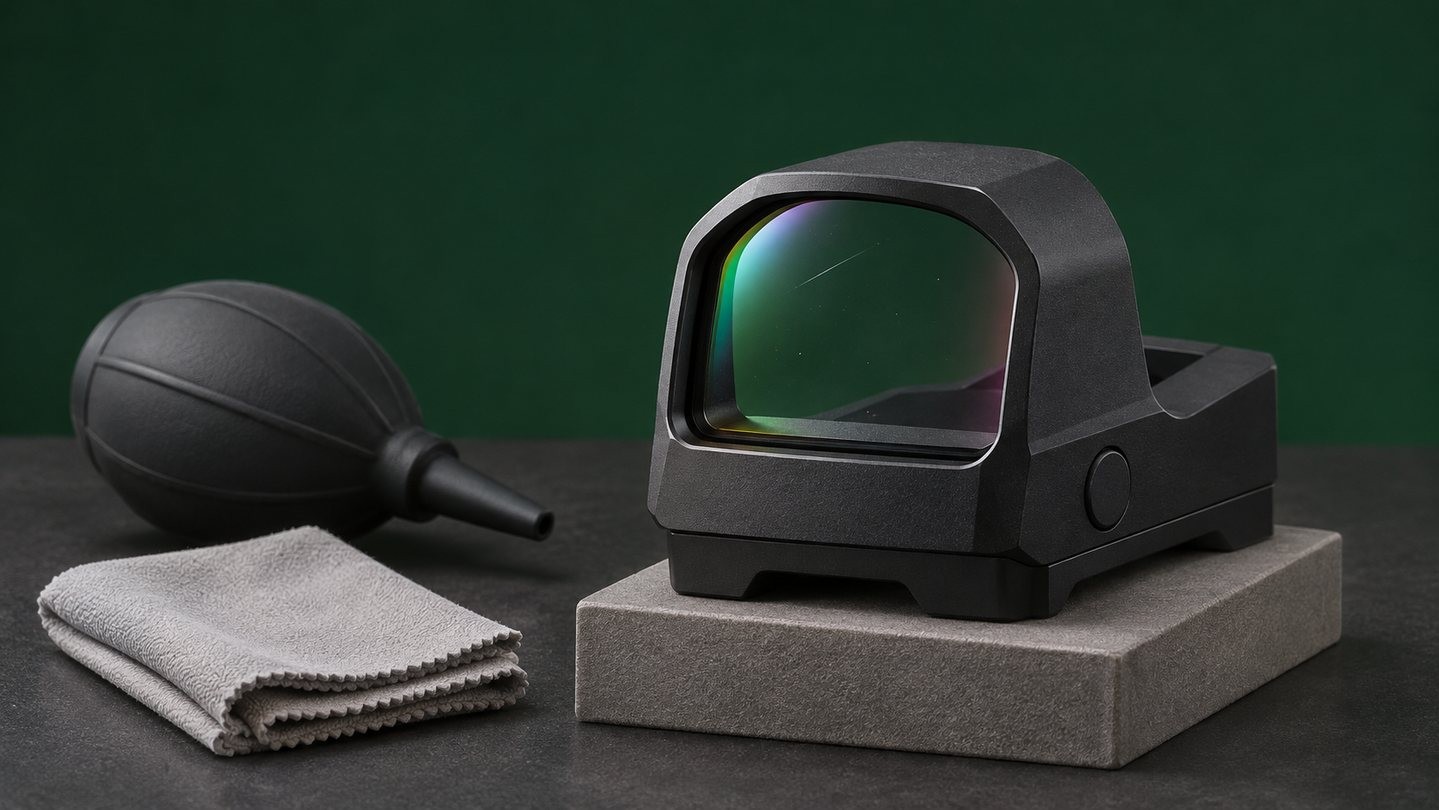
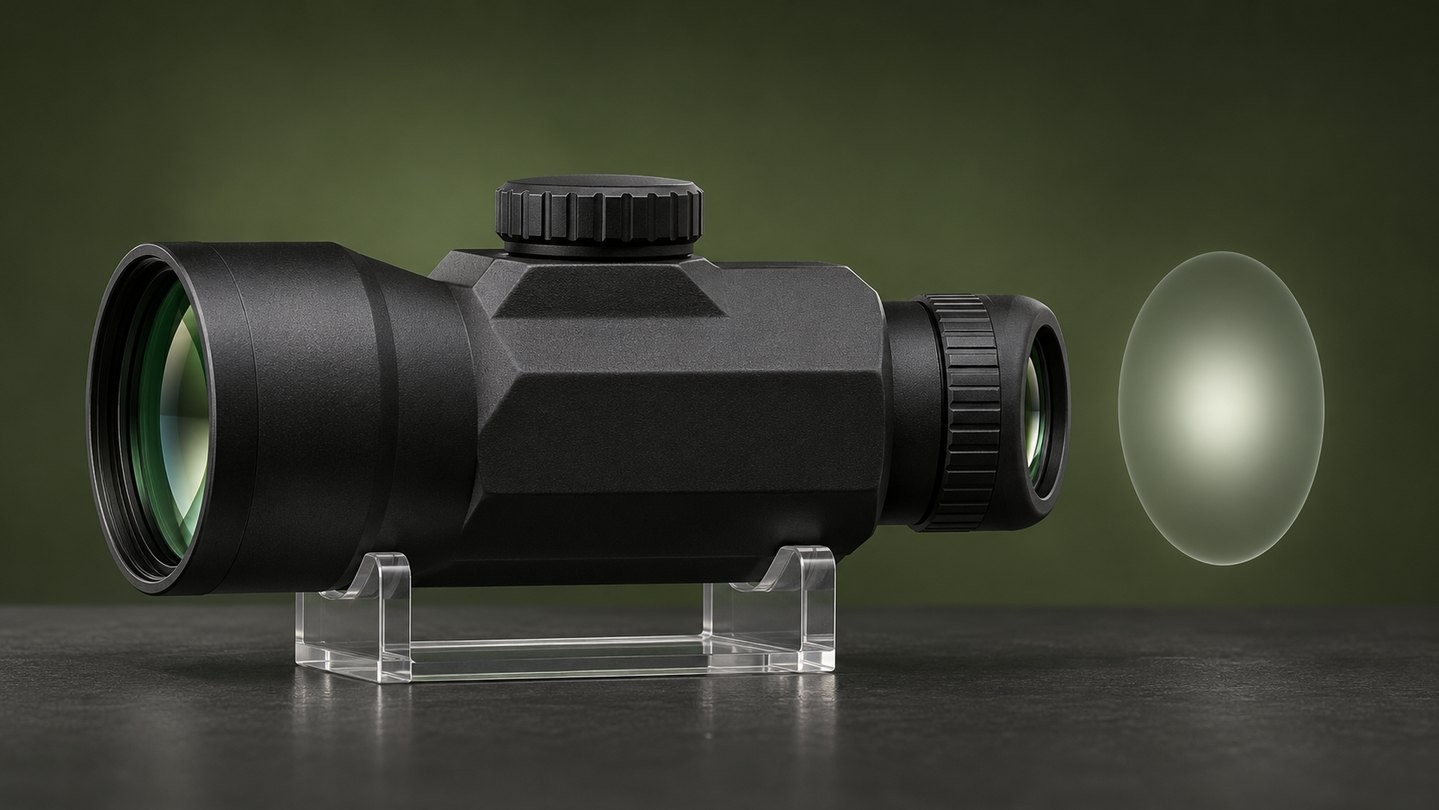
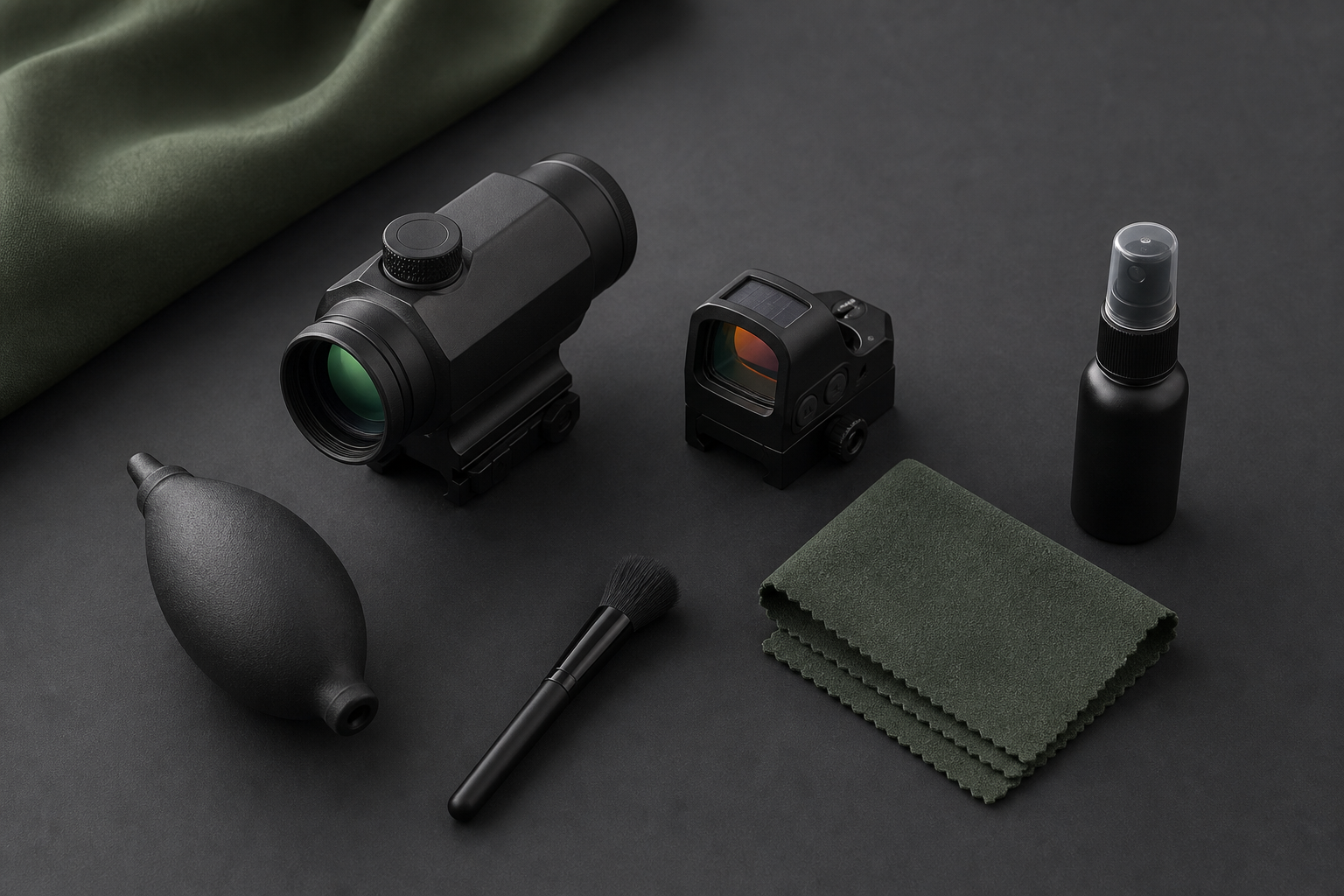
Remove loose grit with a blower or soft lens brush before wiping. Use suitable lens tissue or a clean microfibre cloth and approved cleaner. Rubbing dry grit across coatings can do more harm than leaving a small mark until proper tools are available.
Fit clean lens caps after the surfaces are dry. Our lens-cleaning guide gives a safer sequence.
Avoid chemical and temperature extremes
Do not store optics next to solvents, aggressive cleaners or materials that release vapours. Avoid places with large temperature swings, direct sun or persistent high humidity. Desiccant can help in a closed cabinet, but it must be monitored and renewed rather than forgotten.
Periodic storage check
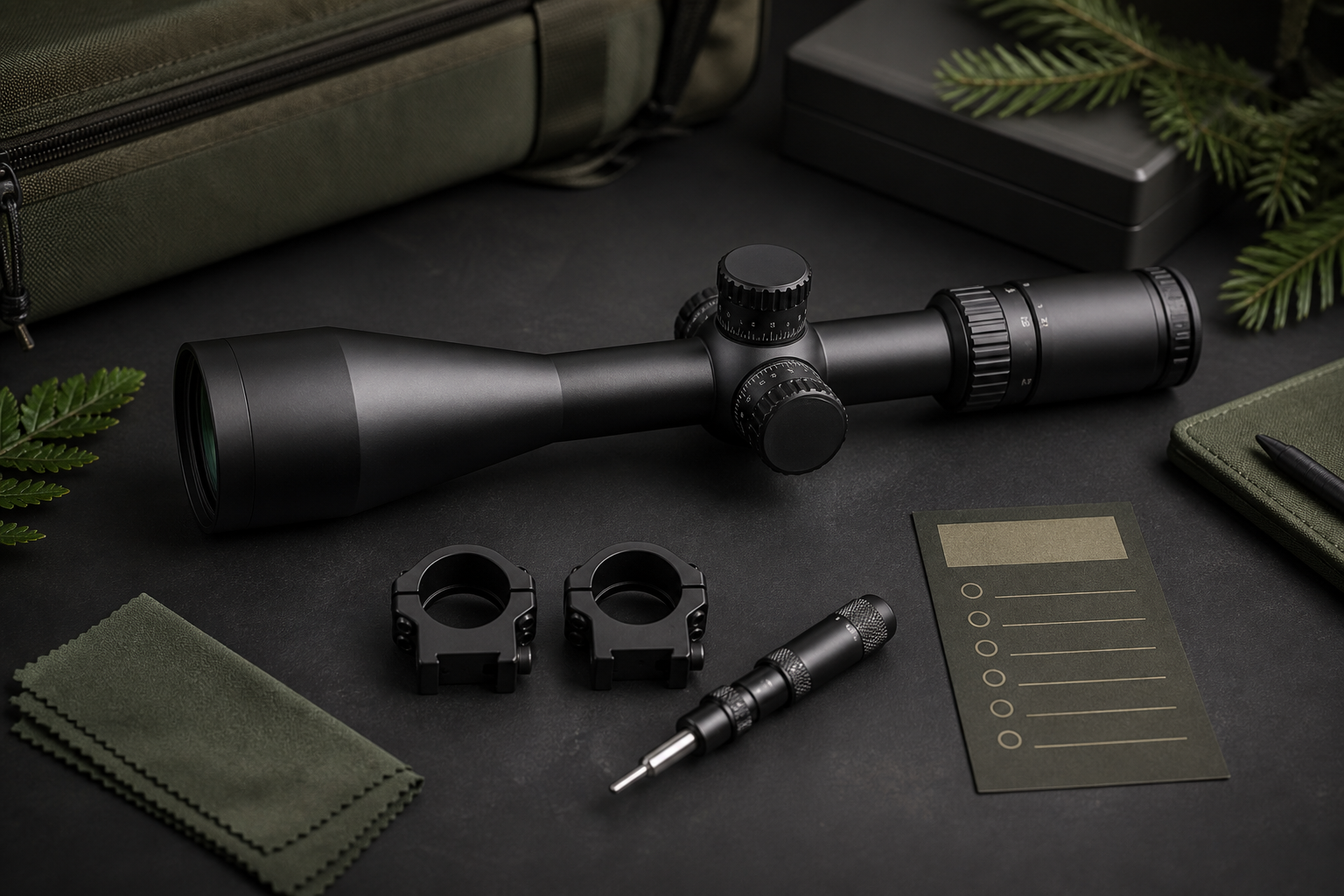
- Look for moisture, haze, corrosion or damaged seals.
- Check that controls move normally without forcing them.
- Inspect battery compartments and dates.
- Confirm caps and cases are clean and dry.
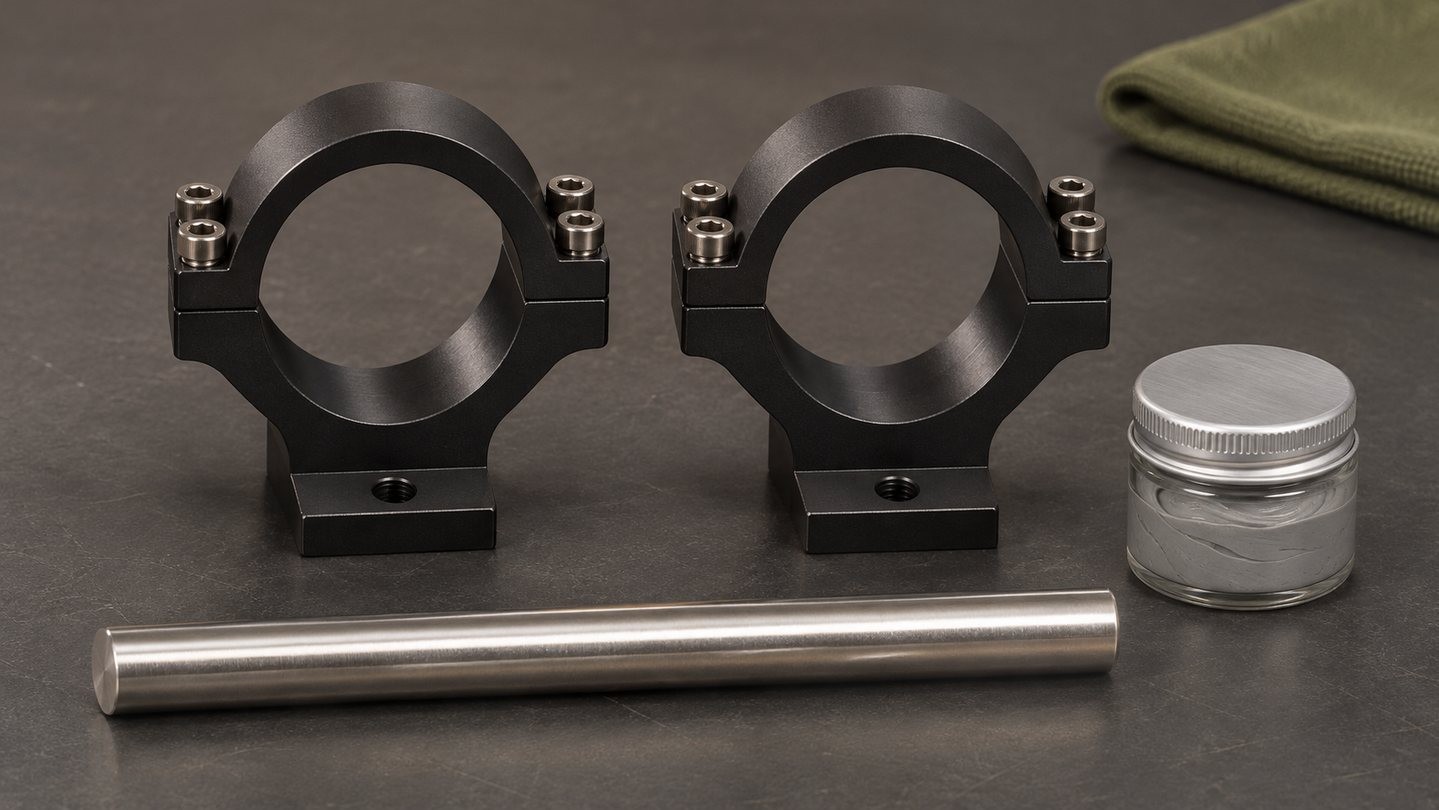
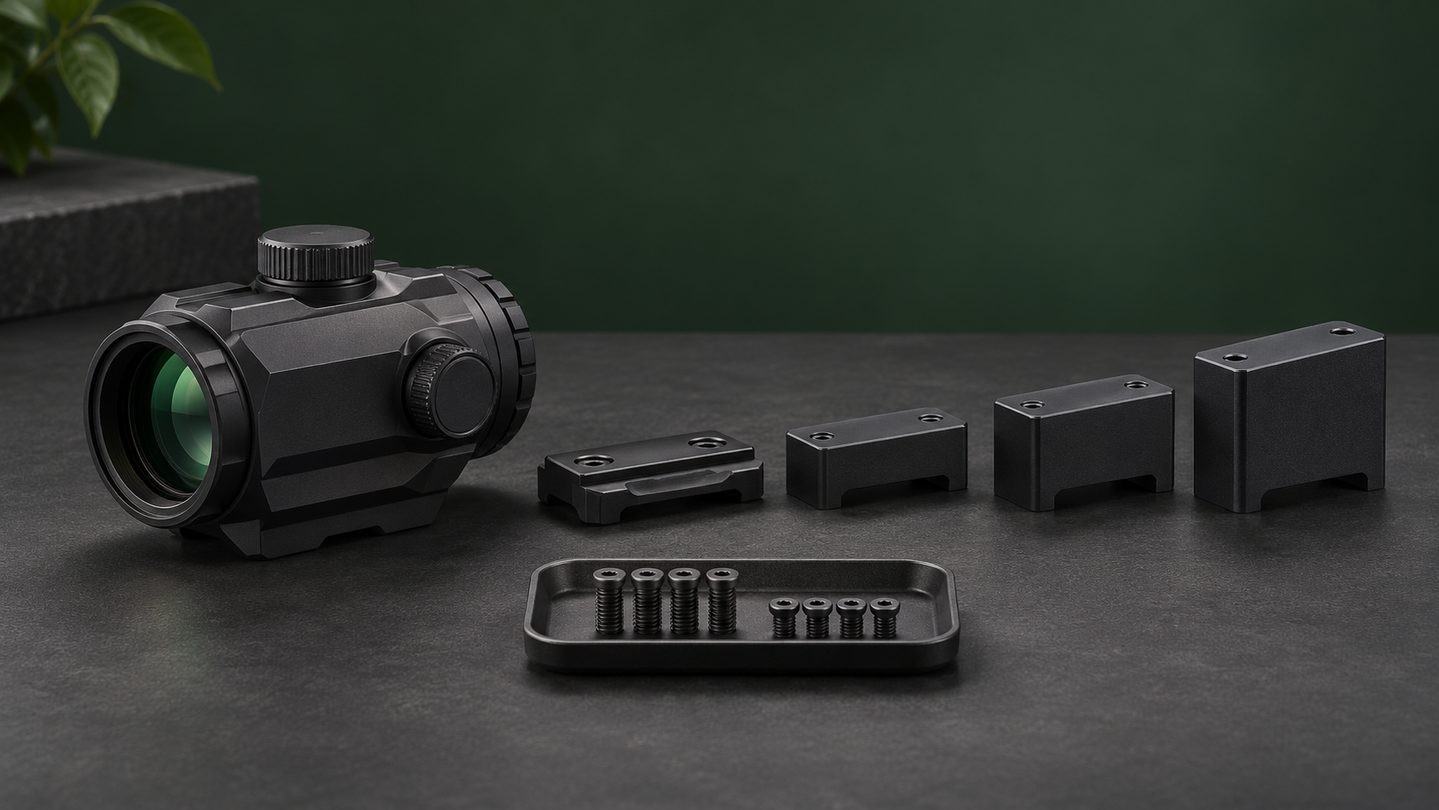
- Review mount screws before returning the optic to use.
Good storage is a routine, not a one-time action. Dry the equipment, manage batteries, protect clean lenses and inspect periodically so a small issue is found before it becomes permanent damage.
For more category-level comparisons, browse Sporting Optics or continue with the USEEIN Buying Guides.



Leave a comment