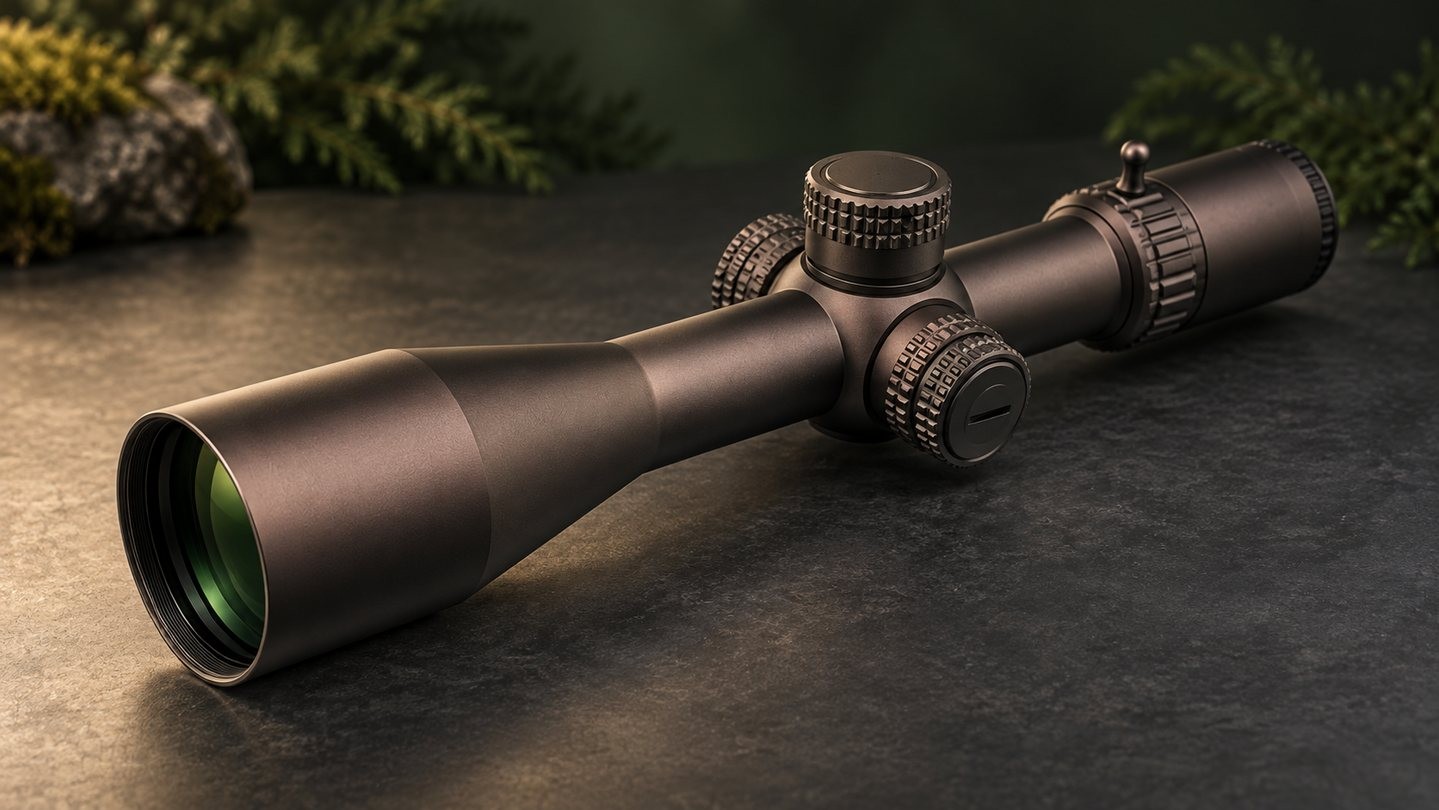
A fingerprint on the eyepiece can be surprisingly distracting. A few specks of dust on the objective lens usually are not. The temptation is to reach for a shirt sleeve and polish the glass until it shines, but that is exactly how harmless grit can become a permanent scratch.
The safest routine is simple: clean only when the view needs it, remove loose particles before you touch the lens, and use as little pressure and liquid as possible.
First, decide whether the lens actually needs cleaning
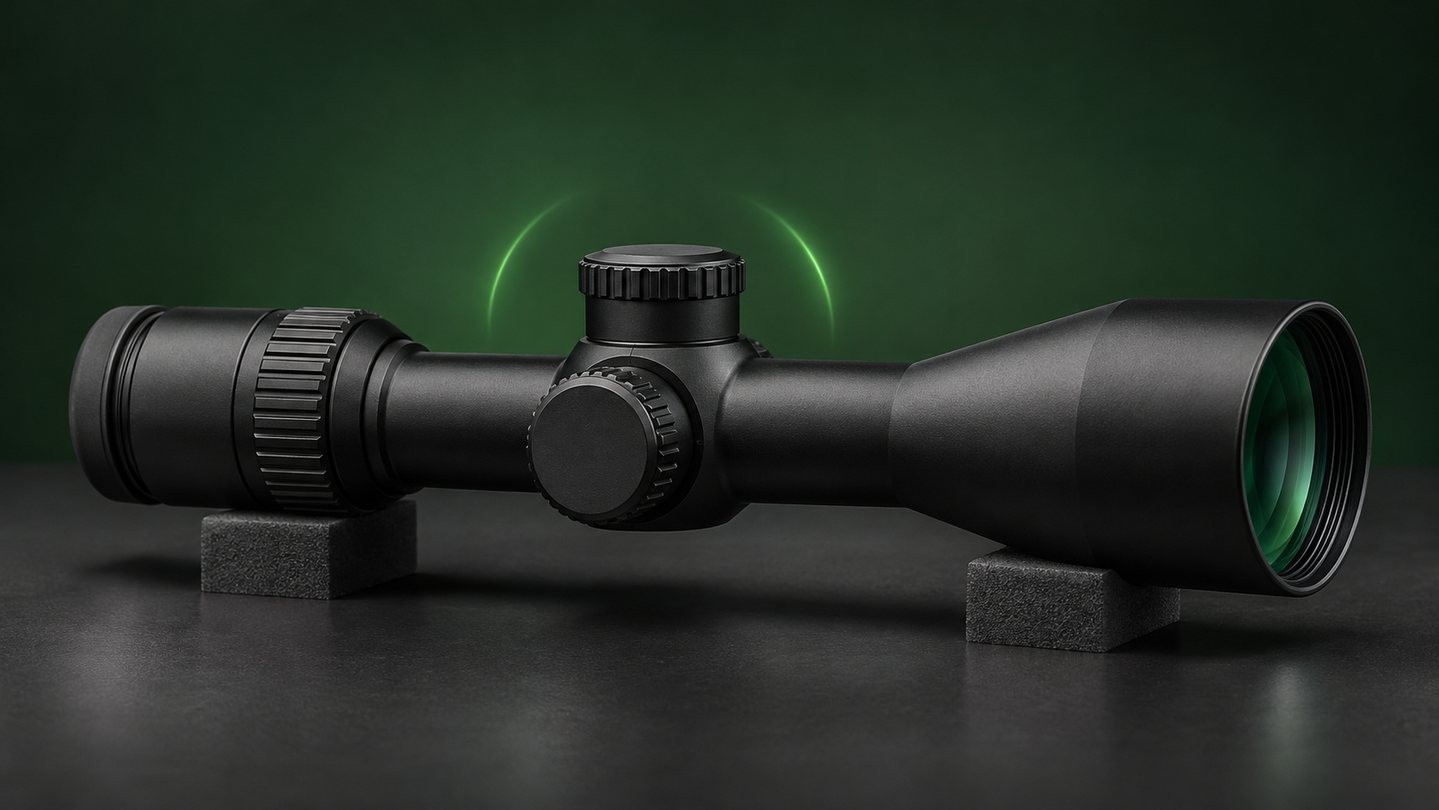
Scope lenses do not benefit from constant polishing. Every time a cloth touches the glass, there is a chance that a hard particle will be dragged across the coating. If a little dust is not affecting the sight picture, leave it alone and put the lens cap back on.
Eyepiece smudges tend to be more noticeable because they sit close to your eye. Water spots, fingerprints, dried spray and visible grit are reasonable reasons to clean. A nearly invisible speck on the front objective usually is not an emergency.
Before you begin, unload the firearm and follow the normal safe-handling procedure for your location. If practical, remove the optic or secure the unloaded firearm so the lens faces upward and you are not chasing dust around a vertical surface.
The safe order: blow, brush, moisten, wipe
The order matters more than the brand of cloth in your kit.
1. Blow away loose dust
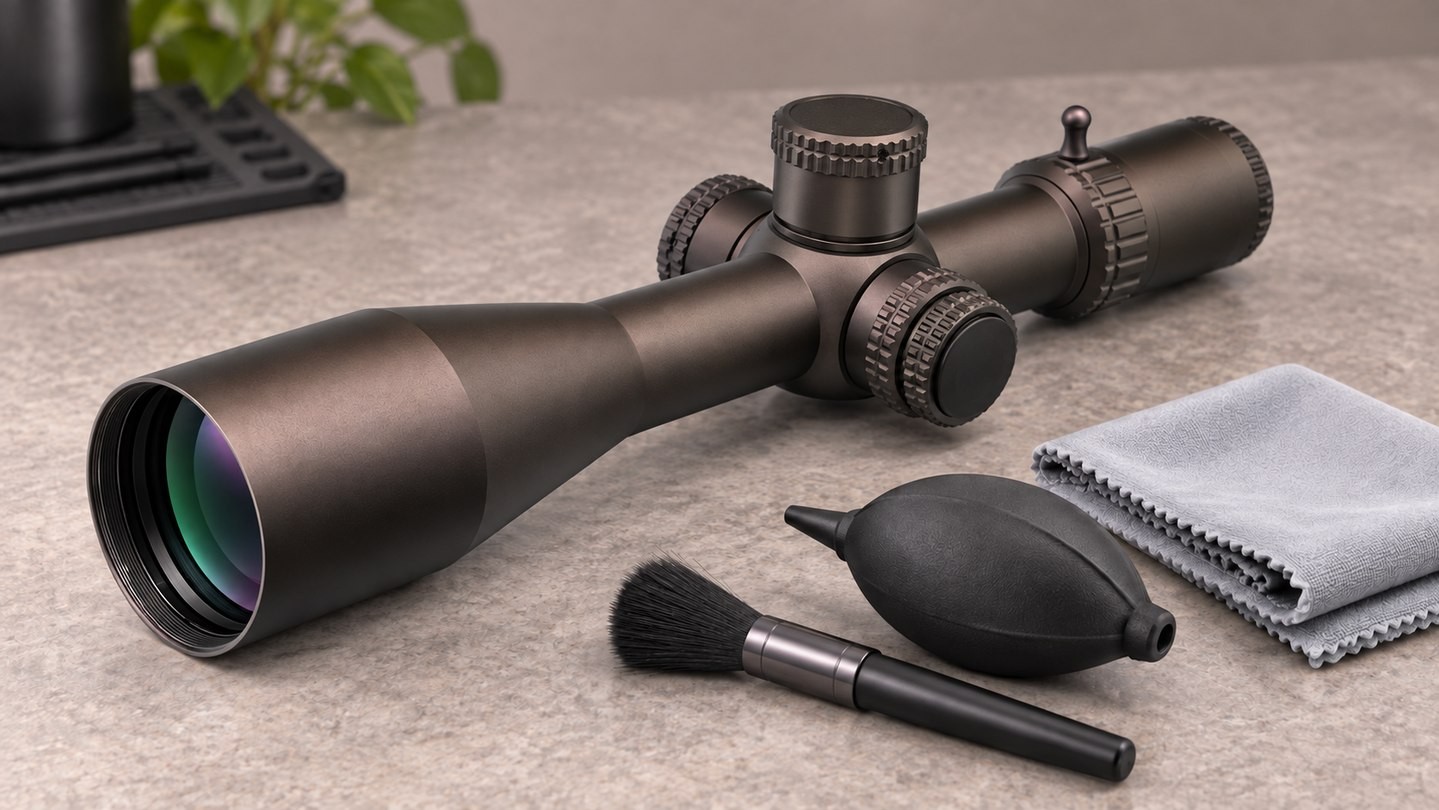
Use a hand-squeezed air blower to lift loose dust, sand and fibres away from the lens. Hold the optic so particles can fall away rather than deeper into the lens rim.
Avoid blowing with your mouth. Tiny droplets of saliva can turn a dry-dust job into a smeared-lens job. Be cautious with canned air as well: some products can spit propellant or create a very cold jet when tilted. A simple bulb blower gives you more control.
2. Use a clean, soft lens brush
If particles remain, sweep them away lightly with a brush made for optical lenses. Work from the centre toward the edge without pressing the bristles into the glass. Keep the brush capped or in a clean bag; a brush that has rolled around loose in a dusty range bag is no longer a clean tool.
Often, this is all the lens needs.
3. Moisten stubborn marks
For fingerprints or dried spots, use a lens-safe cleaning fluid recommended for coated optics. Pure water or a suitable eyeglass-lens cleaner may also be appropriate, while some manufacturers allow high-purity isopropyl alcohol. The exact recommendation can vary, so the scope manual takes priority.
Apply a small amount to the microfiber cloth or cleanroom swab rather than flooding the lens. This gives you better control and reduces the chance of liquid collecting around the retaining ring. Never use household degreaser, lubricant, acetone or an unknown solvent on the glass.
4. Wipe gently from the centre outward
Use a fresh, lint-free microfiber lens cloth or cleanroom swab. Start near the centre and move outward in a slow spiral, using minimal pressure. Use a clean section of cloth for the next pass instead of rubbing the same grit back across the surface.
Stop when the mark is gone. Repeated dry polishing does not make a clean lens cleaner.
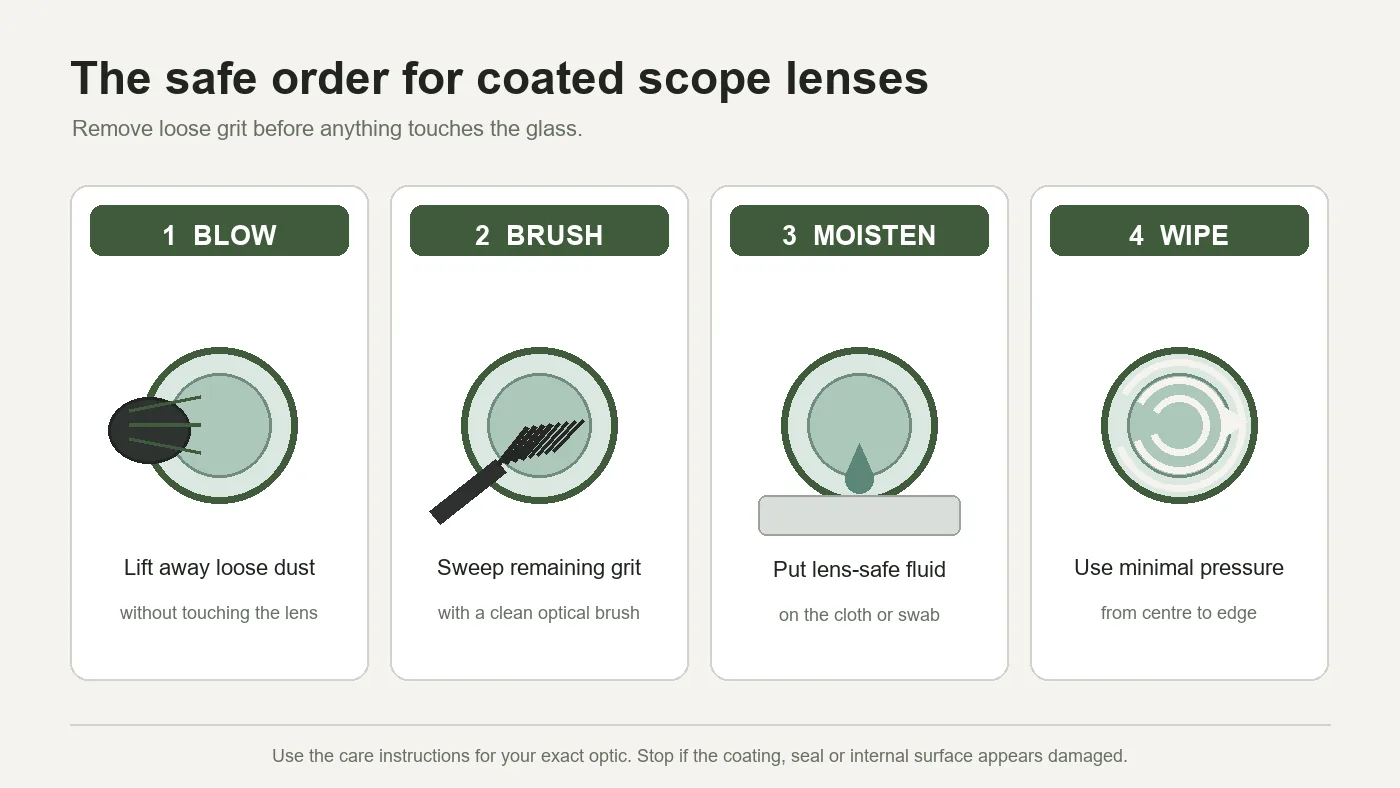
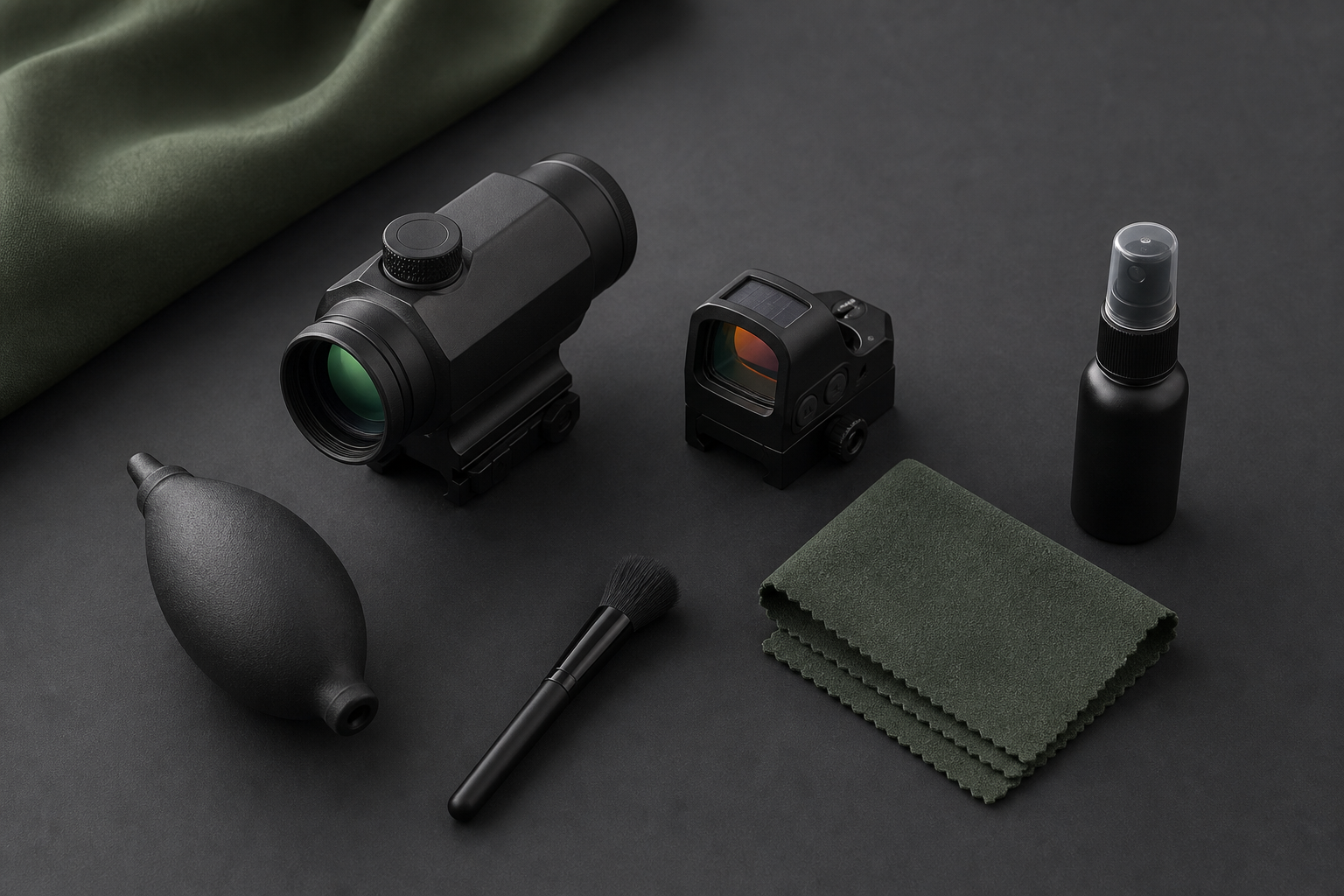
A safe sequence removes loose grit before anything touches the coated glass. This is a general illustration; follow the care instructions for your exact optic.
What not to use on coated scope glass
Convenient materials are often the risky ones.
- A shirt, paper towel or facial tissue: these may carry grit, shed fibres or be rougher than a proper lens cloth.
- A dirty microfiber cloth: softness does not help if the cloth contains sand or metal dust.
- Lubricant or penetrating oil: overspray can migrate onto the lens, seals and controls, leaving residue that is difficult to remove.
- Household window cleaner: formulas vary and may contain additives that are not intended for precision optical coatings.
- Heavy pressure: pressure does not replace proper particle removal. If a spot will not release, moisten it again rather than scrubbing.
- Disassembly: do not remove retaining rings, eyepieces or other sealed parts simply to clean an internal surface. Internal haze, fungus or moisture is a service issue.
Clean the body separately
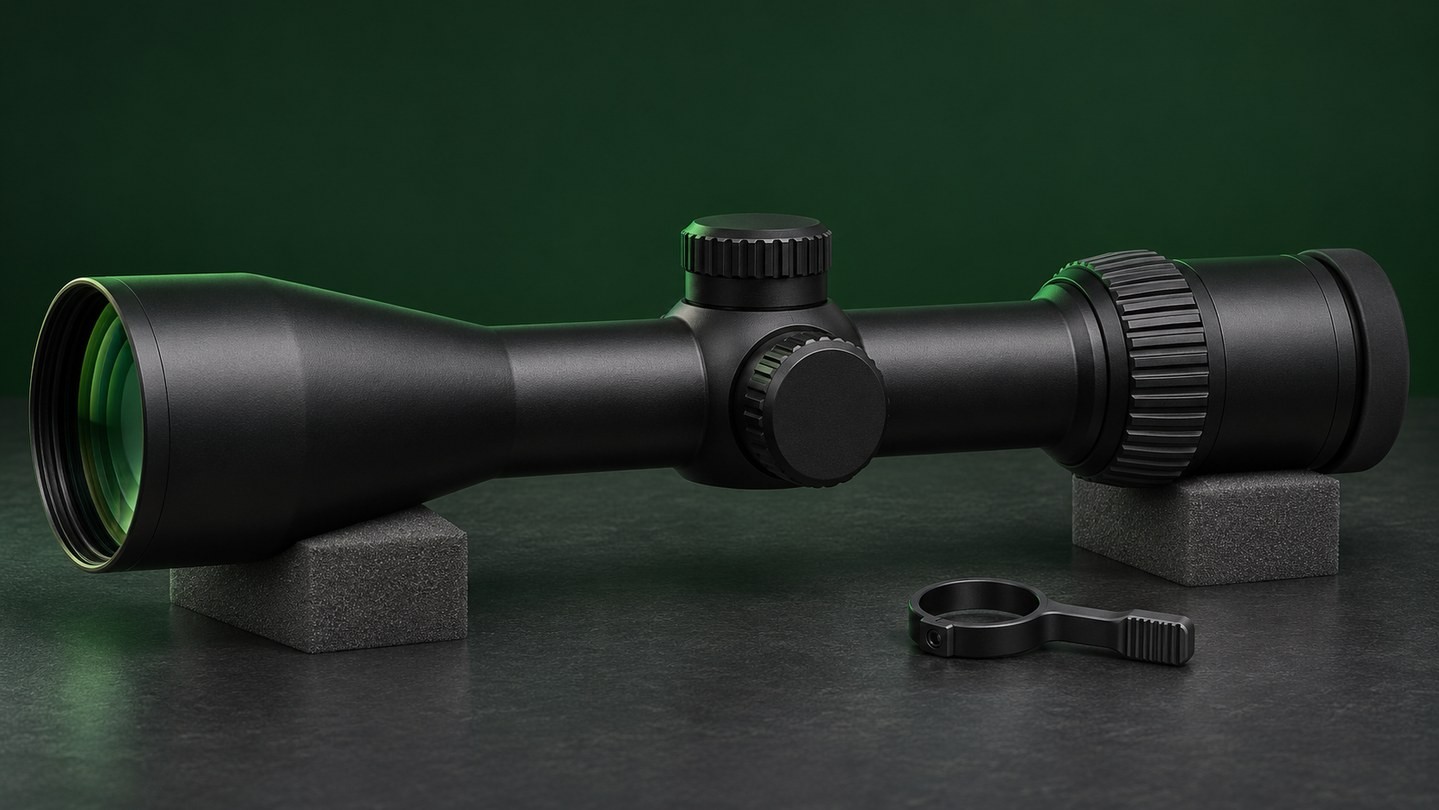
Wipe the scope body with a different clean cloth so dirt from the tube and turret edges never reaches the lens cloth. A soft brush can loosen dry debris around knurling and caps. Do not add lubricant to turrets, the magnification ring or the eyepiece unless the exact manufacturer instructions call for it.
If the scope has been exposed to rain, wipe the exterior and let it dry before storing it. Leave the lens caps open until trapped moisture has evaporated, then close them to keep fresh dust off the glass.
Field cleaning versus careful cleaning at home
At the range or in the field, the goal is to restore a usable view without making the problem worse. A bulb blower and protected lens brush will handle most loose debris. If the lens is muddy, resist the urge to rub it immediately. Let the moisture soften the dirt, lift away what you can without dragging it, and finish the job in a clean place.
At home, use good light and inspect the lens from an angle. That makes oily smears and remaining particles easier to see. Wash reusable microfiber cloths separately from ordinary laundry and do not use fabric softener, which can leave residue.
When cleaning will not fix the view
Not every blurry or restricted image is caused by dirty glass. A reticle that is never sharp may need a proper diopter adjustment. A dark ring or disappearing image is usually an eye-relief and head-position issue, not a lens-cleaning problem. A view that becomes narrower as magnification rises can simply be normal field-of-view behaviour.
Internal fogging, a coating that appears to be peeling, or a scratch you can feel should not be attacked with stronger cleaner. Stop and contact the manufacturer or a qualified service centre. External cleaning cannot repair a damaged coating or a failed seal.
A small kit is enough
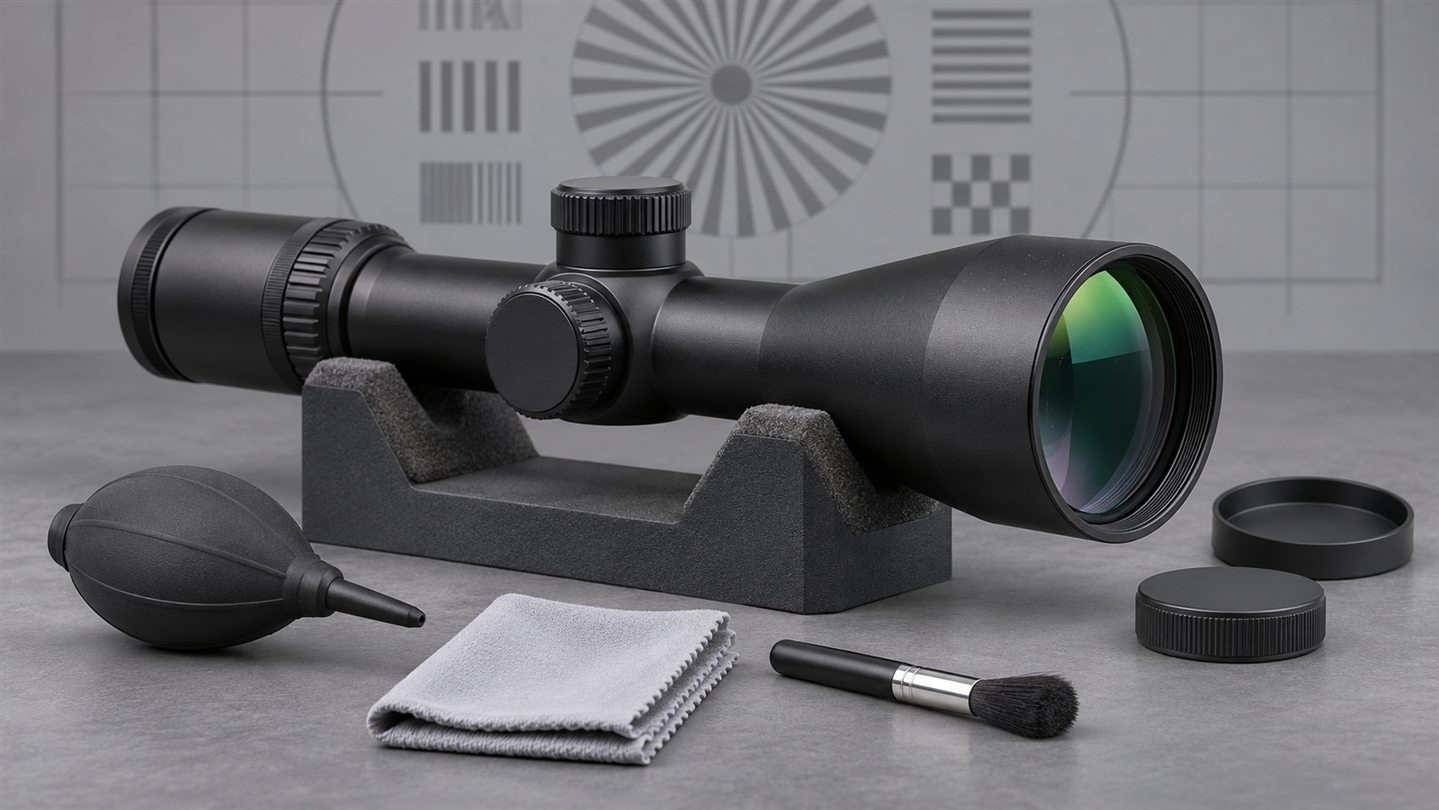
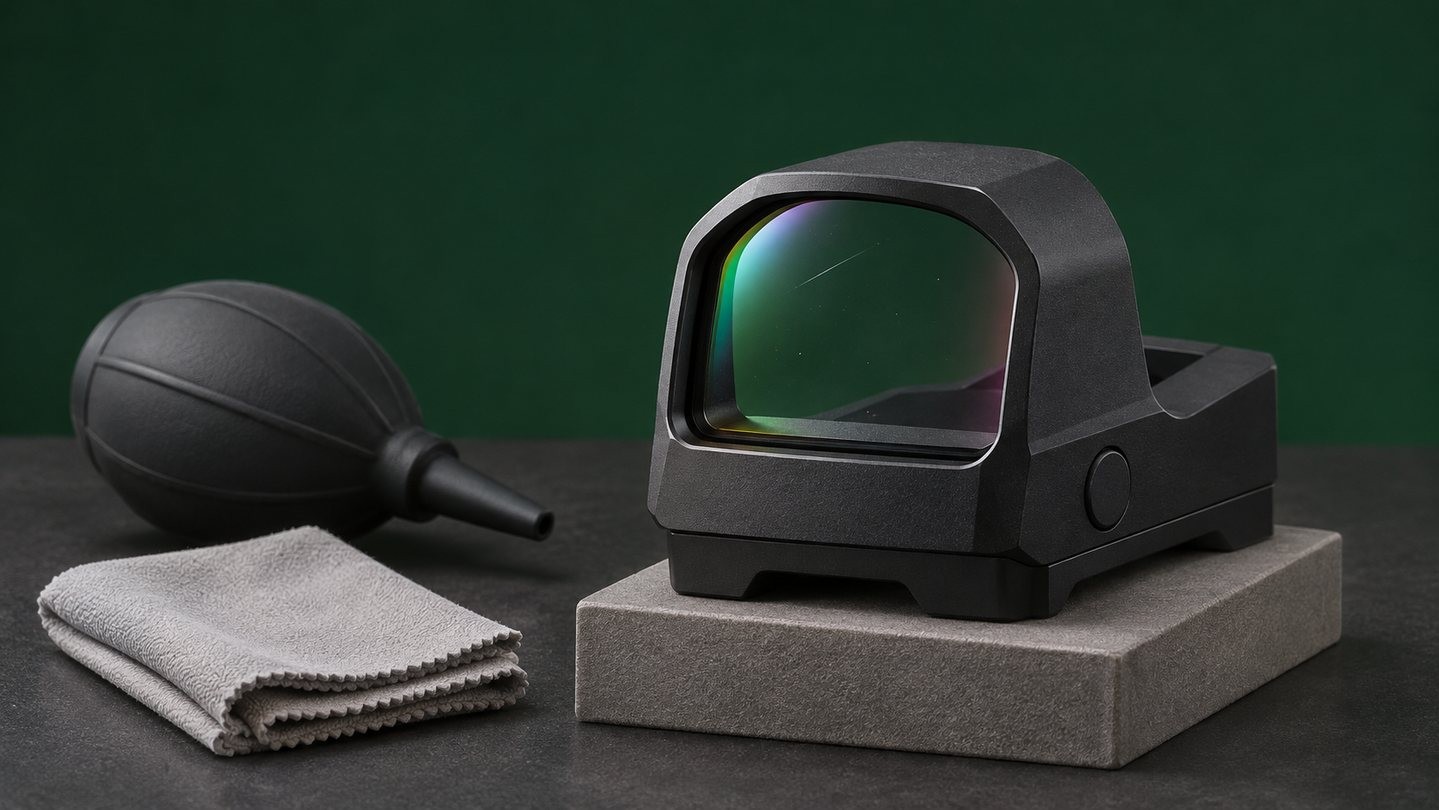
You do not need a crowded maintenance box. A protected bulb blower, a clean optical brush, a sealed microfiber cloth or cleanroom swabs, and a lens-safe fluid cover most situations. Lens caps do more preventative work than any cleaning product.
Clean less often, but clean in the right order.
Continue with the USEEIN Buying Guides
Compare the specifications that matter and find more practical optics explainers in our Buying Guides.



Leave a comment