A small bottle of threadlocker can look like cheap insurance when you are worried about scope-ring screws working loose. The problem is that “add a drop and tighten it” is not a universal mounting rule. On some ring-cap screws, liquid threadlocker can change the relationship between the torque reading and the actual clamping force. On other fasteners—such as certain base screws—a manufacturer may specifically call for a removable compound.
The safe answer starts by identifying the exact fastener and reading the instructions for the scope, rings, mount, base, and host equipment. These parts do different jobs, and their specifications are not interchangeable. This guide explains the decision without inventing one torque value or one chemical rule for every mounting system.
Start With the Exact Fastener, Not the Bottle
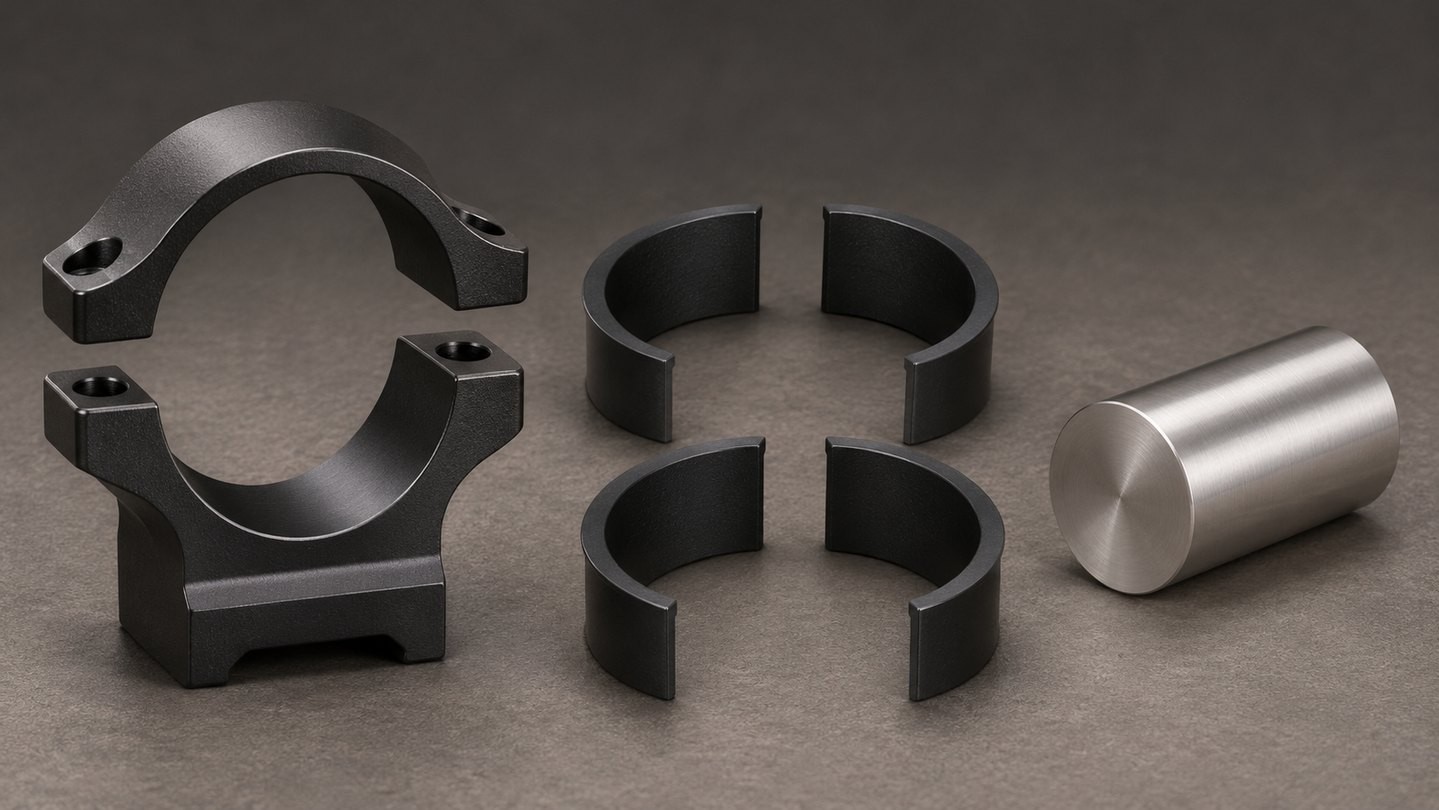
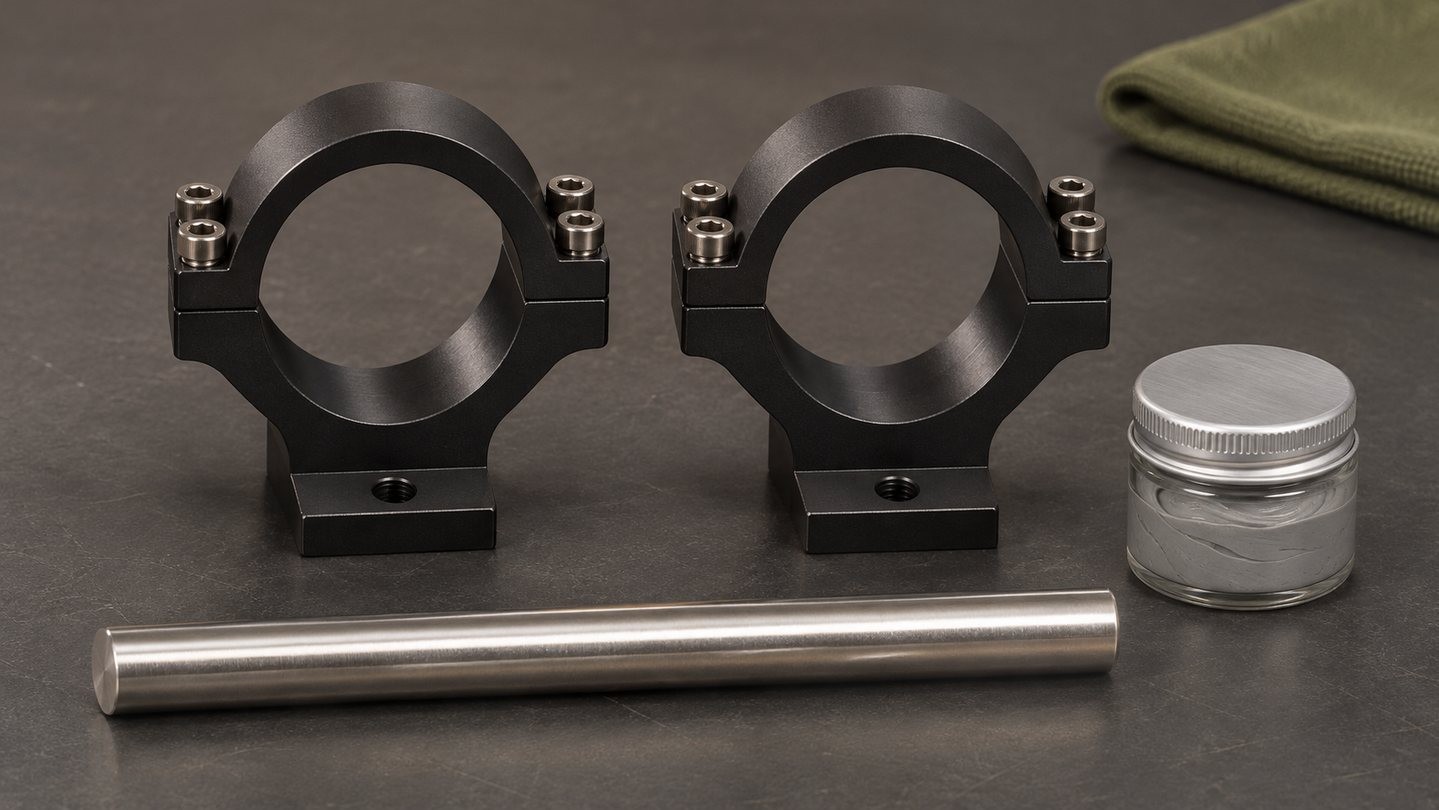
Before deciding whether to use any compound, name the screw. Ring-cap screws clamp the scope tube. A cross bolt or clamp screw secures a ring or one-piece mount to a rail. Base screws attach a separate base to its mounting surface. Small accessory screws may hold a level, top rail, or another removable part. They can sit only centimeters apart while requiring completely different preparation and torque.
This is why advice such as “always use blue threadlocker on optics” is too broad. It may ignore whether a published value assumes clean dry threads, lubricated threads, factory-applied locking material, or a specific removable compound. It may also confuse the scope maker’s limit for tube clamping with the mount maker’s limit for its hardware.
Make a short parts list before touching the screws. Record the ring or mount model, tube diameter, screw locations, drive type, and the instruction source you plan to follow. If the hardware came in mixed bags or its origin is unknown, stop until each screw is identified.
Why “Wet” and “Dry” Torque Are Not the Same
A torque wrench measures resistance to turning; it does not directly measure the clamping force on the scope tube. Friction at the threads and beneath the screw head consumes much of the applied torque. Adding a liquid compound, oil, or anti-seize can change that friction. The same torque setting may then create a different screw tension than it would on clean dry threads.
That difference is the central reason several ring manufacturers warn against adding threadlocker to ring-cap screws when their specification is written for dry threads. The compound can act as a lubricant during tightening before it cures. A familiar torque number may therefore produce more clamp load than intended.
Our guide to scope-mount torque specifications explains why a number without the fastener, thread condition, unit, tool, and manufacturer is incomplete. Do not “correct” a dry-thread instruction by guessing a lower value for wet threads. Use a published alternative from the manufacturer or ask its support team.
Ring-Cap Screws Often Have a Dry-Thread Instruction
Ring caps directly compress the scope tube, so excess clamp load can mark the finish, distort the tube, restrict internal movement, or make controls feel abnormal. Vortex and Warne both publish guidance against thread-locking compound on the ring screws covered by their instructions. Their reasoning centers on altered torque behavior and the risk of overtightening.
That does not turn “dry forever” into a law for every ring ever made. It means the specification for the exact hardware is authoritative. Some systems use an unusual screw size, a hinged ring, a proprietary fastener, factory-applied material, oil, or anti-seize. American Rifle Company, for example, publishes product-specific instructions that call for a small amount of oil or anti-seize on certain ring screws while also stating that Loctite is not recommended. The important lesson is that even reputable manufacturers do not all specify the same thread condition.
If the manual says clean and dry, do not add liquid “for safety.” If it names a lubricant or locking product, use only the stated type and method. If it says nothing, ask rather than importing a rule from another brand.
Base Screws Are a Separate Decision
Fasteners that attach a base to a mounting surface do not perform the same job as ring caps. Some manufacturers recommend a small amount of removable threadlocker on specific base screws, while others specify dry threads or state that the supplied drive system needs no additional compound. Material and thread size also matter: a steel interface and an aluminum interface may not share the same limit.
Warne’s published guidance illustrates the distinction clearly: its ring screws use a dry-thread specification, while certain base screws may use a removable compound. Leupold instructions for some ring-and-base systems state that additional threadlocker is unnecessary. Neither example should be copied onto a different product without checking that product’s current instructions.
Treat “ring,” “mount,” “base,” and “rail” as separate rows on your checklist. A correct decision for one row does not answer the others.
One-Piece Mounts Still Have More Than One Screw Type
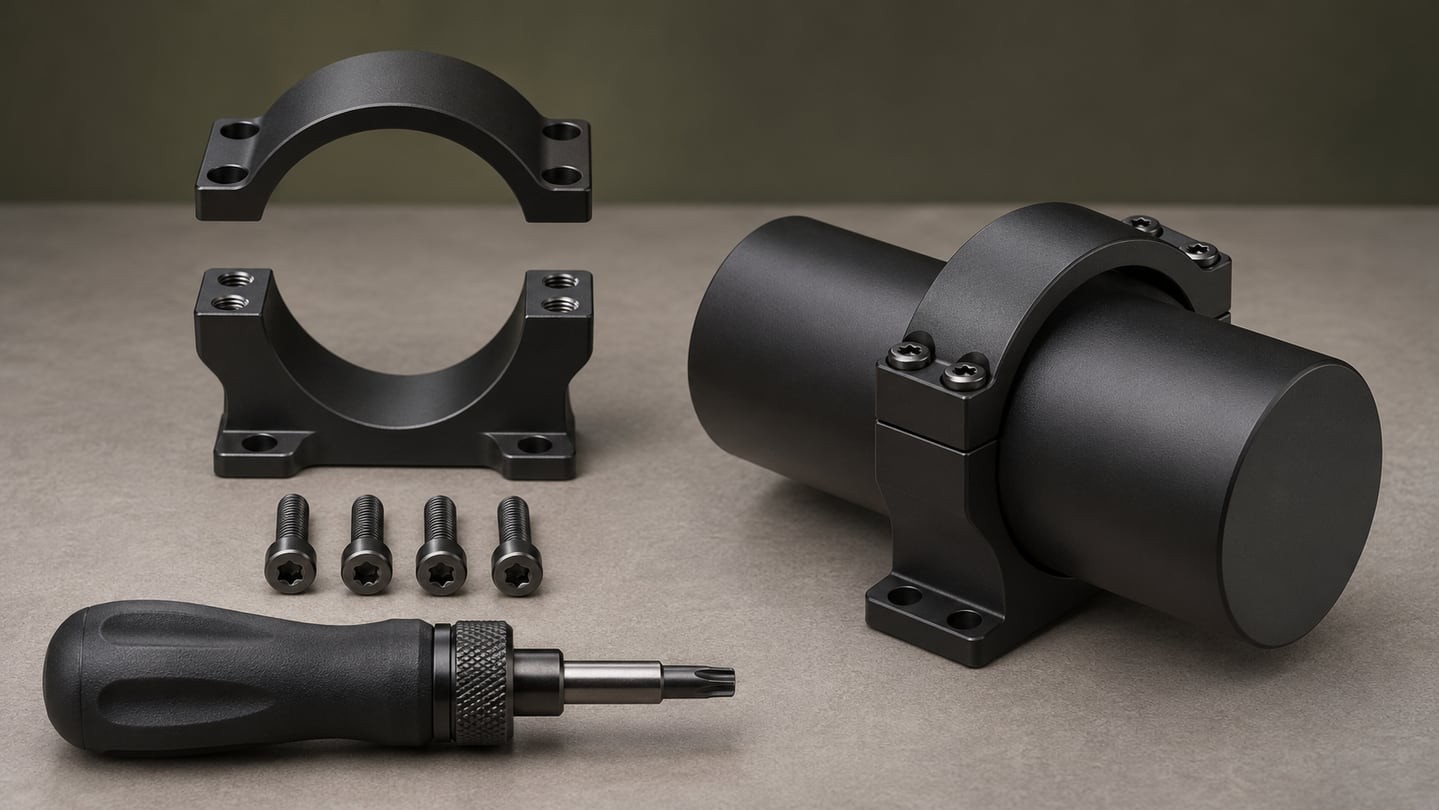
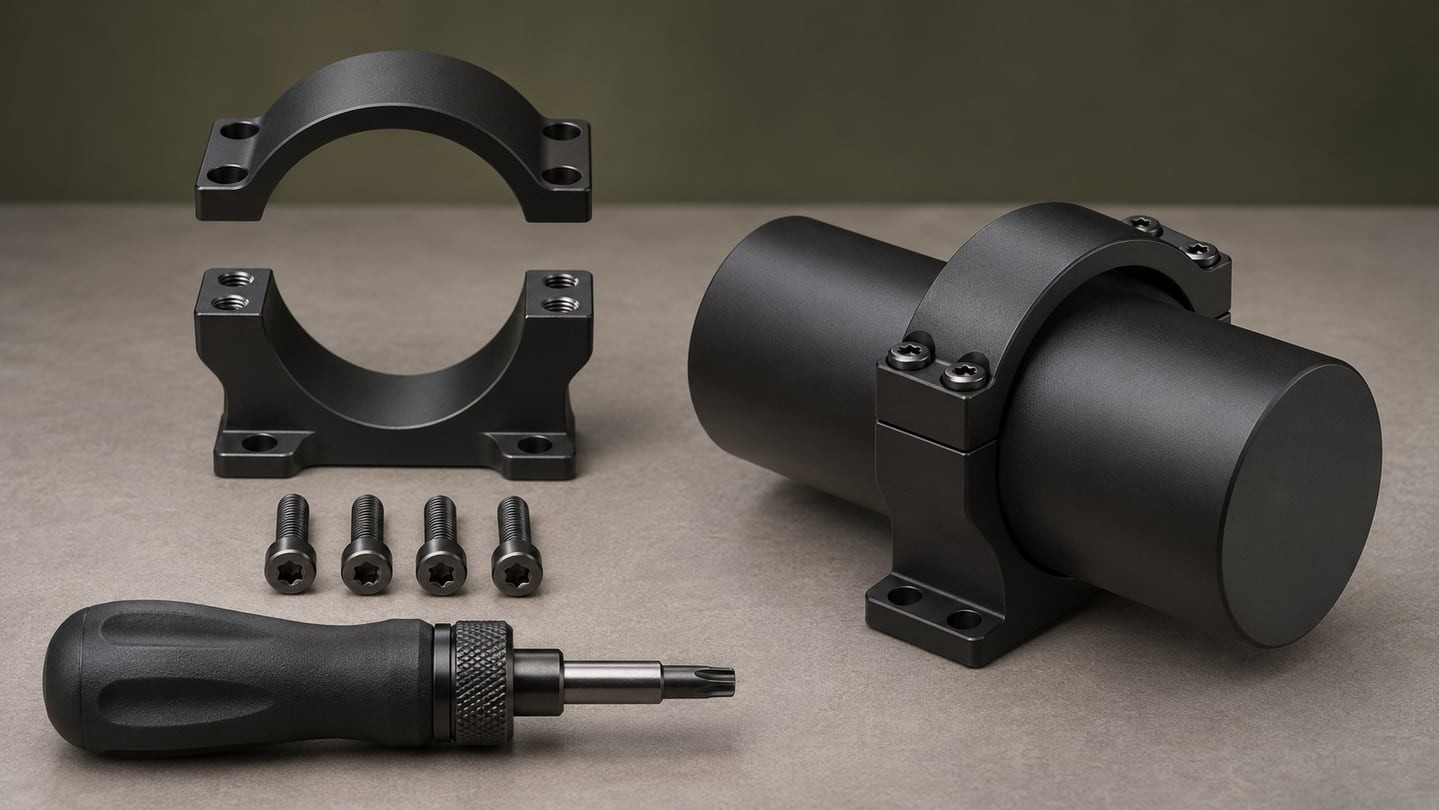
A one-piece mount may look like a single component, but it commonly has cap screws around the scope tube and separate clamp or cross-bolt hardware at the interface below. Optional top accessories can add still more fasteners. Do not apply the cap-screw rule to the clamp or the clamp rule to the cap.
The screw count and split orientation also affect the tightening sequence. Horizontally split and vertically split rings may require different gap patterns or order of operations. Our comparison of vertical and horizontal split scope rings explains why a visually uneven gap is not automatically proof of incorrect installation.
Keep the article’s main question narrow: whether a compound belongs on a particular thread. Alignment, eye relief, clamping sequence, and interface seating still need their own manufacturer-approved procedure.
Read Both the Ring and Scope Instructions
The ring maker controls the hardware design, but the scope maker knows the tube’s allowable clamping conditions. Follow the most restrictive applicable limit unless the manufacturers provide a product-specific clarification. A mount may be capable of a higher cap-screw torque than the scope tube allows.
Check that the torque unit is inch-pounds, newton-meters, or another stated unit. Inch-pounds and foot-pounds are not interchangeable. Confirm whether the value is a target, a maximum, or a range. Note whether the instructions apply to all screws or only to a specific model and diameter.
Use the latest official instruction card, manual, or support answer you can identify. A forum screenshot, unlabeled chart, retailer summary, or number remembered from another setup is not a reliable substitute. If the scope and ring instructions appear to conflict, pause and contact both manufacturers with the exact model names.
Clean Threads Without Quietly Changing Their Condition
“Clean” does not always mean “aggressively degreased.” If an instruction calls for dry threads, remove visible oil, dirt, and old compound without damaging the finish or threads. If the hardware arrives with a factory patch or pre-applied material, do not scrape it off unless the manufacturer tells you to. If a manual calls for oil or anti-seize, fully degreasing and installing dry would also change the specified condition.
Inspect screws for rounded drive recesses, damaged threads, corrosion, incorrect length, and mixed head styles. Thread each screw by hand before final tightening. A screw that binds early, bottoms out, or feels different from the others needs investigation rather than more force.
Old cured threadlocker can produce inconsistent resistance and misleading torque. Do not simply add fresh compound on top. Follow the maker’s removal and reuse instructions, or replace the hardware with the exact approved part.
Tighten Evenly and Watch the Ring, Not Just the Wrench
A calibrated torque tool reduces guesswork, but it cannot detect every assembly error. Start all cap screws correctly and tighten in small, even increments using the sequence specified for that ring design. Keep the scope positioned as intended and watch the cap gaps, contact surfaces, and tube throughout the process.
Stop if one side closes unexpectedly, a screw reaches the tool setting far earlier than its neighbors, the tube develops a new mark, or a control becomes harder to operate. Our guide to scope-ring marks on the tube distinguishes light finish witness marks from warning signs such as sharp grooves, dents, and concentrated contact.
Do not add more torque or threadlocker to compensate for poor alignment. If the rings do not sit correctly, investigate the interfaces, part compatibility, screw length, and installation procedure.
If Screws Have Loosened Before, Find the Cause
Repeated loosening is evidence to investigate, not automatic permission to glue every fastener. Possible causes include incorrect torque, the wrong thread condition, contaminated or damaged threads, a screw bottoming before it clamps, incompatible hardware, an unseated interface, poor tightening sequence, or movement elsewhere in the mounting stack.
Marking the screw position with a removable witness mark can help you confirm movement without changing the threads. Record which screw moved, how far, and under what use. The troubleshooting steps in why optic screws loosen help separate lost preload from movement at another interface.
If the same fastener loosens after a correct manufacturer-approved installation, contact the ring or mount maker. It may recommend replacement hardware, a revised procedure, or a specific removable compound. That recommendation is more useful than a generic color label, because threadlocker colors and grades are not universal specifications across all brands.
Threadlocker Cannot Repair Alignment or Damaged Parts
Locking compound does not straighten misaligned rings, restore stripped threads, correct the wrong screw length, or repair a deformed scope tube. It also cannot compensate for a base that rocks, a clamp that is not seated, or rings that contact only at a narrow edge.
Avoid using lapping as an automatic rescue step. Some ring makers prohibit or do not require it, and removing material can void return options without fixing a larger alignment problem. See scope-ring lapping explained for the manufacturer-first decision process.
Permanent or high-strength compounds create an additional service problem. Heat or excessive force may be required for removal, which can damage nearby finishes, seals, electronics, or small fasteners. Never use a permanent product merely because a removable product failed without first identifying why the joint moved.
The Practical Rule: Follow the Hardware-Specific Procedure
For ring-cap screws, the safest default is not to add threadlocker unless the exact manufacturer instructions call for it. For base, rail, clamp, or accessory screws, make a separate decision from the applicable manual. Record the specified thread condition, compound if any, torque value and unit, tightening sequence, and whether the value is a maximum.
If those details are unavailable or contradictory, stop and ask the manufacturer or a qualified installer. A five-minute clarification is cheaper than a stripped thread, crushed tube, seized screw, or mounting system that cannot be serviced later.
Threadlocker is a tool, not a substitute for correct parts and controlled assembly. The goal is not to make every screw impossible to move. It is to create the intended clamp load, preserve the optic, and keep the system serviceable exactly as its designers specified.











Leave a comment