Sending an optic for inspection, repair, return, or resale is not the same as putting an ordinary durable item in a box. A scope or red dot may look solid from the outside, but its lenses, adjustment assemblies, controls, seals, and finish still need protection from impact, abrasion, moisture, and movement during transit.
The safest method is not simply “more bubble wrap.” Start with the receiving organization’s instructions, document the condition, remove only the accessories they exclude, immobilize the optic, and use a rigid outer package that can survive normal parcel handling. This checklist keeps those steps in the right order.
Start With Service Instructions, Not the Box
Contact the manufacturer, dealer, or authorized service center before packing. Confirm whether authorization is required, which address applies to your region, what documents belong inside, and whether they will provide a label. Do not rely on an address copied from an old forum post, invoice, or previous shipment.
Service instructions also determine what should travel with the optic. Aimpoint, for example, asks customers to include contact details, proof of purchase when relevant, and a complete explanation of the problem, while excluding mounts or accessories that are not part of the requested service. Other brands use different forms and regional procedures. The exact receiving instructions take priority over a generic packing checklist.
Record the Optic Before Packing
Photograph the optic from several sides in even light before wrapping it. Include the lenses with their protective caps in place, visible controls, the mounting interface, and any existing cosmetic marks. Record the model and serial number privately, but do not print the serial number on the outside of the carton or post it publicly.
If the shipment is for service, add clear symptom notes and the case or authorization number. Our guide to photographing an optic problem for customer support explains how to create useful evidence without sharing private identification unnecessarily.
Remove Only the Accessories the Receiver Excludes
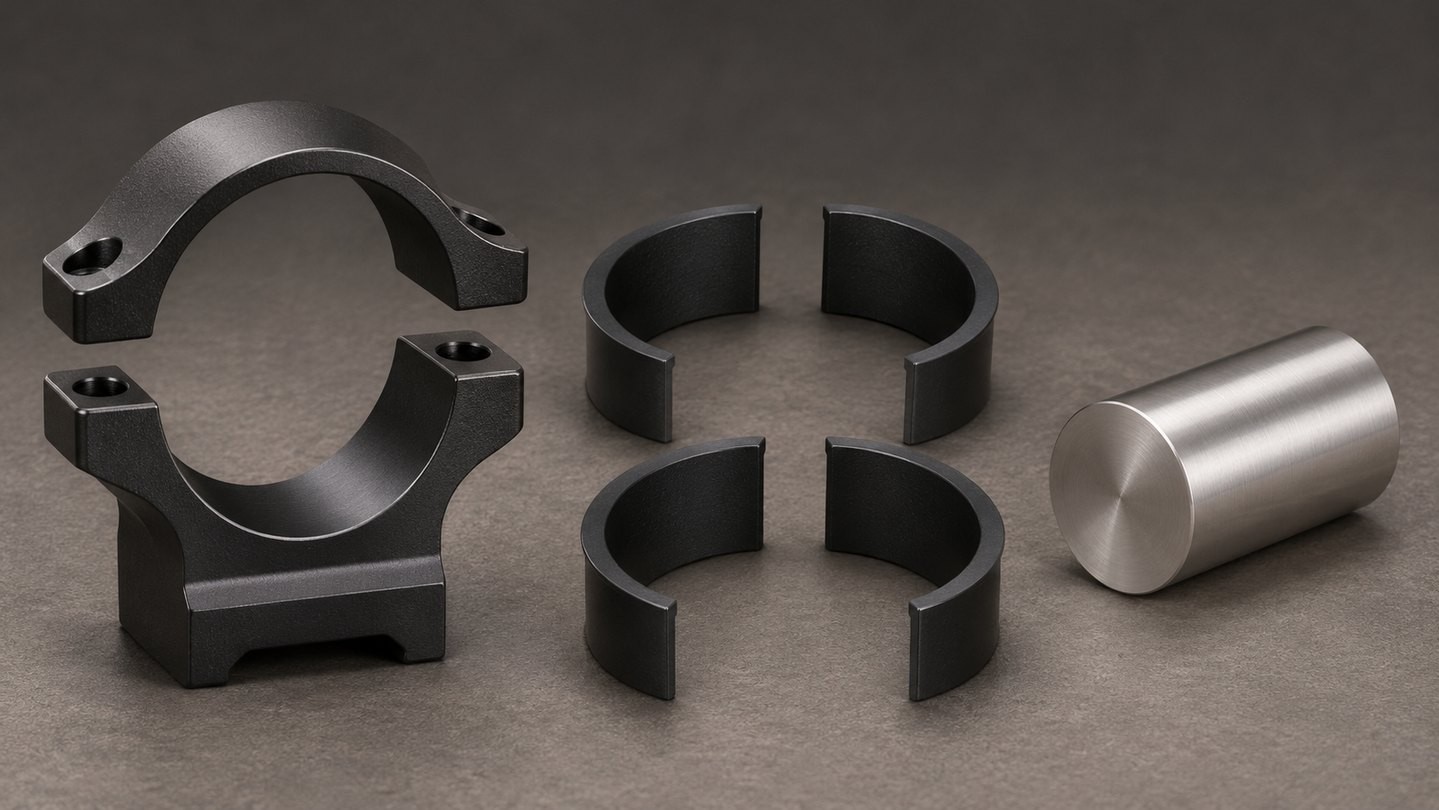
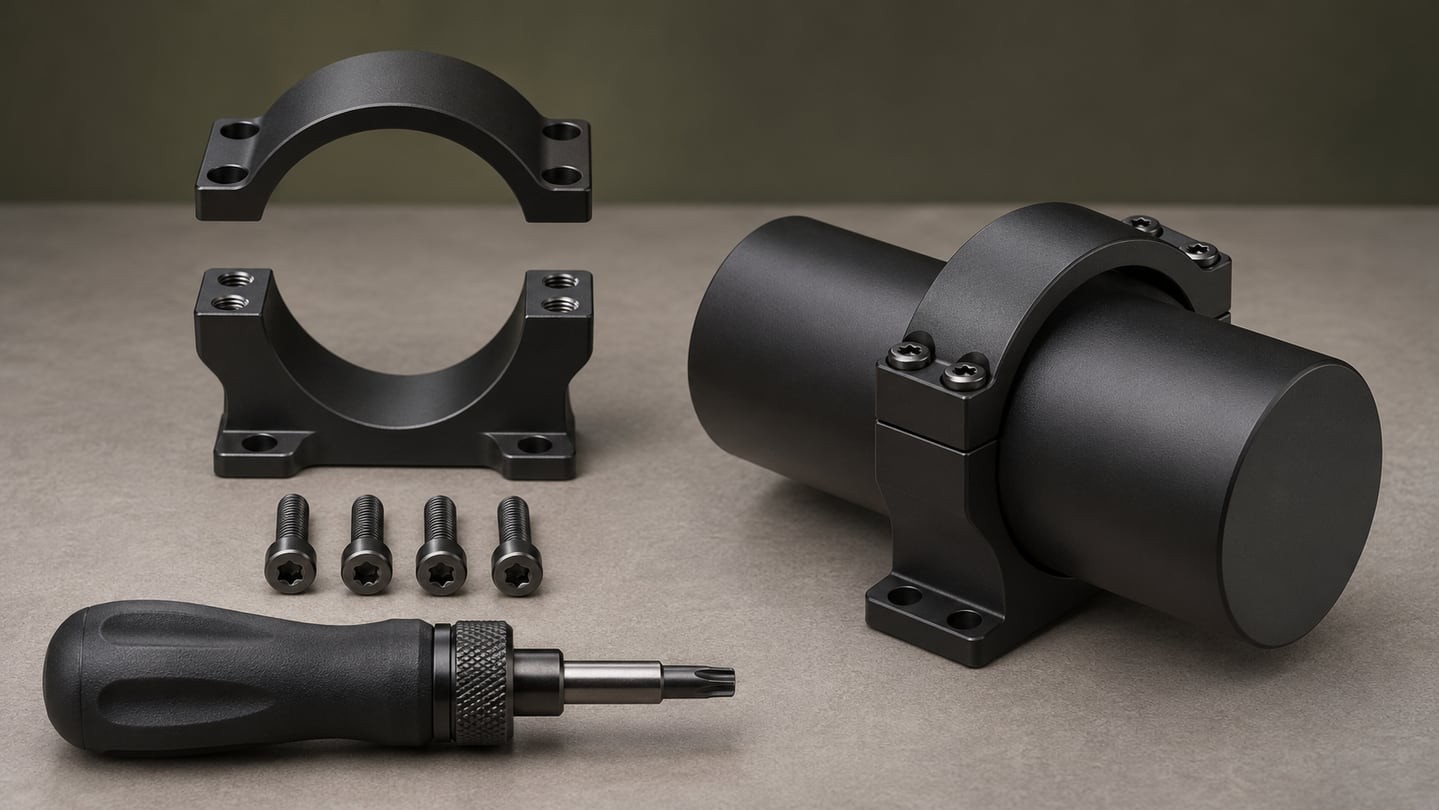
Remove rings, mounts, flip-to-side hardware, sunshades, throw levers, batteries, or other accessories only when the service instructions say they are not needed. Do not disassemble the optical housing, loosen sealed components, remove glued parts, or attempt a last-minute repair before shipping.
Keep every removed screw, spacer, and cap together in a labeled local container. Never let loose metal hardware ride beside the optic inside the parcel; it can scratch the finish, strike a lens, or become separated from the shipment. If a specific accessory may be causing the problem, ask the receiver whether they need it for diagnosis before deciding.
Protect the Lenses Without Pressing on Them
Use the optic’s normal lens caps when they fit securely and do not rub damaged glass. If a cap is missing, place a clean, non-abrasive barrier around the complete optic rather than pressing tissue, tape, adhesive film, or foam directly onto a coated lens.
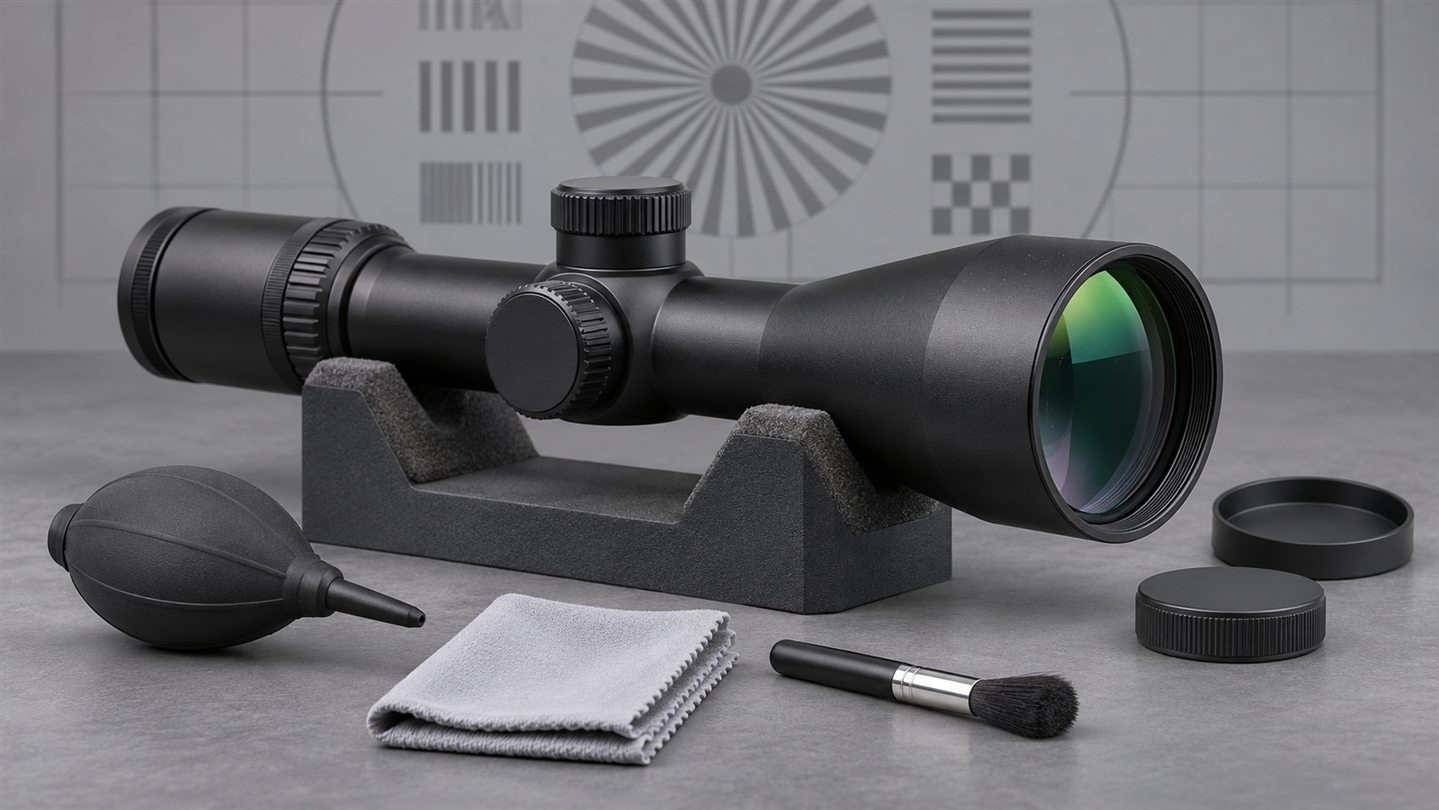
Do not perform aggressive cleaning immediately before shipment. Remove only loose exterior debris using the appropriate method, and let any safe exterior moisture dry before wrapping. The guides to cleaning rifle-scope lenses and cleaning a red-dot sight separate routine lens care from actions that can damage coatings or an exposed emitter.
Immobilize the Optic Inside the Inner Package
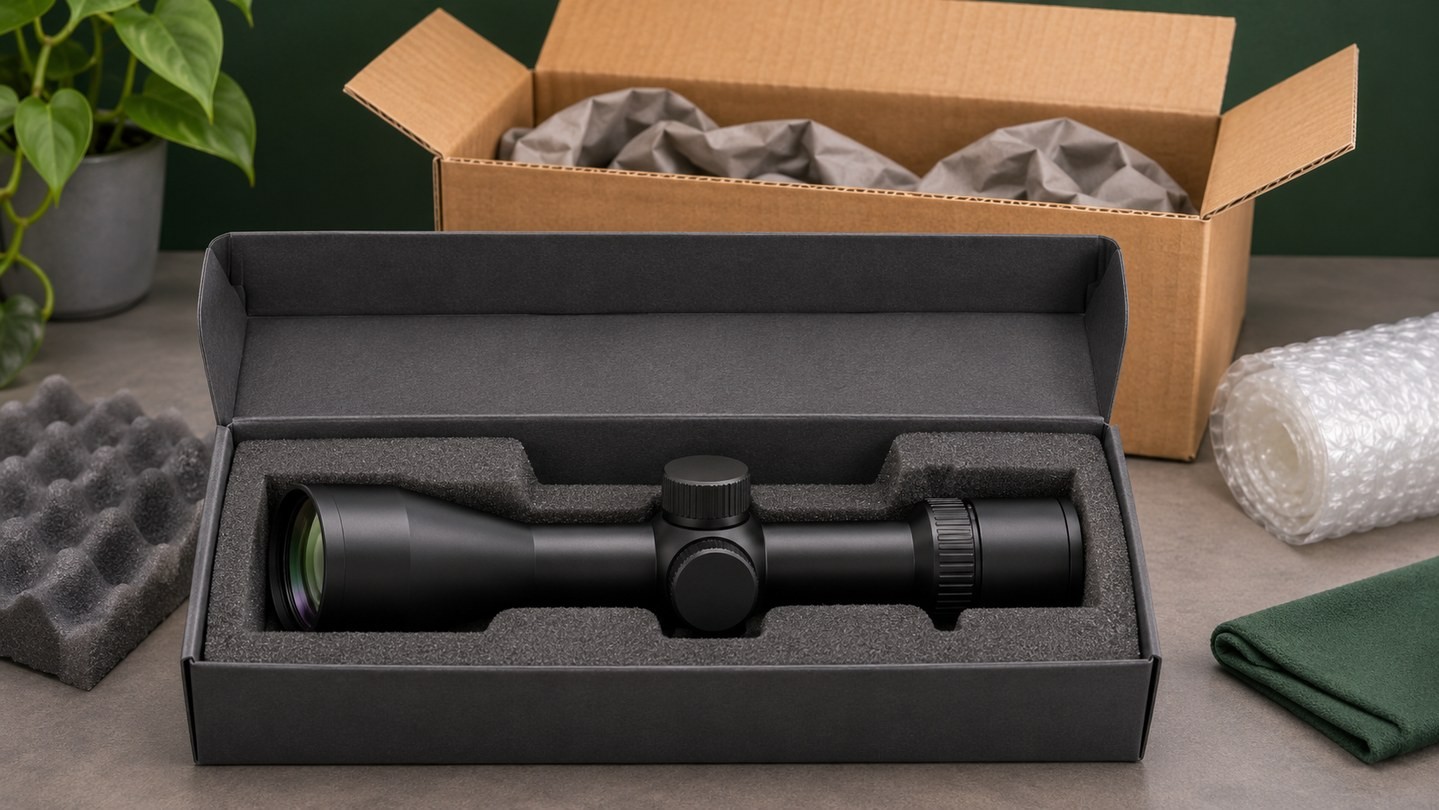
Wrap the complete optic in multiple layers of suitable cushioning, covering the turrets, control knobs, ocular end, objective end, and any projecting edges. The wrapping should be snug enough to stay in place but not so tight that it loads a knob, bends a cap hinge, or presses against glass.
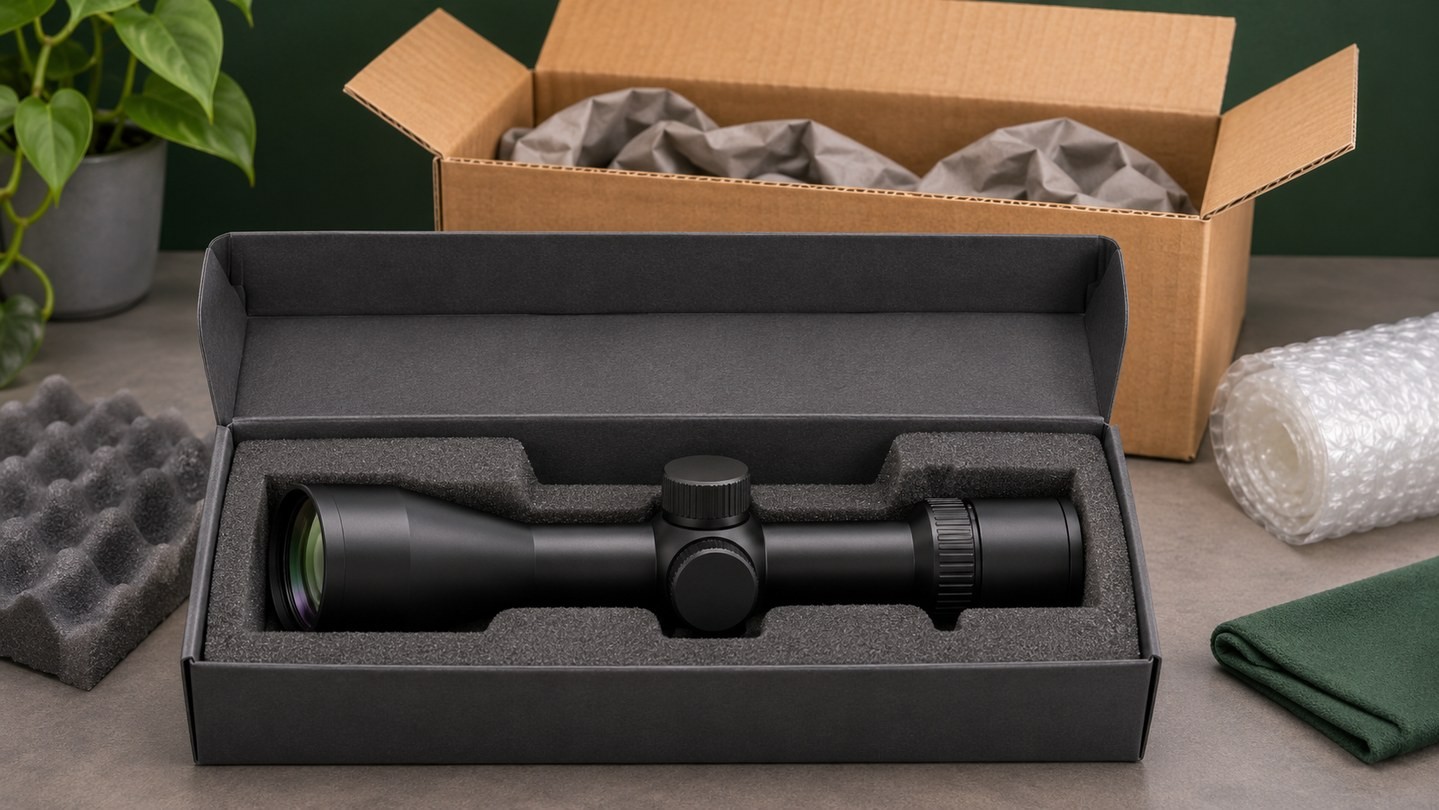
Place the wrapped optic near the center of a rigid inner box or protective case. Fill every void with cushioning that supports the item’s weight. When the closed box is moved gently, the optic should not slide, knock, or rotate. A soft retail pouch by itself is not a shipping carton, and loose paper on top does not prevent side impact.
Use Double Boxing When the Risk Justifies It
Carrier guidance commonly recommends double boxing fragile items: cushion the product inside an inner box, then suspend that box inside a larger rigid carton with protective material on every side. This creates distance between the optic and the outer walls and helps absorb shocks that would otherwise reach the product directly.
Use a sound corrugated outer carton with intact flaps and enough strength for the packed weight. Follow the carrier’s current cushioning dimensions rather than guessing from a reused package. A box that is much too large can let the inner package move; a box that is too small leaves no crush zone and may bulge when closed.
Keep Paperwork Useful and Private
Place the required service form, proof of purchase copy, problem description, authorization number, and contact information in a document sleeve or sealed envelope inside the parcel. Keep the documents away from lens surfaces and do not let loose paper replace proper cushioning.
Include only the personal details the receiver requests. Do not send original identity documents, payment-card details, passwords, or unrelated account records. Keep digital copies of the form, receipt, photographs, tracking number, and the exact list of enclosed items until the case is closed.
Seal and Label the Outer Carton Correctly
Close the box naturally; the flaps should meet without force and the sides should remain flat. Use purpose-made shipping tape across the center seam and both edge seams on the top and bottom. Remove or fully cover old barcodes, hazardous-goods markings, and shipping labels from a reused carton.
Place the new label on a broad, flat surface rather than across a seam or corner. Carrier guidance also recommends a duplicate address label inside the parcel in case the exterior label is damaged. Do not assume a “Fragile” marking compensates for weak packaging—it is only an additional handling cue.
Check Carrier and Destination Rules Before Booking
Packaging guidance, insurance limits, prohibited contents, battery rules, customs documents, and liability terms vary by carrier, service, origin, and destination. Measure and weigh the parcel only after it is fully packed and sealed. Describe the contents accurately and keep evidence of declared value or insurance where applicable.
If the optic contains a battery, follow the manufacturer’s service instruction and the carrier’s current battery rules. Do not improvise with damaged, loose, or unidentified cells. For an international return, confirm who is responsible for customs paperwork, duties, temporary export or re-import treatment, and the correct regional service address before dispatch.
Inspect a Returned Optic Before Reinstallation
When the parcel comes back, photograph the unopened outer carton if it shows crushing, punctures, water exposure, or resealing. Open it carefully, compare the enclosed items with your packing record, and inspect the optic before attaching any mount or accessory.
If the optic appears to have been impacted in transit, use the controlled checks in Dropped Your Optic? A Safe Inspection Checklist. Do not assume a clean exterior proves that zero, adjustment, sealing, or alignment is unchanged. Follow the service report and the manufacturer’s setup procedure before normal use.
A Short Packing Checklist
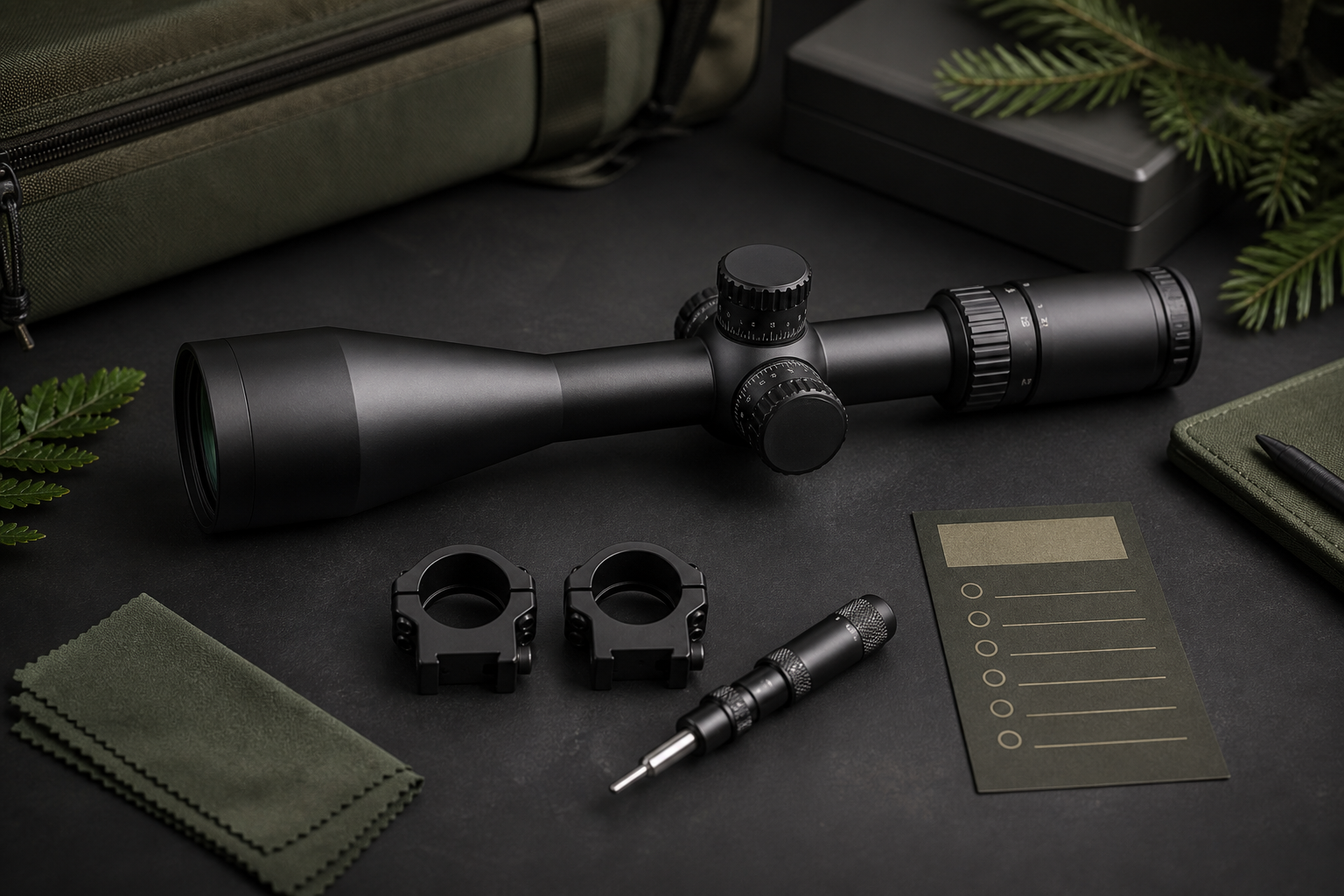
Before handing the parcel to the carrier, confirm that:
- the receiver authorized the shipment and the regional address is current;
- the optic’s condition, model, serial number, and enclosed items are recorded privately;
- only requested accessories and documents are included;
- lenses and projecting controls are protected without direct pressure;
- the optic cannot move inside the inner package;
- the inner package is isolated from the outer carton when double boxing is used;
- old labels are removed, all seams are sealed, and the new label is flat and readable;
- the packed weight, tracking, declared value, and carrier requirements are documented.
Safe shipping is a sequence, not a single material. Clear service authorization prevents routing mistakes; condition records protect both parties; proper cushioning prevents movement; and accurate carrier paperwork keeps the parcel moving. Pack the optic so that no lens, control, or edge can reach the outer wall—and keep the evidence needed to explain exactly what was sent.


Leave a comment