A distant target looks sharp for a moment, then its edges begin to ripple. You touch the side-focus knob, but the image never settles. That does not automatically mean the scope is defective or incorrectly focused. The disturbance may be in the air between you and the target.
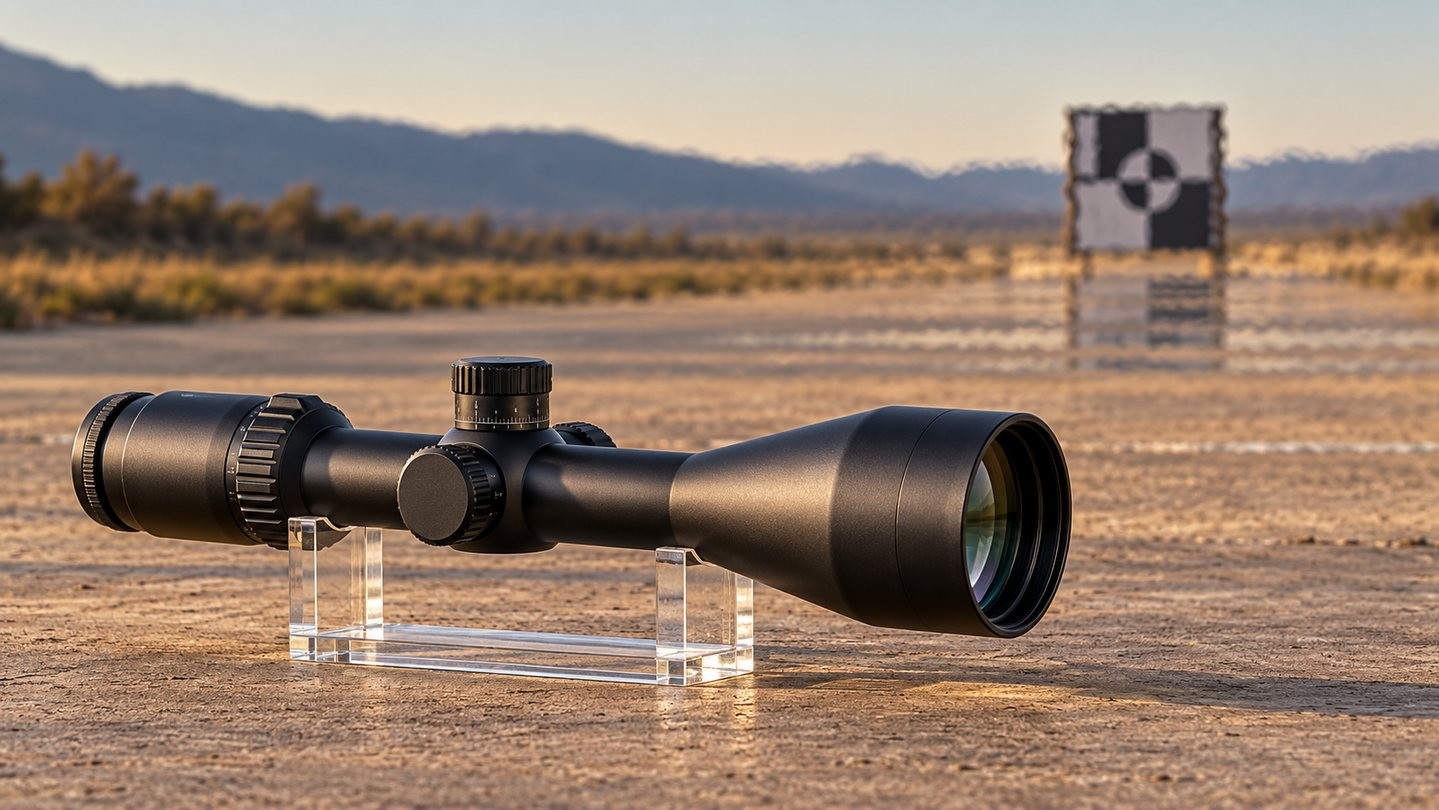
Mirage is an atmospheric optical effect. Layers of air at different temperatures bend light by slightly different amounts. When those layers mix and move, distant details can appear to shimmer, stretch, drift or soften. Magnification makes the effect easier to see, but the scope did not create it.
What mirage looks like through a rifle scope
Mirage is often described as heat waves. Through a magnified optic, it may look like:
- target edges that ripple or swim;
- fine lines that bend from one moment to the next;
- a patch of the scene that seems to move while the reticle stays sharp;
- detail that briefly appears and disappears;
- a watery shimmer above sun-warmed ground or another warm surface.
The pattern is not always dramatic. Mild mirage may simply make a distant image look less stable or less detailed than it did earlier in the day.
Why warm air changes the image
Air density changes with temperature. Light travelling through layers with different density is refracted, or bent. A strong temperature gradient near the ground can therefore act like a weak, moving optical element between the scope and the target.
The longer the viewing path and the more uneven the air, the more opportunity there is for distortion. Sun-warmed ground is a familiar cause, but local warm surfaces near the line of sight can also add shimmer. Wind may move or mix the layers rather than remove the effect completely.
This is why the same target can look cleaner on a cool morning than during a hot afternoon, even when the scope, focus and viewing position have not changed.
Why higher magnification can make mirage seem worse
Increasing magnification enlarges the target image, but it also enlarges movement, atmospheric distortion and focus errors. Leupold and Vortex both note that backing off magnification can make heat distortion less intrusive, although it cannot remove the condition from the air.
This does not mean high magnification caused the mirage. It means the optic is showing a larger view of an already disturbed light path. Our guide to resolution versus magnification explains why a larger image does not always contain more usable detail.
A lower setting can sometimes produce a smaller but steadier-looking image. In practice, that may reveal more information than a larger view that is constantly moving.
Mirage, target focus and parallax are different problems
Side focus or an adjustable objective moves the target image into the correct focal relationship with the reticle and helps reduce parallax error at the chosen distance. It cannot straighten a light path that is already being disturbed by moving air.
Set the reticle diopter first, then adjust target focus or parallax according to the scope manual. If the reticle is crisp and the target can be brought to its best available focus, yet fine details continue to flow or wobble from moment to moment, mirage becomes a more likely explanation.
The distinction matters because repeatedly turning the focus control may move you away from the best setting without curing the shimmer. See our guide to parallax, target focus and diopter for the separate job of each control.
A simple way to separate mirage from a scope issue
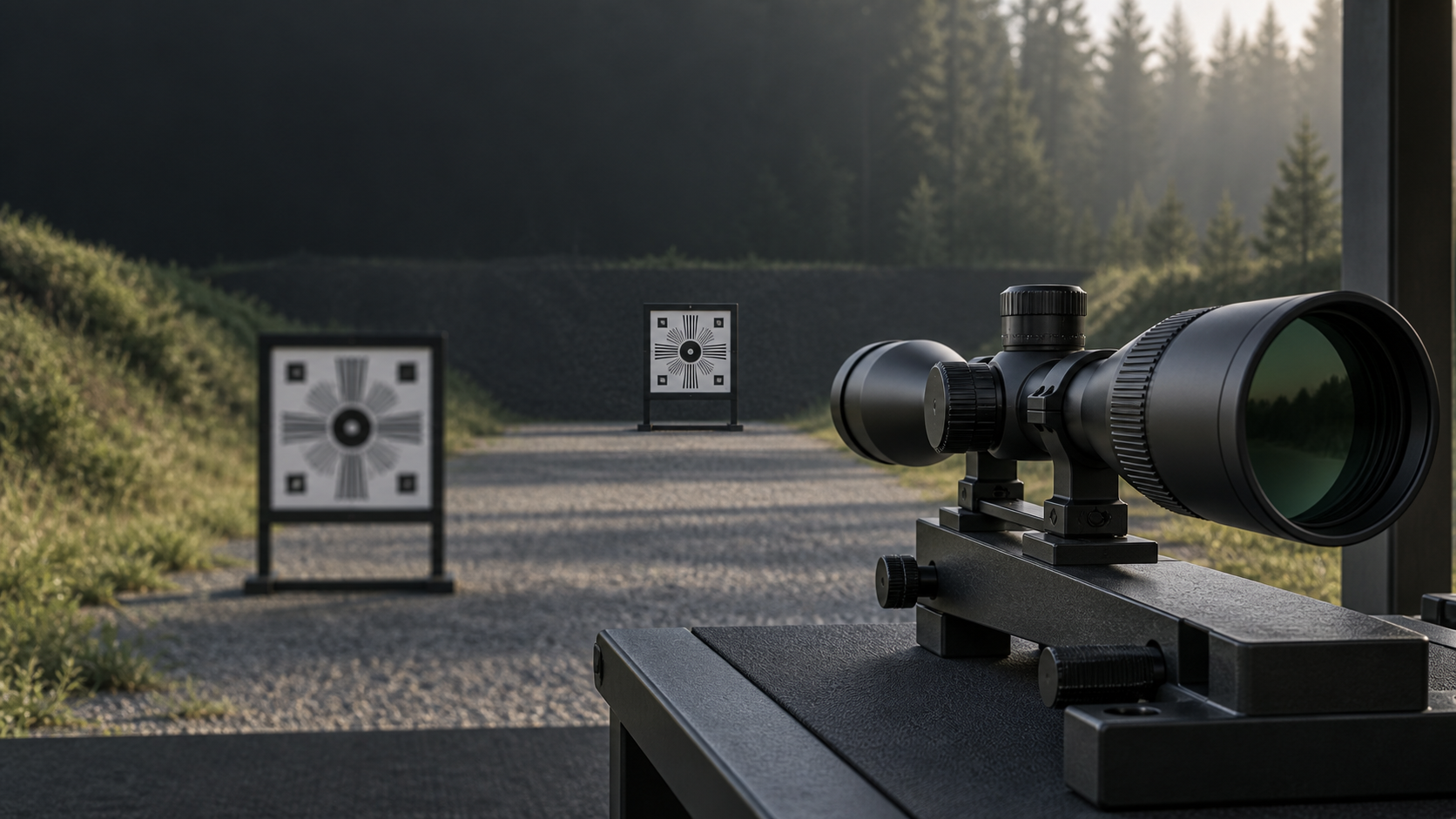
Use a stable support and compare several observations without changing everything at once:
- Confirm that the reticle itself is sharply focused.
- Adjust target focus or parallax for the distance.
- Observe a high-contrast edge at the distant target.
- Reduce magnification and watch whether the apparent ripple becomes less obvious.
- Compare a nearer object along a shorter air path.
- Recheck during cooler or more stable conditions if practical.
Mirage is more likely when distant details visibly move or bend, the effect changes with time and conditions, and a nearer object remains clean. A scope or setup problem becomes more likely when the same fixed blur, double image, dark ring or obstruction follows every target under different conditions.
Do not confuse a dark border caused by eye position with atmospheric shimmer. The scope tunnel-effect guide explains how field of view, eye relief and eyebox can create a different kind of restricted-looking image.
It is also different from fogging or condensation
Mirage distorts the scene beyond the optic. Condensation is moisture on an exterior lens surface, while persistent haze inside a sealed optic may indicate internal moisture. These conditions require different checks.
If the view looks uniformly hazy rather than wavy, inspect the exterior lens surfaces under safe lighting and compare the optic in a dry environment. Do not disassemble a sealed scope. Our guide to external condensation and internal moisture covers that diagnosis separately.
What to do when mirage limits detail
You cannot focus atmospheric distortion away, but you can make a better observation:
- lower magnification until the image becomes more useful;
- allow nearby heat sources or warm equipment to cool;
- compare conditions at a cooler time of day;
- avoid judging optical resolution through the strongest visible shimmer;
- keep the optic steady so vibration is not added to the moving image;
- use the clearest recurring moments rather than chasing the focus control continuously.
These steps manage the viewing conditions; they do not repair the air or prove anything about the scope's internal quality.
Do not rate a scope by one hot-afternoon view
Mirage can make excellent glass look disappointing and can hide the difference between two optics. A fair comparison uses the same target, distance, support, magnification and timing, preferably when the air is reasonably stable.
Also remember that image brightness and eye-position tolerance can change as magnification rises. The exit-pupil guide covers those separate effects. They can occur at the same time as mirage, but they are not the same phenomenon.
When the image seems to breathe or flow, stop turning every control. Set the scope correctly, compare a shorter path, reduce power and watch how the scene changes over time. If the distortion follows the hot, moving air rather than the optic, the most useful adjustment may be patience—not another turn of the focus knob.


Leave a comment