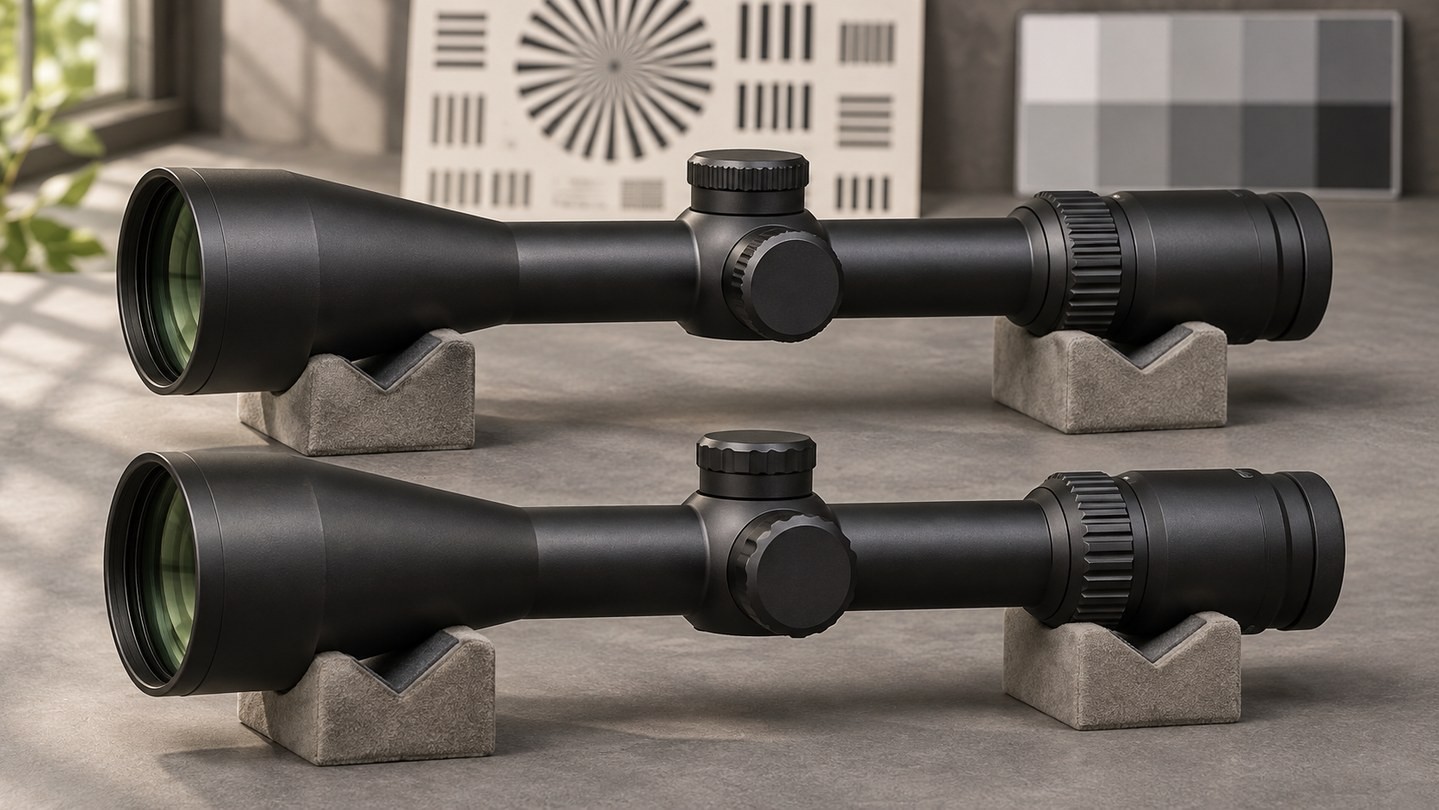
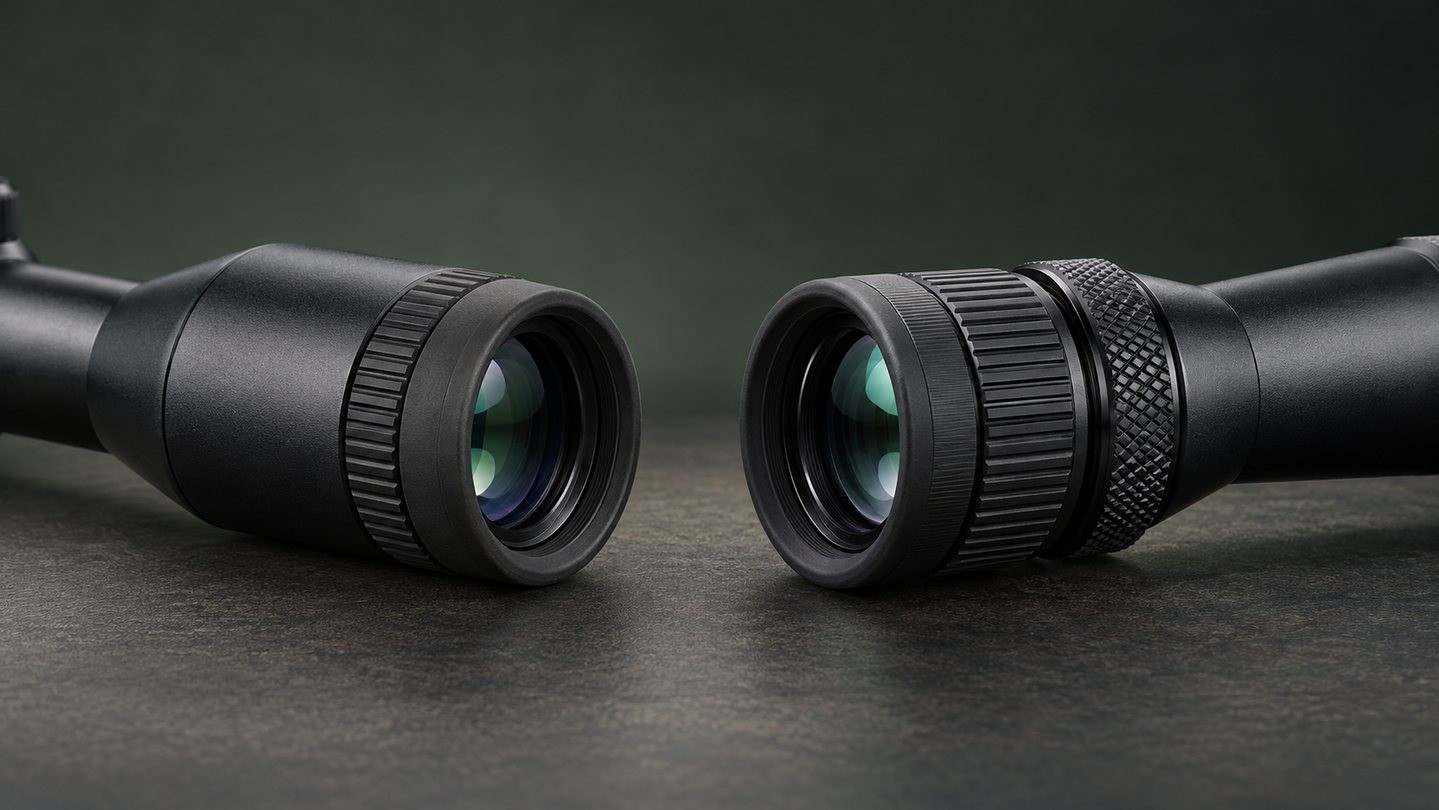
Two scopes can use the same basic job description for the eyepiece - focus the reticle for your eye - yet feel completely different when you adjust them. One may have a compact ring that turns quickly. Another may use a threaded eyepiece with a separate locking ring.
That difference affects setup and convenience. It does not, by itself, tell you which scope has better glass or holds zero more reliably.
Both designs focus the reticle
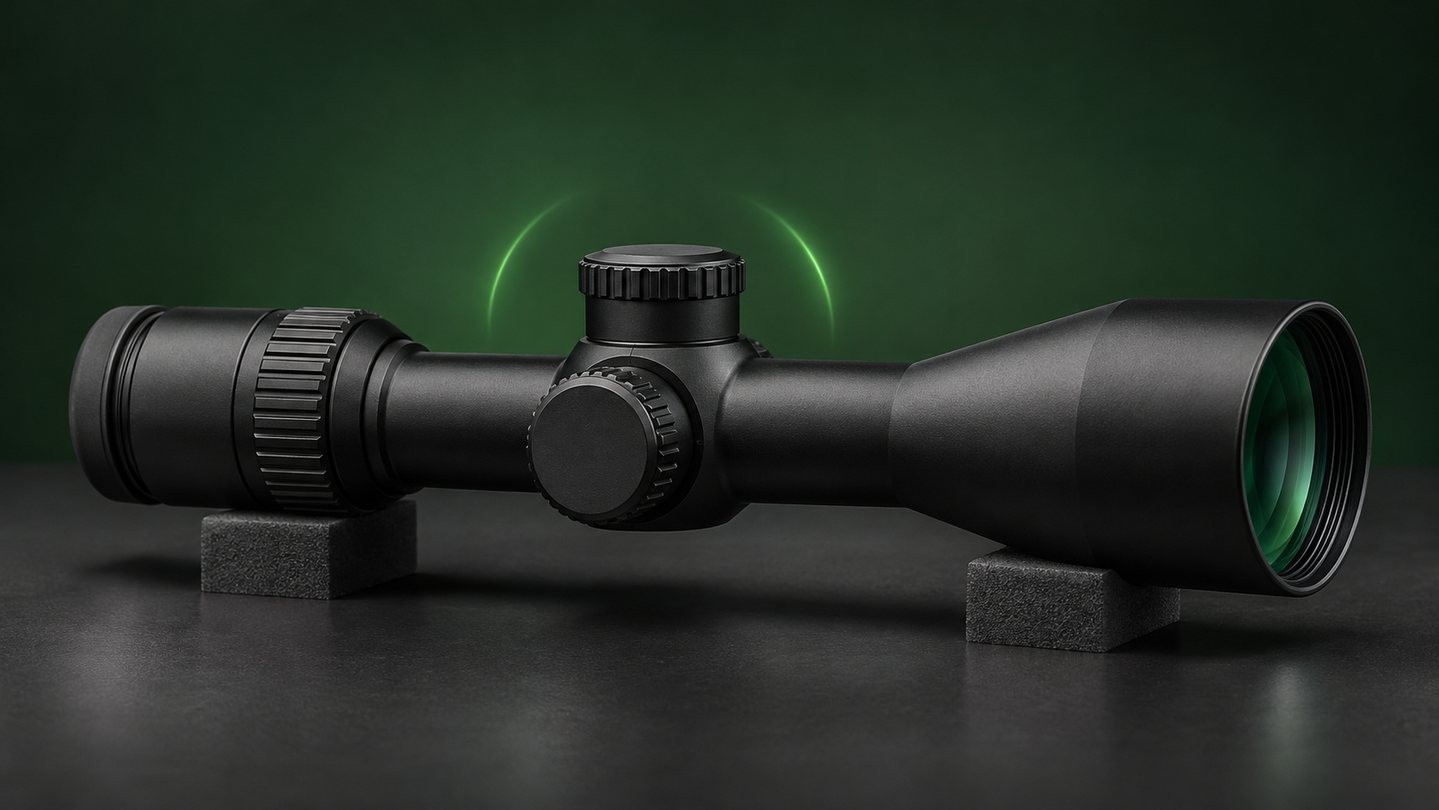
The diopter is the focus adjustment at the ocular, or eyepiece, end of the scope. Its purpose is to make the reticle look sharp to the individual viewer. It compensates for differences between eyes; it is not a second magnification control.
This is also why the setting can change when a different person uses the scope, or when the same person switches between glasses and contact lenses. Our rifle scope diopter guide covers the basic setup process in more detail.
How a fast-focus eyepiece works
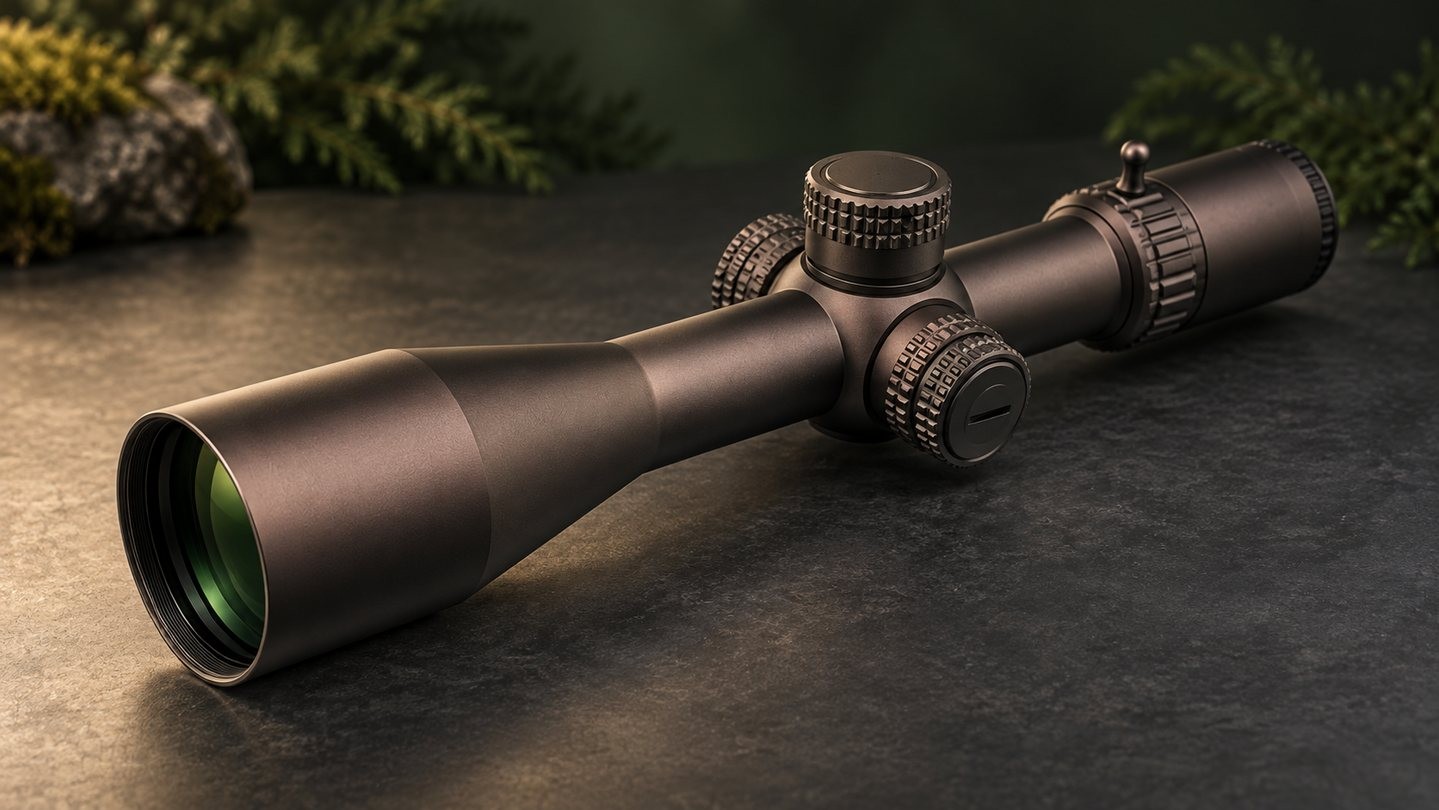
A fast-focus design usually places a relatively short-turn adjustment ring at the rear of the eyepiece. On some designs, an internal rotating section moves the focusing lens while the outer eyeshell remains in place. The exact mechanical layout varies by model, but the user experience is similar: the reticle focus can be changed with a quick turn and little ceremony.
That is convenient when an optic is shared, when corrective eyewear changes, or when the initial setting needs to be found quickly. The trade-off is that an exposed adjustment may be easier to move unintentionally, depending on its stiffness and whether the manufacturer provides a reference mark or lock.
"Fast focus" describes the control style. It does not mean the target image focuses faster, and it does not prove anything about optical resolution.
How a locking diopter works
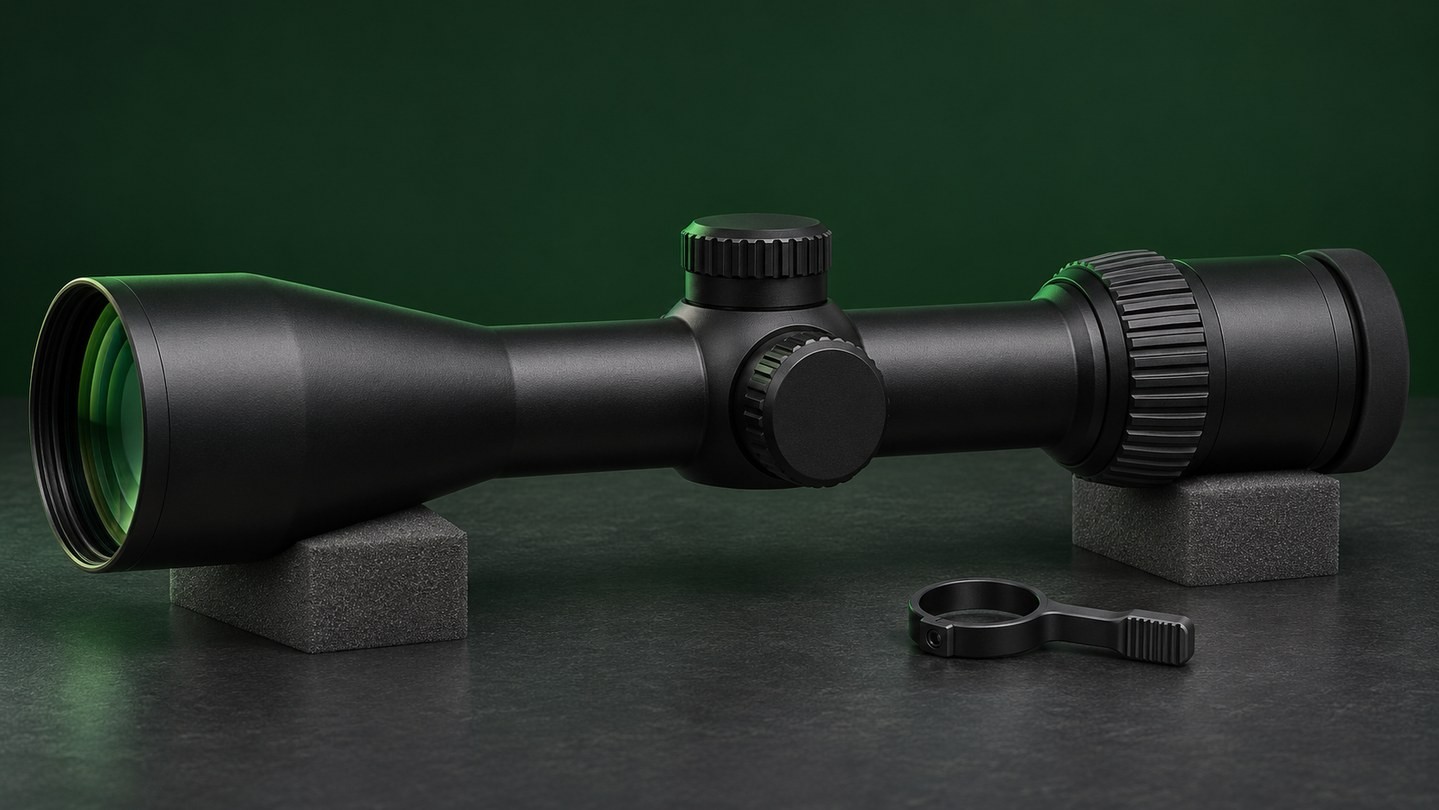
A traditional locking arrangement normally uses a threaded eyepiece plus a separate lock ring. The user loosens the lock, rotates the eyepiece until the reticle is sharp, then tightens the ring against it.
This approach is slower to set, but it gives the chosen position a deliberate mechanical stop. That can be useful on an optic assigned to one person for long periods. It can be less convenient when several people need different settings.
The presence of a lock ring is not a promise that the setting can never move. Thread fit, ring tension and handling still matter, and the exact instructions should come from the manual for that model.
Diopter is not target focus or parallax
This is the most important distinction. The eyepiece diopter focuses the reticle for your eye. A side-focus or adjustable-objective control is used to address target-image focus and parallax at different distances on scopes that provide that control.
If the reticle is sharp but the target is soft, turning the diopter back and forth can hide the problem temporarily while your eye strains to compensate. Set the reticle first, then use the appropriate target-focus or parallax control. The relationship is explained in our parallax, focus and diopter guide.
A better way to set either design
Use the procedure in the exact product manual, but the general logic is consistent:
- Use a plain, light-colored background so the eye is not distracted by target detail.
- Wear the glasses or contact lenses you normally use with the optic.
- Look only briefly, then look away before checking again. Staring lets the eye accommodate and can make a poor setting seem acceptable.
- Adjust until the reticle looks immediately sharp and relaxed.
- If the design has a lock ring, secure it without disturbing the eyepiece position.
- Record the position if the optic is shared or the control has no clear scale.
Once set, the diopter normally stays in that position unless the user or corrective vision changes. A reticle that looks sharp to one person may not look equally sharp to another; this is one reason the same scope can look different to two people.
Which design is easier to live with?
Choose by use pattern rather than by assuming one mechanism is premium.
- Fast-focus eyepiece: useful when adjustment speed and easy sharing matter.
- Locking diopter: useful when a single user's setting should remain deliberate and easy to preserve.
- Either design: should have enough adjustment range, smooth movement and a setting that remains stable in normal use.
Also check eye relief and eyebox separately. A perfectly focused reticle does not fix a black ring caused by incorrect eye position. Our rifle scope eyebox guide explains that different problem.
The practical takeaway
Fast-focus and locking diopters solve the same optical task with different controls. The fast-focus style favors quick adjustment; the locking style favors a deliberate set-and-secure routine. Neither one automatically improves image quality, tracking or durability.
Whichever design you choose, judge it by how easily you can obtain an immediately sharp reticle, how well the setting stays where you put it, and whether the rest of the scope fits your viewing position.


Leave a comment