Twilight factor looks wonderfully precise. Multiply magnification by objective diameter, take the square root, and you get a tidy number that seems to rank one optic against another.
The calculation is real. The problem is what people sometimes ask it to prove.
Twilight factor can compare the basic magnification-and-aperture relationship between two optical configurations. It cannot tell you how much light the complete scope transmits, how well it controls glare, or whether fine detail will remain visible against a dark background. Think of it as a geometry-based clue, not a low-light score.
How is twilight factor calculated?
The conventional formula is:
Twilight factor = √(magnification × objective diameter in millimetres)
A 3–9×40 scope therefore has a different twilight factor at each end of its zoom range:
- at 3×: √(3 × 40) ≈ 11.0
- at 9×: √(9 × 40) ≈ 19.0
A 4–16×50 scope gives:
- at 4×: √(4 × 50) ≈ 14.1
- at 16×: √(16 × 50) ≈ 28.3
These examples show why the figure rises when either magnification or objective diameter increases. They do not show that the view will become proportionally brighter. In fact, raising magnification reduces exit pupil, which may make the image feel less forgiving as ambient light falls.
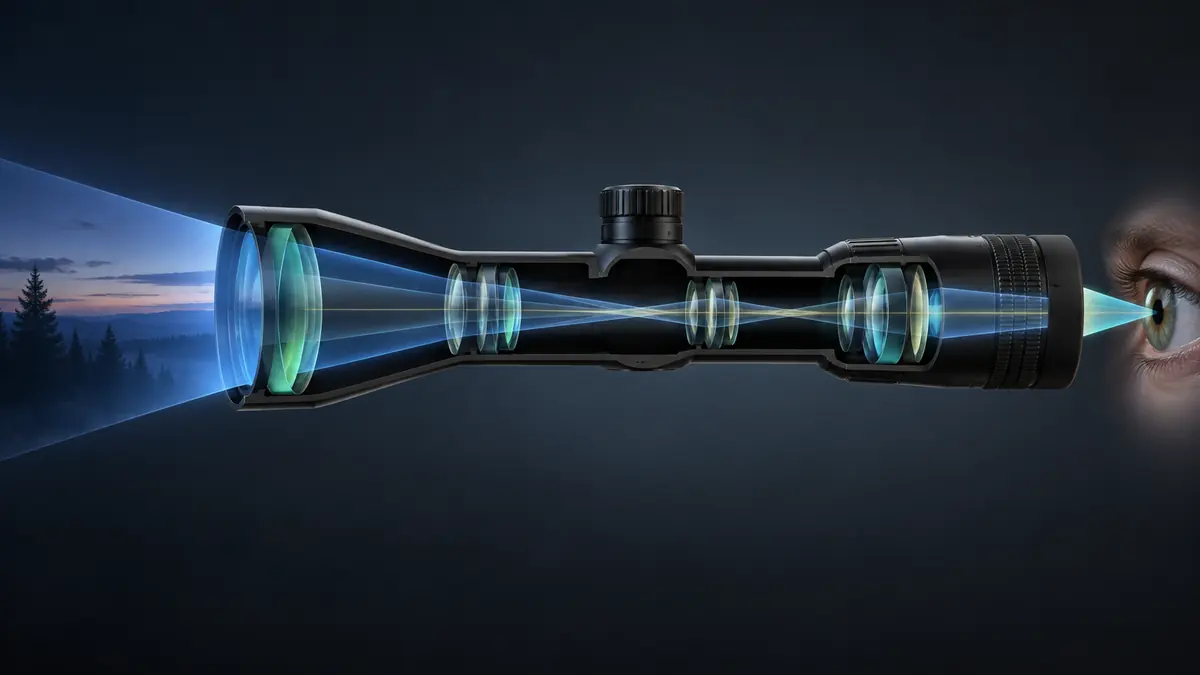
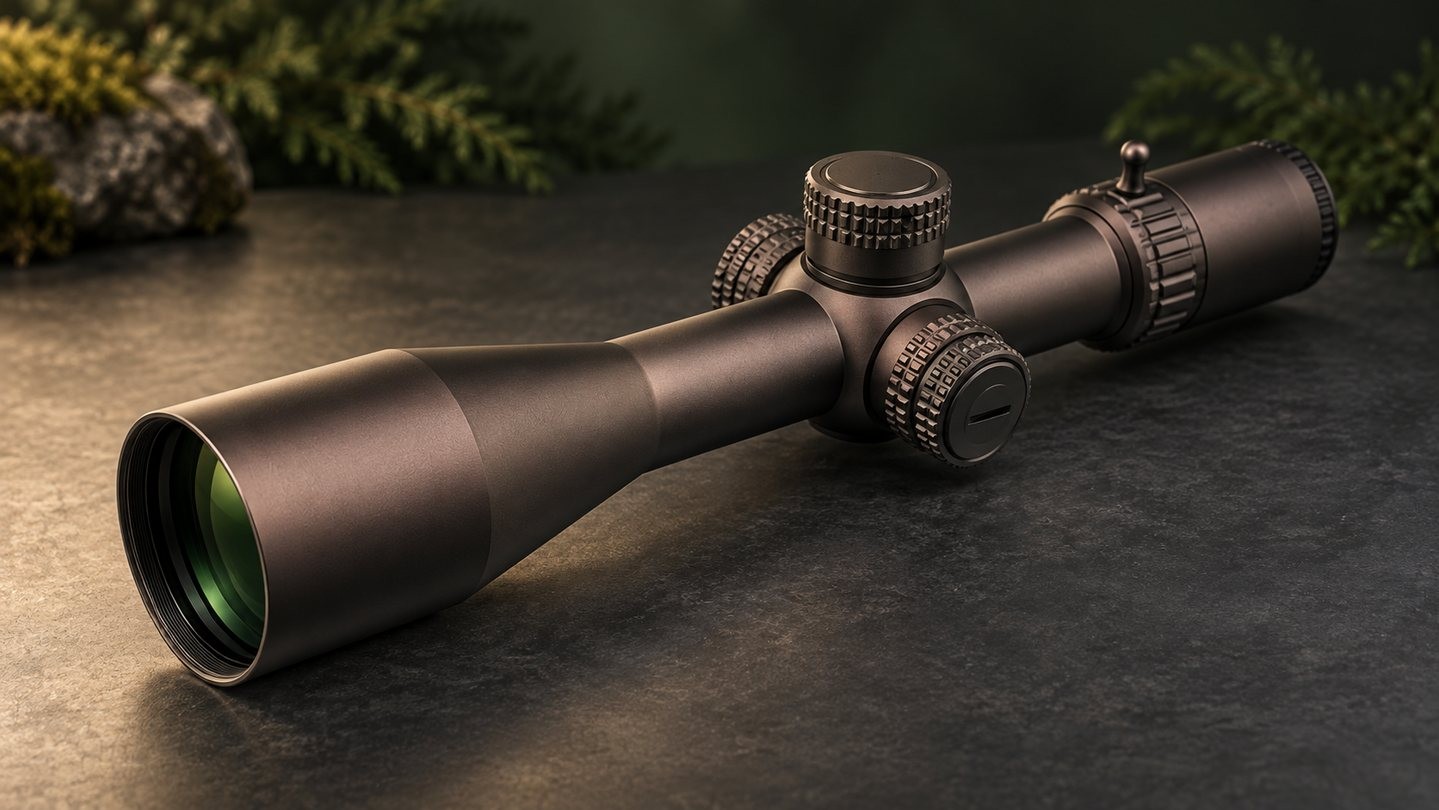
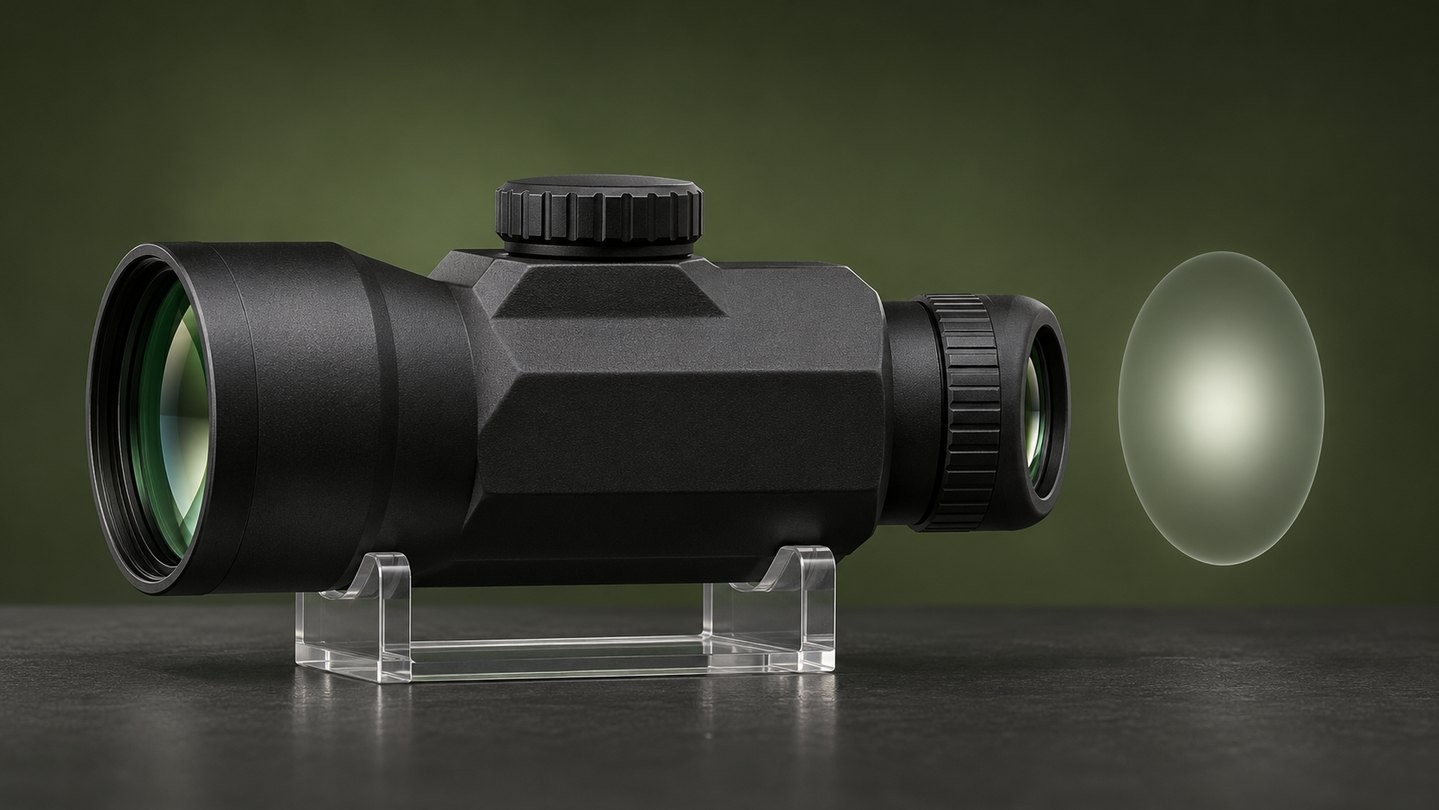
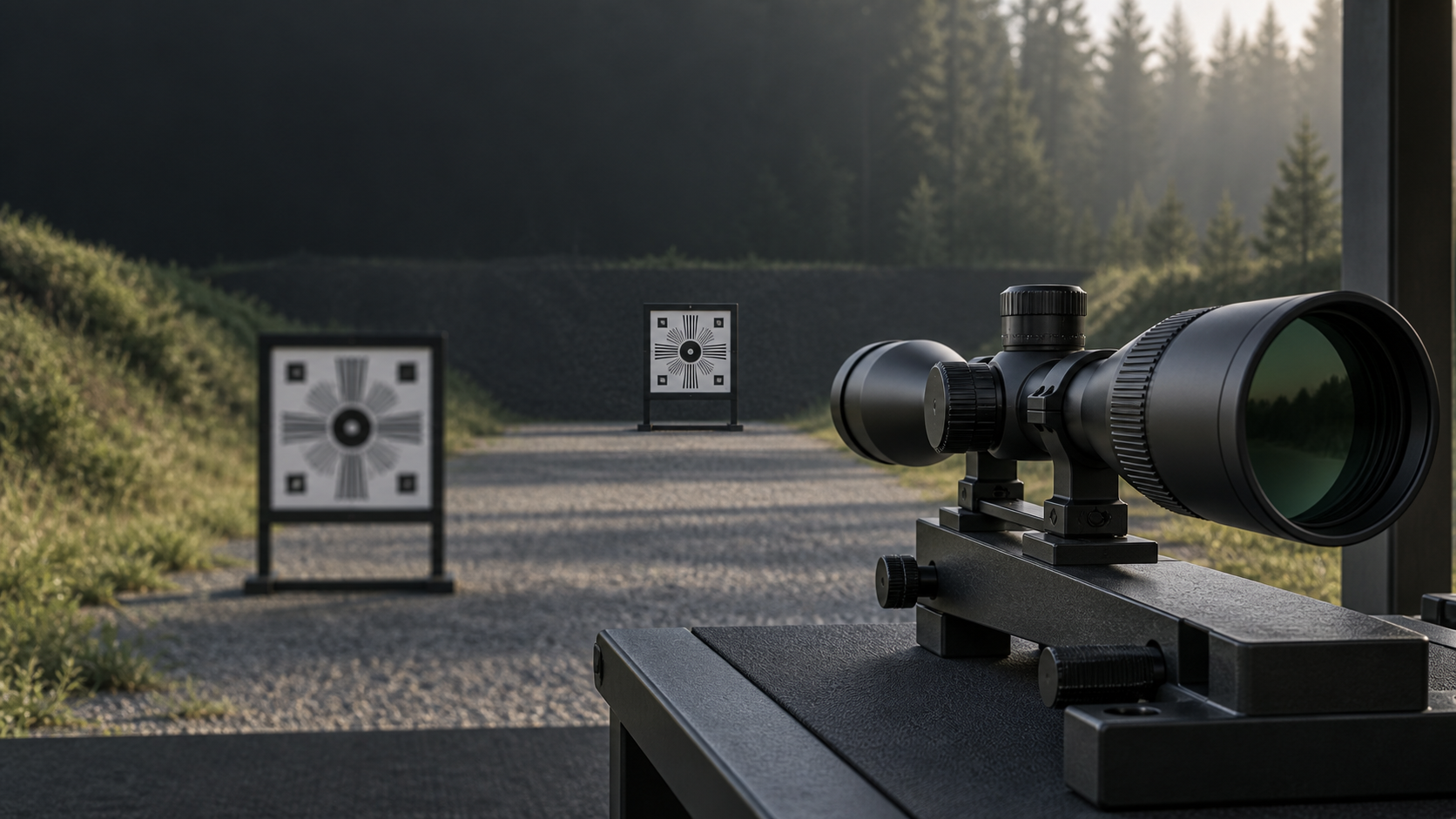
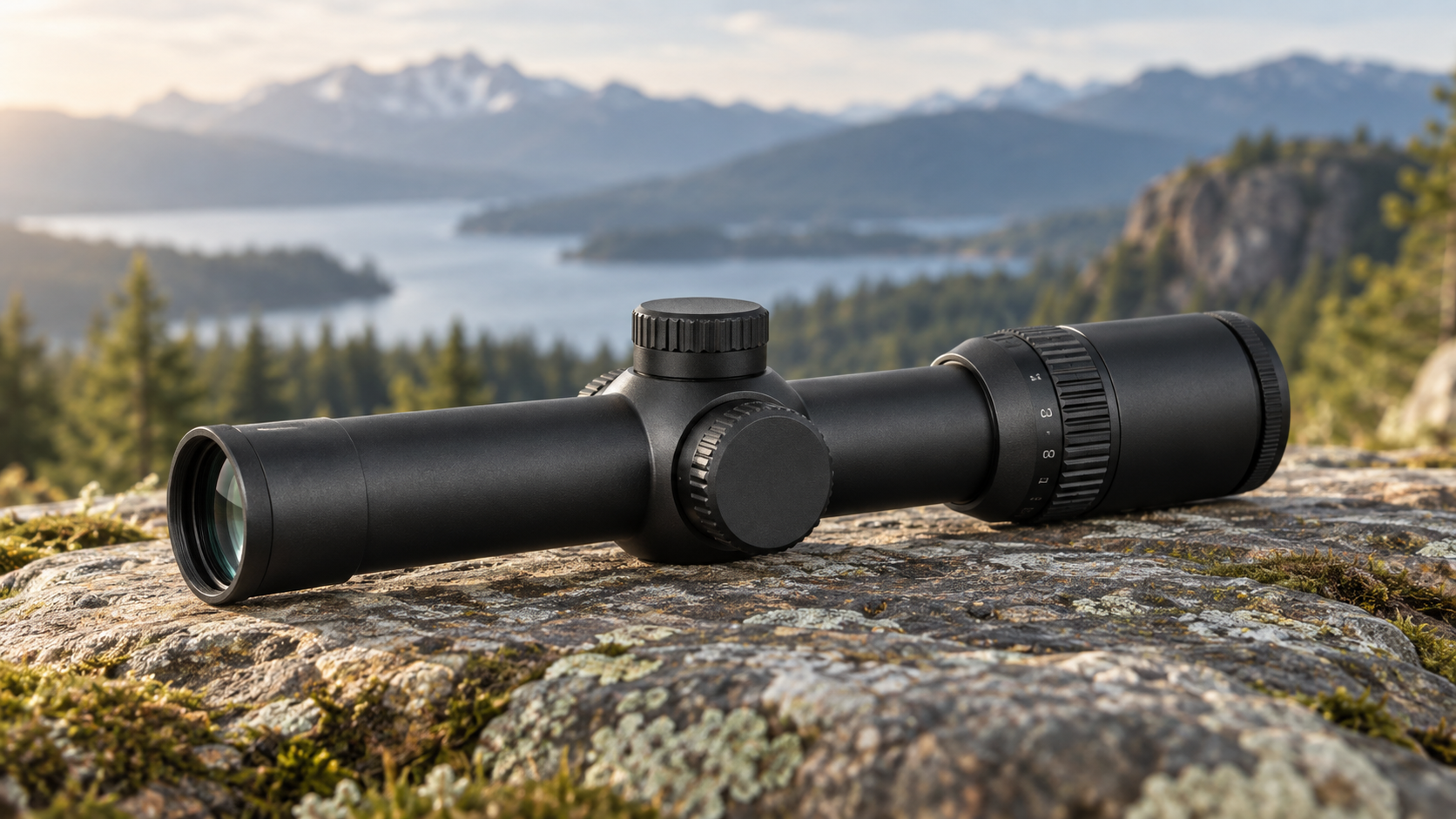
Illustration: objective size, magnification and the emerging light beam all influence the viewing situation. It is not a laboratory measurement of a specific scope.
What does a higher number actually suggest?
Historically, twilight factor was intended as a quick way to compare how magnification and aperture might support detail recognition in dim conditions. A larger objective can admit a wider bundle of light, while higher magnification can make a small feature appear larger.
That relationship explains why the number is not simply a brightness calculation. Magnification helps reveal detail, but it also spreads the available light over a larger apparent image and narrows the exit pupil. The formula rewards both aperture and magnification without checking whether the resulting beam suits the observer's eye.
Used carefully, twilight factor can answer a limited question: how do the magnification and objective diameter of two configurations compare mathematically? It cannot answer the more useful question: which scope will give the clearer, more readable image at dusk?
Why twilight factor is not the same as light transmission
Twilight factor uses only two inputs. It knows nothing about the glass, the number of air-to-glass surfaces, the coatings, or the mechanical control of stray light.
Two scopes set to the same magnification with the same effective objective diameter will have the same twilight factor. One may still deliver a cleaner image because it transmits light more evenly across the visible spectrum, preserves contrast, and suppresses internal reflections more effectively.
This is the same reason a headline transmission percentage does not describe the whole view. Our guide to rifle scope light transmission explains why the test method, wavelength range, contrast and glare control all need context. The separate guide to lens coatings covers how anti-reflective treatments help manage losses and reflections.
Exit pupil is the reality check
Exit pupil is calculated by dividing objective diameter by magnification. It describes the nominal diameter of the light beam leaving the eyepiece.
Consider the 4–16×50 example again:
- at 4×, the nominal exit pupil is 50 ÷ 4 = 12.5 mm
- at 10×, it is 50 ÷ 10 = 5 mm
- at 16×, it is 50 ÷ 16 ≈ 3.1 mm
Twilight factor increases as you move toward 16×, but the exit pupil becomes much smaller. Your eye cannot use a beam larger than its own pupil, yet a beam that becomes too small may make eye placement less forgiving and the image appear dimmer in poor light.
That does not mean the highest magnification is unusable. It means the setting has to suit the available light, the target detail and the steadiness of the viewing position. For a fuller explanation, see what exit pupil means in a rifle scope.
Objective diameter needs context too
A larger objective can provide more exit-pupil headroom at a given magnification, but it also brings practical changes. The front bell is larger, the scope may sit higher, and the complete optic may be heavier.
It is therefore unhelpful to choose a 50 mm or 56 mm objective simply because it produces a larger twilight-factor number. The better question is whether the added aperture supports the magnification and conditions you actually use. Our comparison of 40 mm, 44 mm, 50 mm and 56 mm scope objectives looks at those trade-offs without treating bigger as automatically better.
A simple comparison that exposes the limitation
Imagine two theoretical configurations:
- 8×56: twilight factor ≈ 21.2, exit pupil = 7 mm
- 56×8: twilight factor ≈ 21.2, exit pupil ≈ 0.14 mm
The multiplication is identical, so the twilight factor is identical. The viewing experience would be radically different. The second arrangement combines extreme magnification with a tiny objective and an extremely small exit pupil.
This deliberately unrealistic comparison makes the weakness easy to see: the formula cannot judge whether the magnification and aperture form a sensible optical system. It only multiplies the two numbers.
How should you compare low-light performance?
Start with the specifications, but compare complete viewing conditions rather than one figure.
- Use the same magnification. A scope at 6× should not be judged against another at 12× and then blamed for looking different.
- Check exit pupil. It helps explain how much alignment tolerance and beam diameter the chosen setting provides.
- Look for a defined transmission method. A percentage is more useful when the manufacturer explains what was measured.
- Pay attention to contrast and flare. A bright veil across the image can hide more detail than a small transmission difference.
- Keep eye position consistent. A dark crescent or partial black ring is generally an alignment or eyebox symptom, not a twilight-factor problem. See the rifle scope eyebox guide for that distinction.
- Compare the same scene safely. Use a shaded subject near a brighter background, not the sun, and observe whether edges and darker tones remain distinct as the light changes.
So, is twilight factor useful?
Yes—as long as it stays in its lane.
Twilight factor is a quick mathematical comparison of magnification and objective diameter. It can help explain why two configurations occupy different places on paper. It does not measure optical quality, actual transmission, exit-pupil suitability, colour fidelity, glare control or the observer's eyesight.
Use it as one clue among several. When the light is fading, a balanced combination of usable magnification, adequate exit pupil, good contrast and controlled reflections matters far more than winning a contest between two calculated numbers.
For more plain-language optics explanations, browse the USEEIN Buying Guides.


Leave a comment