A reticle can look slightly tilted even when the scope has not developed an internal fault. The scope may be rotated in its rings, the reference in the scene may not be truly vertical, or your head may be approaching the eyepiece at an angle. The important first step is to separate an apparent tilt from a repeatable mechanical problem.
Do not judge the scope from one hurried glance. Use a stable position, a trustworthy vertical reference, and the same viewing position for each check. If the appearance changed after an impact or the reticle seems to move inside the image, stop and request model-specific support rather than trying to disassemble the optic.
Is the reticle tilted, or is the whole scope rotated?
The reticle is viewed through the scope, but the scope body can rotate in the rings. When that happens, the vertical reticle line rotates with the optic. The reticle may be perfectly fixed inside the scope while the complete scope is installed at an angle relative to the mounting system.
This is why a tilted-looking reticle is not, by itself, proof of an internal defect. Our guide to leveling a rifle scope explains the mounting relationship in more detail.
Use a trustworthy vertical reference
Door frames, fence posts, tree trunks, shelves, and building edges often look vertical without being accurately plumb. A camera can add perspective distortion, and a sloping floor can make a correctly mounted object look wrong.
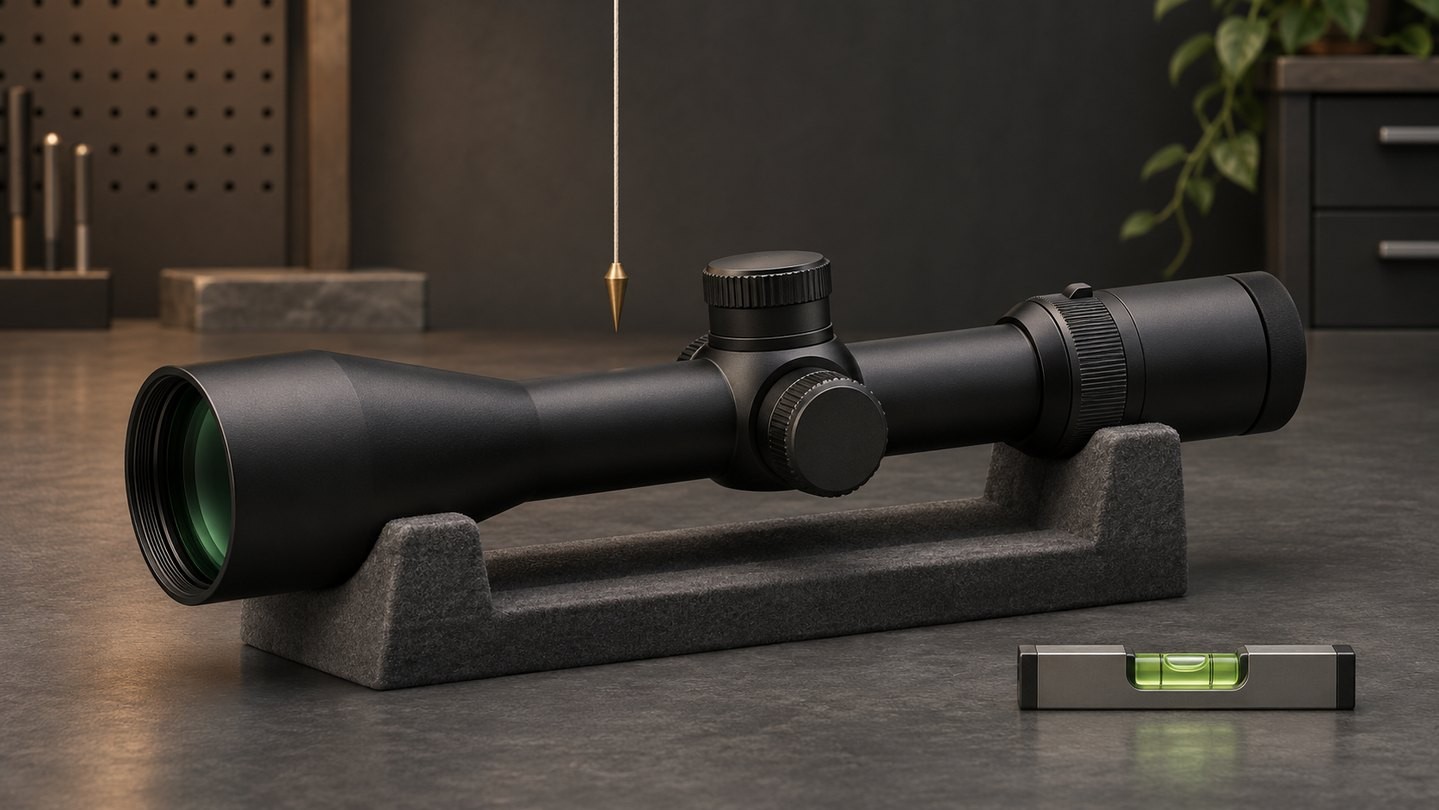
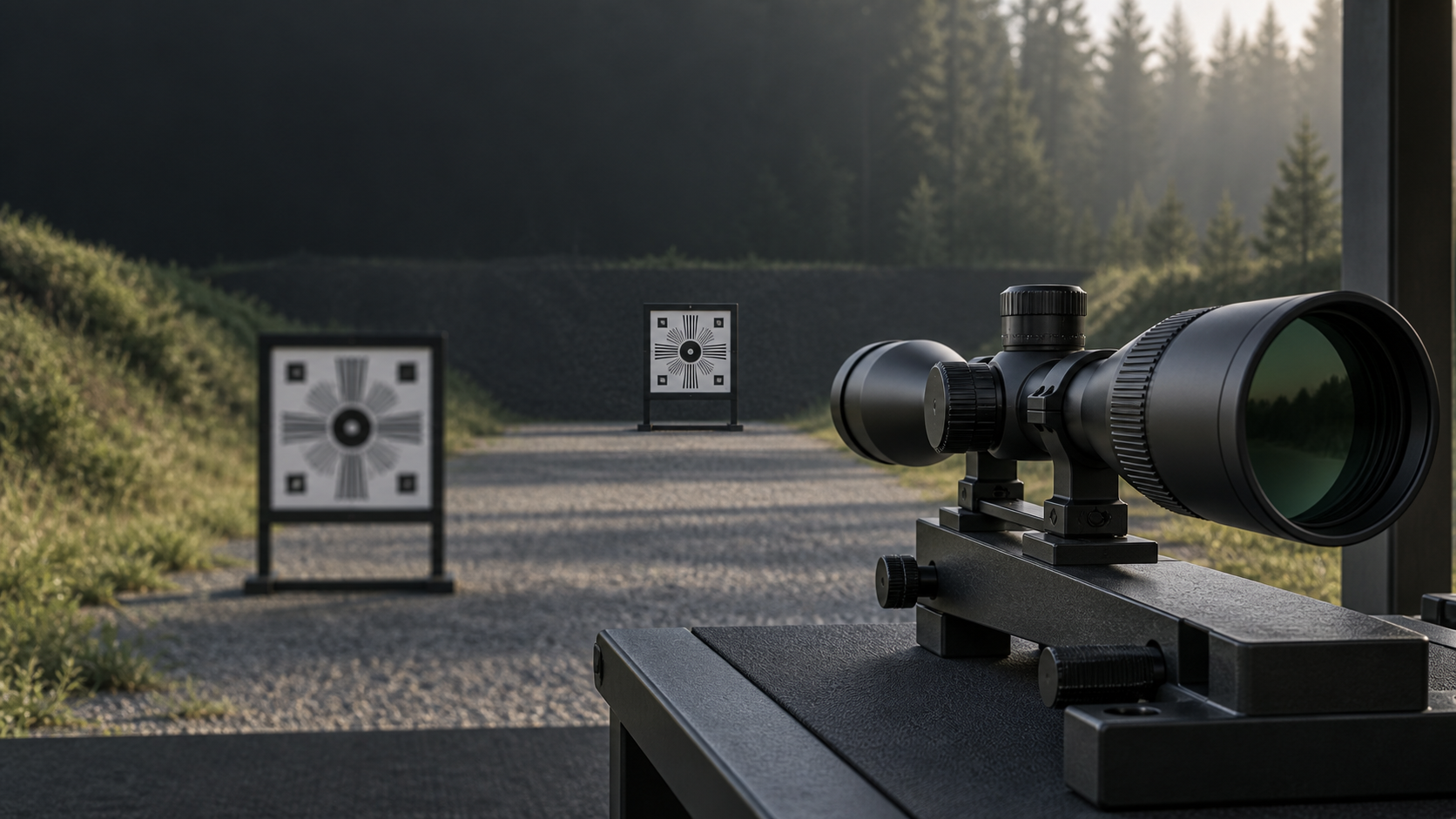
For an inspection, use a verified plumb line or another reference that has been checked with a suitable level. Place it at a comfortable viewing distance and keep the optic stable. The goal is not to zero the scope or make an adjustment; it is simply to compare the reticle's vertical line with a known vertical reference.
Check from a normal viewing position
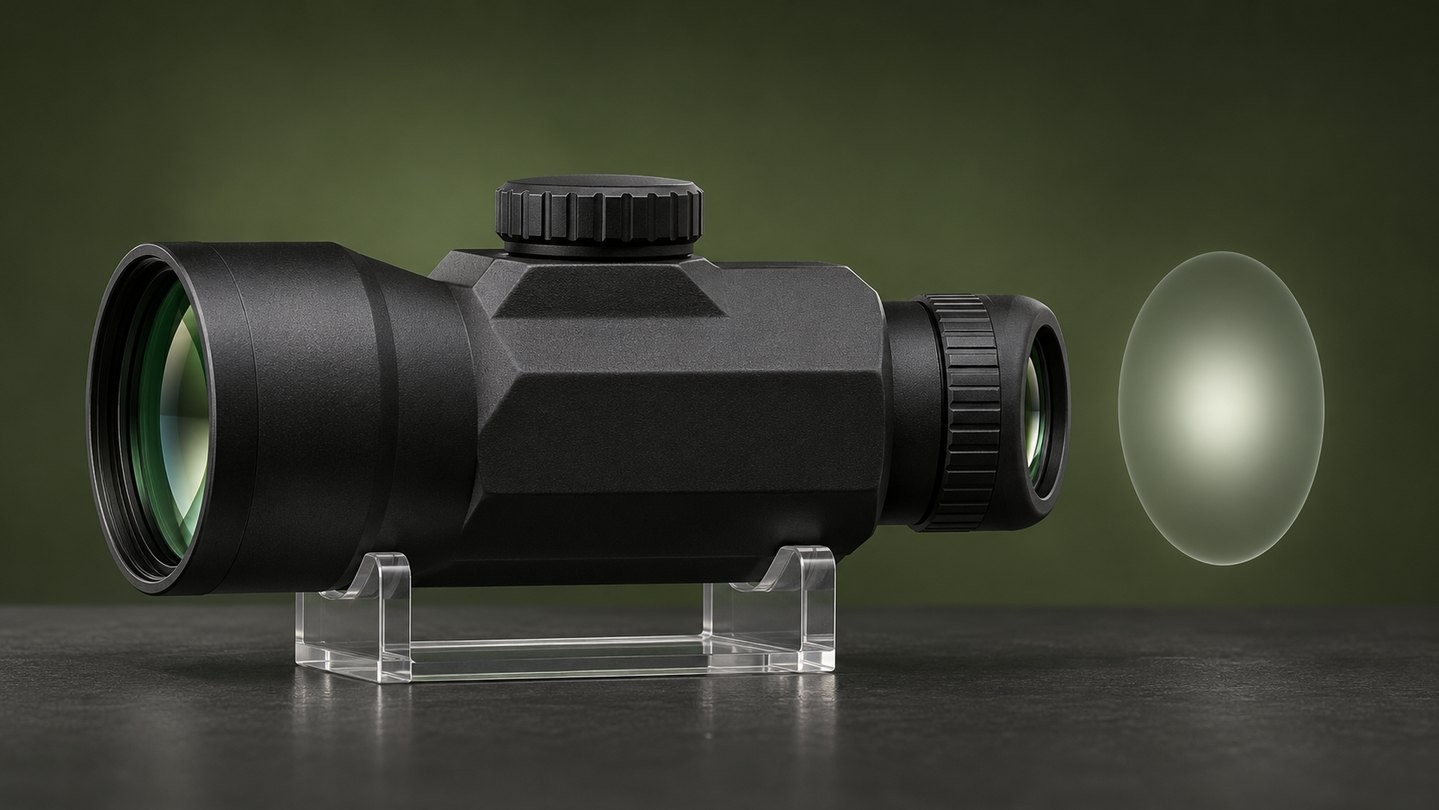
Move your eye until you see a complete, evenly illuminated circular image. A dark crescent or partial black ring means your eye is outside the most forgiving part of the viewing area. That off-axis position can make the whole picture feel displaced or rotated, especially when the reference line is near one side of the field.
Change only your head position first. If the apparent tilt changes as your eye moves, the symptom is not behaving like a fixed reticle rotation. Review the eye-relief and scope-shadow guide before changing the mounting position.
Separate scope rotation from reticle rotation
With the optic stable, compare three things: the verified vertical reference, the reticle's vertical line, and an appropriate mounting reference identified by the product or mount instructions. If the scope body is rotated, the reticle and the optic's controls will normally rotate together.
An internal problem is more concerning when the reticle appears newly rotated relative to the scope body, when its angle changes without the scope moving, or when another part of the image also shifts unexpectedly. Those observations should be documented rather than corrected by force.
Do not treat every exterior surface as a precision level
A turret cap, illumination knob, saddle edge, or power-ring feature may look flat. That does not guarantee that it is a calibrated leveling surface. Manufacturing shape, removable caps, engraving, and protective features can all make an exterior surface a poor reference.
Use the method and reference surfaces specified by the scope and mounting-system manufacturers. If the instructions do not define a leveling surface, a qualified installer can help establish the correct relationship without assuming that a convenient flat-looking part is exact.
Recheck the mounting system without forcing the tube
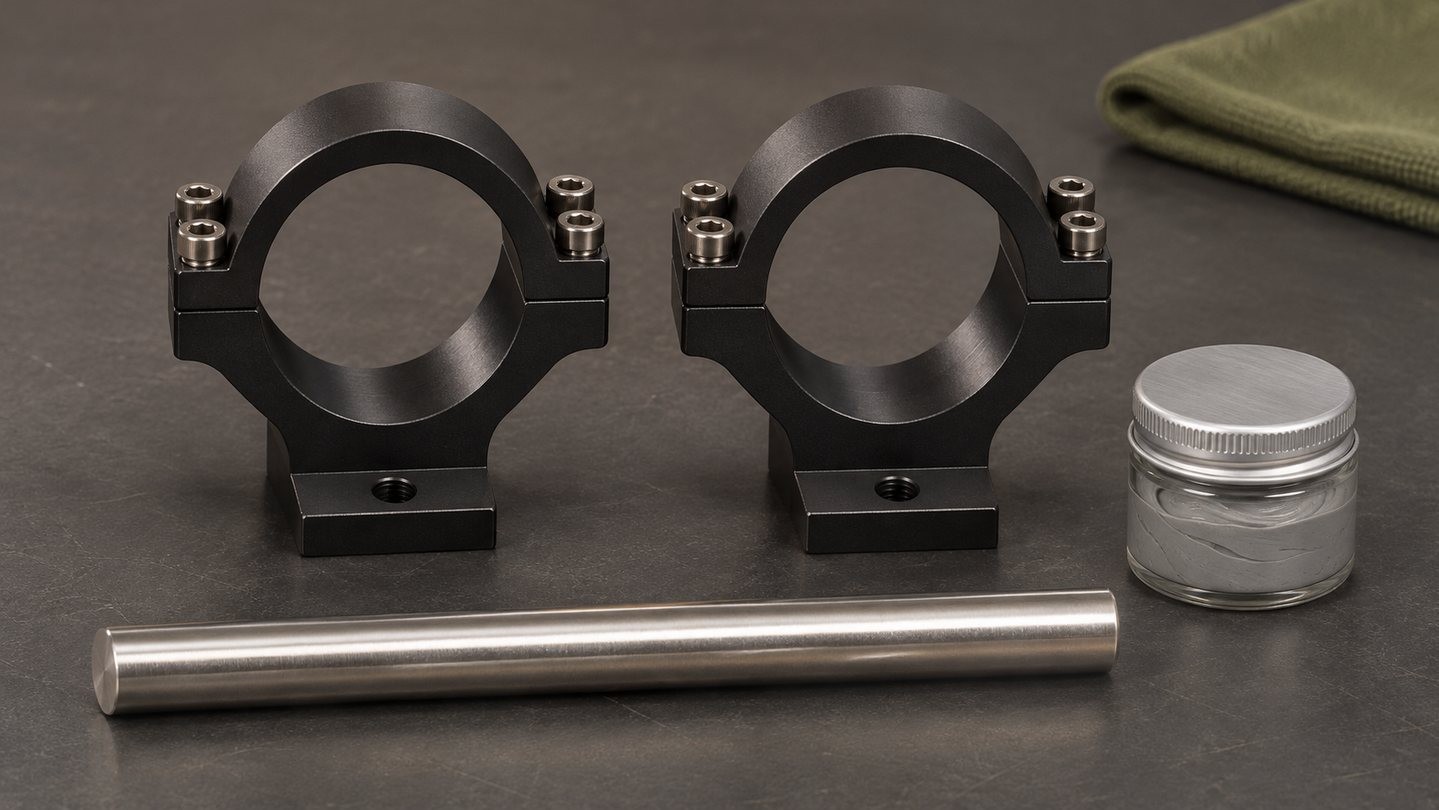
If the complete scope appears rotated, inspect the rings and bases before assuming the reticle is loose. Uneven ring gaps, a mount that is not fully seated, or movement after installation can change orientation. Follow the exact mount instructions and torque values for the components in use; there is no universal ring-screw value that fits every system.
Do not twist the scope against fully tightened rings, pry on a turret, or use the scope tube as a lever. Excessive or uneven force can damage the tube and create a more serious problem than the original visual symptom.
Pay attention to changes after an impact
A reticle that looked normal before a drop or hard impact deserves a different response from one that has always appeared slightly off relative to an uncertain reference. Look for dents, ring movement, cracked glass, unusual control feel, or a change in the image at the same time.
The dropped-optic inspection checklist covers the visible checks that can be made without opening the optic. Stop using the scope and seek service if the reticle or image appears newly displaced, intermittent, or unstable.
What to record for customer support
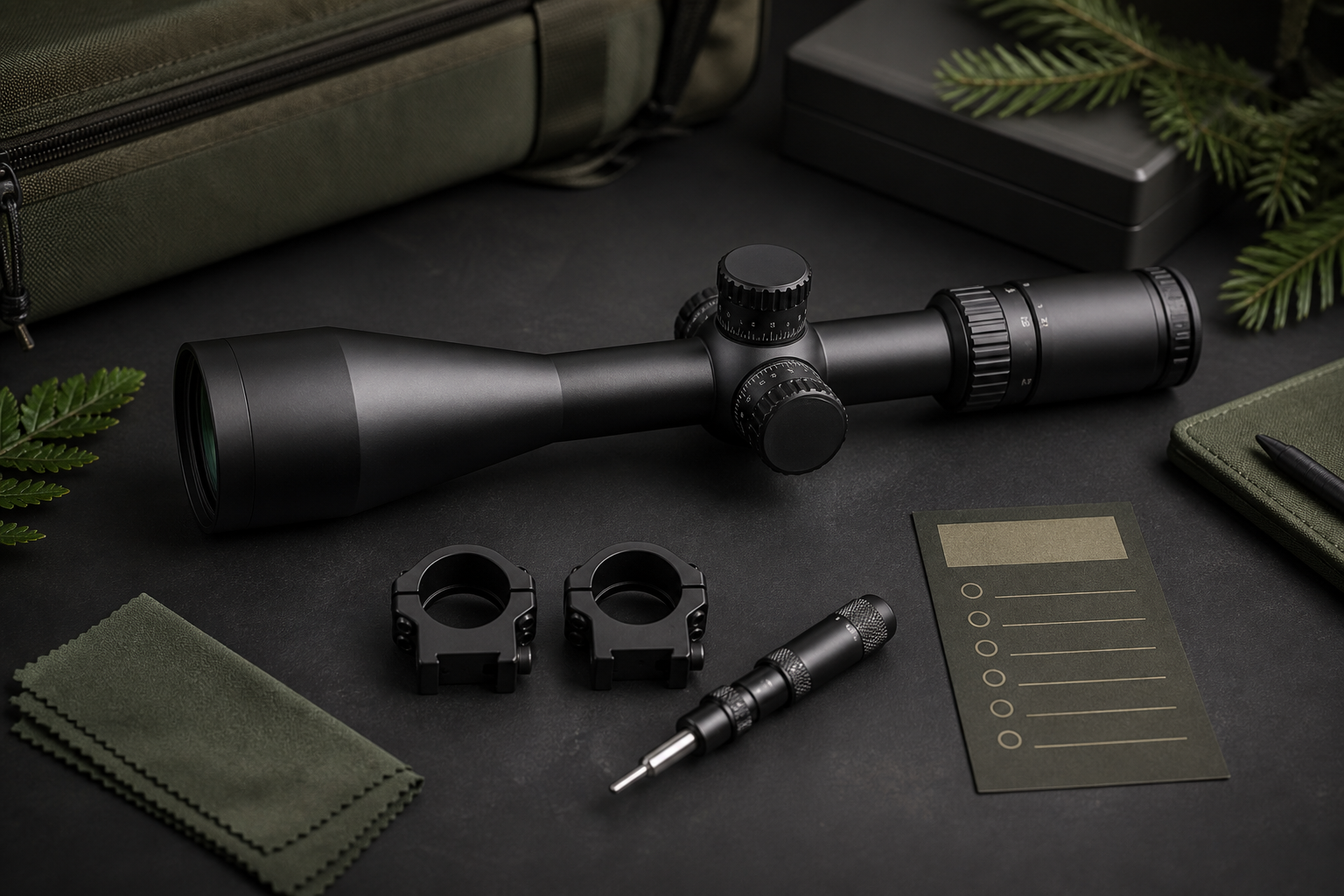
Take one photo showing the complete scope and mount, another showing the ring gaps and control orientation, and a through-the-scope photo only if it can be made safely without pointing the optic toward people or an unsafe area. Include the verified vertical reference in the frame when possible.
Record the exact model, when the symptom first appeared, whether there was an impact, whether the apparent angle changes with eye position, and whether the scope body has moved in the rings. The optic support-photo checklist explains how to make those images useful without publishing private serial information.
A simple diagnostic sequence
- Stabilize the optic and use a verified vertical reference.
- Find a complete circular view at normal eye relief.
- Move your eye slightly and note whether the apparent angle changes.
- Compare the reticle, scope body, and approved mounting reference.
- Inspect the rings, bases, and tube for movement or damage.
- Stop if the reticle or image is unstable, newly displaced, or changed after impact.
- Document the result and request model-specific support when necessary.
Final takeaway
A tilted-looking reticle does not automatically mean the reticle has rotated inside the scope. First eliminate an unreliable visual reference, off-axis eye position, and rotation of the complete optic. Use manufacturer-approved mounting references, avoid forcing the tube, and treat any new or unstable change after an impact as a service issue. A short, repeatable inspection is more useful than trying to correct an uncertain symptom by eye.


Leave a comment