A specification such as “70 MOA elevation adjustment” looks straightforward. Then the scope is mounted and zeroed, and the dial may have far less than 70 MOA available in the upward direction. Nothing has necessarily disappeared. The number on the specification sheet and the travel available from your zero are simply describing two different things.
This distinction matters when comparing scopes, choosing a mounting setup, or diagnosing why a turret reaches its limit earlier than expected. Here is the beginner-friendly version.
What does total adjustment range mean?
For most riflescope specifications, elevation or windage adjustment range means the full internal travel from one mechanical extreme to the other. It is not normally a promise that the entire amount will be available above your final zero.
Imagine a scope with 70 MOA of total elevation travel. If its internal adjustment begins perfectly centered, the theoretical starting point is roughly 35 MOA in one direction and 35 MOA in the other. That is only a simple illustration, though. Once the scope is mounted and zeroed, the mechanism may no longer sit at the exact center of its travel.
The same principle applies to MRAD specifications. A scope listed with 20 MRAD of total elevation travel does not automatically provide 20 MRAD above zero. If the two unit systems are still easy to mix up, our MOA vs MRAD guide explains how they relate to turret clicks and reticle measurements.
Why is usable travel different after zeroing?
A scope has to move its internal optical system until the reticle and the actual point of impact agree at the chosen zero distance. That correction consumes part of the available mechanical range.
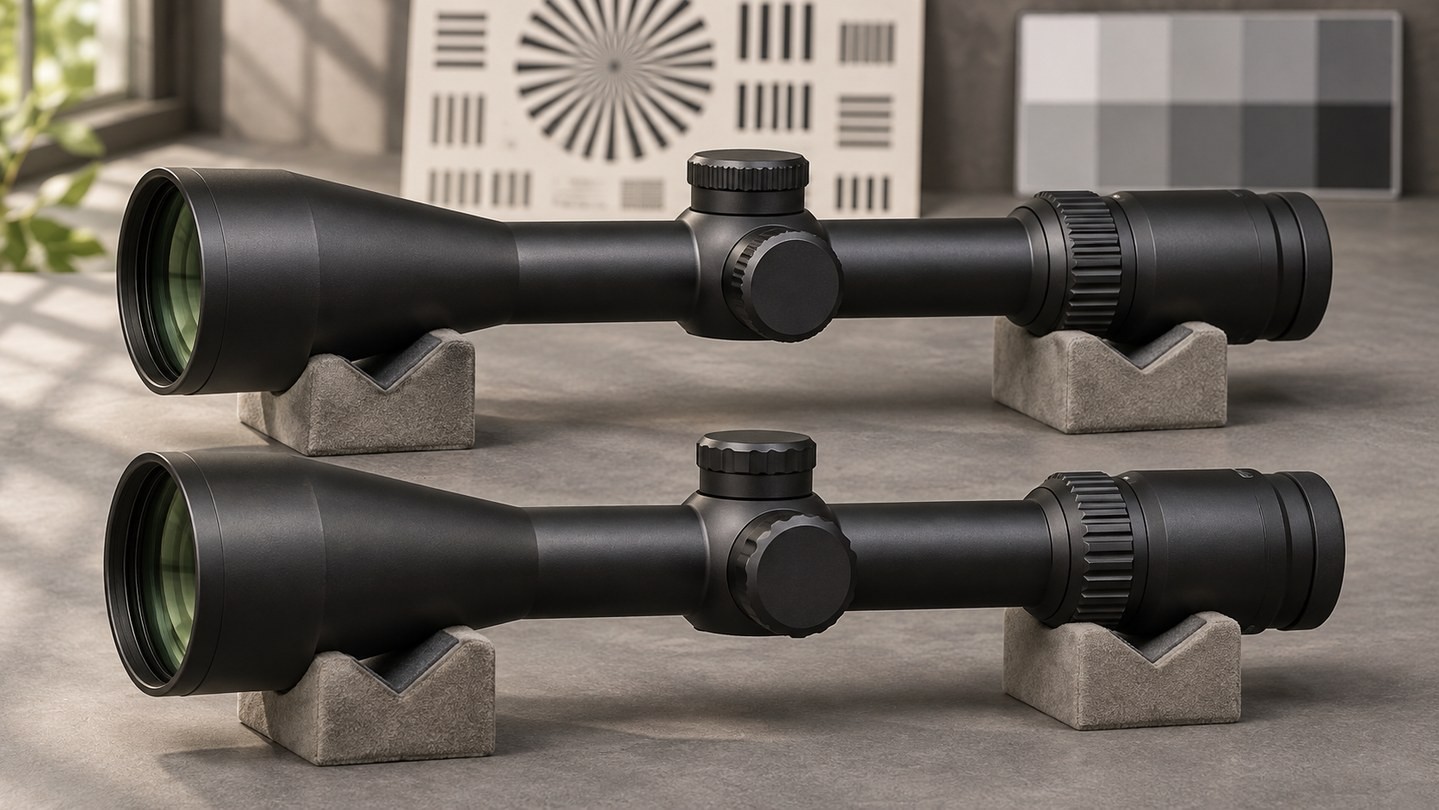
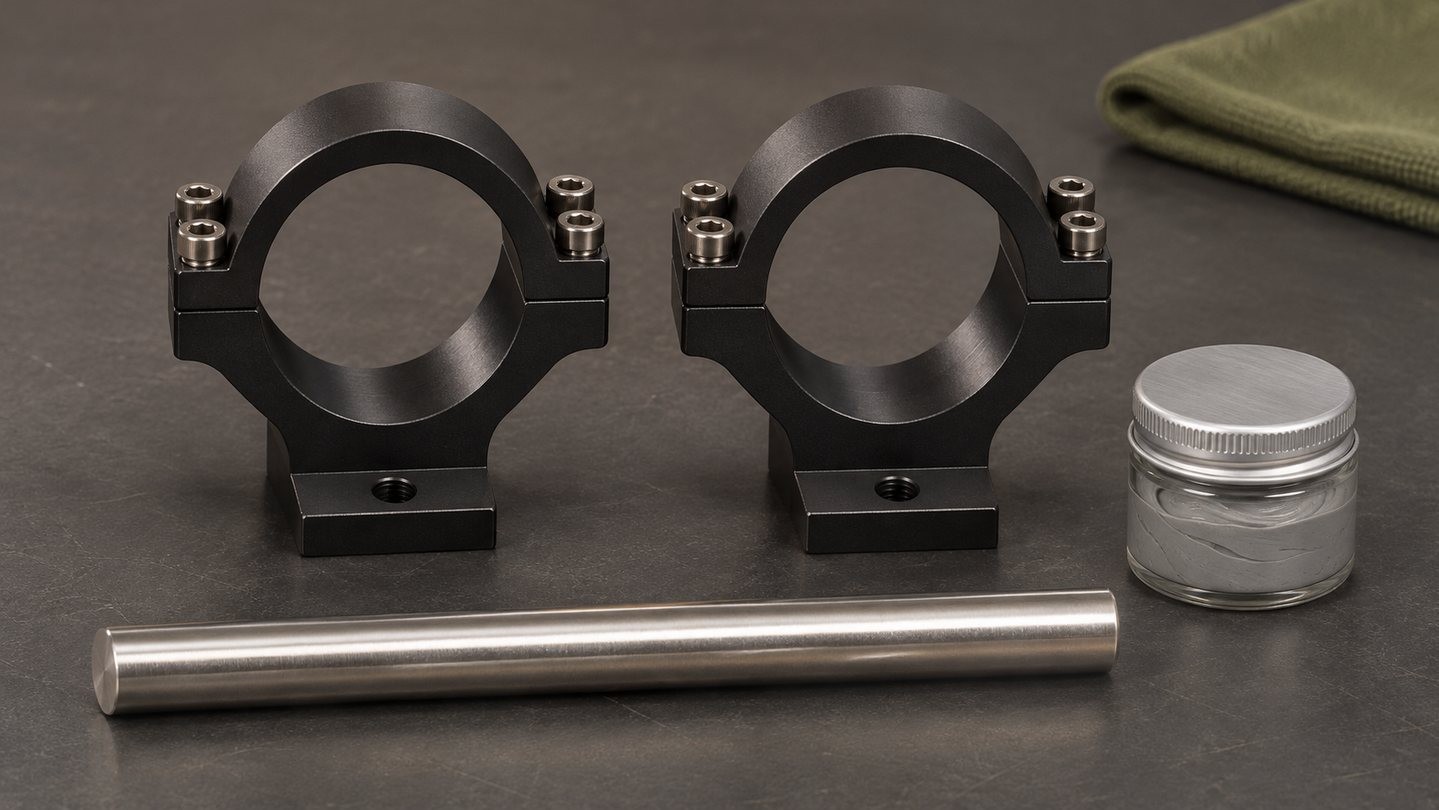
The amount used depends on the complete setup. The relationship between the scope, rings, base and receiver matters, as do normal manufacturing tolerances and how the parts seat together. Two otherwise identical scopes can therefore finish with different amounts of upward travel remaining when installed on different setups.
This is why a listed total range should be treated as a comparison specification, not as a guaranteed amount of usable travel from zero. The only reliable number for a particular setup is the travel you confirm after the scope has been installed and zeroed correctly.
Elevation and windage do not work in isolation
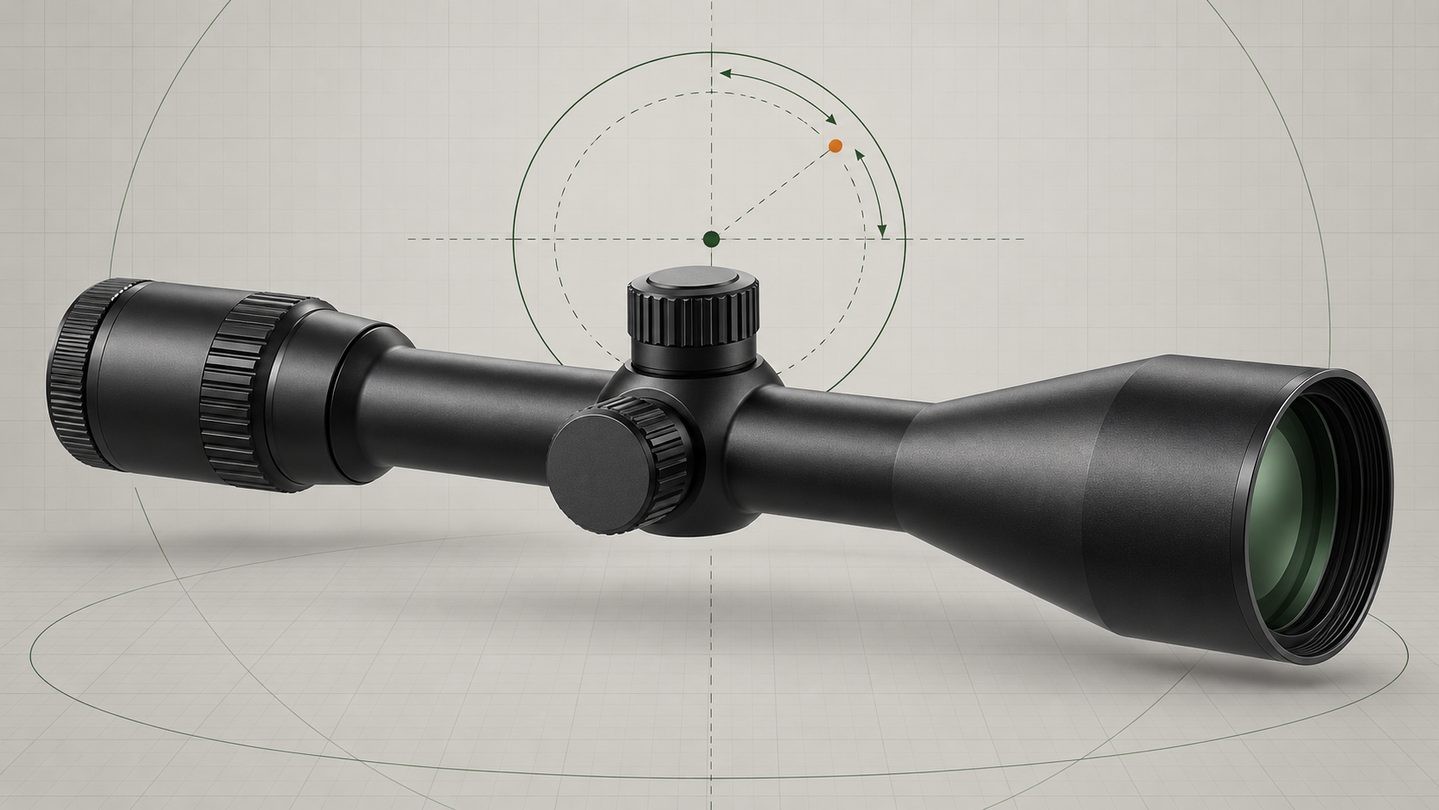
Inside a conventional scope, the adjustable optical assembly moves within a limited space. It is helpful to picture that space as a circle rather than two completely separate straight tracks.
If a large amount of windage is used to move the assembly far to one side, there may be less room left for elevation near that edge. The reverse can also happen. This is one reason an unusually large windage correction deserves attention: it may reduce the elevation headroom that appeared available when the mechanism was closer to center.
That does not automatically mean the scope is defective. It is a reason to check mounting alignment and the complete installation before assuming the advertised adjustment range is wrong.
Four specifications that are easy to confuse
1. Click value
The click value is the angular change produced by one click, such as 1/4 MOA or 0.1 MRAD. It describes the size of each adjustment step, not the scope’s total travel.
2. Travel per revolution
This is how much adjustment one complete turn of the turret provides. A dial might offer 10 MRAD or 20 MOA per revolution while the internal mechanism provides several revolutions of total travel.
3. Total adjustment range
This is the full mechanical range between the two extremes. It is usually the figure shown in a specification table for elevation and windage.
4. Dial travel limit
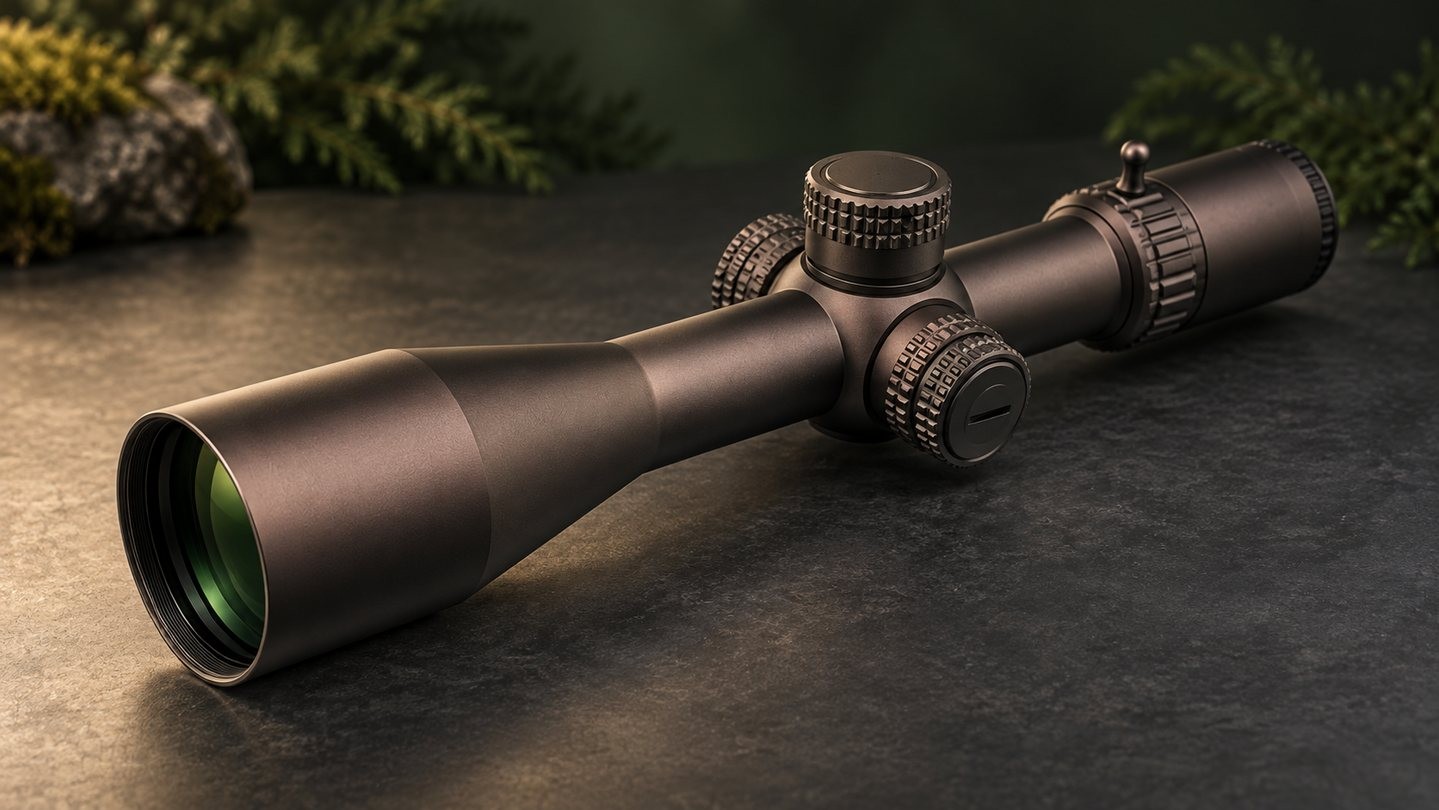
A zero stop, turret design or other dial mechanism may limit how far the user can rotate the external control, even when the scope has additional internal travel. Internal adjustment range and accessible dial travel are related, but they are not always identical specifications.
Our guide to capped, exposed and locking turrets explains how the control style changes access and protection. For a separate look at adjustment accuracy, read scope tracking and return to zero.
Does a larger main tube guarantee more adjustment?
No. A larger tube can give designers more internal space, but tube diameter alone does not tell you how much adjustment a finished scope provides. The erector design, lens arrangement, turret system and intended use all matter.
Compare the published adjustment range for the exact model rather than assuming that every 30mm scope has more travel than every 1-inch scope. Our 1-inch vs 30mm vs 34mm scope tube guide explains why tube size should not be treated as a shortcut for optical or mechanical performance.
What should you check if the turret runs out of adjustment?
First, do not force the dial past a firm mechanical stop. Then work through the simple checks in order:
- Confirm that you are reading the correct specification for the exact scope model.
- Check whether the figure is total travel, travel in one direction, or a dial limit.
- Review the manufacturer’s zero-stop or turret-reset instructions if the model includes those features.
- Check that the base and rings are the correct parts, fully seated and installed without visible misalignment.
- Make sure the scope tube has not been stressed by uneven or excessive ring pressure.
- If the required correction remains unusually large, ask the scope or mounting-system manufacturer to review the setup before changing parts.
Corrective bases and mounts exist for some applications, but they are not a universal answer. Their suitability depends on the equipment and intended use, so follow the relevant manufacturer’s guidance instead of treating a particular angle as a default fix.
A practical comparison checklist
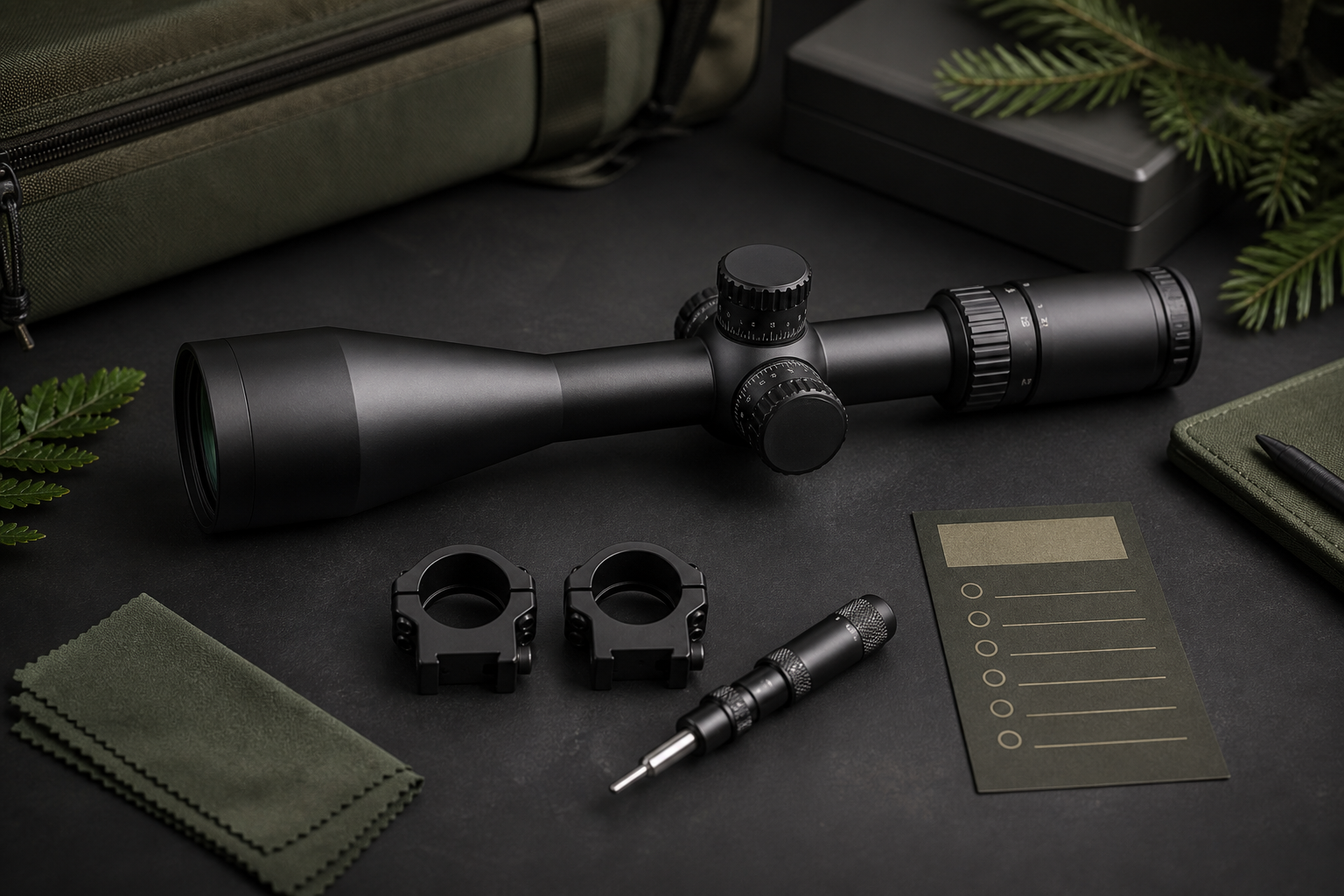
When comparing scopes, write down these questions rather than looking at one large number:
- Is the listed elevation range total travel or travel from a reference position?
- Is windage range specified in the same way?
- What is the click value and travel per revolution?
- Does the scope include a zero stop, and does it restrict accessible dial travel?
- Are the adjustment units matched to the reticle?
- Has the manufacturer published separate tracking or return-to-zero information?
For a broader pre-purchase checklist, visit our Buying Guides or browse the Sporting Optics category without jumping straight to a specific product.
The short version
Total adjustment range describes the scope’s complete mechanical travel. Usable travel describes what remains from the zeroed position in the direction you need. The second number depends on the scope and the complete mounting setup, so it cannot be calculated safely from the specification sheet alone.
Once you separate total range, click value, travel per revolution and dial limits, scope specifications become much easier to compare—and an apparently “missing” adjustment range is less mysterious.


Leave a comment