A turret can be easy to reach, hard to bump, or quick to unlock—but rarely all three in exactly the same way. That is why the shape of a scope’s adjustment controls matters more than it first appears.
Capped, exposed, and locking turrets all move the reticle through the same basic windage and elevation adjustments. The difference is how the controls balance access, protection, size, and speed. None of the three is automatically a sign of better optical quality, and none is the right answer for every user.
The useful question is simpler: how often do you expect to dial, and how much protection do you want when you are not dialing?
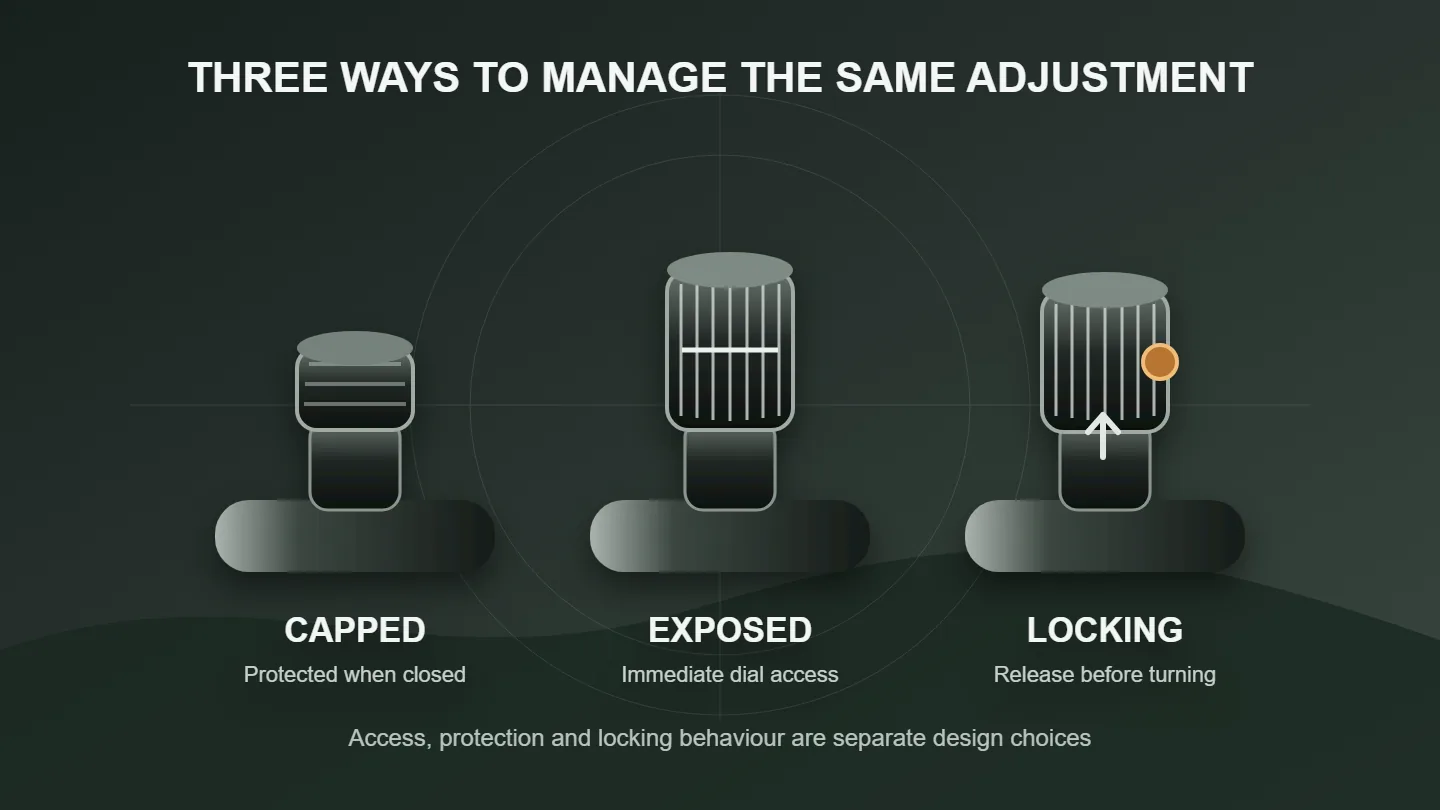
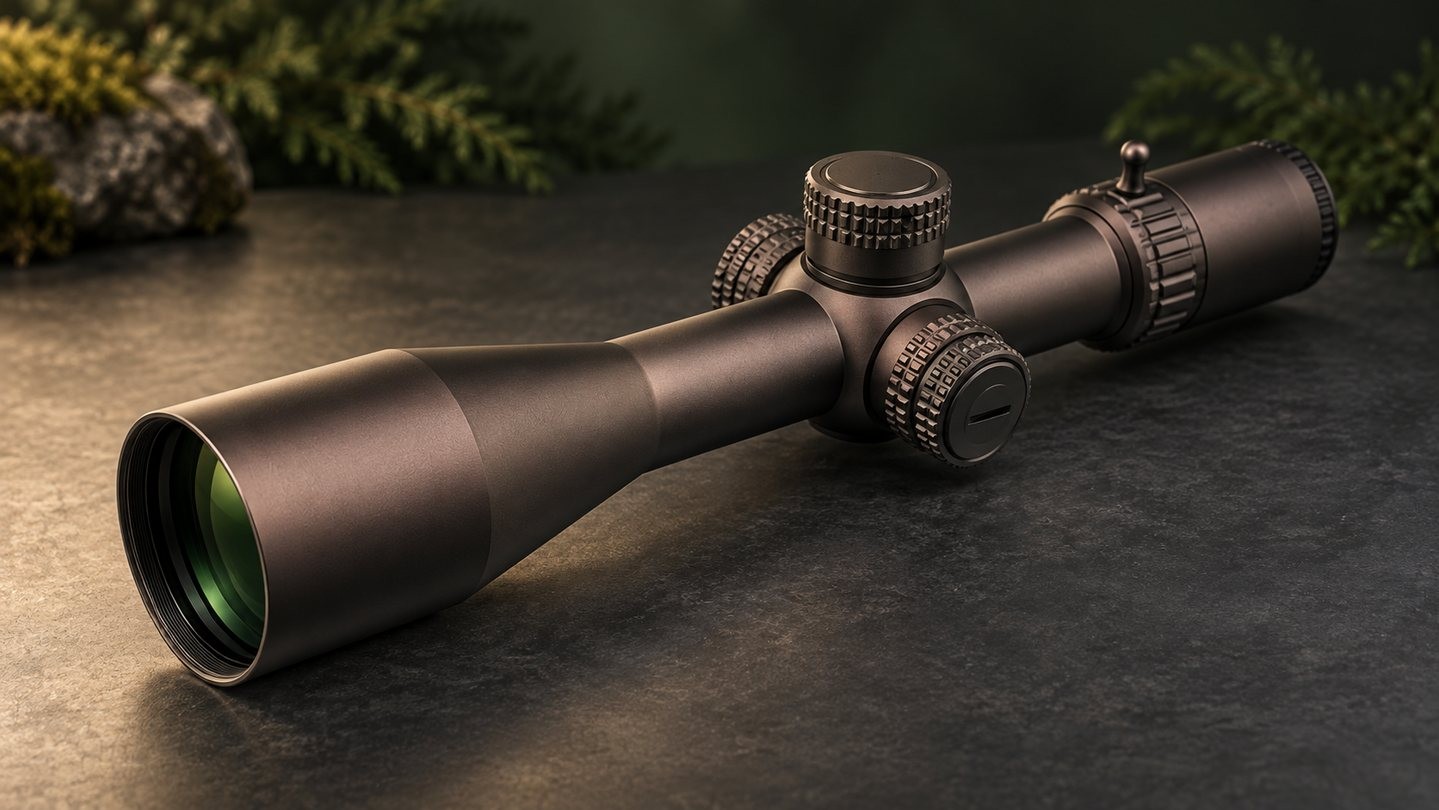
Capped, exposed and locking turrets solve the same adjustment problem with different balances of access and protection.
Start with what the turret actually does
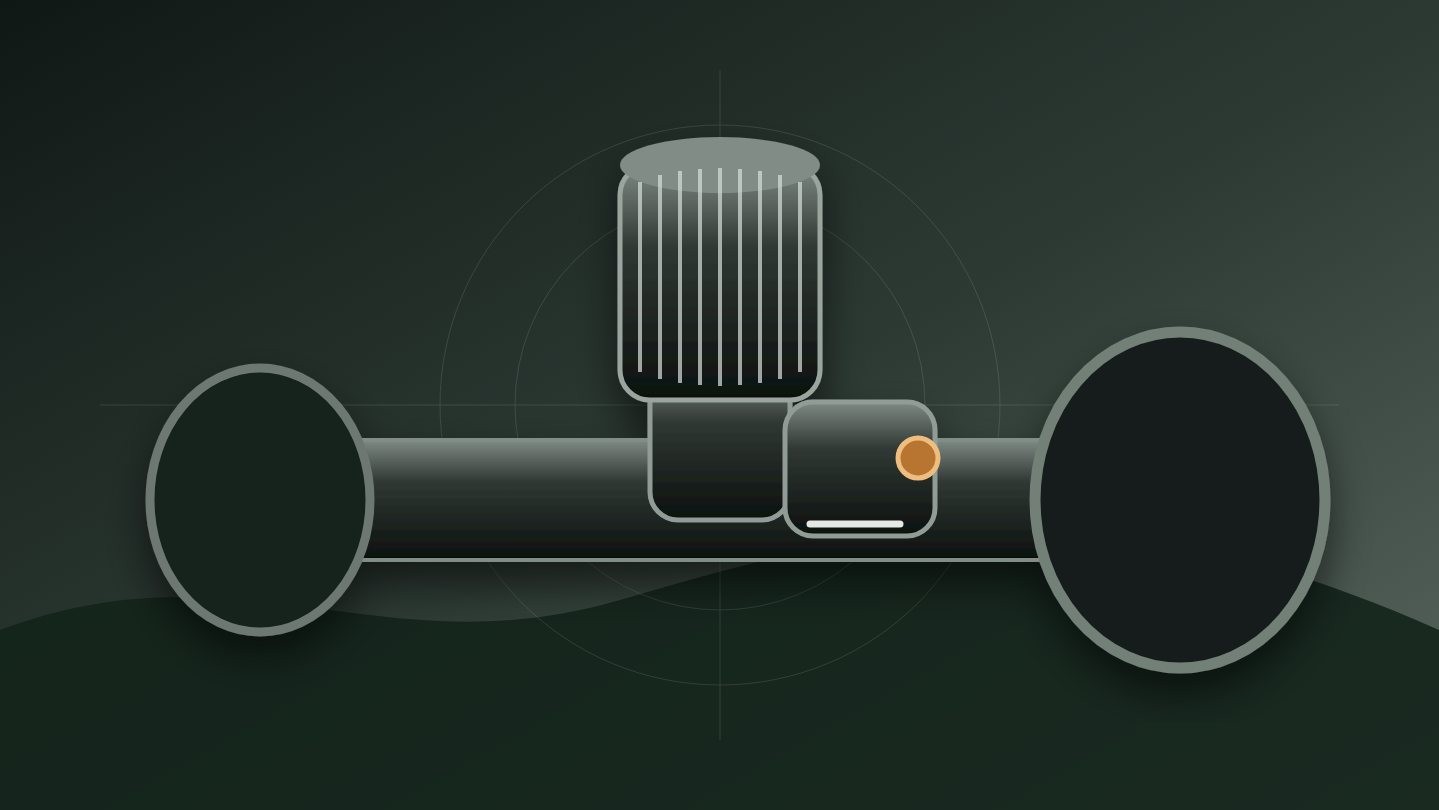
The top turret normally controls elevation, while the turret on the right side controls windage. Turning either one moves the point of impact in measured increments, commonly expressed in MOA or MRAD.
If those controls are still unfamiliar, begin with our guide to the three knobs on a rifle scope. The important point here is that a turret’s outer design does not change the meaning of a click. It changes how you reach the adjustment and how well the setting is protected afterward.
The published click value, total adjustment range, travel per revolution, zero-reset method, and zero-stop system are separate specifications. A large exposed dial may be convenient to read, but its size alone tells you nothing about tracking accuracy or repeatability.
What is a capped turret?
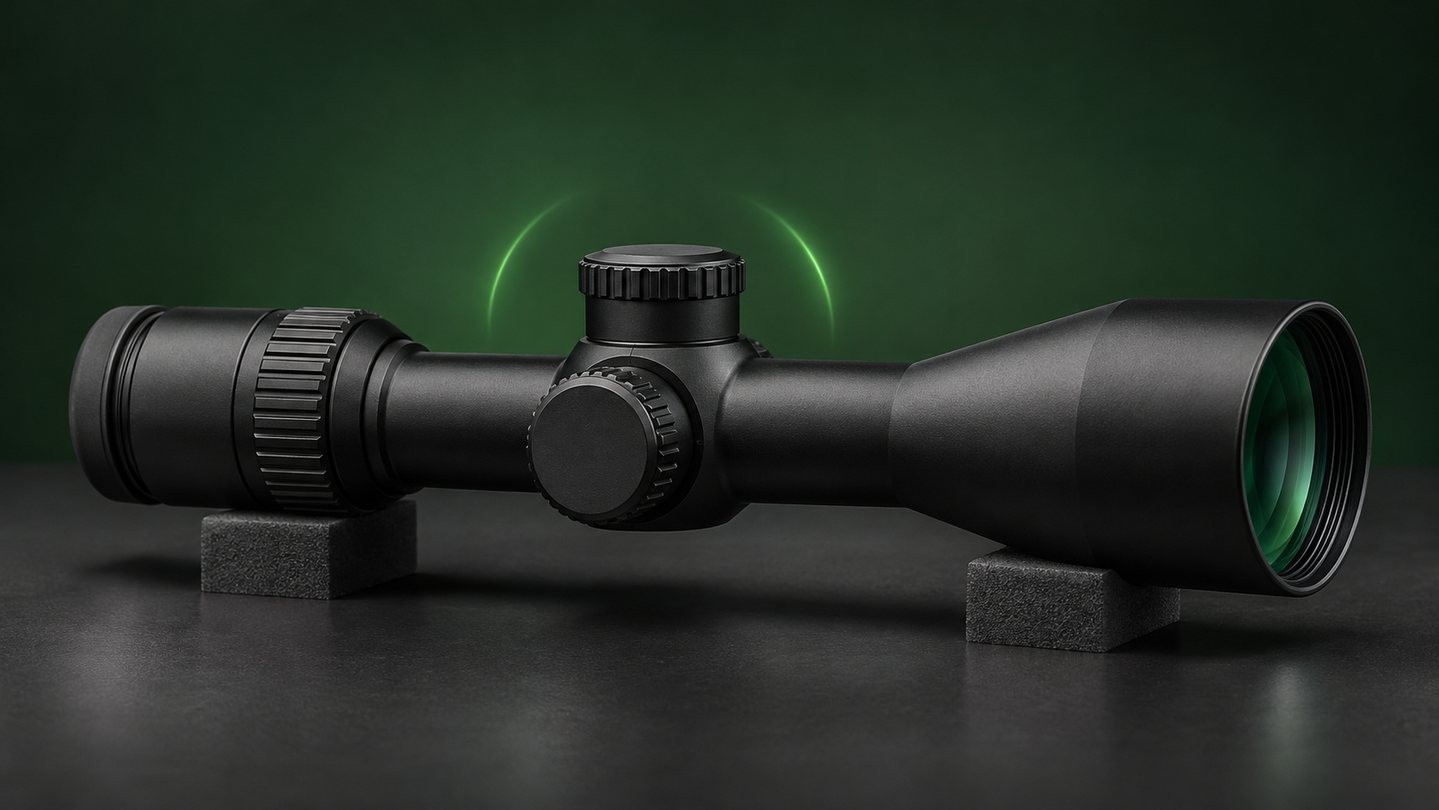
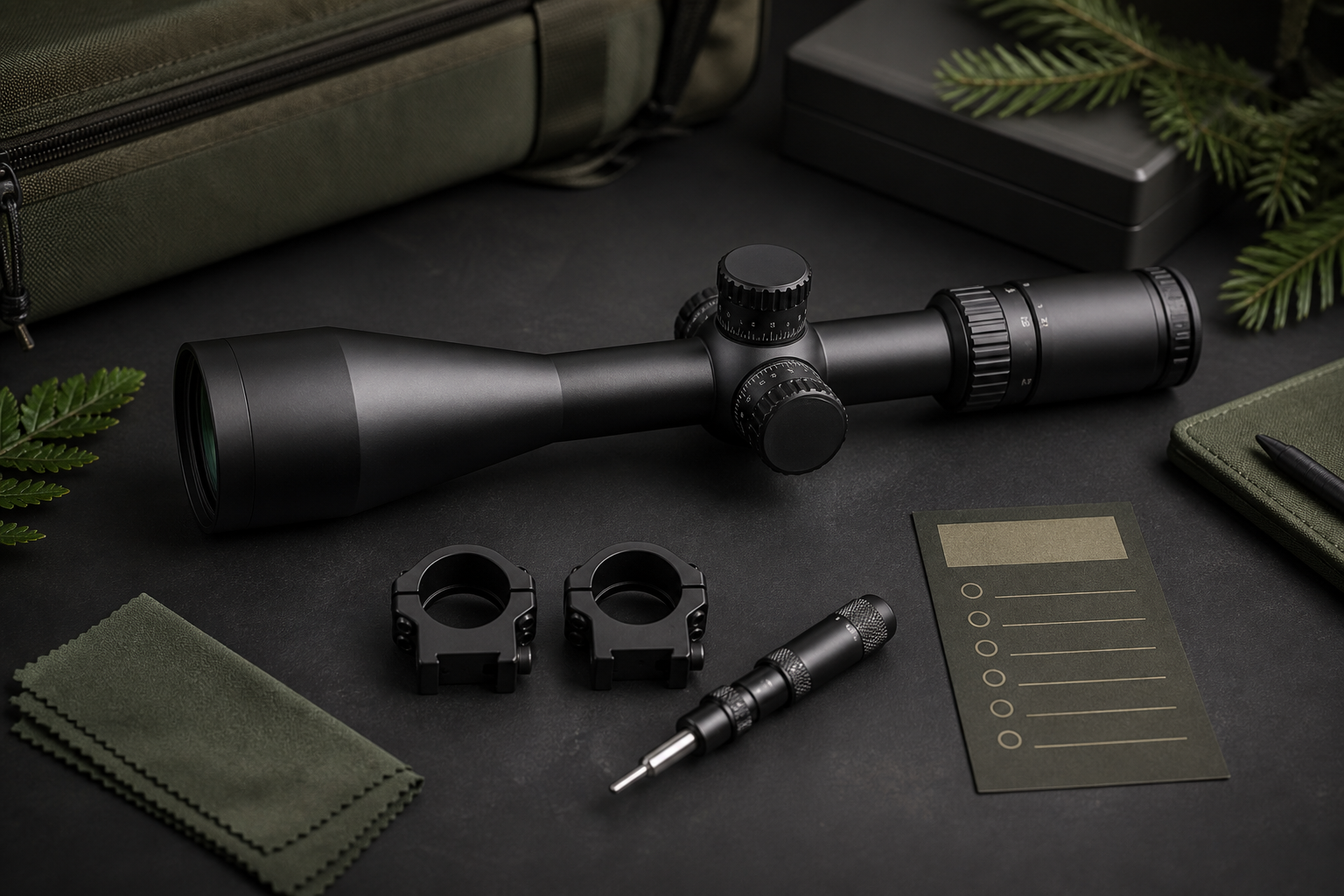
A capped turret places a removable cover over the adjustment dial. You unscrew the cap, make the correction, and replace the cap when you are finished.
That extra step gives the control physical protection. The cap helps prevent clothing, a case, a pack, or routine handling from turning the dial accidentally. It also keeps the scope profile relatively tidy.
Capped turrets make sense when the normal routine is “zero it, confirm it, and leave it alone.” A hunter, recreational shooter, or beginner who uses the reticle for modest holdovers may value that simplicity more than instant access to the dial.
The trade-off is speed. If you regularly change elevation for different distances, removing and storing a small cap becomes repetitive. Some caps can also be awkward with gloves, and a loose cap is one more item that can be misplaced.
Do not assume that “capped” means crude or tool-dependent. Many current designs still provide finger-adjustable dials beneath the cover, and some allow the scale to be re-indexed after zeroing. Check the manual for the actual model.
What is an exposed turret?
An exposed turret leaves the dial available without removing a cover. The markings are usually easier to see, and the dial is often taller or more heavily knurled so it can be turned deliberately.
This design suits users who dial elevation as part of their normal process. You can read the scale, make a correction, and return without dealing with a separate cap. For target shooting and other repeatable-distance work, that direct access can be genuinely useful.
The obvious trade-off is exposure. A dial that is easy for your fingers to turn is also easier for another object to contact. A good routine therefore includes checking the index mark before use and after transport.
Some scopes mix the two approaches: exposed elevation for frequent vertical corrections, capped windage because windage is adjusted less often. That is not an odd compromise. It is a practical acknowledgement that the two controls may have different jobs in real use.
What is a locking turret?
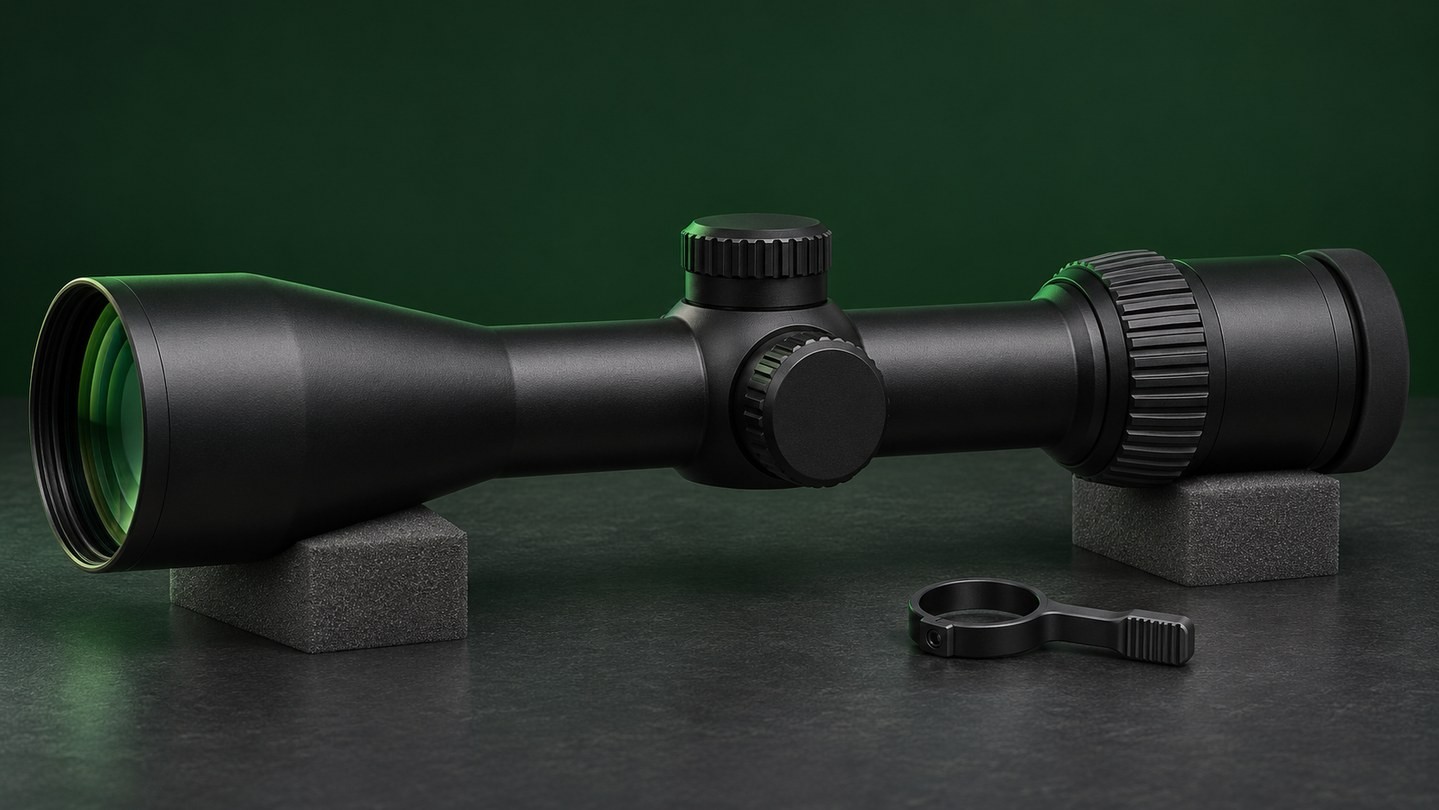
A locking turret adds a mechanism that resists rotation until the user deliberately releases it. Depending on the design, you may pull the dial upward, push it downward, pinch a ring, or press a button before turning.
The attraction is clear: you keep much of the quick access and readable scale of an exposed dial while reducing the chance of an accidental change. For someone who dials regularly but also carries the optic through brush, cases, vehicles, or crowded range bags, that can be a useful middle ground.
Locking systems are not all identical. Some lock at every position; others only lock at zero. Some use a push-pull motion, while others rely on a release button. The word “locking” on its own is therefore incomplete—look for a description of how and where the lock engages.
There are trade-offs here too. The mechanism can add height, complexity, or a specific movement that takes practice. A lock is also not a substitute for checking the index before use.
Locking turret and zero stop are not the same feature
These terms are often placed next to each other in product descriptions, but they solve different problems.
A turret lock is intended to prevent unwanted rotation from the current setting. A zero stop provides a defined mechanical reference when you dial back toward the established zero. One protects a position; the other helps you return to a reference.
A scope may have a lock without a zero stop, a zero stop without a lock, both features, or neither. Our guide to zero stop versus zero reset explains the distinction in more detail.
Which turret design is easiest for a beginner?
For a beginner who expects to zero the scope and make only occasional corrections, capped turrets are often the least distracting choice. They encourage a simple routine and reduce the chance that normal handling will change the setting.
That does not mean beginners should avoid exposed or locking turrets. If the goal is to learn measured corrections and practise dialing, a clearly marked exposed dial can make the relationship between the reticle, the turret, and the adjustment unit easier to see.
The deciding factor should be the intended routine, not the most technical-looking design. A feature that is never used still adds controls to learn and check.
A practical comparison
| Turret style |
Main advantage |
Main trade-off |
Often suits |
| Capped |
Strong physical protection and a low-profile setup |
Slower access; cap must be removed and replaced |
Set-and-forget use, hunting, beginners |
| Exposed |
Fast access and easy-to-read markings |
More vulnerable to accidental contact |
Frequent dialing, target and distance work |
| Locking |
Direct access with added resistance to unwanted movement |
Added mechanism; locking action varies by model |
Users who dial but also carry or transport the optic often |
Treat this as a decision guide, not a quality ranking. A well-designed capped turret can be more useful than a poorly matched exposed one, and vice versa.
Five details to check before choosing
1. Are elevation and windage configured the same way?
Do not assume both turrets use the same design. A scope may combine exposed elevation with capped windage, or use a lock on both axes.
2. How does the lock release?
Look for a push-pull action, release button, pinch ring, or another clearly documented method. Consider whether it will be comfortable with gloves and whether the locked state is easy to confirm by touch.
3. Does the turret have a zero stop or only a resettable scale?
Resetting the printed zero does not automatically create a mechanical stop. Verify the wording and the manual rather than inferring the feature from the dial shape.
4. Do the turret and reticle use the same unit?
A matching MOA/MOA or MRAD/MRAD system is usually easier to work with because the observed correction can be transferred directly to the dial. The MOA vs MRAD guide covers that choice without treating either unit as superior.
5. Can you read the full revolution clearly?
Check the graduation marks, numbers, direction arrows, travel per revolution, and any revolution indicator. A lock cannot prevent an error caused by reading the wrong mark or losing track of a full turn.
A simple way to decide
Choose capped turrets if you mostly establish zero, use holds, and want the adjustment protected during routine handling.
Choose exposed turrets if dialing is a normal part of how you use the scope and fast, visible access matters more than a low profile.
Choose locking turrets if you want to dial directly but also want a deliberate release before the setting can move. Then verify exactly how that particular locking system works.
The best choice is the design that supports a repeatable routine. Before buying, read the model manual, confirm the adjustment unit and click value, and separate the turret style from related features such as zero reset and zero stop.
For more plain-language setup and buying explanations, browse the USEEIN Buying Guides or the broader Sporting Optics category.


Leave a comment