A used rifle scope can look clean in a listing and still arrive with worn controls, damaged threads or an uncertain history. The opposite is also true: a few finish marks may be cosmetic while the glass, adjustments and housing remain perfectly serviceable.
The sensible way to evaluate one is to separate what you can observe from what requires a manufacturer, a qualified technician or a controlled performance test. This checklist helps you document identity and condition without treating a quick visual inspection as proof of authenticity, waterproofing or internal accuracy.
1. Start with the exact identity, not the finish
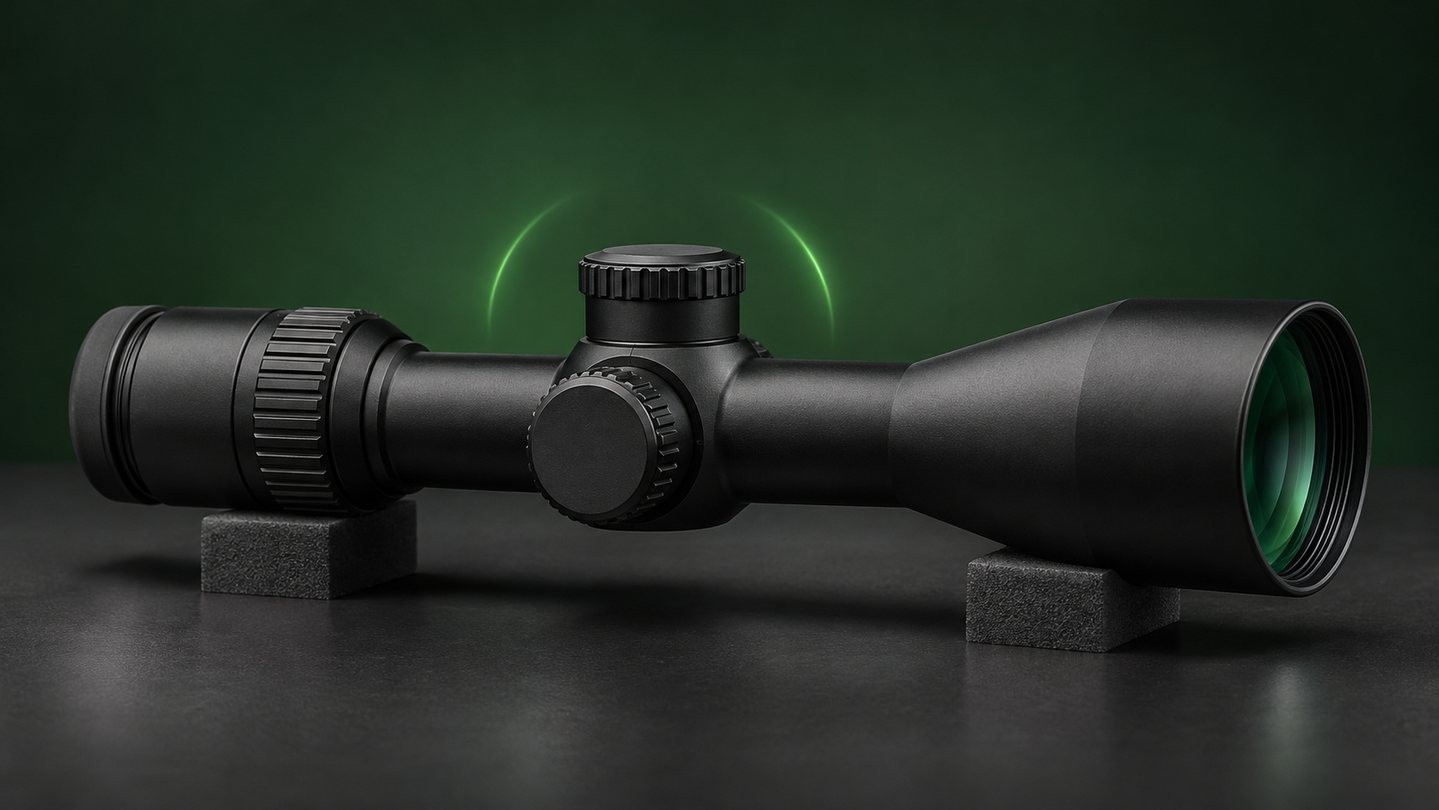
Ask for the complete model name, magnification range, objective size, reticle version and any identifying number before discussing price. A partial name can hide meaningful differences between generations, focal-plane versions, illumination options or turret configurations.
Compare the seller's description with archived or current manufacturer material for that exact model. Check the control layout, turret markings, tube diameter, objective shape and included accessories. Our guide to reading an optics product page explains which specifications should match before you assume two similar-looking scopes are the same product.
Do not treat a box or manual as proof that the optic originally came with it. Packaging can be mixed, replacement manuals are common, and a correct-looking label does not establish ownership or authenticity by itself.
2. Request a consistent photo set
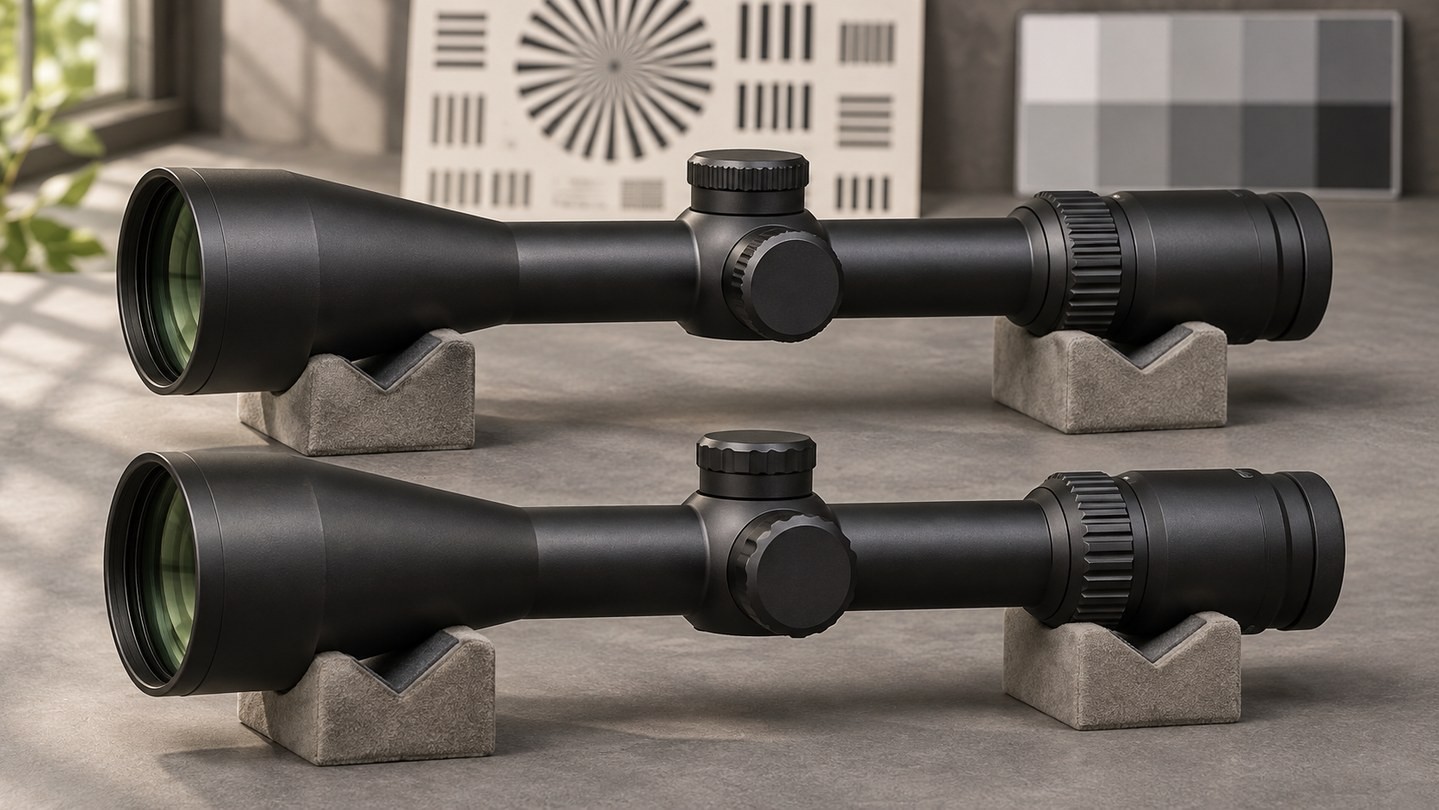
A useful listing should show the entire optic from both sides, the top and underside, the objective and ocular lenses, every turret or cap, and close views of any mark the seller mentions. Ask for current photos of the actual item rather than catalogue images.
Use a simple verification request: one new photo of the optic beside a handwritten date or agreed reference word. This does not prove the product is genuine, but it helps show that the seller has access to the item pictured. Avoid asking anyone to expose personal documents, an address, payment information or other unrelated private data.
For a repeatable sequence, use the overview, identification, location and detail order in our optic support-photo checklist. Keep serial-number photos private between the buyer, seller and official support channel.
3. Inspect the housing before operating the controls
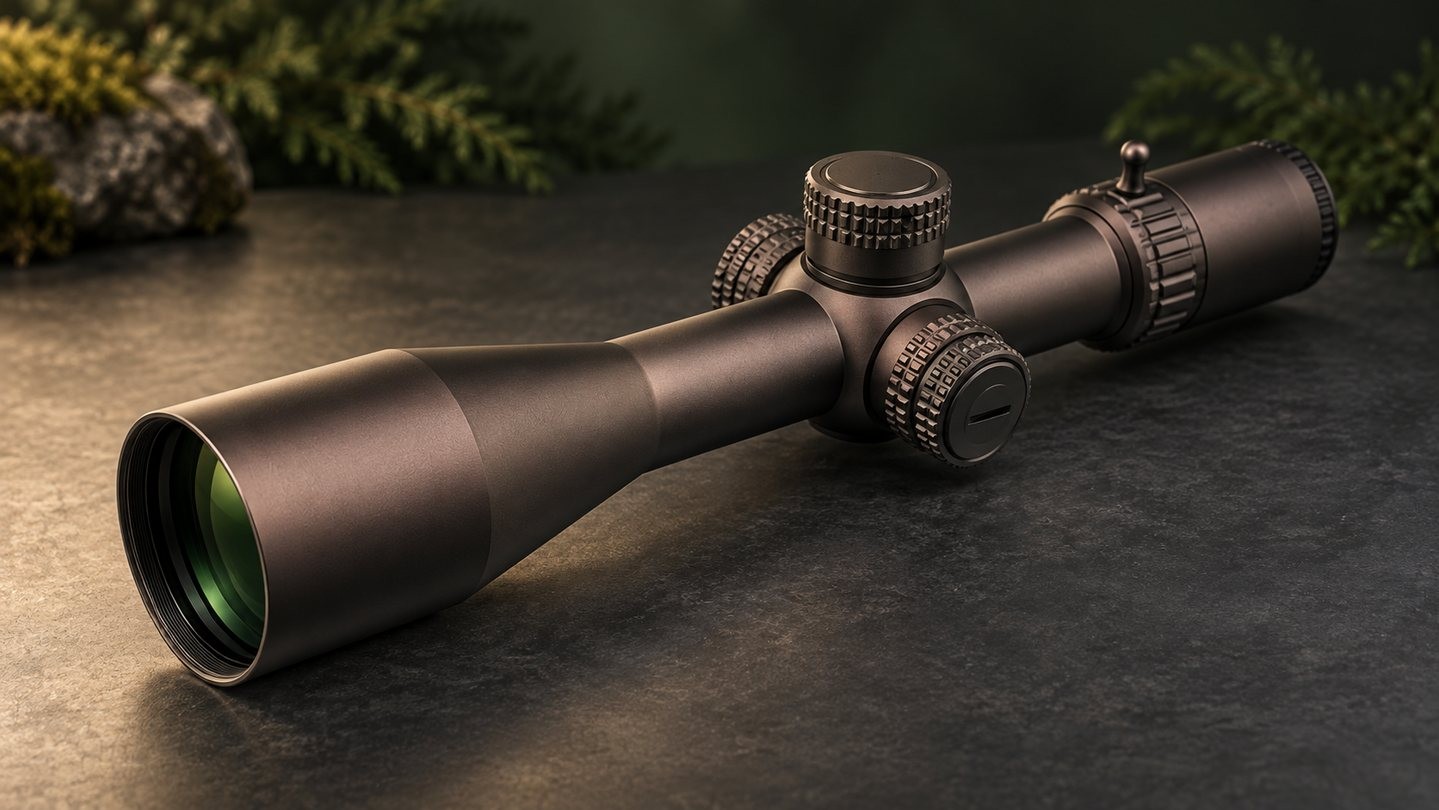
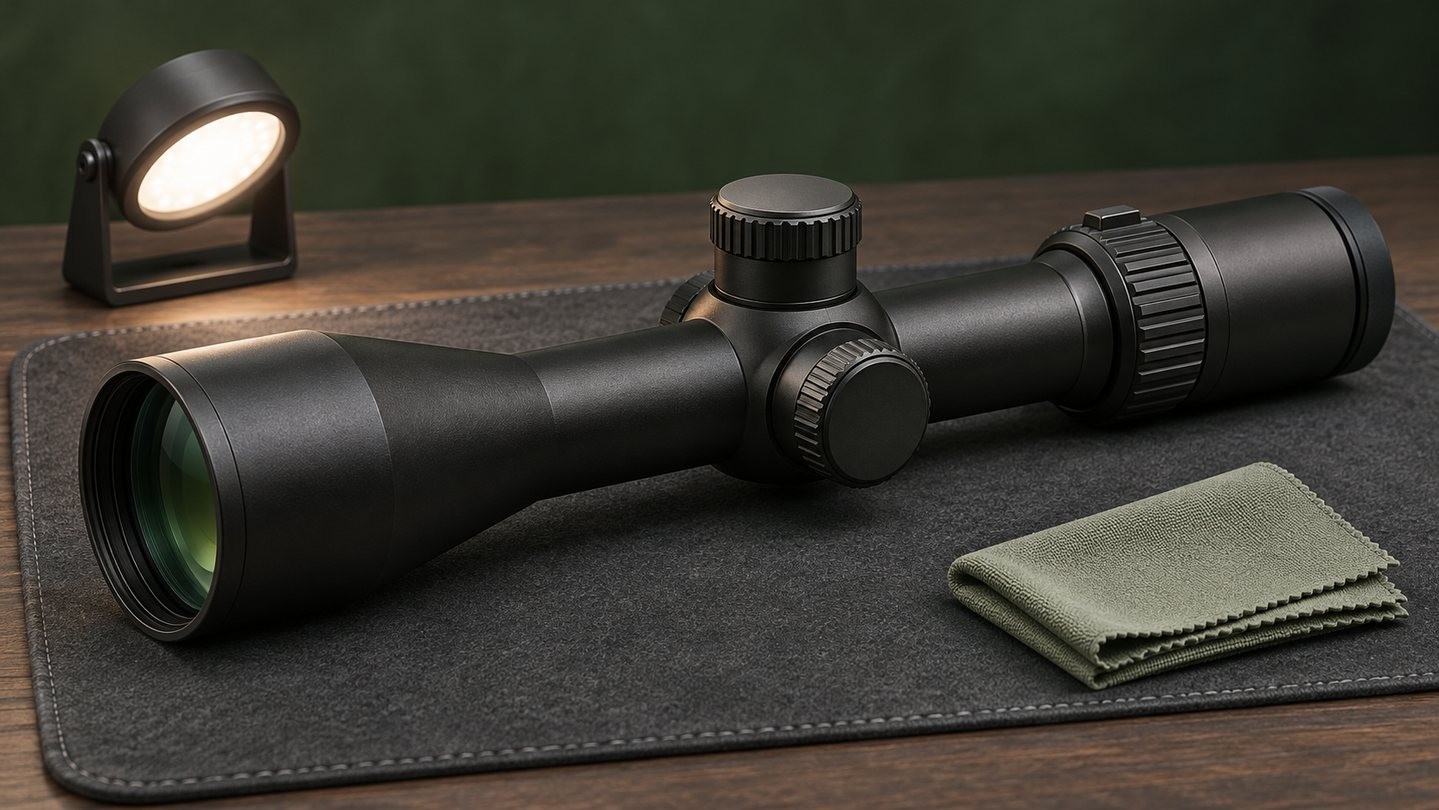
Look around the tube and control housings under soft, angled light. Fresh dents, deep ring impressions, cracked edges, separated joints, displaced seals or a turret that no longer sits square deserve more attention than ordinary finish wear.
Check screw heads, cap slots and adjustment covers for repeated tool damage. Rounded edges can suggest frequent disassembly or the use of an incorrect tool. Adhesive residue is not automatically a defect, but it should have a clear explanation and should not hide a joint, serial marking or damaged surface.
Do not ask the seller to remove sealed parts or internal retaining rings. A used-purchase inspection should remain external and reversible. If the only way to answer a question is to open a sealed housing, the answer belongs with the manufacturer or a qualified service centre.
4. Read the lenses in more than one light
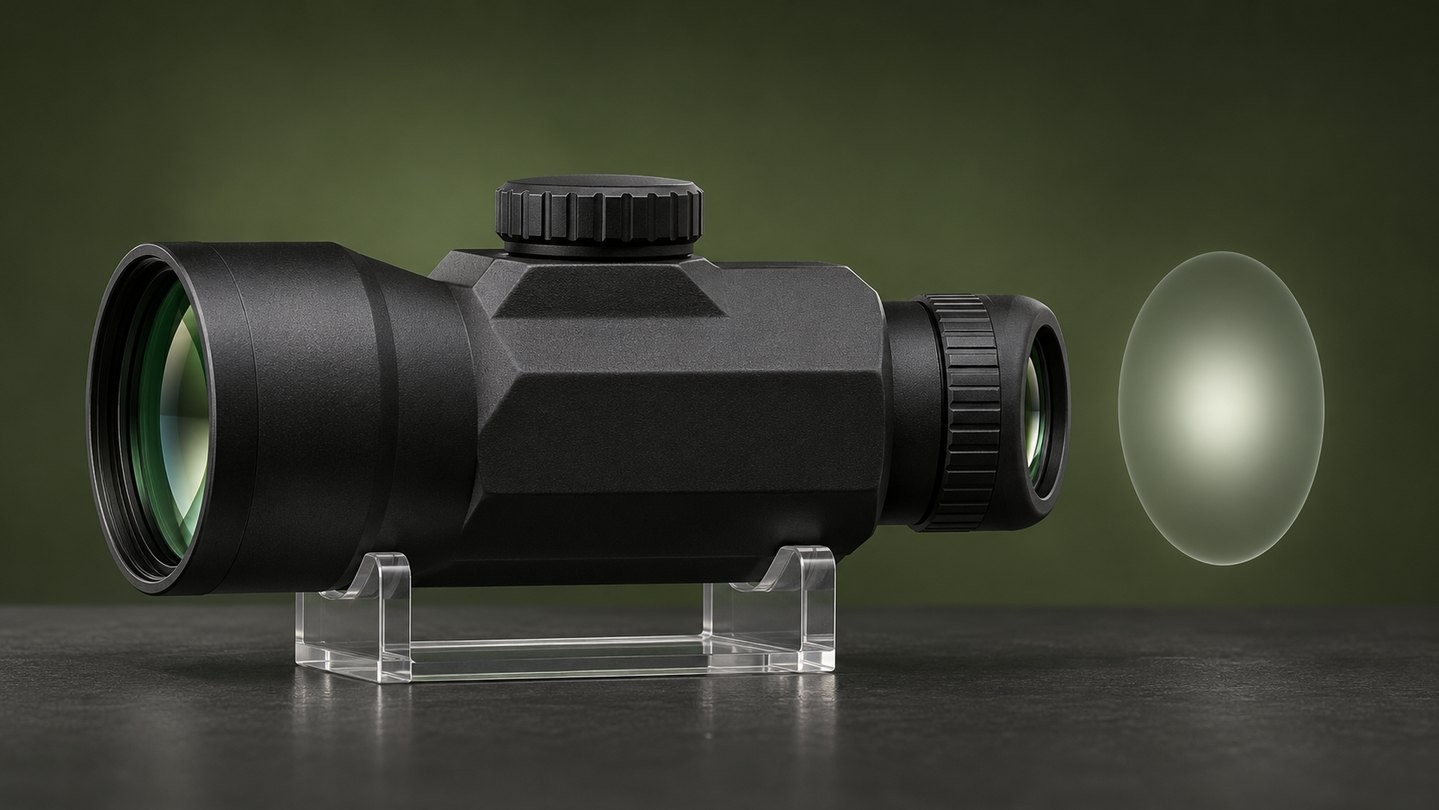
Request photographs with diffuse front light and with a shallow side light. The first view helps show general clarity; the second can reveal scratches, coating marks, dried droplets and edge chips. A bright flash aimed directly into coated glass can create dramatic reflections while hiding the actual surface.
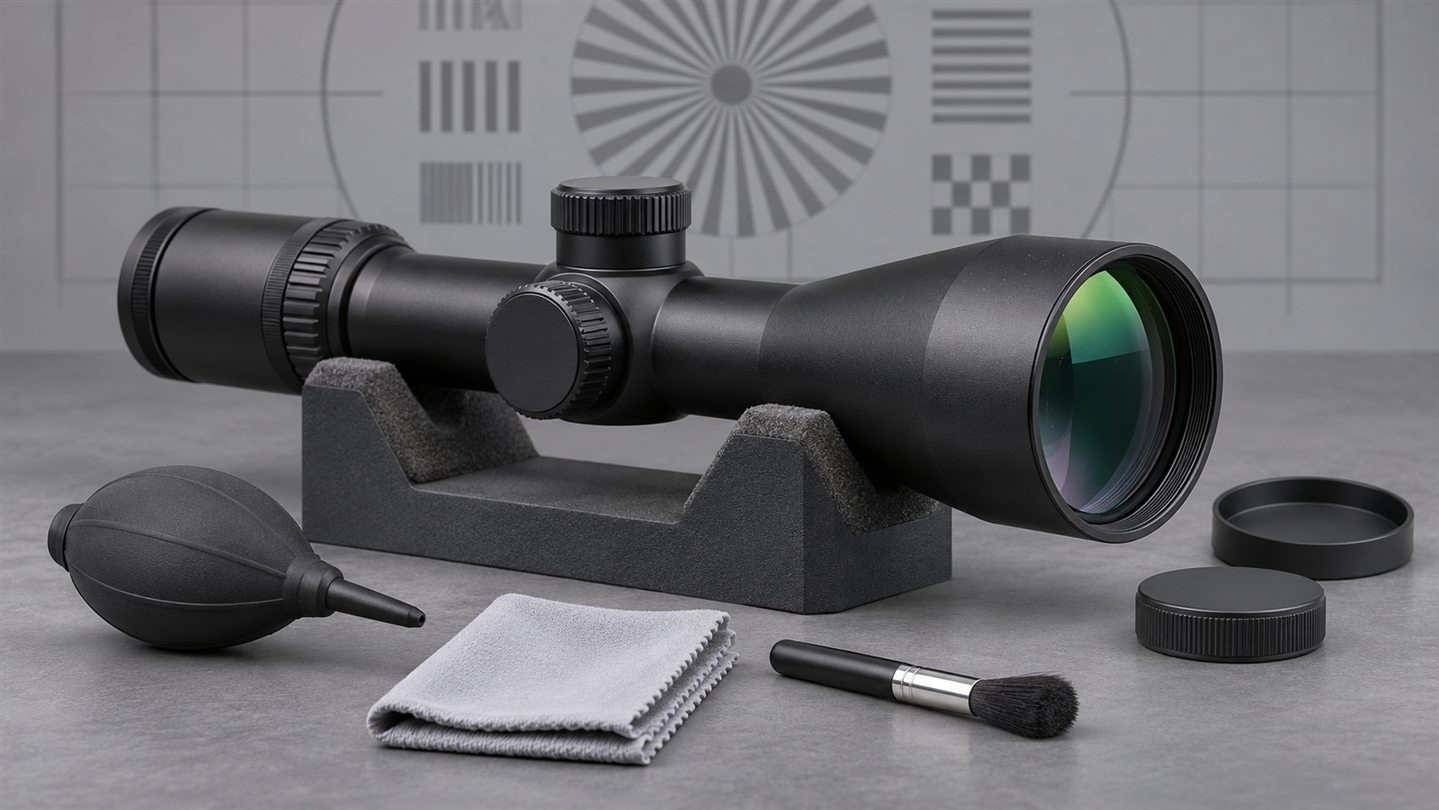
Dust and fingerprints may be removable, but a photograph cannot always separate contamination from coating damage. Do not encourage aggressive cleaning just to improve a sale photo. If cleaning is necessary, the particle-first method in our scope-lens cleaning guide reduces the risk of dragging grit across the coating.
Reject or seek professional advice for cracked glass, a visibly loose lens, persistent internal haze, fungus-like growth, edge separation or debris that appears to move inside the optic. A small external speck is different from an internal condition that the owner cannot safely reach.
5. Check normal controls gently
If you can inspect the scope in person, operate only the controls intended for routine use. The magnification ring, diopter, side-focus control, illumination switch and exposed turrets should move through their normal ranges without scraping, abrupt dead spots or unexplained looseness.
Feel alone cannot prove tracking accuracy. One model may have firmer clicks or more rotational resistance than another, and temperature or design can affect the impression. Compare the control with the manufacturer's description and with the seller's account of its history rather than declaring a fault from click feel alone.
Never force a control that stops unexpectedly. Photograph its position and ask for the model manual or service advice. A stiff ring can have several causes; applying more leverage may turn an uncertain condition into real damage.
6. Separate cosmetic wear from structural warning signs
Light finish wear around ring positions can show normal use. Deep compression marks, a visibly oval tube, fresh dents near a lens housing or a gap between parts are more concerning because they may indicate impact or excessive mounting pressure.
Ask directly whether the optic has been dropped, submerged, repaired, repainted or returned for service. An honest history is more useful than a vague claim that the product is “like new.” If an impact is disclosed, compare the evidence with our post-impact inspection checklist.
Remember that the absence of visible damage does not certify the internal erector system, seals or adjustment repeatability. External condition is evidence, not a factory test report.
7. Perform a bounded viewing check
With the optic secured by itself on a stable support, look at a distant, evenly lit scene. Do not point it at the sun or another intense light source. Check whether the image can be focused, whether the reticle becomes sharp with a normal diopter adjustment and whether the view remains usable across the magnification range.
Move your eye slightly to distinguish ordinary eye-box shadow from a defect. Phone photographs through the eyepiece can document a symptom, but phone alignment, exposure and processing can add blur, colour shifts and vignetting.
This check cannot prove zero retention, tracking, parallax calibration, waterproofing or performance under recoil. Those claims require the appropriate controlled test or manufacturer inspection. Do not pay a premium because a seller says the image “looks perfect” in one photograph.
8. Treat authenticity checks as brand-specific
A serial number is useful, but there is no universal serial-number database for every optic. Current manufacturer policies differ. Leupold says it can often help assess a suspect Leupold riflescope from its serial number. Trijicon states that it cannot confirm or deny the legitimacy of a prospective used purchase remotely and can determine authenticity only with the product in hand at its factory.
Those are brand-specific procedures, not interchangeable promises. Use the current official support page for the exact manufacturer, and do not rely on a forum post, an old screenshot or another brand's process. A serial number that follows the expected format is still not complete proof of ownership, authenticity or condition.
Be cautious if the seller refuses reasonable identity photos, gives inconsistent model information or pressures you to bypass normal payment and marketplace protections. Product inspection and transaction safety are separate checks; both matter.
9. Verify service, warranty and included parts before price
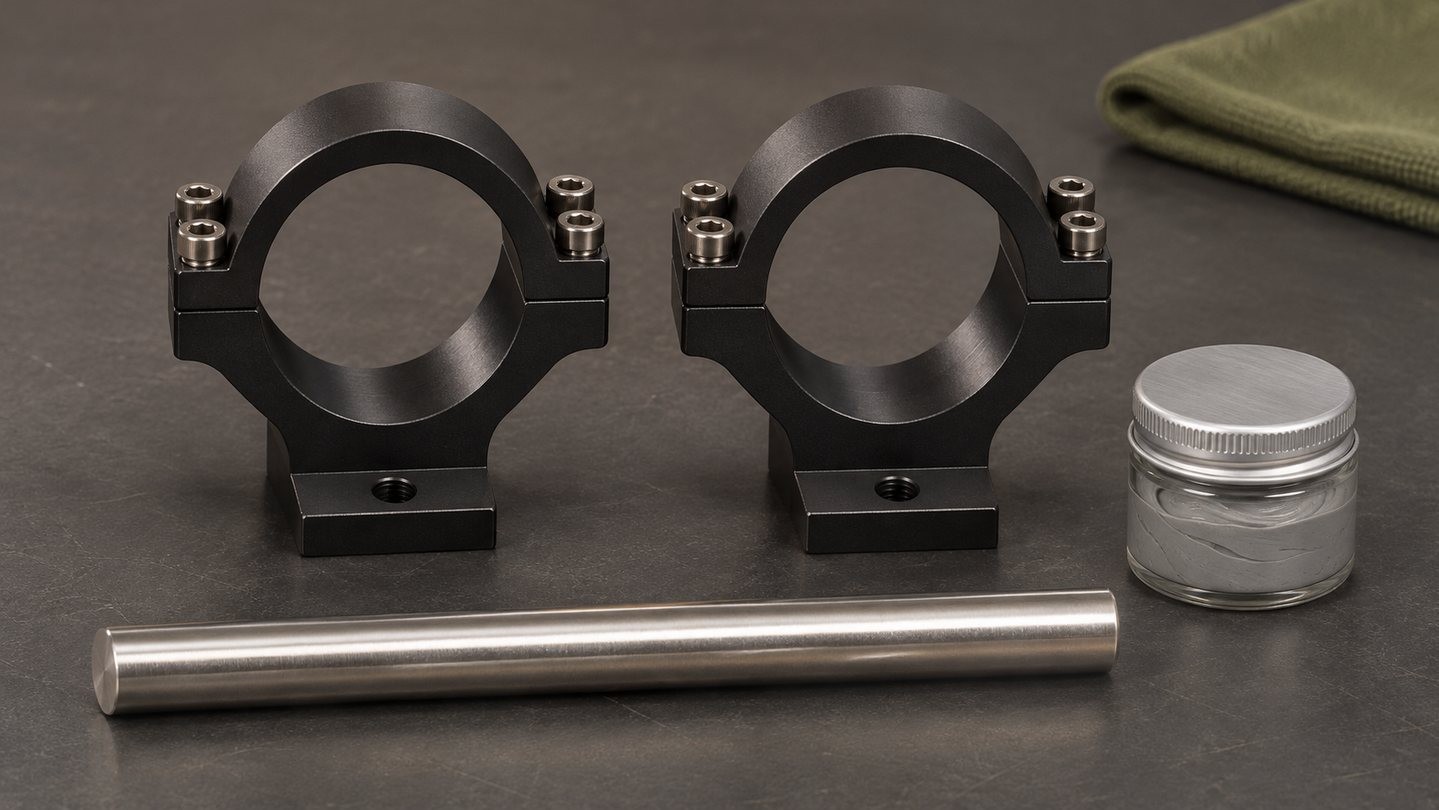
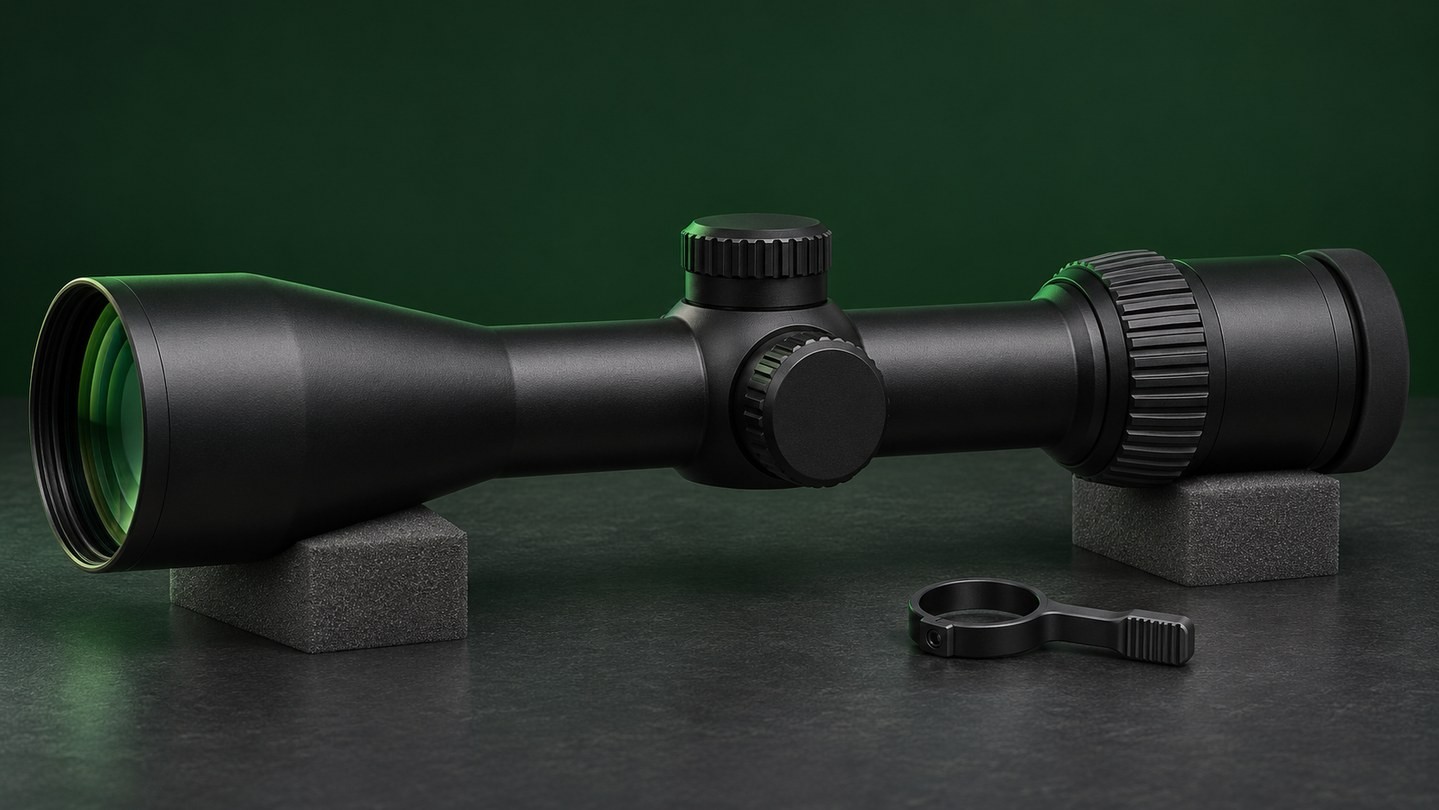
Ask exactly what is included: caps, sunshade, throw lever, battery cover, tools, original rings or packaging. Confirm which items are original and which are replacements. Missing accessories may be easy to source, but uncommon proprietary parts can change the real cost of the purchase.
Check the manufacturer's current service route for your country before assuming that a warranty transfers or that international service is available. Leupold, Vortex and Trijicon publish different service and regional instructions, and those procedures can change. Record the answer and date instead of treating “lifetime warranty” as a complete purchasing decision.
If the optic needs immediate service, price the uncertainty honestly. Shipping, regional handling, replacement parts and inspection time may remove the apparent saving.
10. Know when to walk away
Pause the purchase when the identity is inconsistent, the seller will not provide current photographs, the serial area is altered, glass is cracked, controls bind, internal haze is visible or the story changes when you ask simple questions. A low price does not reduce the cost of a counterfeit or unserviceable optic.
For an expensive purchase, use an established seller, a marketplace with clear dispute procedures or an inspection period that gives you time to compare the item with the listing. Keep the listing, messages, payment record and arrival photos until the inspection is complete.
A used scope can be good value when the model, condition and service route are clear. The goal is not to prove everything at a kitchen table; it is to collect enough reliable evidence to price the remaining uncertainty. For more selection references, visit the USEEIN optics buying guides.


Leave a comment