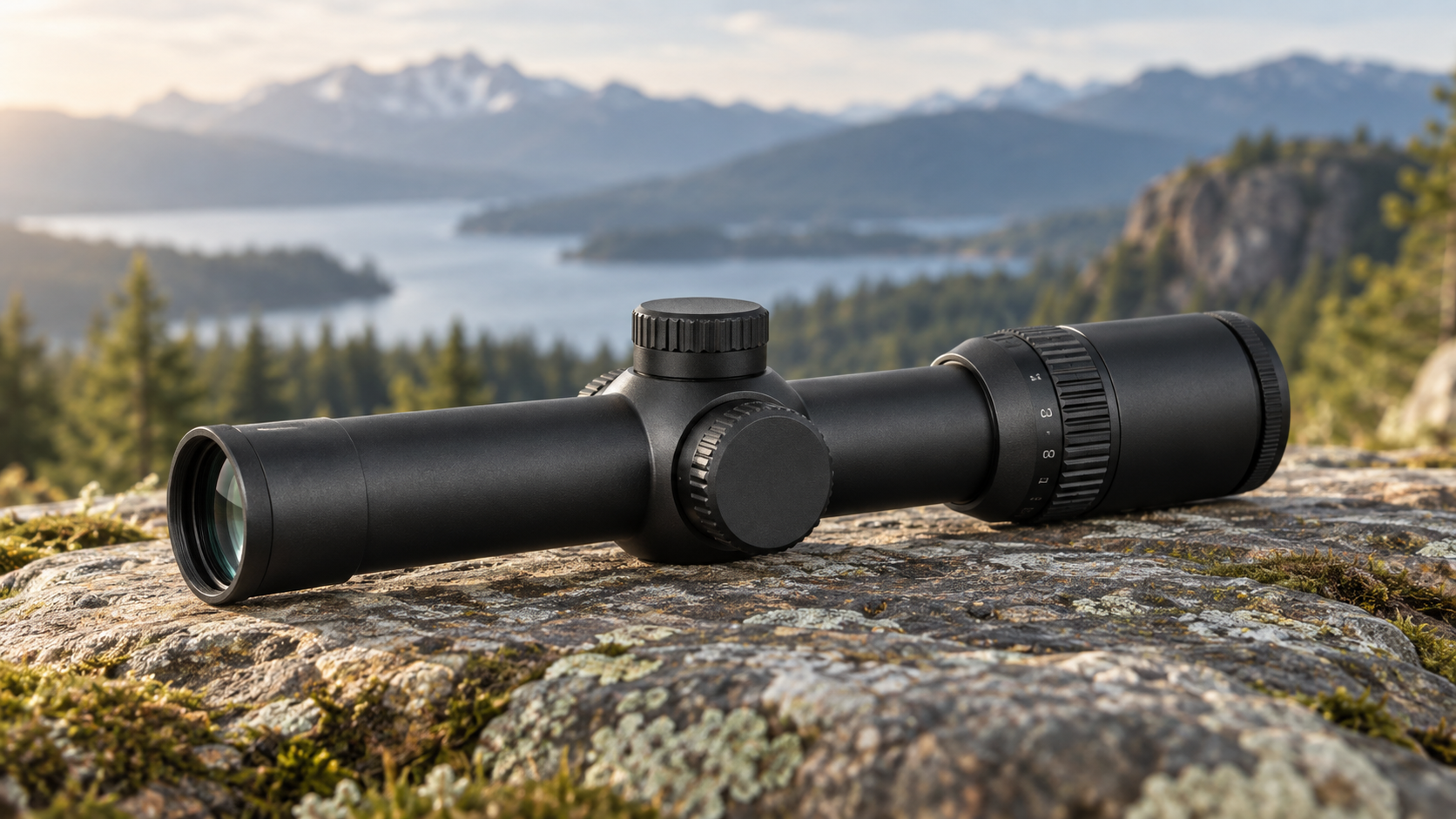
Two scopes can offer adjustable parallax and still feel quite different from behind the rifle. One puts the control on the objective bell at the front. The other places it on the side of the centre tube, close to the elevation and windage turrets.
Those layouts are known as an adjustable objective, or AO, and side focus, often shortened to SF. They do the same basic optical job. The real difference is where you reach, how easily you can make a correction without disturbing your position, and how the rest of the scope is arranged.
AO and side focus solve the same problem
Parallax error can appear when the target image and the reticle are not in the same optical plane. If your eye moves slightly behind the eyepiece, the reticle may appear to move across the target even though the scope itself has not moved.
Both an AO ring and a side-focus dial adjust the target-side optical system so the target image can be brought closer to the reticle plane at the working distance. They also tend to change how sharp the target looks, which is why parallax adjustment is sometimes casually called “focus.” Sharpness is useful, but a sharp target alone does not prove that parallax has been fully minimised.
If the difference between parallax, target focus and eyepiece focus is still unclear, start with our parallax, focus and diopter guide.
What is an adjustable objective?
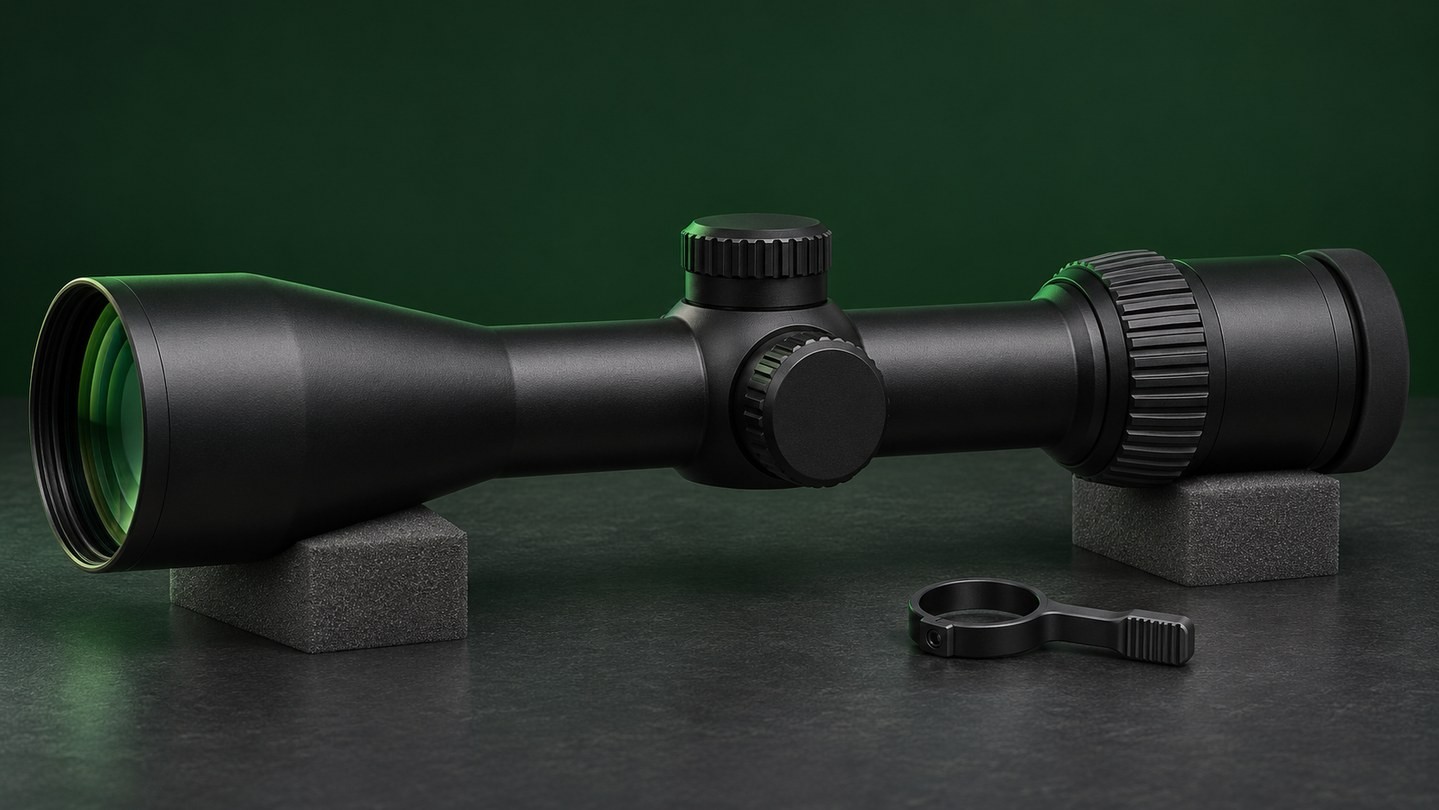
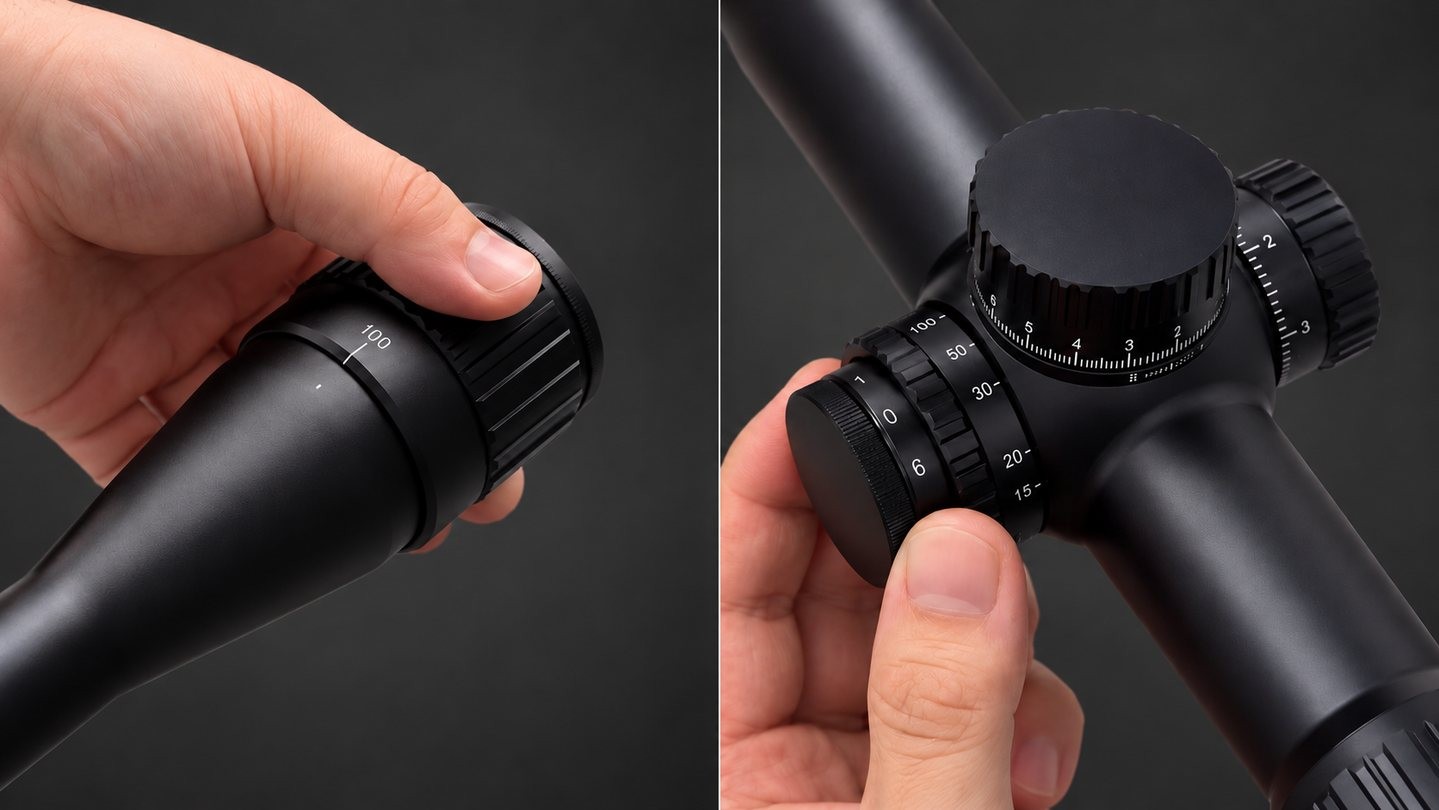
An adjustable-objective scope has a rotating ring around the objective bell. Distance markings are usually printed on or beside that ring. Turning it moves part of the focusing system and changes the distance at which the target image and reticle are best aligned.
The layout is easy to recognise. Instead of looking for a third turret on the centre tube, look at the front of the scope for a broad, textured ring with distance values and an infinity symbol.
AO controls can be straightforward and give the front of the scope a clean, purposeful layout. The trade-off is reach. From a supported position, you may need to move your support hand forward or lift your head slightly to see and turn the ring. How noticeable that feels depends on the scope length, shooting position and stiffness of the ring.
What is side focus?
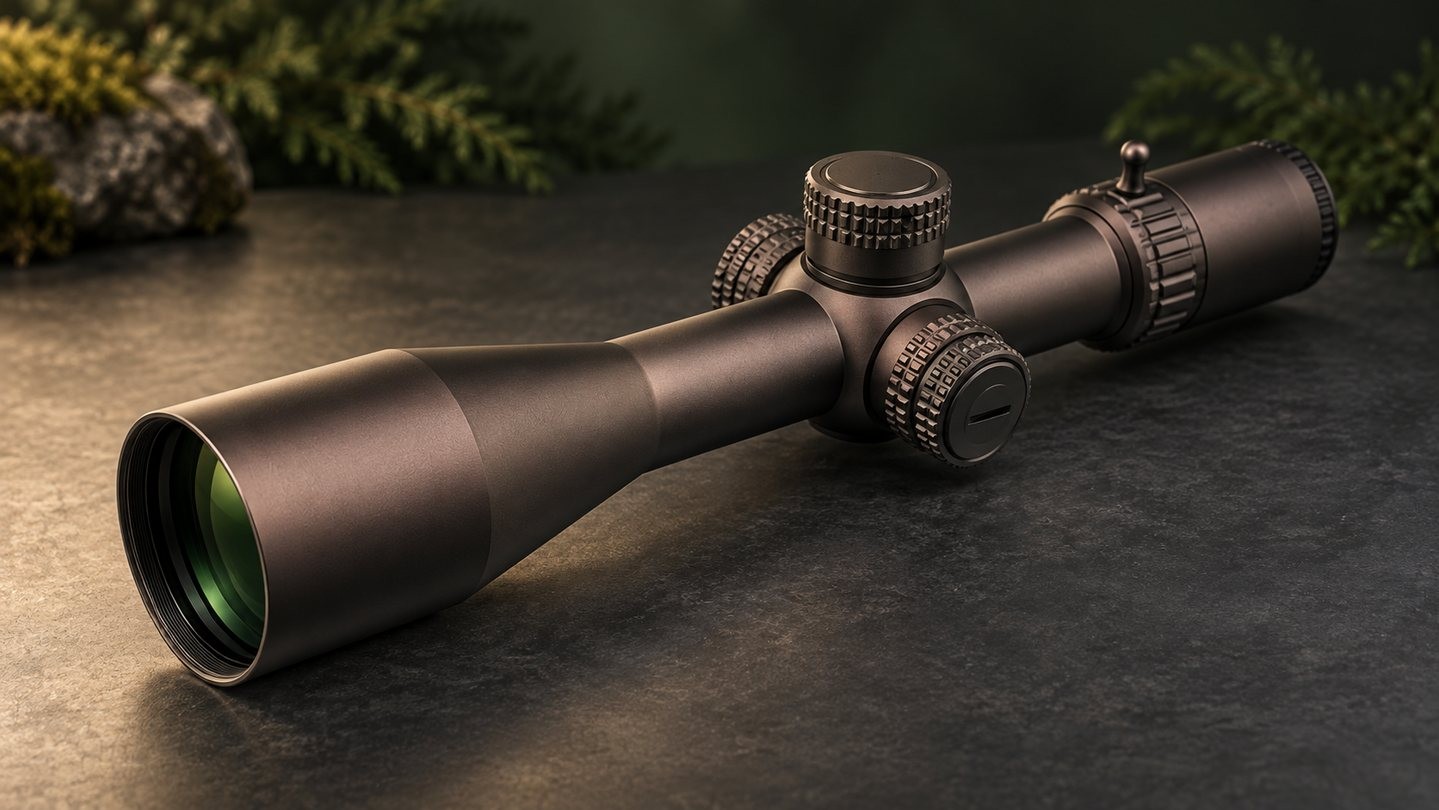
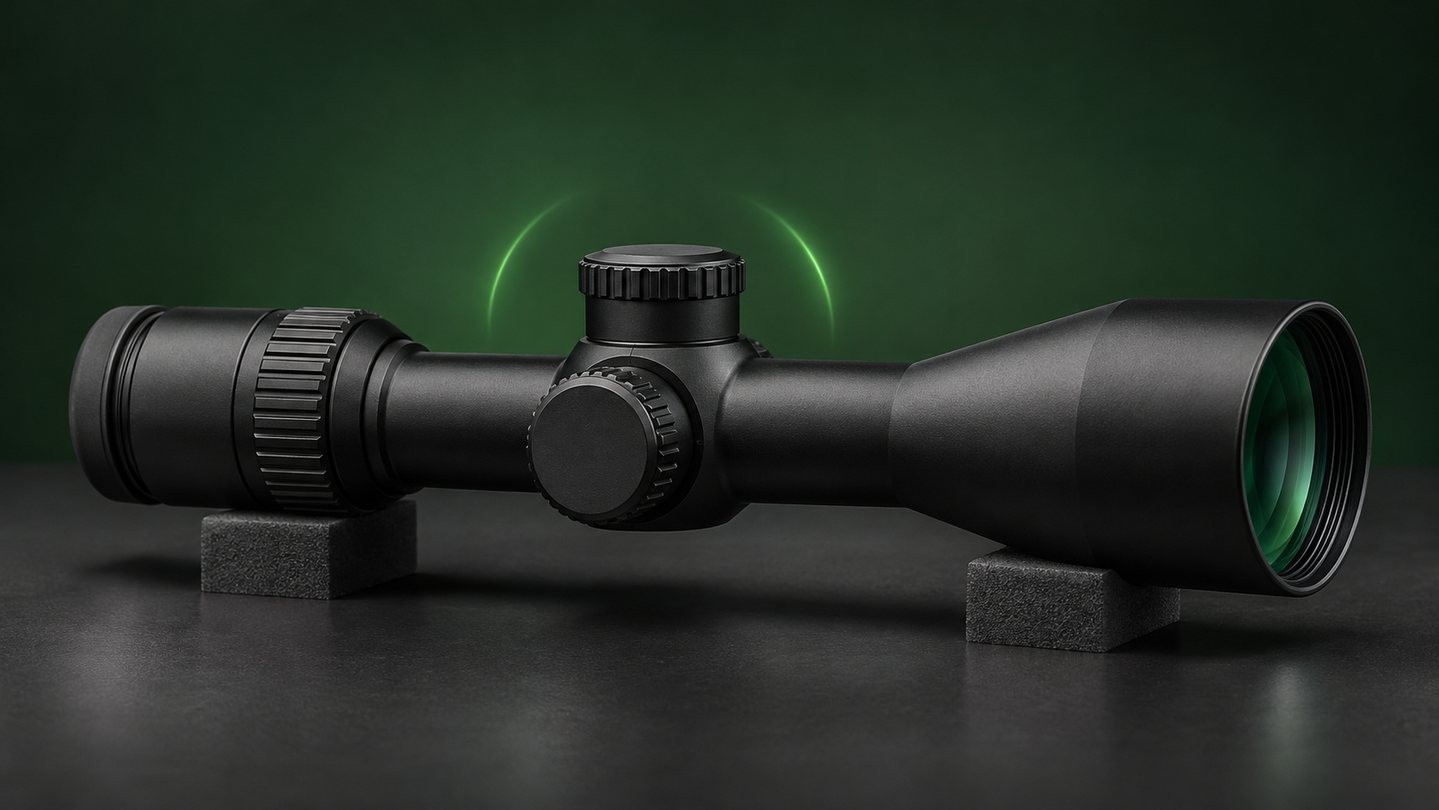
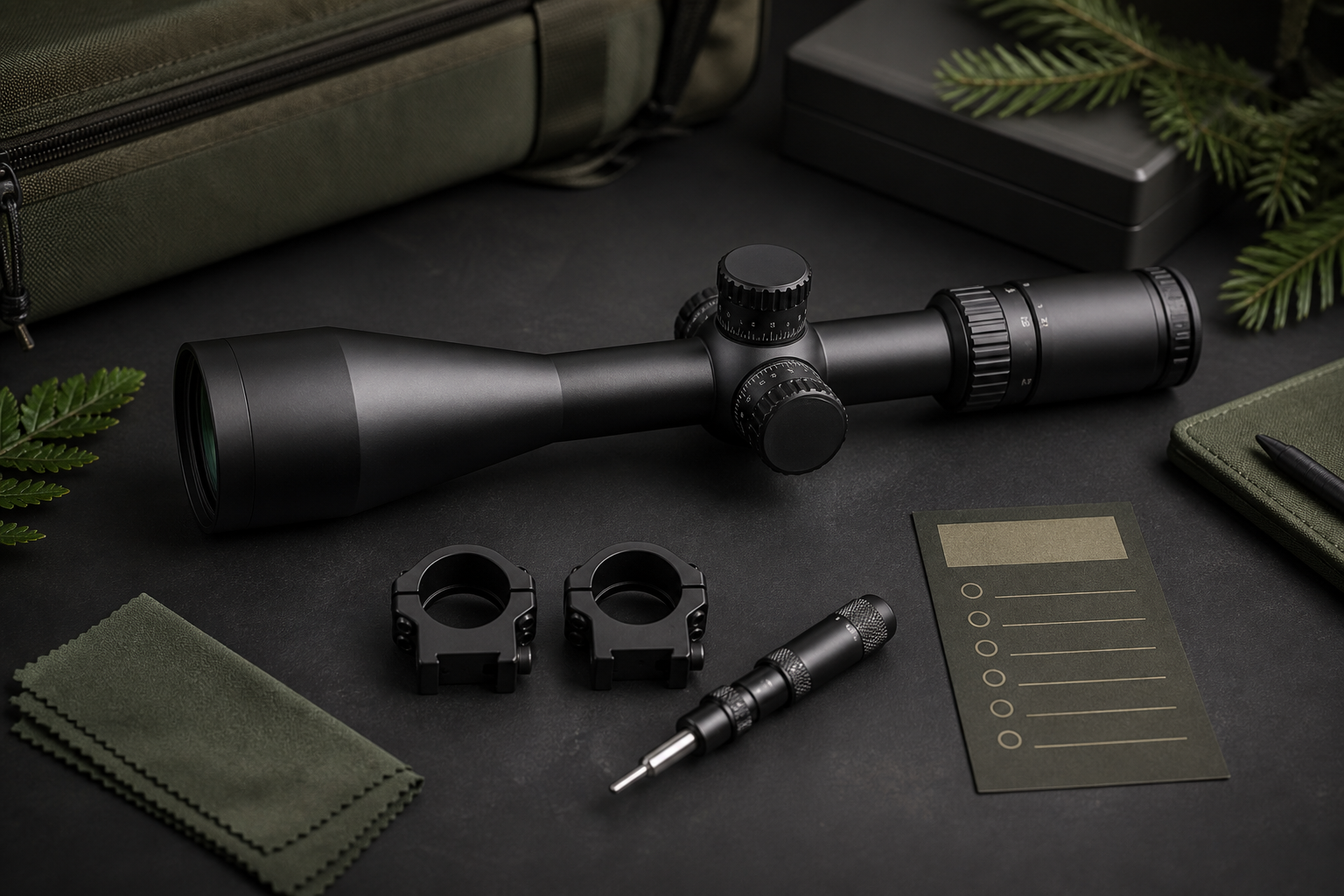
Side focus moves the parallax control to a dial on the side of the centre tube, normally opposite the windage turret. Because it sits closer to the shooter, it is usually easier to reach while maintaining cheek position.
That convenience is the main reason many shooters prefer the layout on higher-magnification scopes or when target distance changes regularly. You can make a small adjustment without reaching to the objective bell, and the scale is often easier to see from behind the scope.
Do not identify the control by position alone. A side dial may operate reticle illumination, parallax, or part of a concentric control. Distance markings such as 25, 50, 100 and infinity usually indicate parallax adjustment, while a sequence of brightness numbers normally indicates illumination. The manual for the exact scope remains the safest reference.
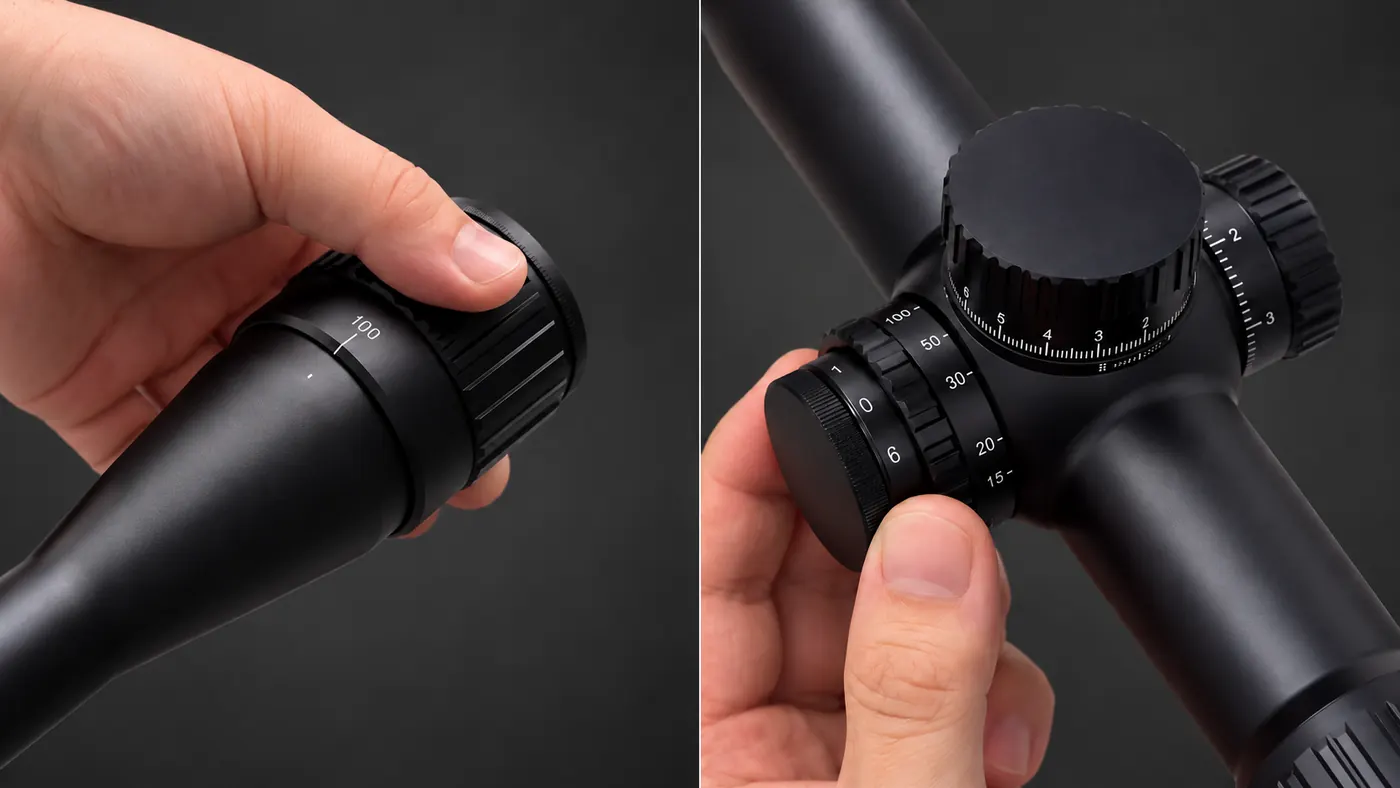
The practical difference is ergonomics
Side focus is often described as the more convenient layout, and that is generally fair. Convenient does not mean optically superior.
Reach and body position
With side focus, your adjusting hand stays near the action and turret area. That can help you preserve a stable head position while fine-tuning the image. With AO, your hand travels to the front of the scope, which may cause more movement in a light or unsupported setup.
On a bench or a firmly supported rifle, the difference may be minor. From a position where your support hand and cheek weld are doing more work, control placement becomes easier to notice.
Visibility of the scale
A side-focus scale is normally closer to the shooter, but its markings may wrap around the dial and disappear from view. An AO scale has more circumference available, although reading it can require leaning forward. Neither scale should be treated as a rangefinder or a laboratory calibration.
Use the printed distance as a starting point, then check the actual image and apparent reticle movement. Eyesight, magnification, temperature, manufacturing tolerances and viewing conditions can all shift the best real-world setting slightly away from the printed number.
Scope layout and handling
AO puts a moving control at the objective bell. Check that a sunshade, lens cap or other accessory does not cover the scale or make the ring awkward to grip.
Side focus adds another control around the turret housing. That area can become busy when illumination and parallax controls sit close together or use a concentric design. Gloves, dial resistance and the amount of usable grip matter more than the letters AO or SF on a specification sheet.
Price and optical performance
AO is sometimes associated with simpler or lower-priced scopes, while side focus is common on feature-rich models. That market pattern is not a quality rule. A side-focus design is not automatically more accurate, and an AO design is not automatically less capable.
The location of the control does not tell you about resolution, tracking, mechanical repeatability, usable adjustment range or how closely the printed distances match the real setting. Those qualities must be evaluated separately on the exact model.
Which layout is likely to suit you?
AO may suit you when
- target distance changes only occasionally;
- you normally shoot from a stable position;
- you prefer a simple centre-tube layout;
- the front ring remains easy to reach with your accessories fitted.
Side focus may suit you when
- you change target distance frequently;
- you want to make corrections without reaching forward;
- you often work at higher magnification;
- you want to operate the control from behind the scope.
These are handling preferences, not hard rules. A smooth, well-marked AO ring can be easier to use than a cramped or excessively stiff side dial. Try the actual control if possible, especially when gloves or an unusual shooting position are part of the setup.
How to adjust either system correctly
The process is almost identical whether the control sits at the front or on the side.
- Set the diopter first. Adjust the eyepiece until the reticle looks crisp during a quick glance. Do not use AO or side focus to correct a blurry reticle.
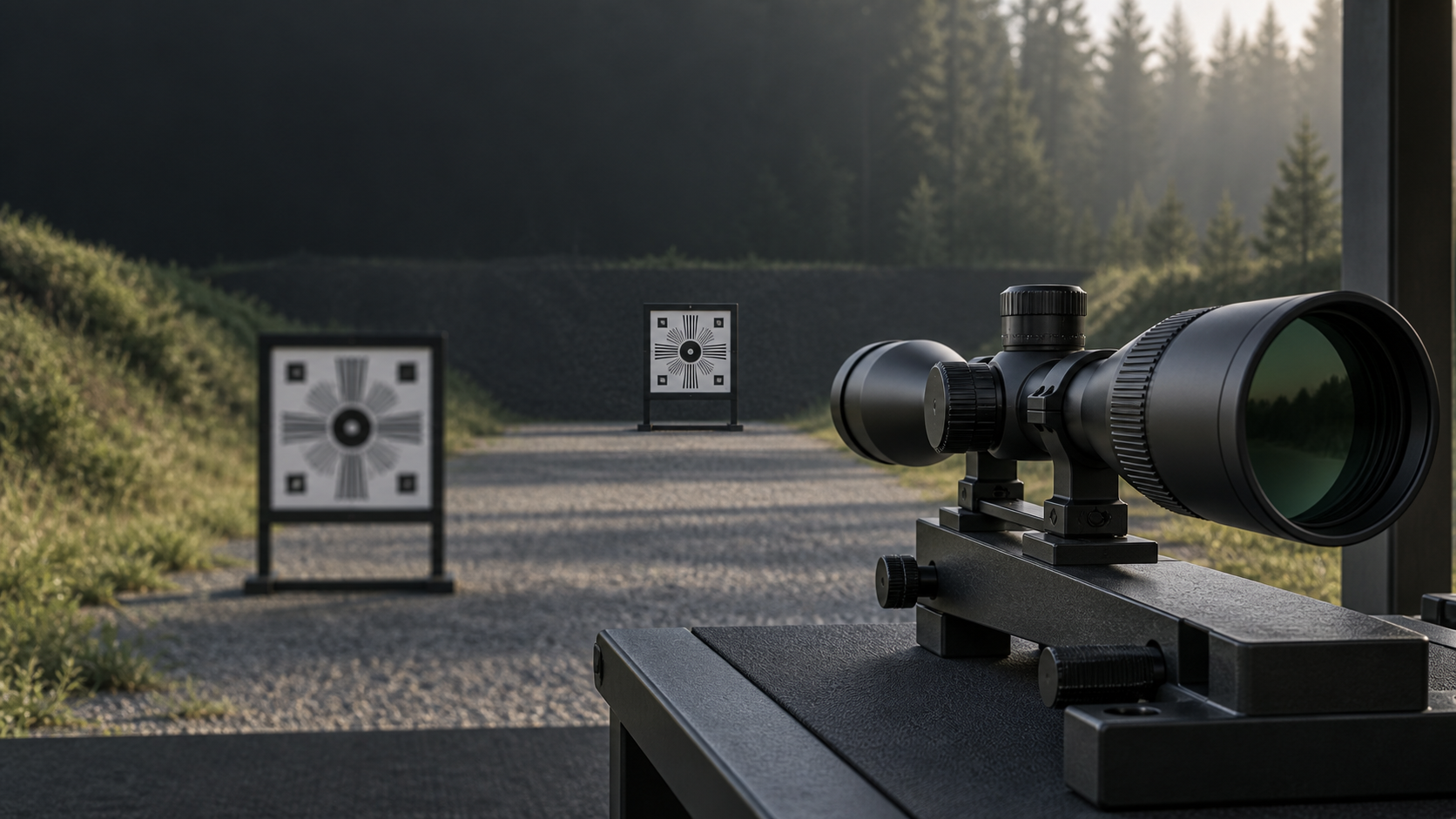
- Support the scope steadily. Aim at a small, clearly defined point with the firearm unloaded and handled safely.
- Start with the approximate distance. Turn the AO ring or side-focus dial to the nearest marked value.
- Refine target clarity. Make a slow adjustment until the target appears clear.
- Check for apparent movement. Without moving the scope, shift your eye slightly up, down, left and right. If the reticle appears to slide across the target, fine-tune the control and repeat.
- Trust the result, not the printed number. Stop where apparent movement is minimised, even if the index sits a little away from the expected distance mark.
Our guide to fixed and adjustable parallax settings explains why a distance range on the specification sheet describes capability rather than overall quality.
Common misconceptions
“Side focus is more precise than AO”
Not by control location alone. Side focus can be easier to reach, but accuracy depends on the complete optical and mechanical design and on how carefully the user checks the setting.
“AO is only target focus”
An AO ring usually affects target focus and parallax together. Its purpose is not the same as the rear diopter, which focuses the reticle for your eye.
“A sharp target means parallax is gone”
Not necessarily. After making the target clear, use the slight eye-movement test. Apparent reticle movement is the more useful practical check.
“The distance scale measures range”
It does not. The marks are reference settings for the focusing mechanism. Use a suitable range-measuring method when the actual distance matters.
Choose the control you can use consistently
AO and side focus are two layouts for the same basic task. AO places the adjustment on the objective bell; side focus moves it closer to the shooter. Side focus often wins on convenience, especially when distances change frequently, but it does not create accuracy by itself.
The better choice is the one you can identify, reach and adjust without losing a stable position. Set the diopter separately, use the distance scale as a starting point, and confirm the final parallax setting with a small eye-position check.


Leave a comment