Prism scopes often come in fixed magnifications such as 1x, 3x or 5x. The larger number shows more apparent detail, but it also changes the way the optic frames the scene and how precisely the eye must be positioned.
The best choice begins with the normal viewing distance and the amount of surrounding awareness you want to keep.
1x keeps the broadest view
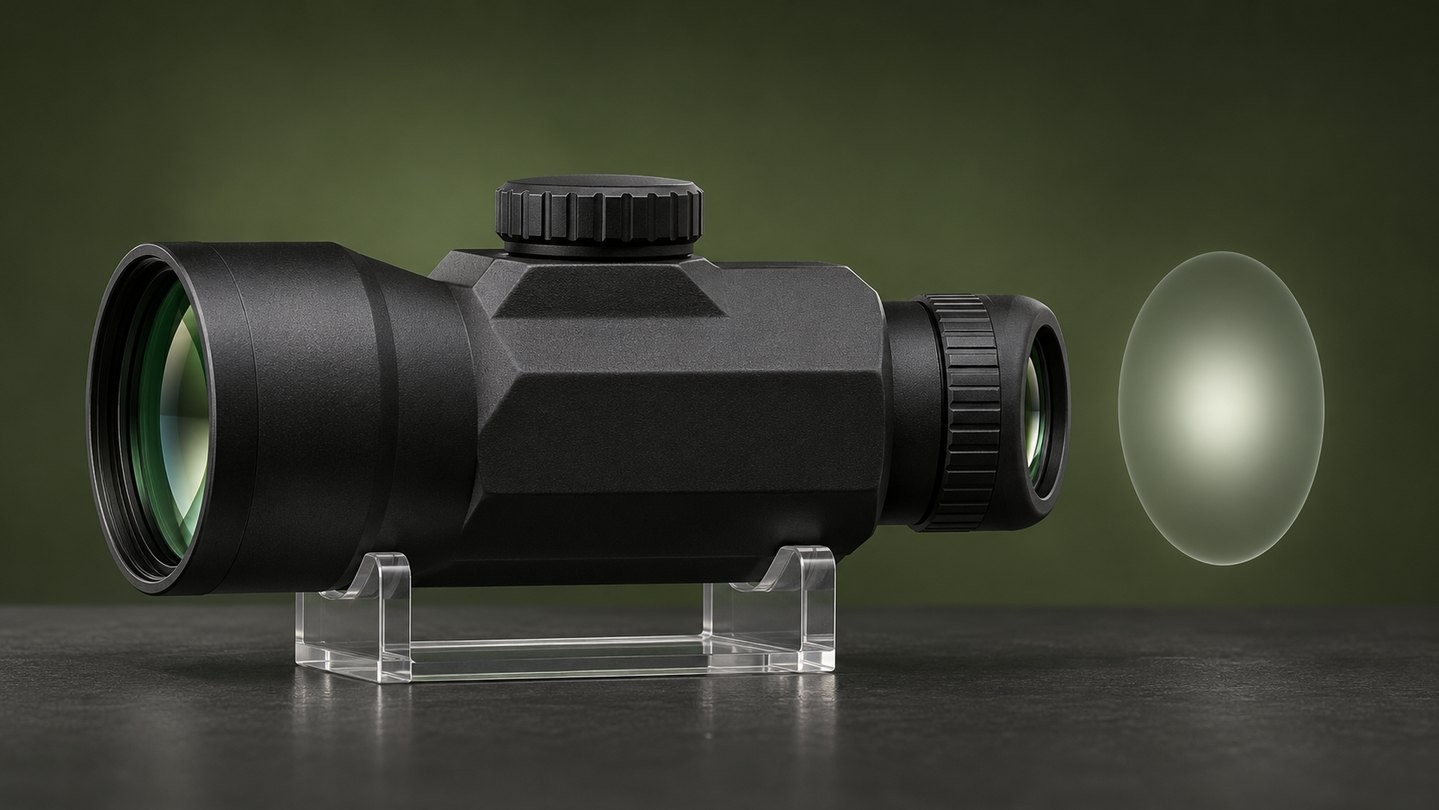
A nominal 1x prism is intended to feel close to an unmagnified view while still providing an etched reticle and diopter adjustment. It can be easier to use with both eyes open than a higher-power prism.
“1x” does not guarantee a perfectly identical image between the two eyes. Small differences in distortion, apparent size and diopter setting can still affect comfort.
3x is a middle-ground choice
At 3x, small details become easier to see while the field remains broad enough for many general uses. The housing, eye relief and eye box become more important than they were at 1x, so compare those specifications rather than magnification alone.
A well-designed 3x can feel more usable than a higher-power optic with a tight eye position. Product drawings and real eye-relief figures are valuable here.
5x gives more detail with more visual commitment
A 5x prism can reveal more apparent target detail, but the narrower field makes finding and following a scene less forgiving. Head position and mounting location usually need more care.
Higher fixed power also means you cannot turn down the magnification when the scene is close. Compare it with a variable optic in our fixed vs variable power guide.
Reticle design must match the power
An etched reticle that feels open at 1x may need finer references at higher power. Do not assume a busy layout is more capable. The marks should remain visible, understandable and relevant to the way the optic will be used.
If eyesight affects the appearance of an electronic dot, the prism vs red dot guide explains why an etched reticle may look different.
Compare the complete size and mounting position
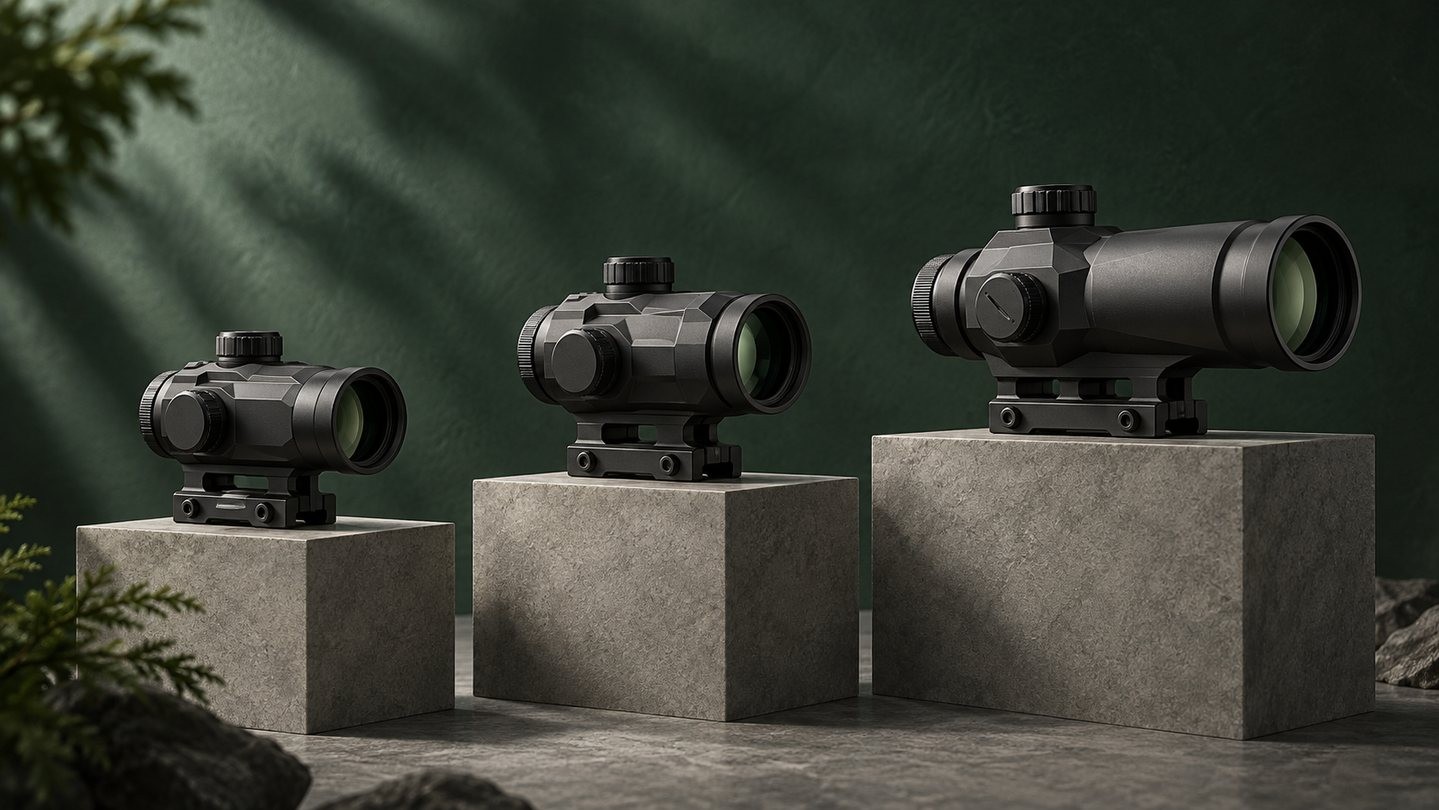
Higher magnification can bring a longer housing, a larger mount or less forgiving eye relief, although the exact trade-off depends on the design. Check the full dimensions and where the eyepiece must sit. A compact-looking 5x is not a better fit if it cannot reach the eye position without compromising the mount.
Decision checklist
- What is the most common viewing distance?
- How much surrounding awareness is needed?
- Is the listed eye relief compatible with the mounting position?
- Can the eye find the full image quickly and repeatedly?
- Does the reticle remain legible without illumination?
- Are size and weight acceptable for the complete setup?
Choose the lowest fixed power that provides the detail you genuinely need. That usually preserves more field of view and a more forgiving viewing experience.


Leave a comment