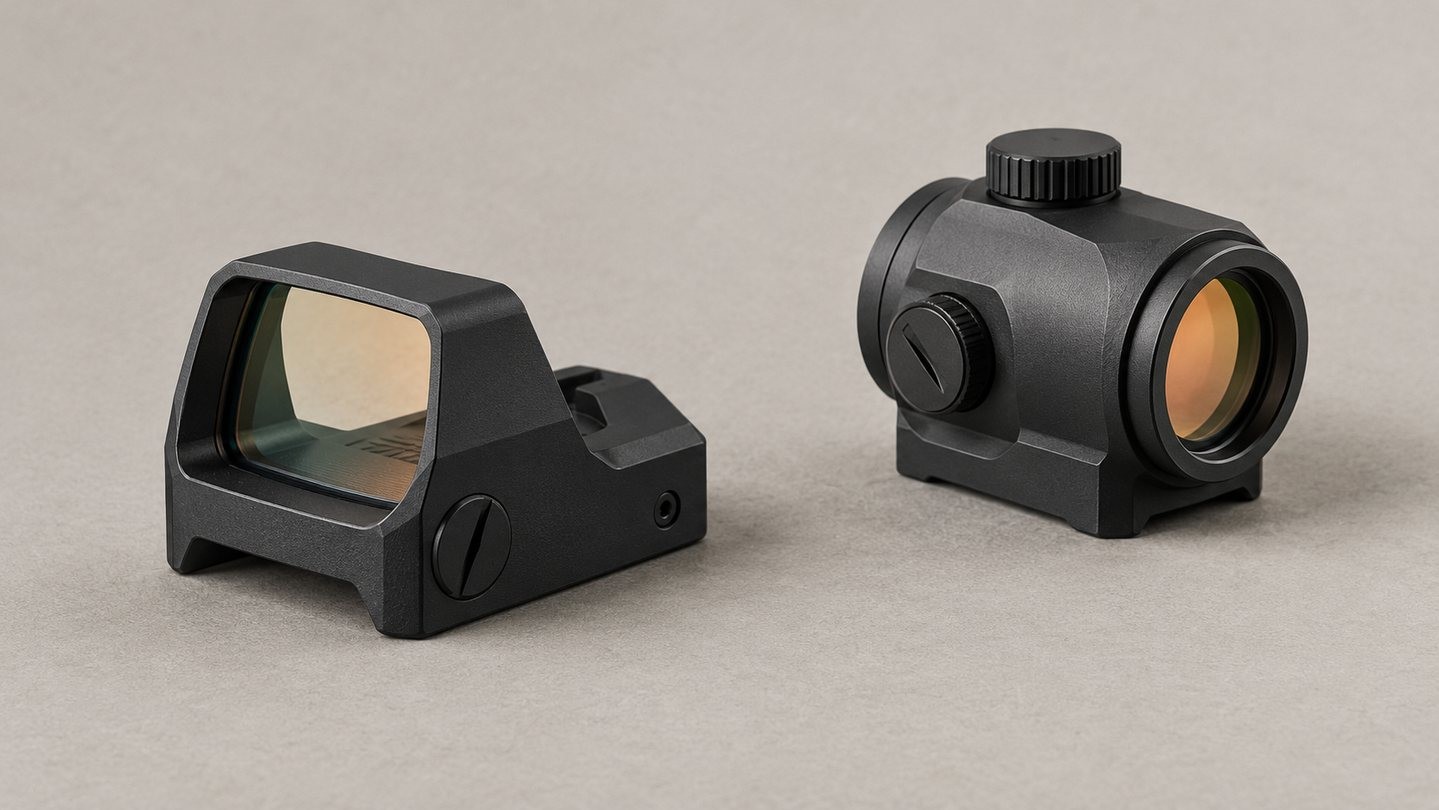
Window size is one of the first differences people notice between red dot sights. A broad rectangular opening can feel very different from a compact circular tube. The larger-looking option is not automatically faster or easier for every setup.
The sight picture is created by the window, the surrounding housing, mounting height and the user’s eye position together.
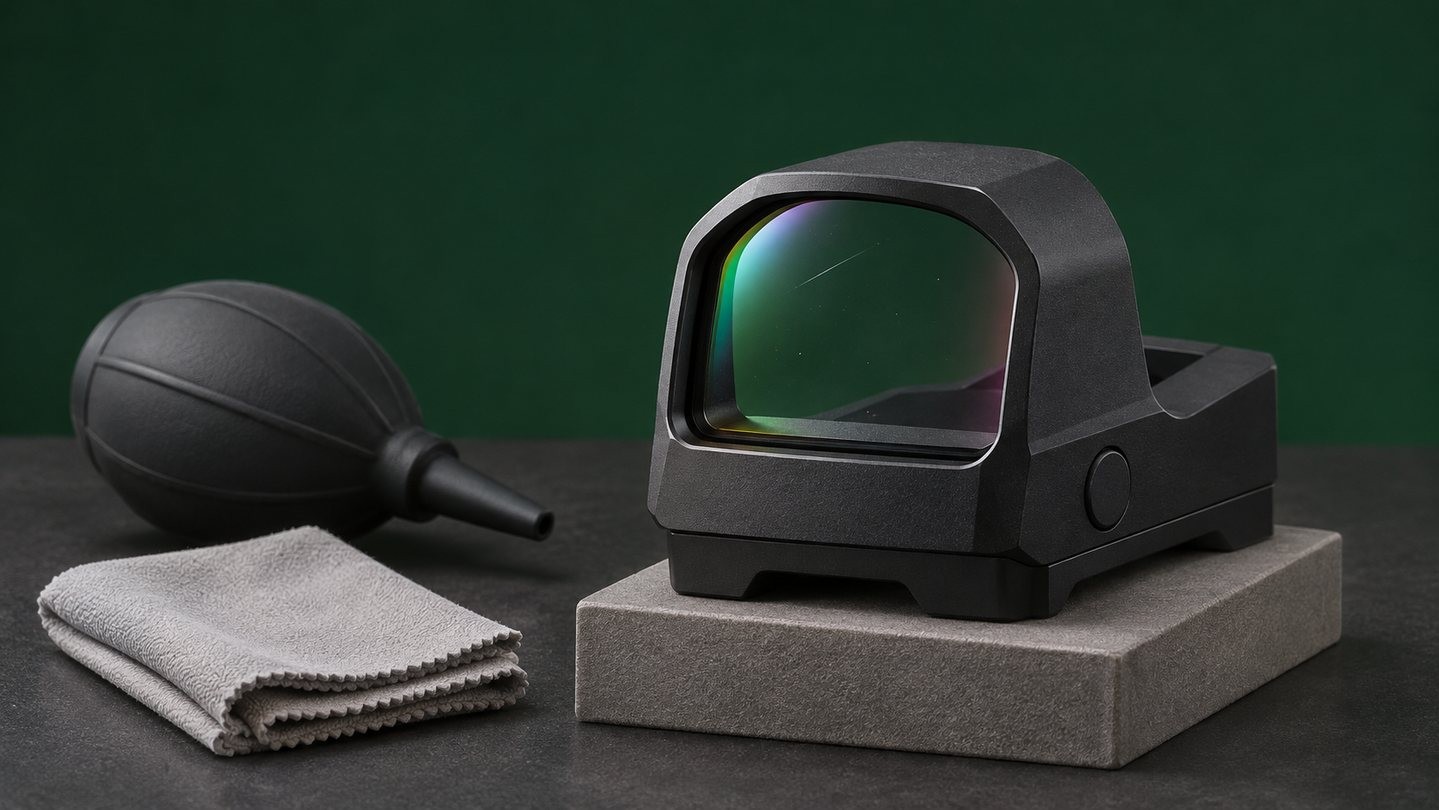
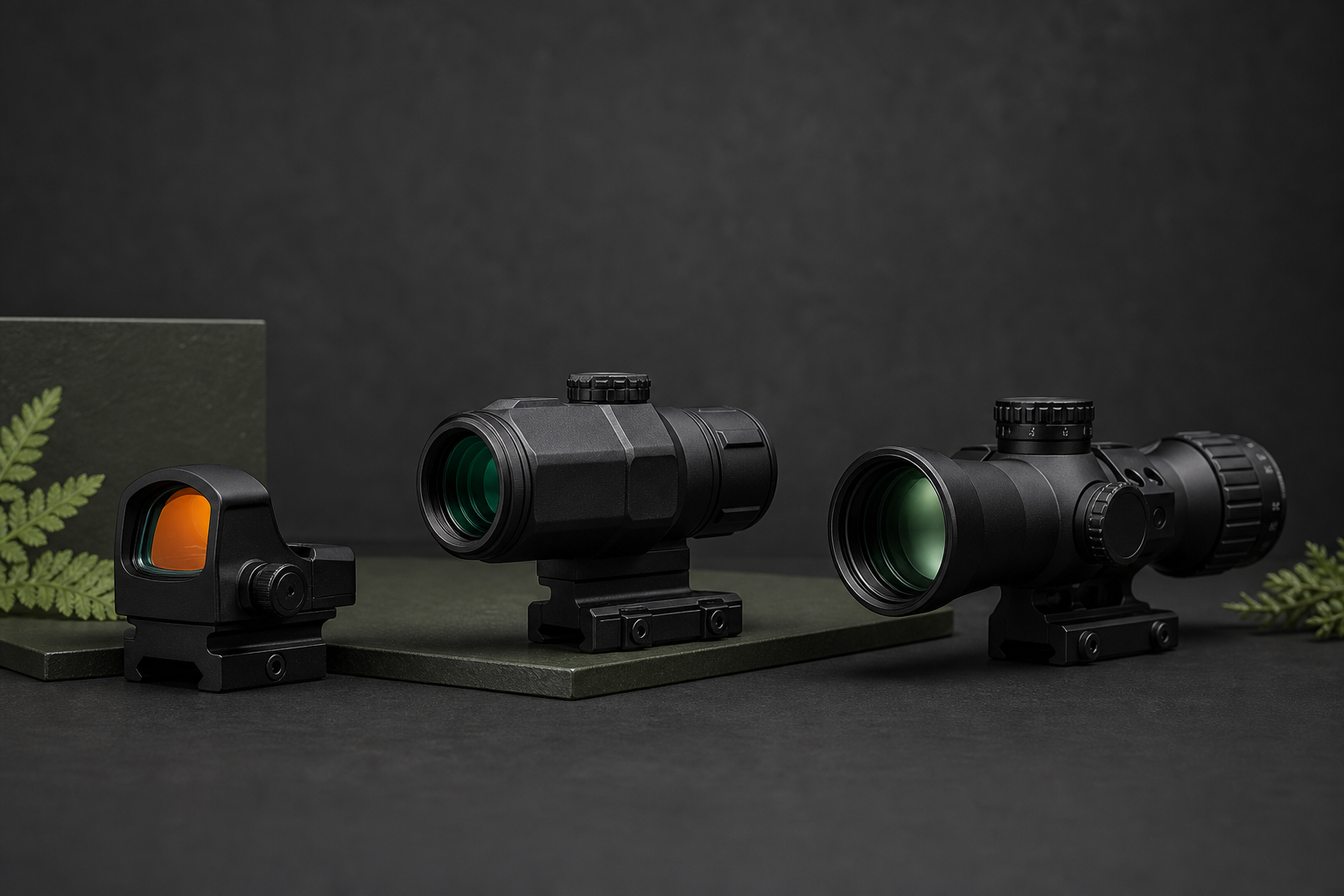
A larger window can reduce the feeling of enclosure
More visible glass and a thin frame can make it easier to maintain awareness around the dot. This is especially noticeable when the sight is viewed from a slightly imperfect position.
That does not change the dot’s angular size or guarantee a wider usable field in the same way a magnified optic specification would. Red dots are normally used with both eyes open, so the brain also combines information from the unobstructed eye.
Housing shape affects what the eye notices
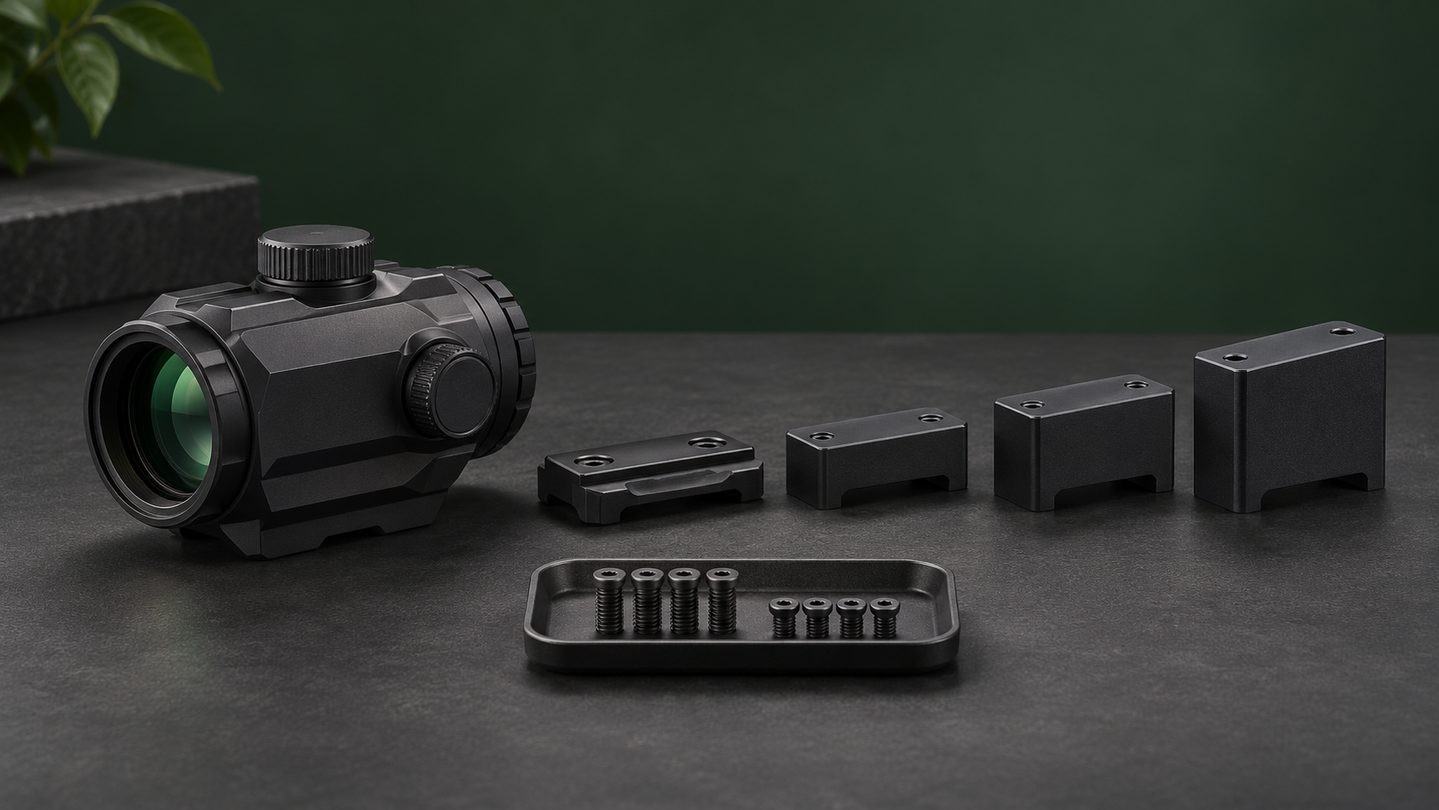
A thick hood may appear more prominent, while a compact tube can give a strong circular reference. Some users quickly ignore the housing; others prefer a particular outline because it helps them find a repeatable position.
Try to look through the optic rather than at its frame. If the housing dominates attention, mounting height, distance from the eye or brightness may be contributing.
Open and enclosed constructions solve different problems
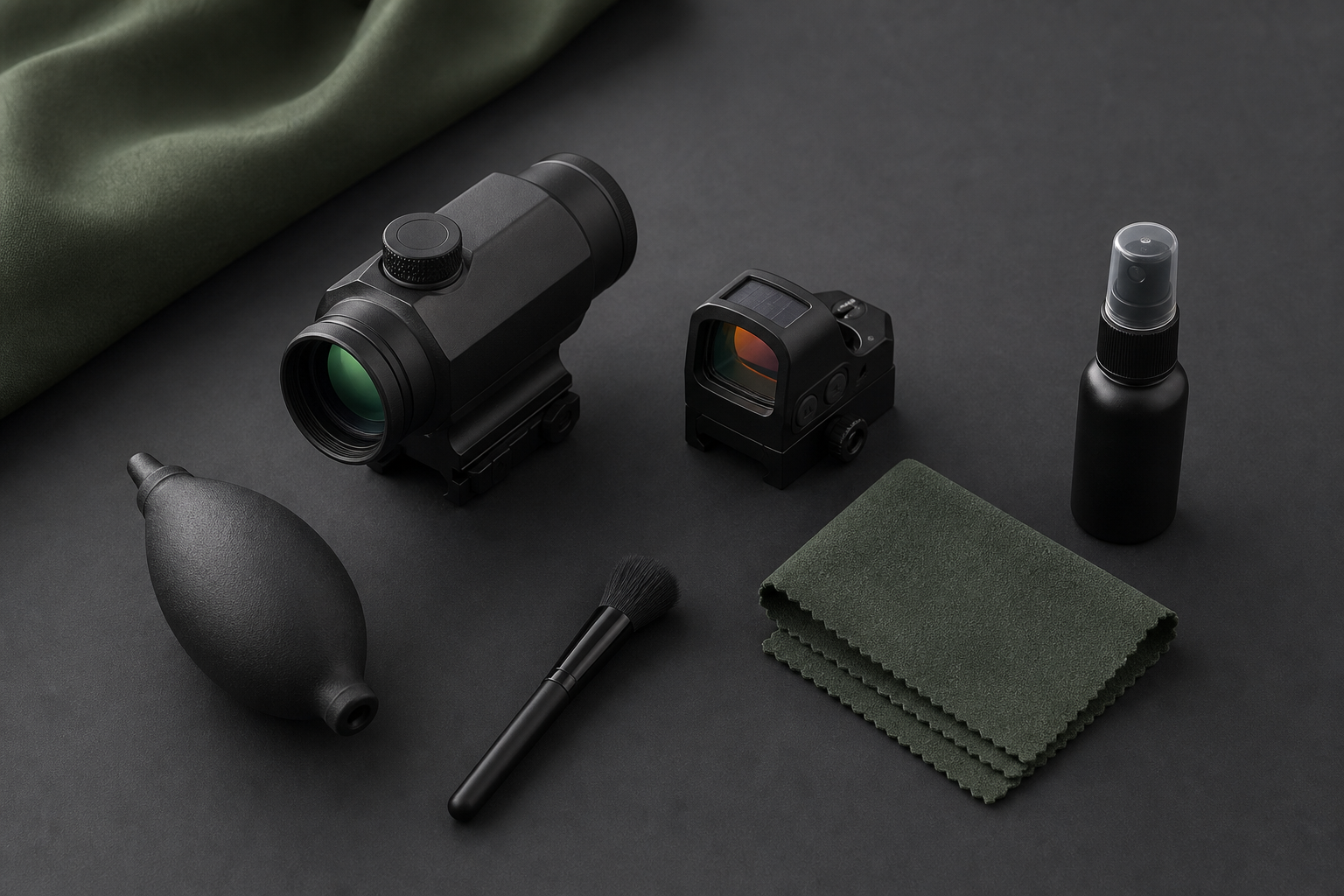
An open sight exposes the emitter area and often keeps the form slim. An enclosed sight puts the emitter inside a sealed optical path, which can be easier to keep clear in rain, dust or debris. The trade-off may include size, weight or a more noticeable body.
Our open vs enclosed red dot guide covers that structural decision in more detail.
Fit can matter more than window area
A larger window is not useful if the sight does not match the mounting footprint, available space or desired height. Check the footprint first with the red dot footprint guide, then compare housing clearance and controls.
Measurements do not describe the whole visible opening
Two windows with similar height and width can feel different because of frame thickness, corner radius, lens angle and how far the optic sits from the eye. Product photos can exaggerate or hide these differences. If possible, compare the sights from the same viewing position rather than measuring the front glass alone.
What to evaluate in person
- Can the dot be found from a normal, repeatable position?
- Does the housing disappear from attention when both eyes are open?
- Are the brightness buttons and battery access still reachable?
- Does the window stay clear with the intended protective cover?
- Does the sight fit the correct footprint without overhang or interference?
Window size is useful information, but it is not a score. The best shape is the one that fits the mounting system and becomes visually quiet when the user concentrates on the scene.


Leave a comment