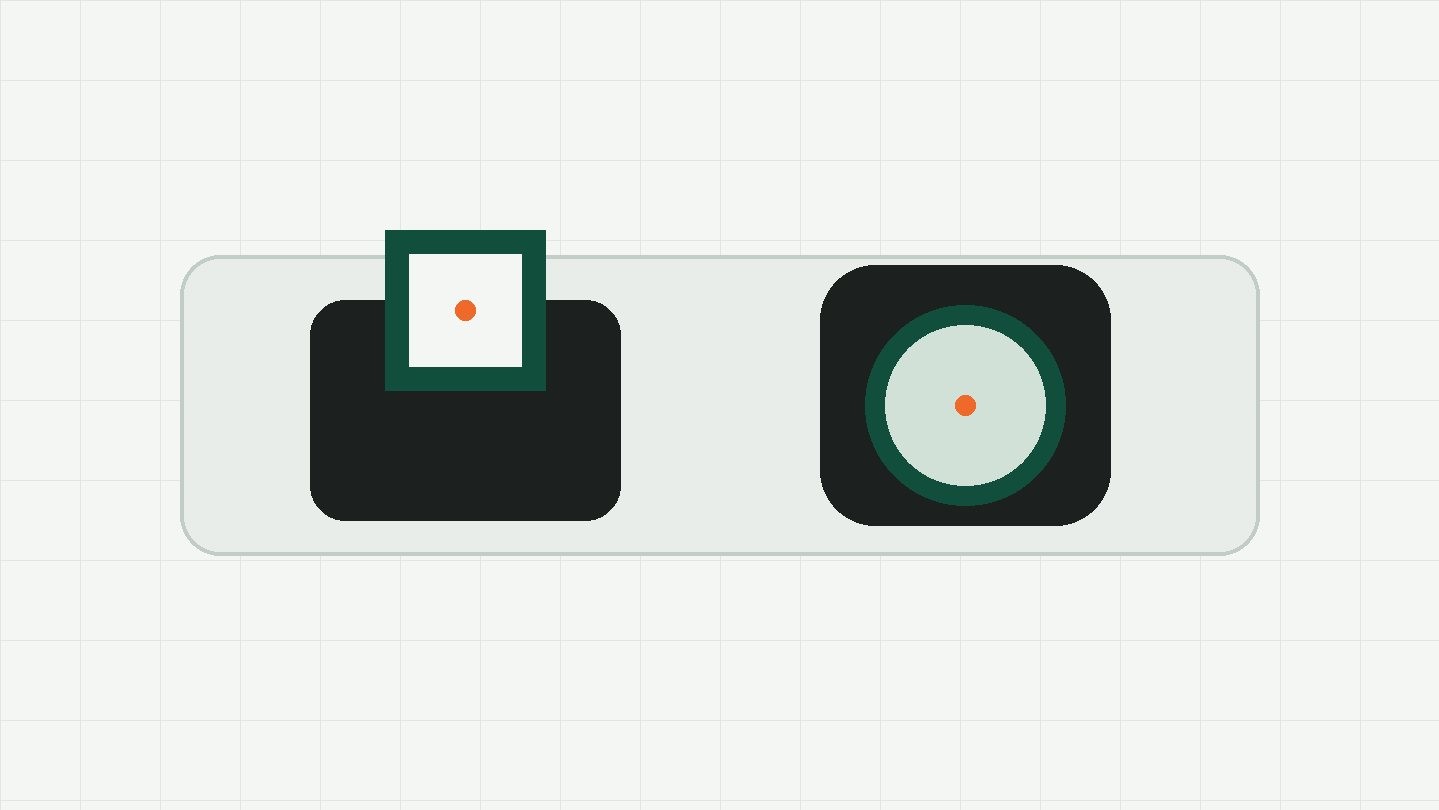
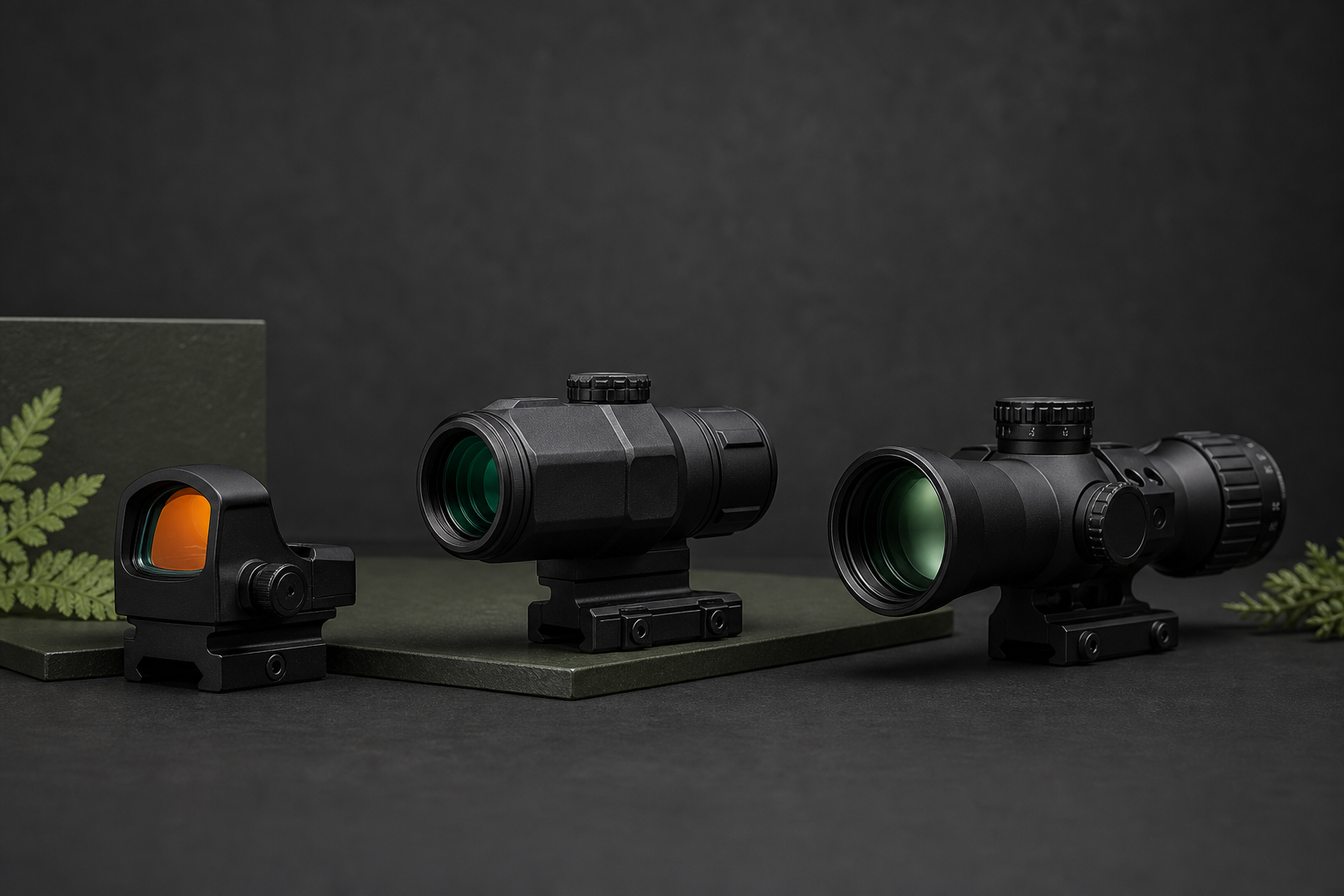
Open and enclosed red dot sights use the same basic idea: an LED projects a dot that appears in the viewing window. The main structural difference is whether the light path from emitter to lens is open to the environment or sealed inside a housing.
What an enclosed housing changes
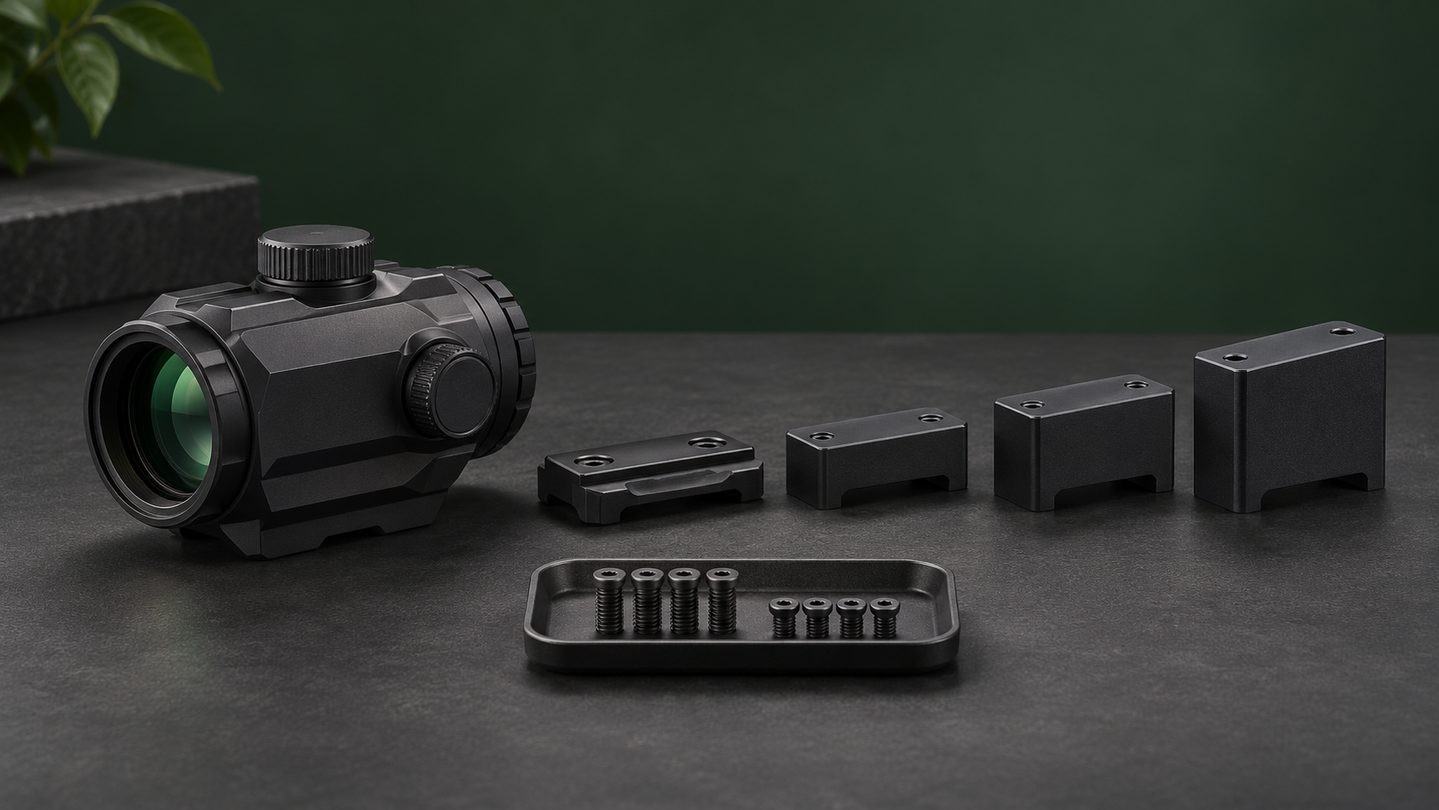
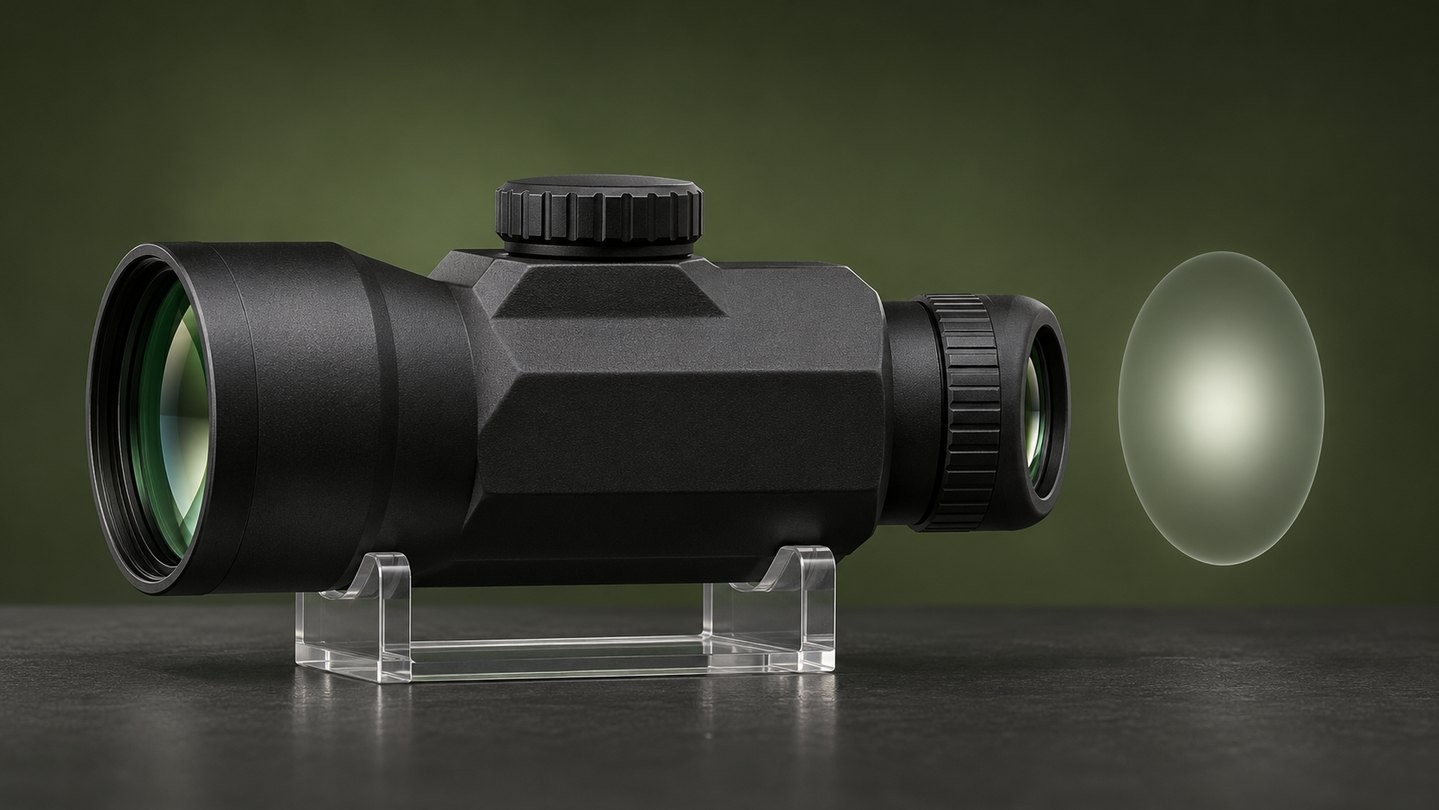
In an enclosed design, front and rear windows surround the emitter system. Rain, dust or loose debris is less likely to block the emitter-to-lens path directly. The trade-off can be more housing, more glass surfaces, additional weight or a larger outline, depending on the model.
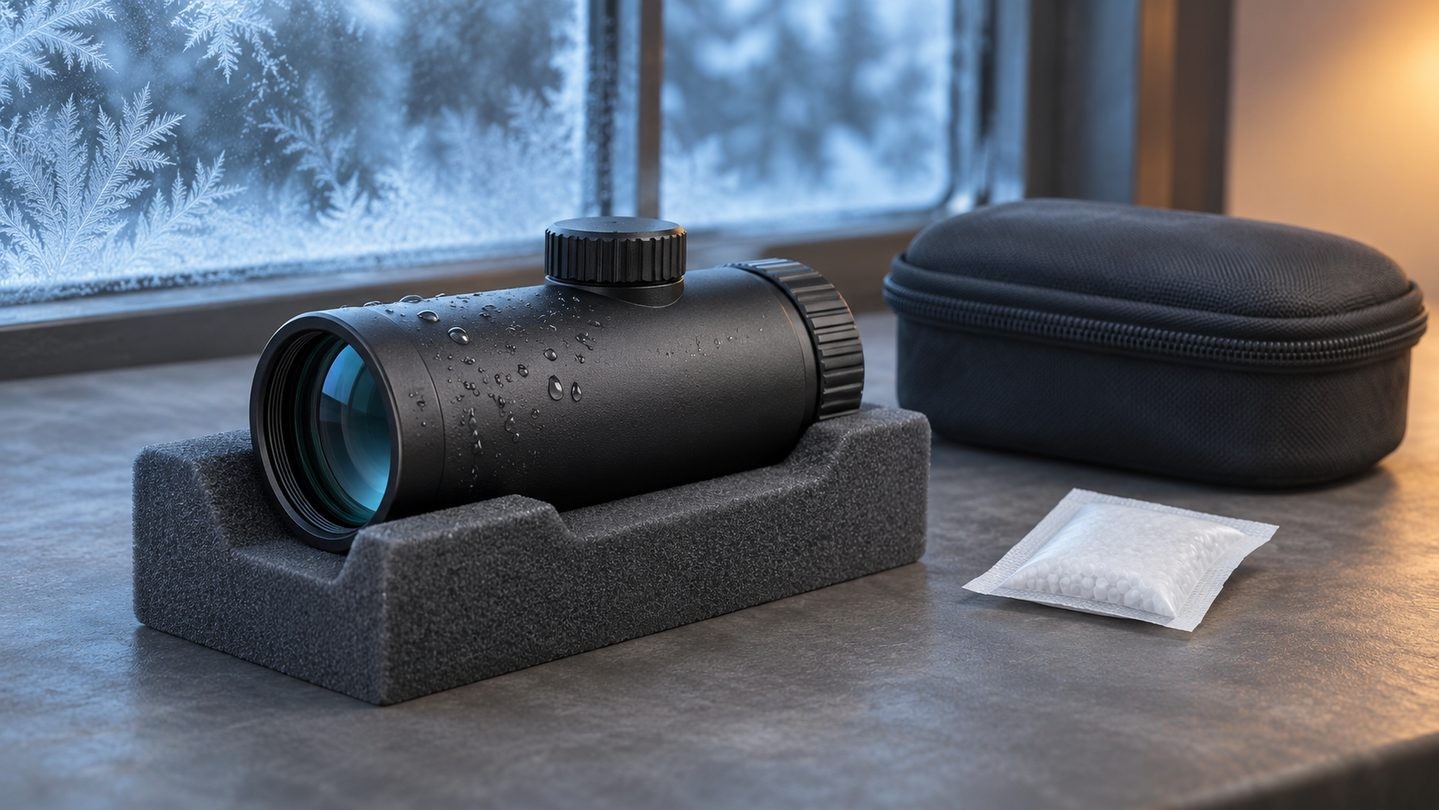
“Enclosed” should not be translated into “maintenance-free.” Exterior windows still collect fingerprints, water and dust, and seals are only as capable as the exact product specification states.
What an open design offers
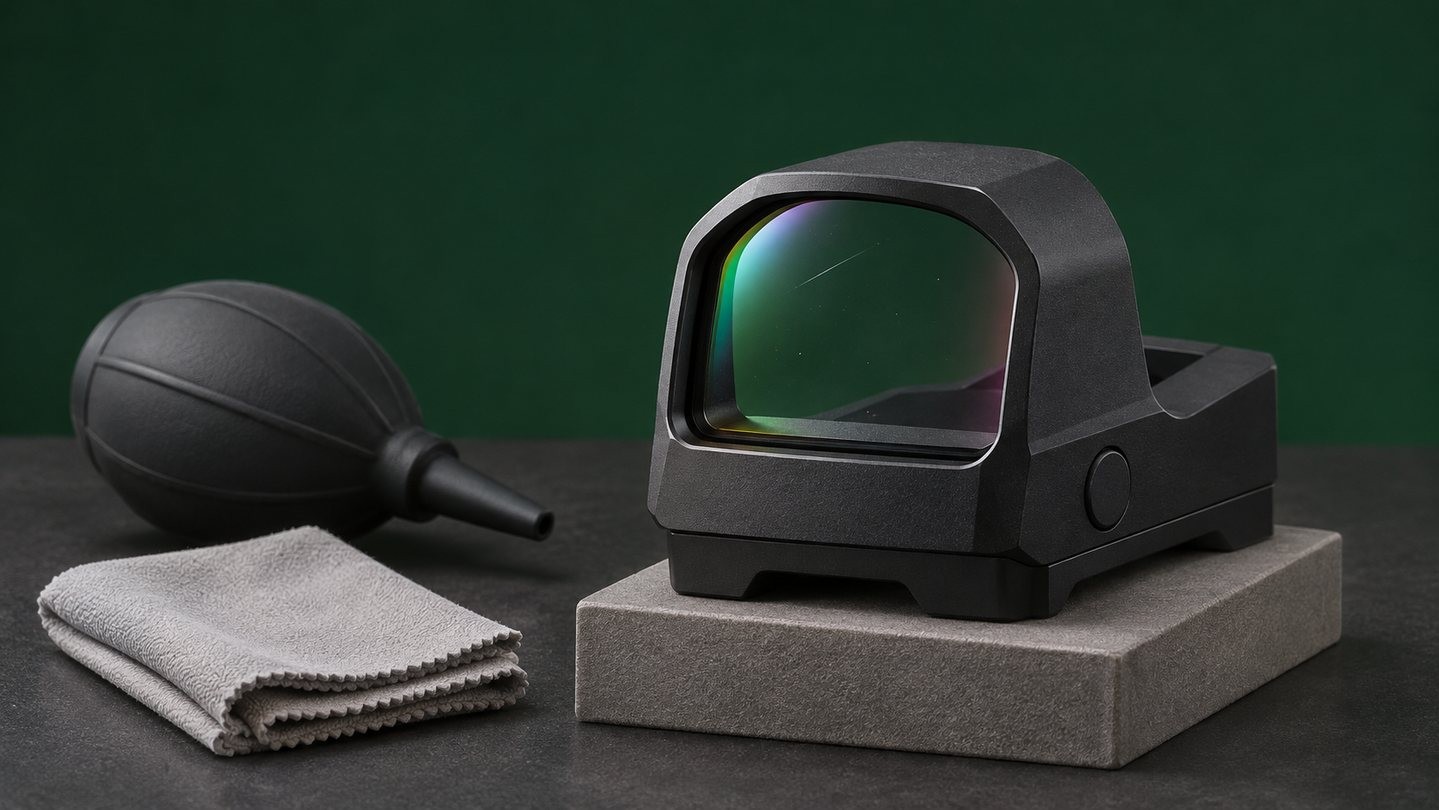
An open reflex sight can be compact and provide an uncluttered window with less surrounding housing. It may also be easier to inspect at a glance. The exposed emitter area and curved interior, however, can require more attention when wet or dirty.
Window feel is model-specific
Housing shape, window dimensions, lens tint and distortion often affect the viewing experience more than the open/enclosed label alone. Compare the exact models with both eyes open and at normal viewing distance. A larger-looking window on a product image may not feel larger once mount height and eye position are considered.
Mounting compatibility still comes first
Enclosed and open sights can use different footprints even within one brand. Some enclosed models use an adapter to fit a more common interface. Read our red dot size guide for dot-size selection, but verify footprint, plate and screw details before comparing reticles.
Which design fits which priority?
- Prioritise enclosed construction when protection of the emitter path and easier clearing of external surfaces matter most.
- Prioritise open construction when minimal size, weight or a less enclosed window is more important.
- Compare actual dimensions, battery access and controls rather than assuming one category always wins.
- Check the exact waterproof and environmental claims; construction style alone is not a rating.
An enclosure solves a specific exposure problem. It does not automatically provide the best window, footprint, battery system or value. Choose the complete model, not only the category name.
For more category-level comparisons, browse Sporting Optics or continue with the USEEIN Buying Guides.


Leave a comment