A “20 MOA base” sounds as if it gives the scope twenty more minutes of adjustment. It does not. The scope keeps the same internal adjustment range; the base changes the angle at which that range begins.
This can be useful when a setup needs more upward correction than a flat base leaves available. It can also be unnecessary—or even inconvenient—when the normal zero already sits comfortably inside the scope’s travel.
A 0 MOA base is the neutral starting point
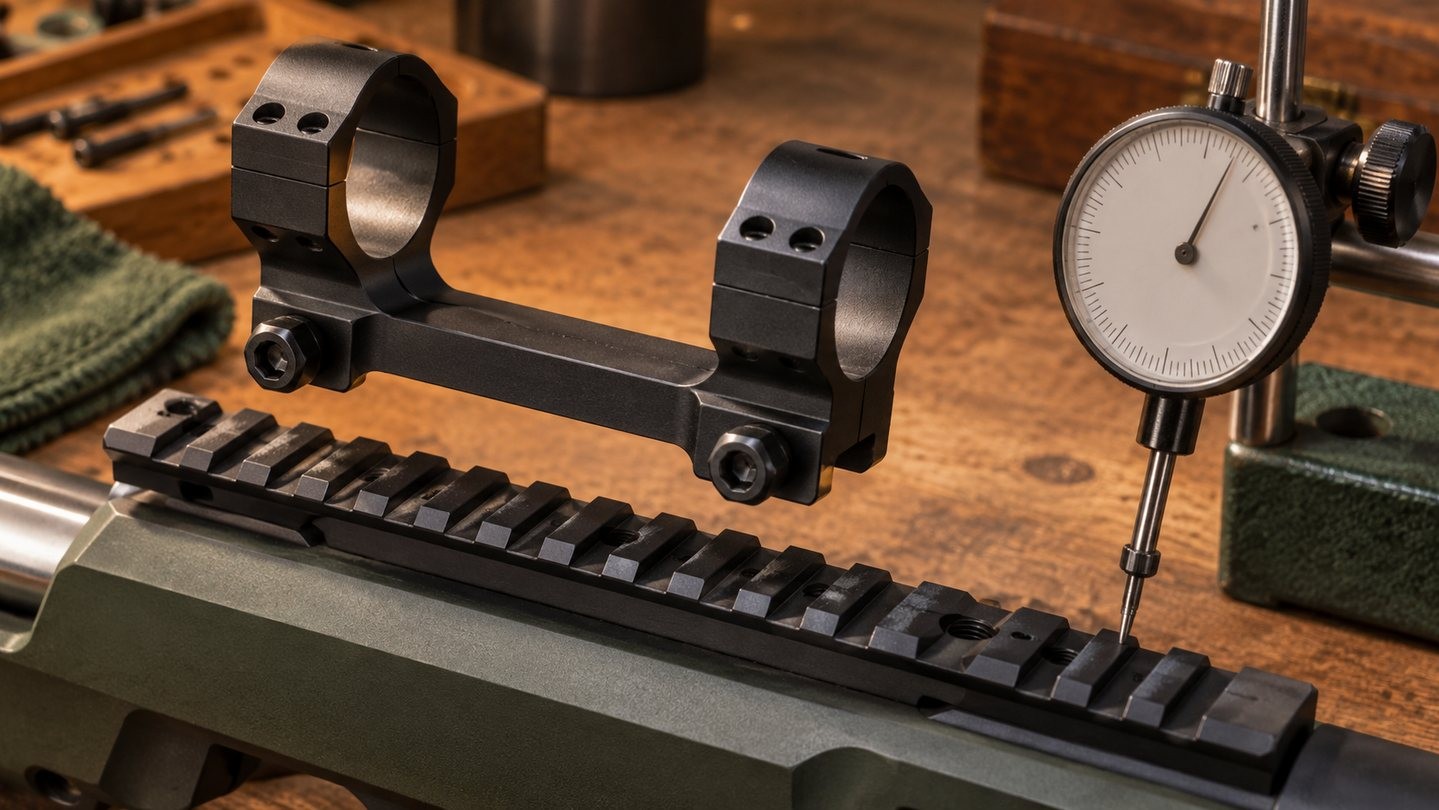
A nominal 0 MOA base is intended to hold the optic without a deliberate fore-to-aft cant. It is the straightforward choice when the required zero and expected adjustments fit well within the scope’s usable range.
“Zero” does not mean every assembled surface is mathematically perfect. Receiver, base, rings and optic all have tolerances. The term describes the base’s intended angle, not a guarantee about the complete stack.
A 20 MOA base tilts the optic relative to the bore axis
A canted base places the scope at a slight downward angle toward the front. To bring the point of aim back to the chosen zero, the internal adjustment is moved in a direction that can leave more travel available for later upward dialing.
The base does not improve glass quality, tracking or mechanical precision. It simply reallocates part of the scope’s existing elevation range.
Why usable travel matters more than the catalog maximum
Manufacturers may list total elevation adjustment, but the zero position is rarely guaranteed to land at the exact mechanical center after the scope is mounted. Our guide to total vs usable adjustment travel explains that difference.
If a canted base moves the required zero too close to the opposite limit, there may not be enough adjustment left to complete the zero. This is why a larger cant value is not automatically an upgrade.
Check the complete system
The decision depends on the optic’s adjustment range, the intended zero, the adjustment demand, mount height and the geometry of the base. Tracking quality also matters if the plan is to dial frequently; read the tracking and return-to-zero guide for that separate issue.
Do not use cant to rescue a bad installation
If the scope reaches an adjustment limit during a normal zero, first check that the correct base is installed in the correct direction, the rings are seated properly and the tube is not being forced. A canted base should be selected deliberately. Adding more angle without finding the reason for an unusual zero position can move the problem rather than solve it.
Before choosing a canted base
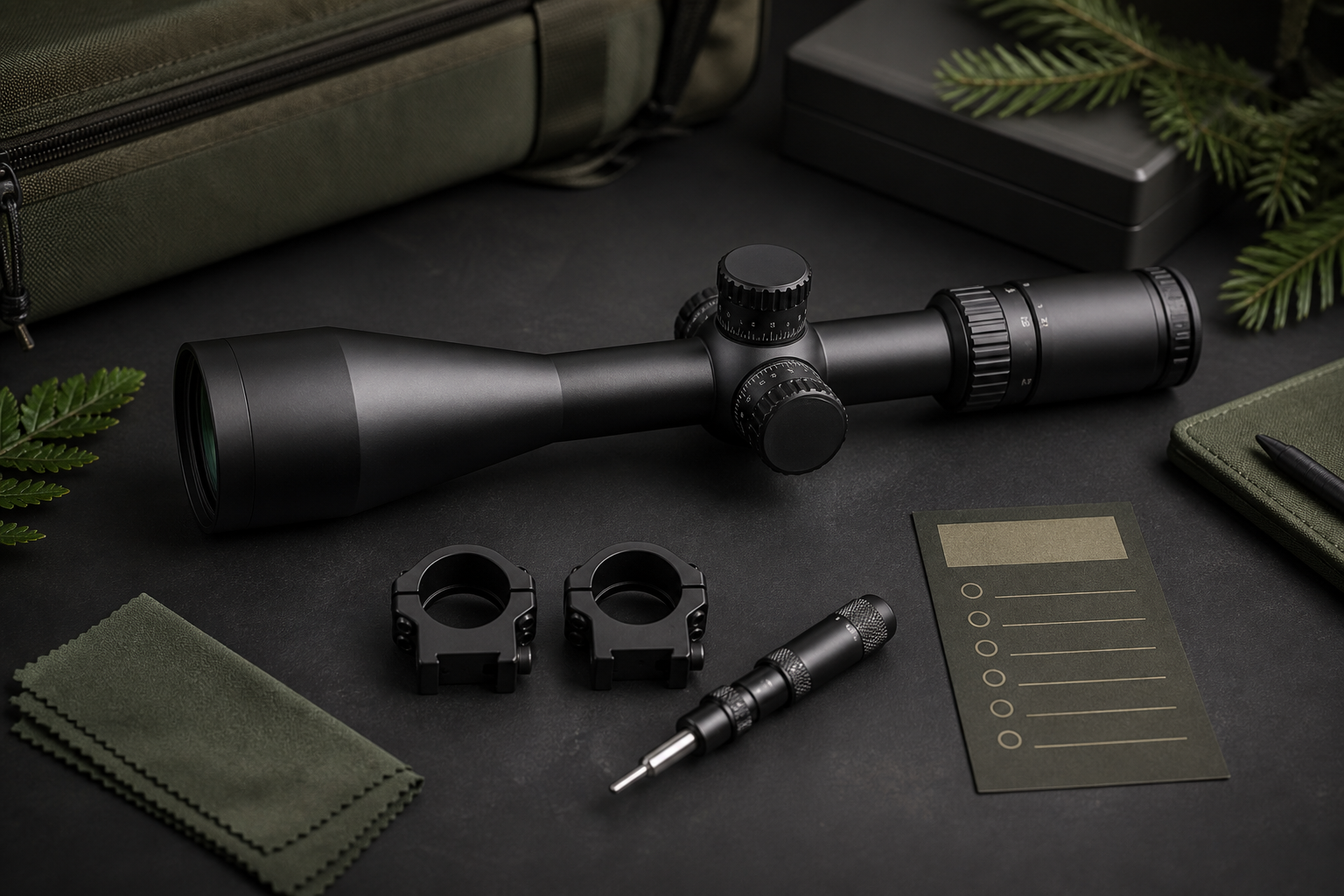
- Confirm the angle and direction from the base manufacturer.
- Check the scope’s total adjustment and current usable position.
- Make sure the intended zero remains achievable.
- Do not use base cant to hide an alignment or mounting problem.
- Record the final zero position and remaining travel.
A canted base is a travel-management tool. Choose it because the adjustment budget requires it, not because a larger number looks more capable.


Leave a comment