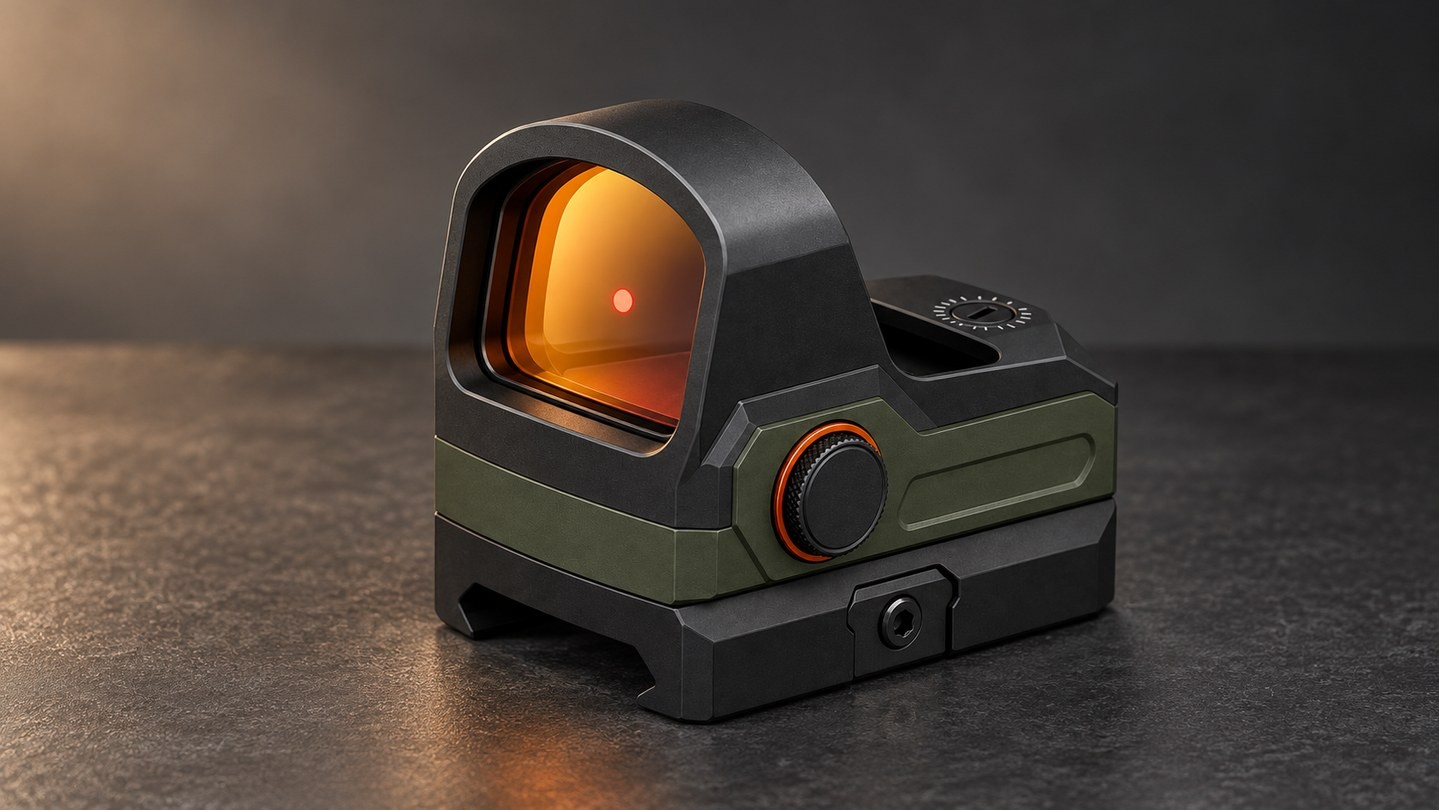
Put a red dot near the edge of the window and a reasonable question follows: is the dot still pointing to the same place, or does it need to be centered before it can be trusted?
That is exactly the question behind the phrase parallax-free. The short answer is that a well-designed red dot is meant to keep the aiming point practically stable as your eye moves within the usable window. The longer answer is that “parallax-free” is often operational language, not a promise of literally zero optical error at every distance and every point in the glass.
What Parallax Looks Like in a Red Dot
Parallax is apparent movement between the aiming dot and the target when your viewing position changes while the sight itself stays still. If the dot appears to slide across a fixed target as your eye moves left, right, up or down, you are observing parallax error.
The key phrase is while the sight stays still. If the mount shifts, the equipment moves or the target is not fixed, the observation tells you very little about the optic.
This is also different from a dot that looks stretched, doubled or star-shaped. Those effects may come from excessive brightness, contamination on the window, the camera or the viewer's eyesight. Our guide to red-dot starbursts covers that separate problem.
Why the Dot Does Not Have to Stay in the Center
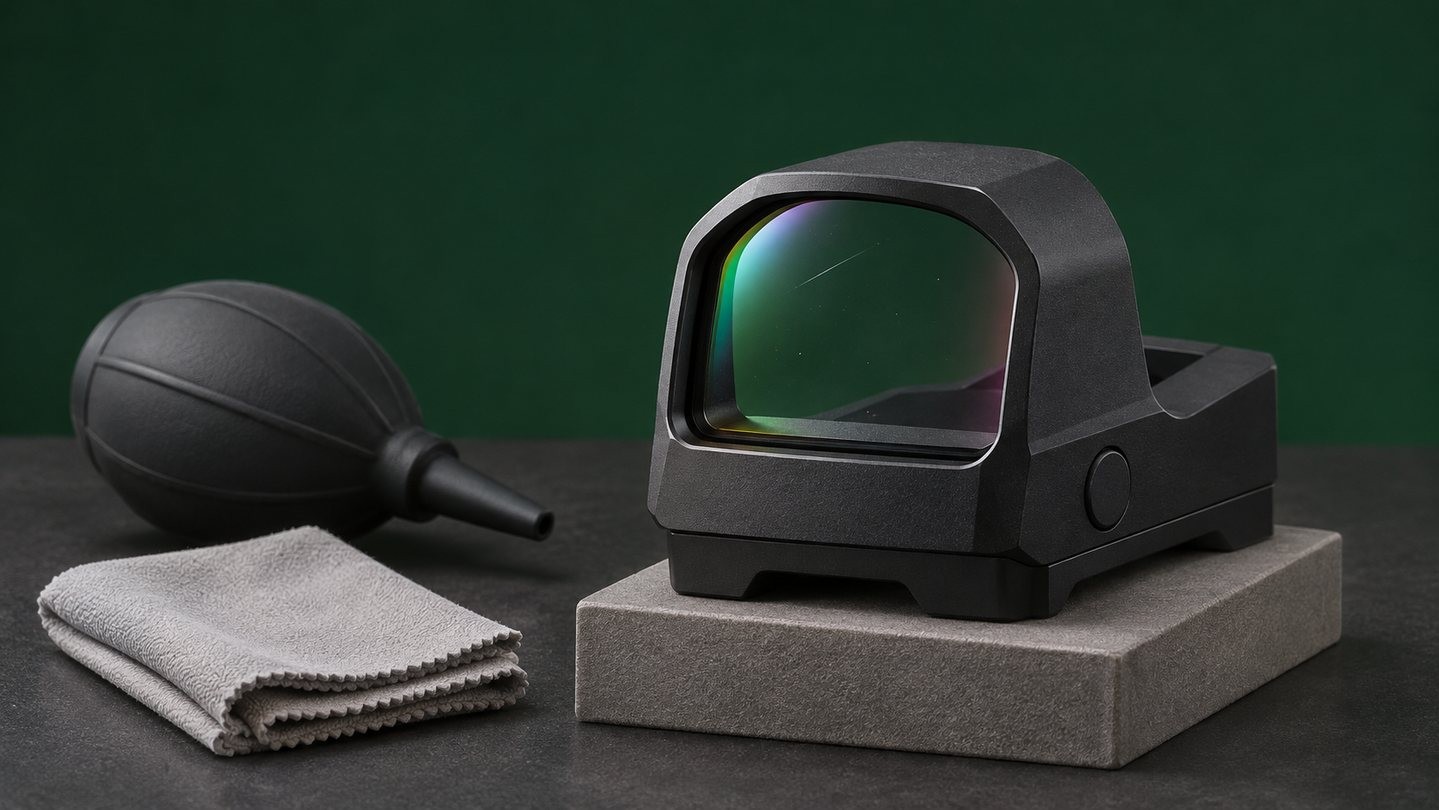
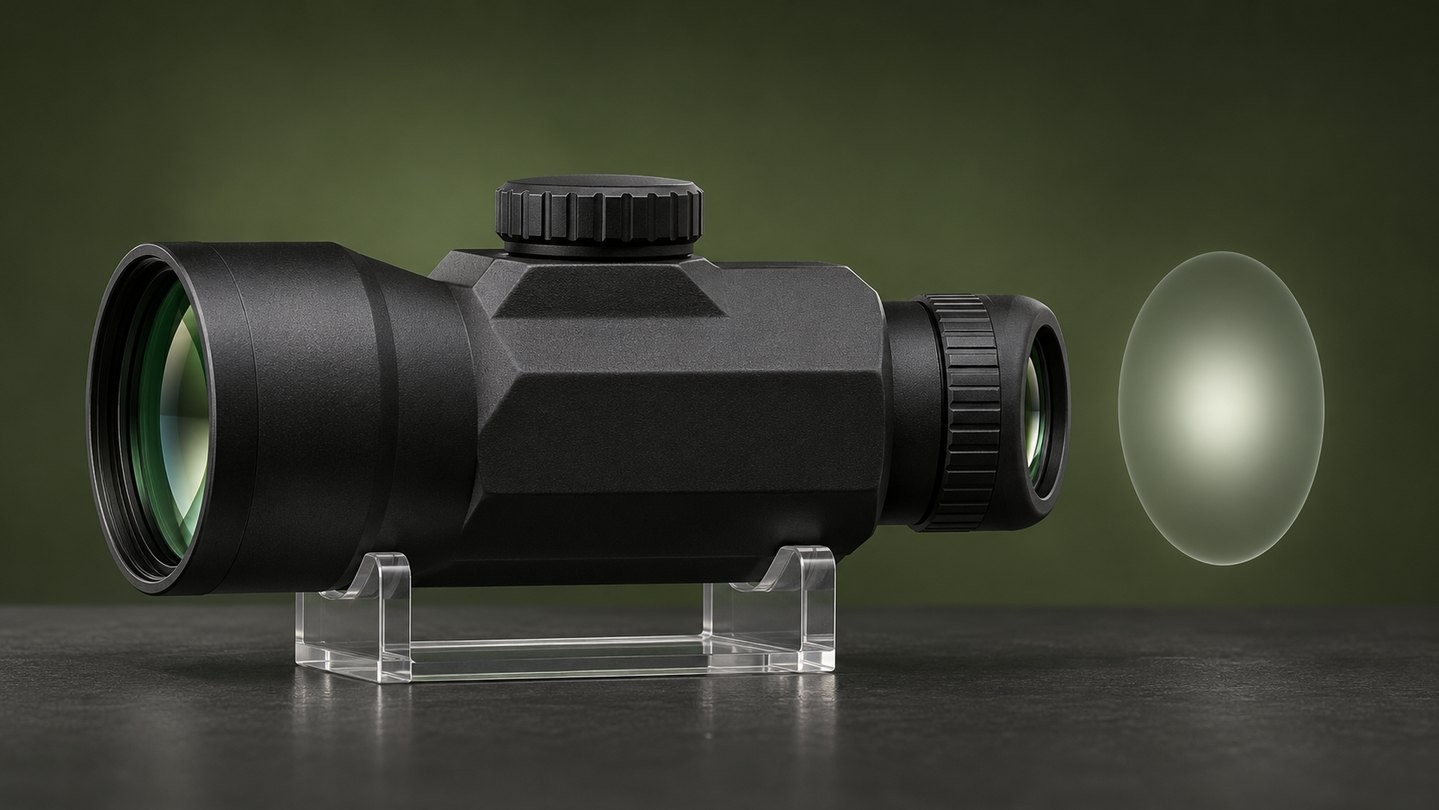
A reflex sight uses a light source and a specially shaped, coated lens to make the dot appear at a much greater optical distance than the window itself. The design is intended to send the useful light toward the eye so that the dot continues to represent the sight's adjusted line of aim over a broad range of eye positions.
That is why a red dot can be faster and less restrictive than a magnified scope. There is no short, defined eye-relief zone and no need to align a circular field of view in the same way. If you can see the dot through the usable window, the sight is designed to let you use it without first making the dot perfectly concentric with the housing.
Centering is still useful when zeroing or testing. It gives you a repeatable reference and avoids judging the optic from the most distorted edge of the window. But centering the dot for every normal view would defeat one of the main practical advantages of a reflex sight.
“Parallax-Free” Is Usually Practical Shorthand
Manufacturers do not all use the phrase in the same way. Some specify that a sight is operationally parallax-free, which makes the practical intent clear. Other manuals use “parallax-free” and still publish a small allowable error. One official manual, for example, pairs the claim with a model-specific tolerance of no more than plus or minus one MOA.
Those descriptions are not necessarily contradictory. A residual error can be small enough that the sight performs as intended in normal use without being mathematically perfect at every combination of distance and eye position.
- The dot should remain usefully stable through the normal viewing area.
- Small residual movement may still exist.
- The amount can change with target distance and position in the window.
- A claim for one model should not be copied to another.
If precision matters to your decision, look for a stated tolerance, reference distance or test description in the exact model's documentation. A bare “parallax-free” badge gives less information.
Why Close Distances Can Show More Movement
Red-dot optics are designed around a chosen optical geometry rather than physically projecting the dot onto the target. The apparent dot image is optimized for useful performance over a range, but it cannot be perfectly coincident with every target distance under every off-axis view.
At short distances, a small difference in viewing angle can be easier to see against a nearby target. Official manufacturer guidance makes the same general point: all optics can show some degree of parallax, and the effect is typically more pronounced close up.
Do not confuse that with the physical distance between the sight's optical axis and the equipment beneath it. That line-of-sight offset exists even if optical parallax is very well controlled. It is a geometry issue, not proof that the red dot's lens system is defective.
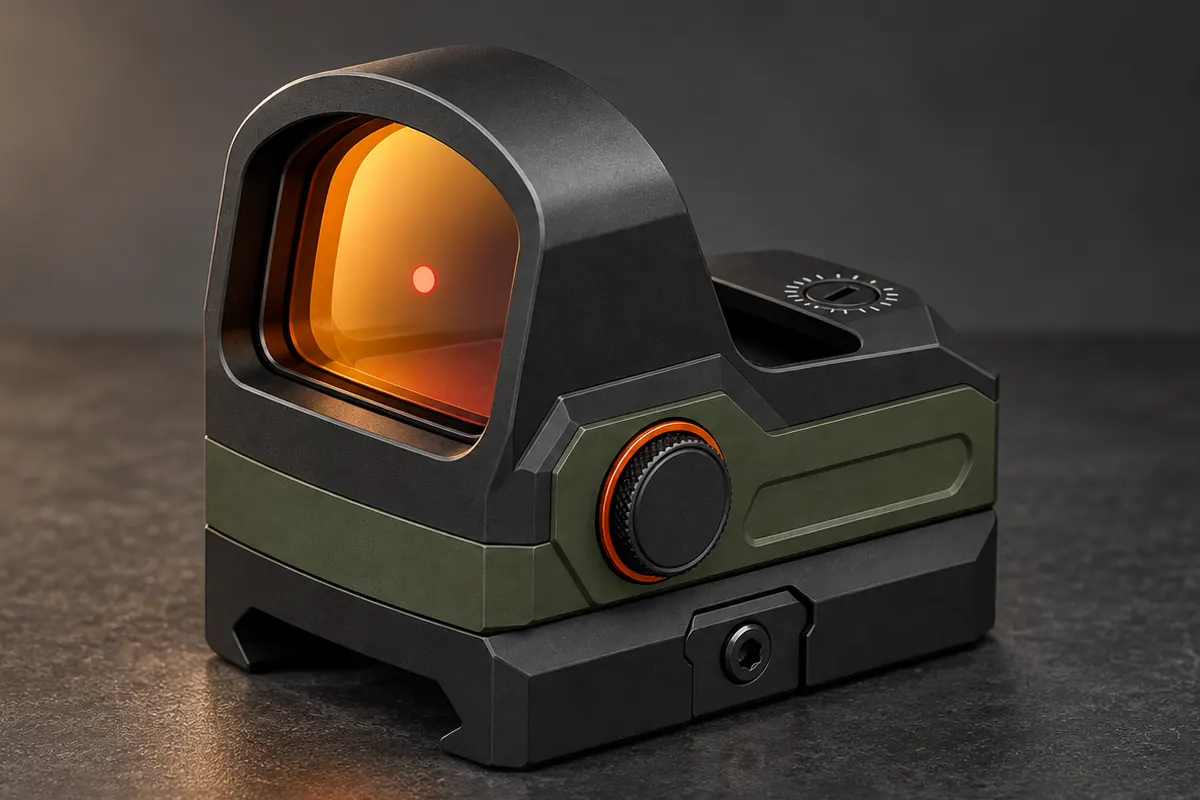 A clean dot near the center provides a repeatable reference for zeroing and comparison. Normal use should not require perfect visual centering.
Window Size and Lens Tint Do Not Answer the Question
A larger window can make the dot easier to find and leave more room around the target. It does not automatically guarantee lower parallax error. The lens curvature, coating, emitter position, assembly tolerances and correction built into the optical design all matter.
Lens tint is another separate issue. A reflex sight may use a visibly colored coating because the front lens must reflect the emitter wavelength efficiently while transmitting the rest of the scene. Tint can affect color balance and perceived brightness, but its appearance alone does not tell you how well parallax is controlled.
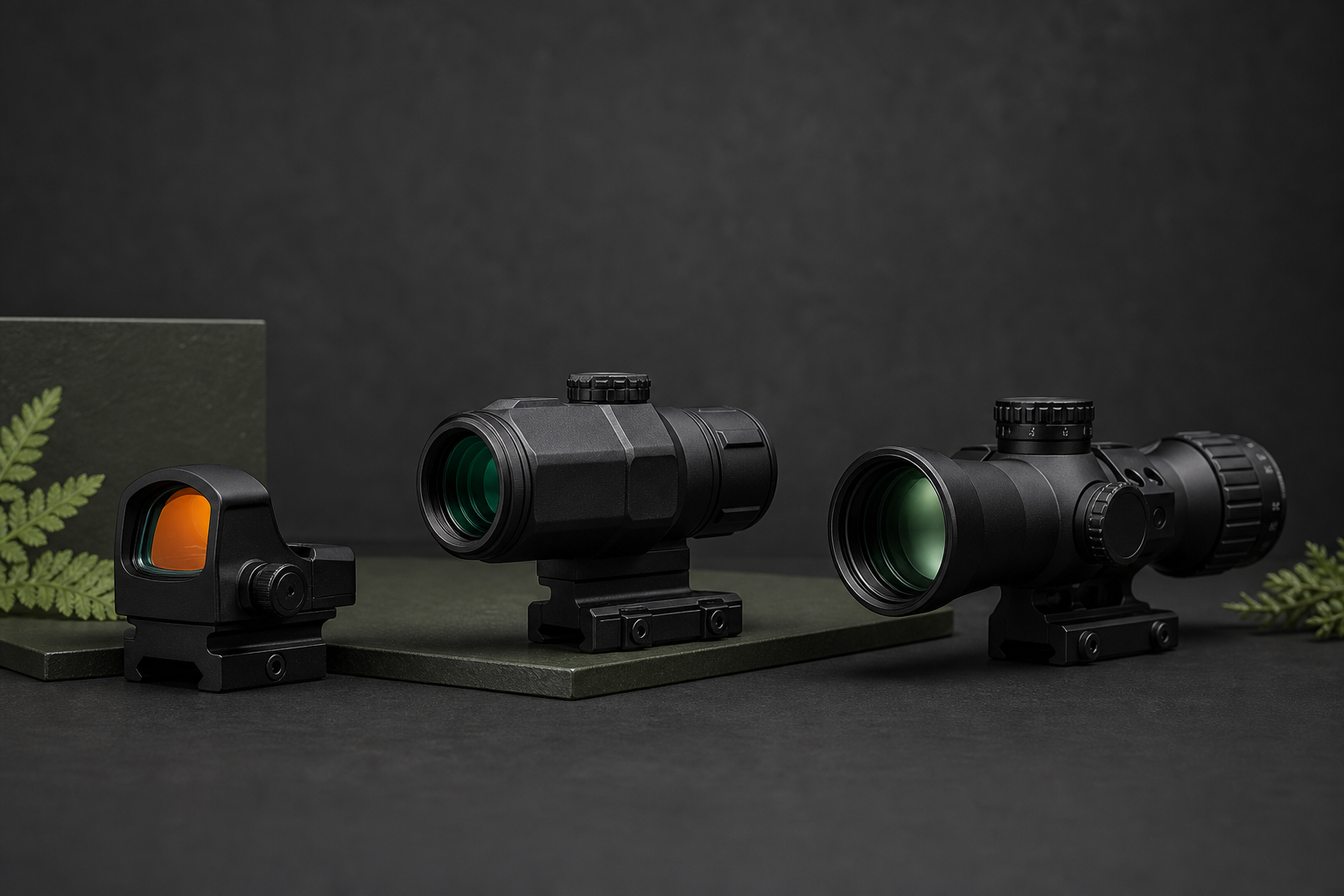
Open and enclosed sights use the same broad reflex principle. Enclosing the emitter changes protection, cleaning and packaging; it does not create a universal parallax advantage. See our open vs enclosed red-dot guide for that comparison.
A Sensible Way to Check a Sight
You can make a useful observation without pretending it is a laboratory test.
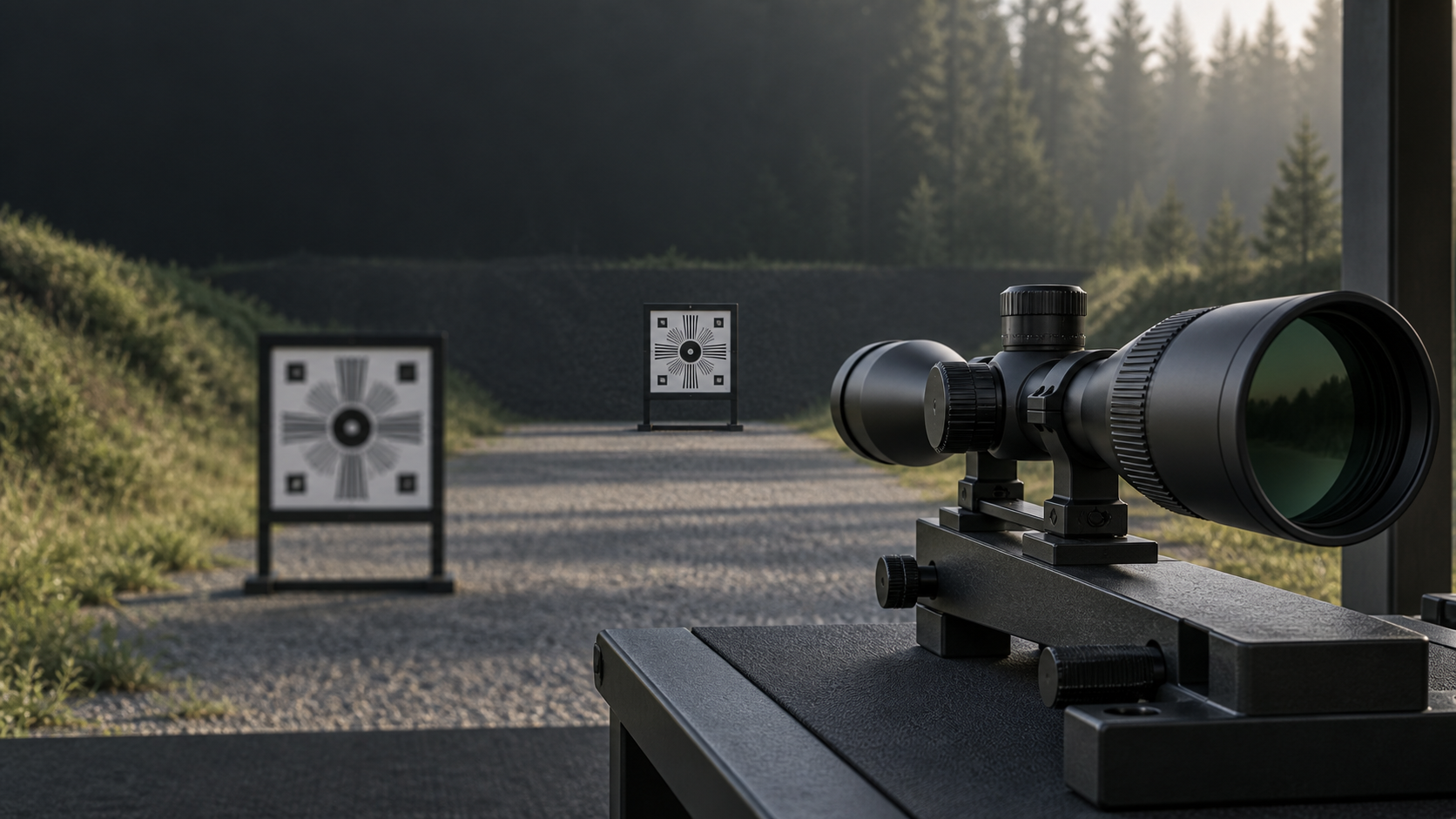
- Secure the unloaded equipment or the sight so it cannot move.
- Choose a small, high-contrast point on a stationary target.
- Set the brightness only high enough for a clean, visible dot.
- Place the dot on the reference point from the center of the window.
- Move your eye slowly around the usable window without touching the sight.
- Watch for apparent movement between the dot and the reference point.
- Repeat at more than one distance if that distance range matters to you.
Keep the test realistic. The far corner of the window may show more distortion than the central area, and a brightness setting that produces a large glowing bloom makes precise judgment difficult. A phone camera can introduce its own alignment, focus and exposure effects, so it should not automatically be treated as a more accurate observer than the eye.
If the dot moves dramatically, repeat the setup before drawing a conclusion. Confirm that the base and fasteners are secure, the sight has not moved, and the target is fixed. Persistent, repeatable movement beyond the maker's stated specification is a reason to contact the manufacturer rather than invent an adjustment procedure.
What Matters When Choosing a Red Dot
Parallax performance belongs on the checklist, but it should not push every other characteristic aside. Also compare:
- dot size and how cleanly you see it;
- brightness range in the light you actually use;
- usable window and housing obstruction;
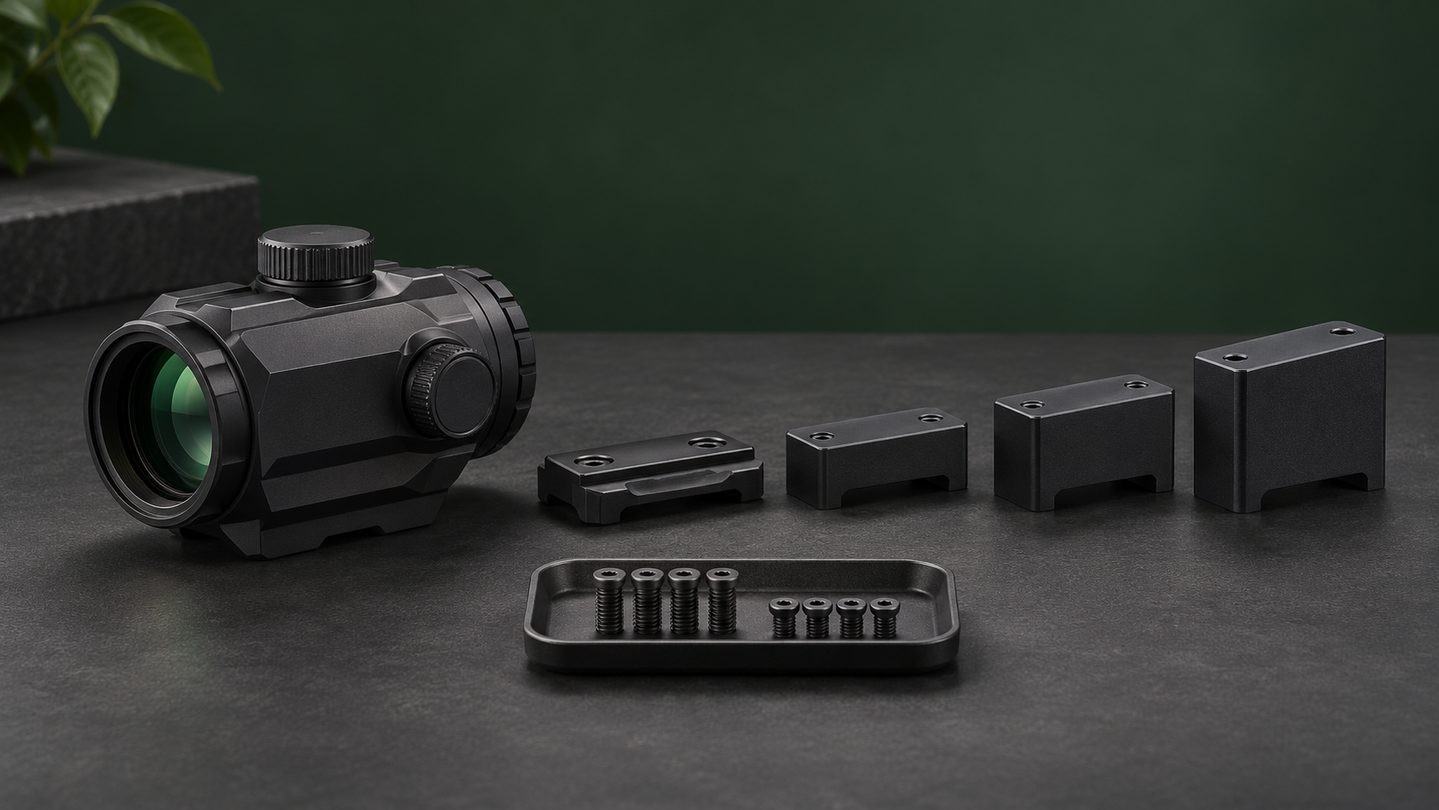
- mounting footprint and compatible hardware;
- battery access and controls;
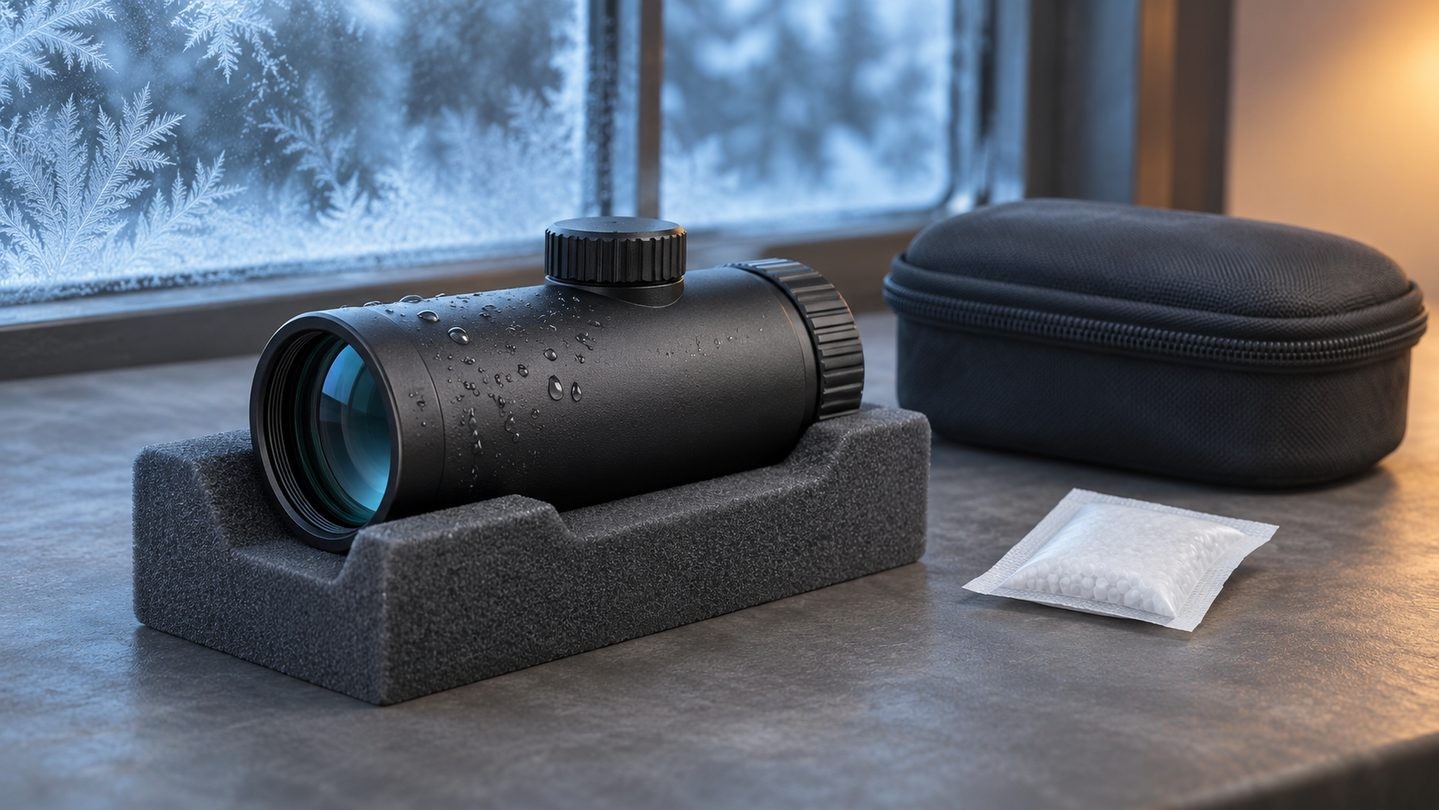
- environmental specifications with a stated test basis; and
- the clarity of the manual and warranty support.
A smaller dot is not automatically more precise if it blooms or becomes hard to find. A larger window is not automatically more accurate. Our 2 MOA vs 3 MOA vs 6 MOA comparison explains the dot-size trade-off separately.
The Practical Answer
A good red dot should not require you to recenter the dot before every normal use. That is the useful meaning behind the parallax-free claim.
Still, treat the phrase as a description of practical performance—not proof of zero error everywhere. Read the exact model's documentation, look for a tolerance or test condition when available, zero from a repeatable centered view, and judge any off-axis movement with the sight held genuinely still.
That approach respects what modern reflex sights do well without asking two marketing words to carry more precision than they actually contain.
Explore more red-dot guides
Browse practical explanations of red-dot setup, optical specifications and viewing issues.


Leave a comment