Dot size sounds like a tiny specification until you look through two sights side by side. A 2 MOA dot leaves more of a small target visible. A 6 MOA dot is easier to notice quickly. A 3 MOA dot sits between those two ideas—and for many people, that middle ground is exactly the point.
There is no universally “best” red dot size. The useful question is simpler: how much of the target do you want the dot to cover at the distances you actually use?
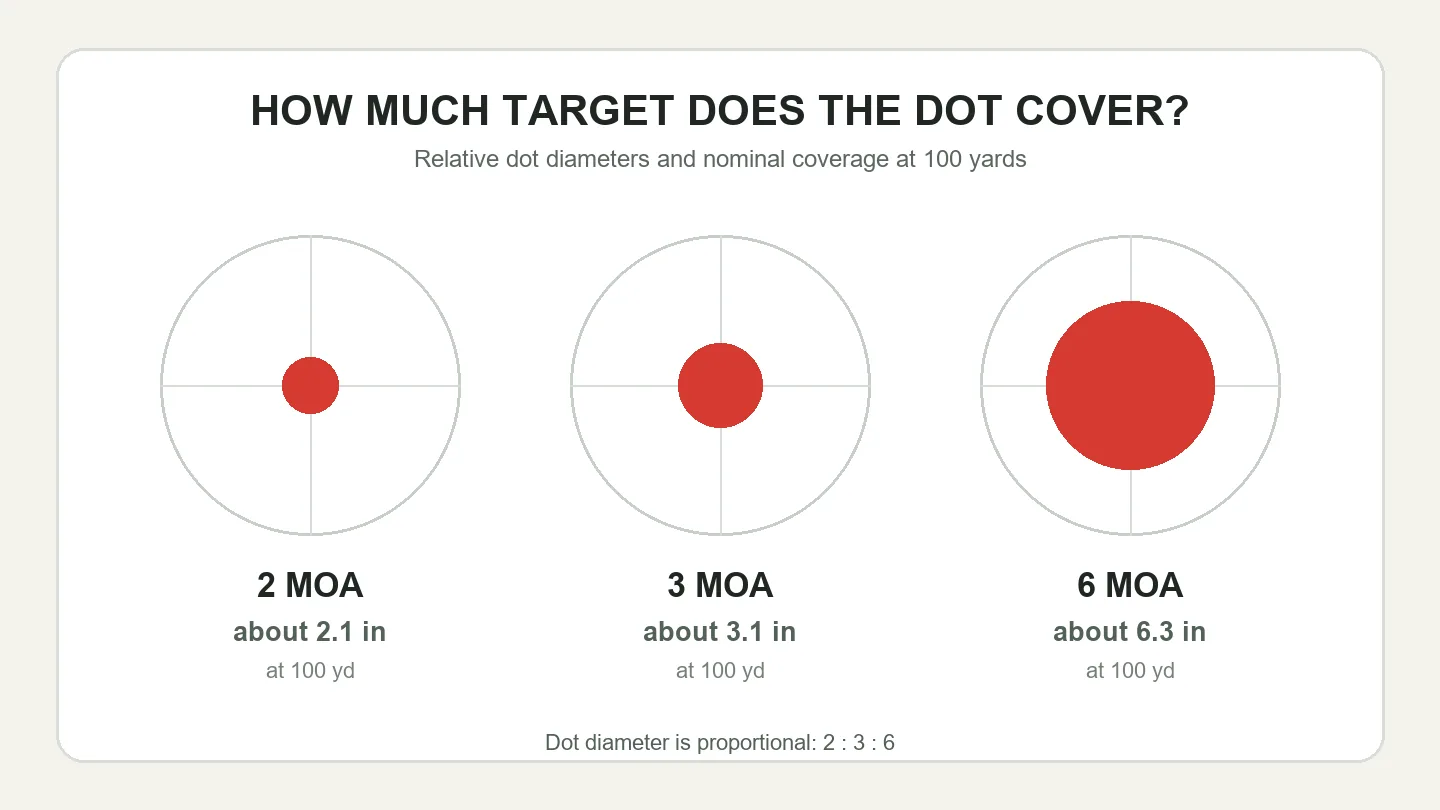
The circles show the relative diameter of each dot. The coverage figures use the true angular value of one MOA, rounded to one decimal place.
First, what does MOA mean on a red dot?
MOA stands for minute of angle. It is an angular measurement, not a fixed physical diameter. One MOA equals 1/60 of a degree, so the area covered by the dot grows with distance.
At 100 yards, 1 MOA spans about 1.047 inches. Most quick explanations round that to one inch, which is usually close enough for choosing a dot. If you want a fuller explanation of the unit, our MOA vs MRAD guide covers the underlying measurement without making one system sound inherently better than the other.
The dot is not projected onto the target like a laser. You see it inside the optic, and its MOA rating describes the angle it occupies in the sight picture.
How much of the target does each dot cover?
The table below uses the true MOA value and rounds the result to the nearest tenth of an inch.
| Dot size |
At 25 yards |
At 50 yards |
At 100 yards |
| 2 MOA |
about 0.5 in |
about 1.0 in |
about 2.1 in |
| 3 MOA |
about 0.8 in |
about 1.6 in |
about 3.1 in |
| 6 MOA |
about 1.6 in |
about 3.1 in |
about 6.3 in |
These numbers describe nominal angular coverage. The dot may look larger or less tidy to your eye because of brightness, ambient light, lens condition and your vision.
A 2 MOA dot: less target coverage
A 2 MOA dot covers the least target area of the three. That makes it useful when the target is relatively small, the distance is longer, or you want a finer visual reference for deliberate aiming.
The trade-off is visibility. At a low brightness setting or against a visually busy background, a small dot can take a little longer to find. Turning up the brightness may help, although too much brightness can make the dot appear to bloom and look larger than its nominal size.
A 2 MOA dot is a sensible starting point when precision matters more than having the largest, most obvious aiming point. It does not make the sight mechanically more accurate; it simply obscures less of what you are aiming at.
A 3 MOA dot: a practical middle ground
A 3 MOA dot gives up a little fine coverage compared with 2 MOA, but it remains small enough for careful work at ordinary range distances. It is also slightly easier to notice at a glance.
That balance is why 3 MOA is common in compact reflex sights. It works well for users who do not want to commit fully to either end of the comparison. At 50 yards, it covers roughly 1.6 inches—enough to be clearly visible without becoming a large patch over a modest target.
If your use shifts between quick practice and slower, more deliberate shooting, 3 MOA is often the least complicated choice.
A 6 MOA dot: easy to see, with more coverage
A 6 MOA dot is visually prominent. It can be easier to acquire quickly, especially at close distances or during movement, and some users simply see a larger dot more cleanly.
The cost is obvious at longer distance. At 100 yards, a nominal 6 MOA dot covers about 6.3 inches. That does not prevent accurate aiming, but it hides more of a small reference point than a 2 or 3 MOA dot would.
A larger dot makes sense when fast visibility matters more than seeing a fine aiming mark. It can also be a practical choice when a smaller point looks faint or irregular to the user, although brightness and eyesight should be checked before assuming size alone will solve the problem.
Dot size is not the whole sight picture
Two sights with the same advertised dot size can feel different. The MOA number matters, but it is only one part of the viewing experience.
Brightness changes the apparent size
An overly bright dot can flare at the edges and appear larger. In dim conditions, the same setting may look much more aggressive than it did outdoors. Use the lowest setting that remains easy to see against the target and background. This usually produces a cleaner aiming point and preserves more detail around it.
Your eyes may change the shape you see
Some people see a clean circle; others see a comma, cluster, streak or starburst. That appearance can vary between eyes and with brightness. If a dot looks badly distorted, compare several brightness levels and, if practical, another sight before deciding that the emitter is faulty. Persistent distortion across different optics may be worth discussing with an eye-care professional.
Window size and presentation still matter
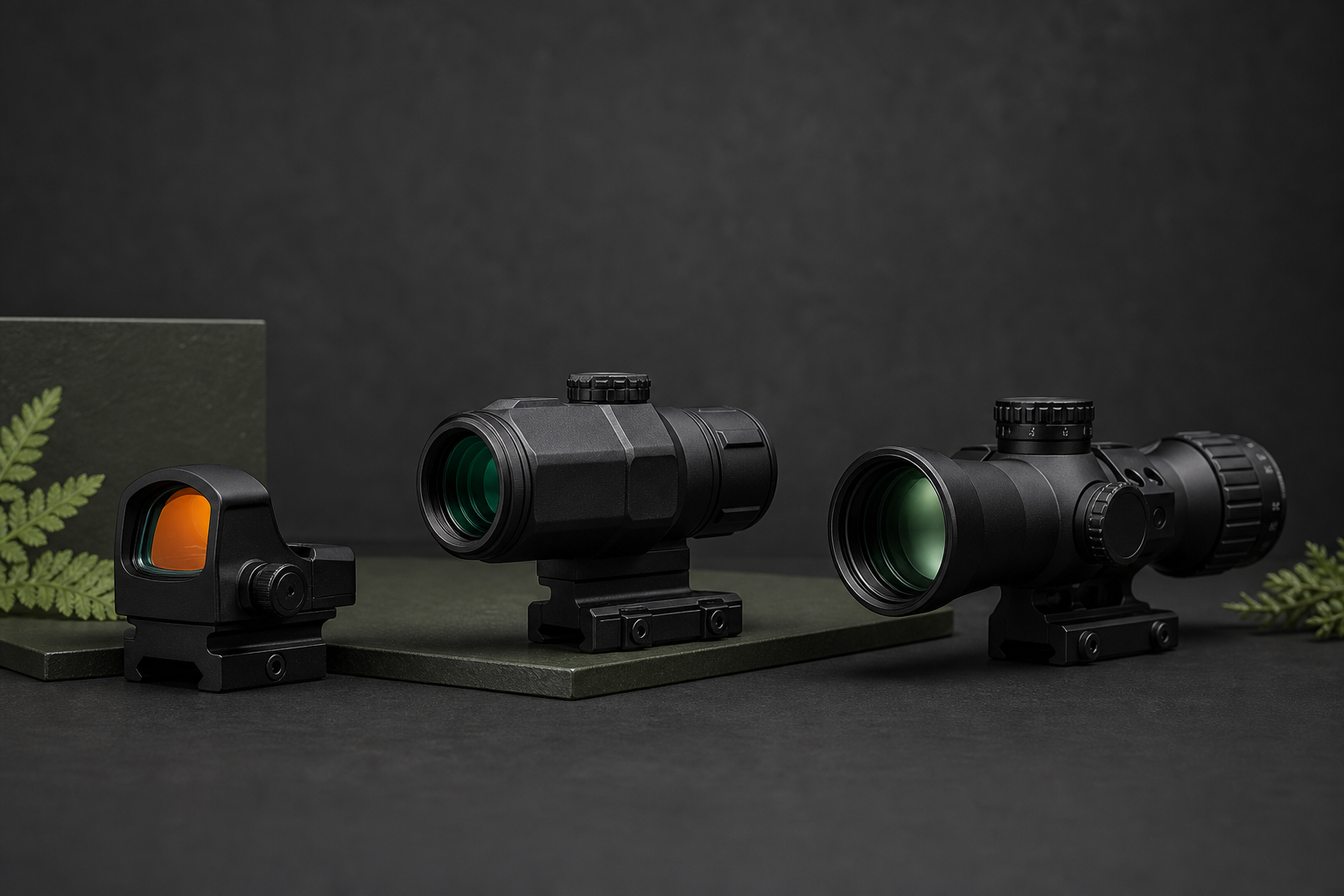
A larger viewing window does not change a 2 MOA dot into a larger dot, but it can make the sight picture feel more open. Consistent presentation and alignment also affect how quickly the dot appears in the window. A large dot cannot compensate for an inconsistent setup or viewing position.
If you are still deciding whether a red dot is the right sight type, read our red dot, prism and LPVO comparison or the shorter red dot vs prism guide.
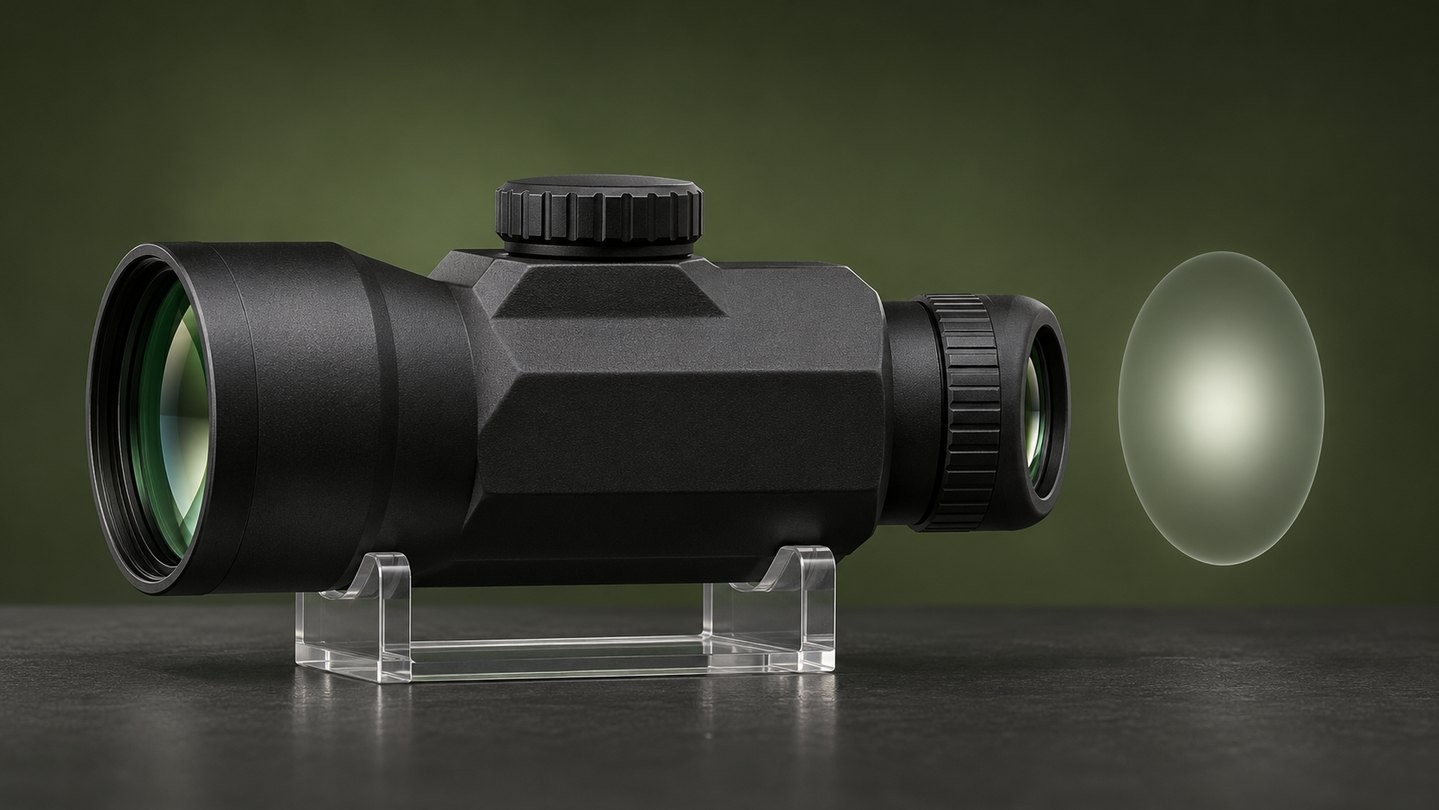
A magnifier does not turn an LED dot into a finer aiming point
With a conventional LED red dot, a rear magnifier enlarges the target and the visible dot together. The sight picture is larger, but the dot keeps covering roughly the same angular portion of the target. A magnifier can help you see target detail; it does not change a 6 MOA LED dot into a 2 MOA dot.
A simple way to choose
Start with your normal target and distance rather than an abstract promise of “speed” or “precision.”
- Choose 2 MOA when you regularly aim at smaller reference points or want the least target coverage.
- Choose 3 MOA when you want a balanced dot that remains fairly fine but is a little easier to find.
- Choose 6 MOA when close-distance visibility and a bold aiming point are the priority.
If possible, look through the sizes outdoors and indoors before deciding. Set each one only as bright as needed. A dot that looks perfect in a dark shop can look very different against a bright target, and the reverse is also true.
The short answer
Smaller dots cover less of the target; larger dots are easier to notice. That is the real trade-off. A 2 MOA dot favors a finer reference, 6 MOA favors visibility, and 3 MOA splits the difference.
The best choice is the one you can see cleanly at a sensible brightness while still leaving enough of your normal target visible. To compare sight formats and current category options, browse Red Dot Sights or visit our Buying Guides.


Leave a comment