Scope-ring material looks like an easy decision. Aluminum is light. Steel is strong. Pick one and move on—right?
Not quite. Both materials can make dependable scope rings, and both can make disappointing ones. The material matters, but the design, machining, fasteners, rail interface and installation matter just as much. For a beginner, the useful question is not “Which material always wins?” It is “Which complete mounting system fits this setup?”
The simple difference: weight
Aluminum rings are usually the lighter option when two broadly similar designs are compared. That can be useful when you are trying to keep the complete optic setup manageable or avoid adding more weight than necessary.
Steel rings are denser, so a comparable pair will normally weigh more. The difference may be modest on its own, but a heavy scope, rail and accessories can make several small additions noticeable together.
Weight is easy to compare because manufacturers often publish it. Just make sure you are comparing equivalent products: the same tube diameter, similar height, the same number of cap screws and the same type of base interface.
Steel is not automatically “better,” and aluminum is not automatically “weak”
Material names do not tell the whole story. An aluminum ring can be engineered for demanding use, while a poorly made steel ring can still have uneven contact, rough threads or inaccurate dimensions.
The alloy and heat treatment matter. So do the amount of material around the clamp, the recoil lug or crossbolt, the thread engagement and the consistency of the machining. Even the finish and the quality of the screws can affect how the mount behaves over time.
This is why material should be treated as one specification, not a shortcut for judging the entire product.
Where aluminum rings make sense
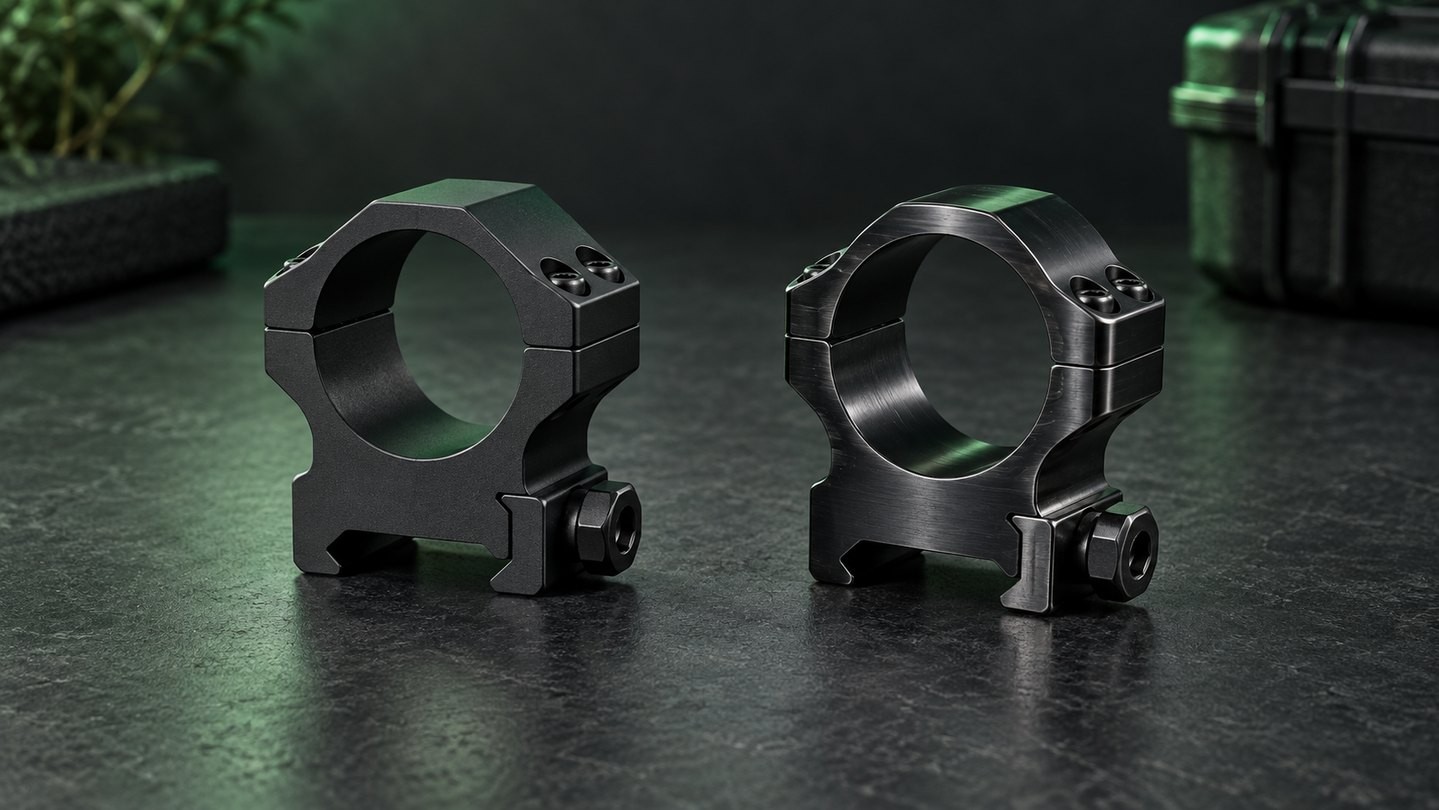
Aluminum rings are a practical starting point when lower weight matters and the mounting system is designed correctly for the intended use. They are common in modern cross-slot rings and one-piece mounts, and reputable designs can provide secure alignment without unnecessary mass.
Aluminum also forms a natural oxide layer, while many finished rings add anodizing for surface protection. That does not make them maintenance-free, but it can be useful in wet or humid conditions. Scratches, damaged threads and trapped moisture still deserve attention.
One caution: aluminum threads can be damaged by careless installation. Starting a screw at an angle or using excessive torque can harm the ring long before the material reaches its theoretical strength. Follow the instructions for the exact mount rather than borrowing a torque number from another model.
Where steel rings make sense
Steel rings are often chosen for a traditional mounting system, for specific base compatibility or simply because a manufacturer designed that family around steel. They can provide durable threads and a rigid clamping structure, but the extra mass should be considered as part of the complete setup.
Steel also needs a suitable protective finish and normal care. If the finish is worn through, moisture can lead to corrosion. Wiping the mount dry after exposure and inspecting the contact areas is more useful than assuming the material can be ignored.
Most importantly, steel does not rescue a mismatched or poorly installed ring. The correct diameter, height and rail or base interface still come first.
Compare the complete design, not two words on a specification sheet
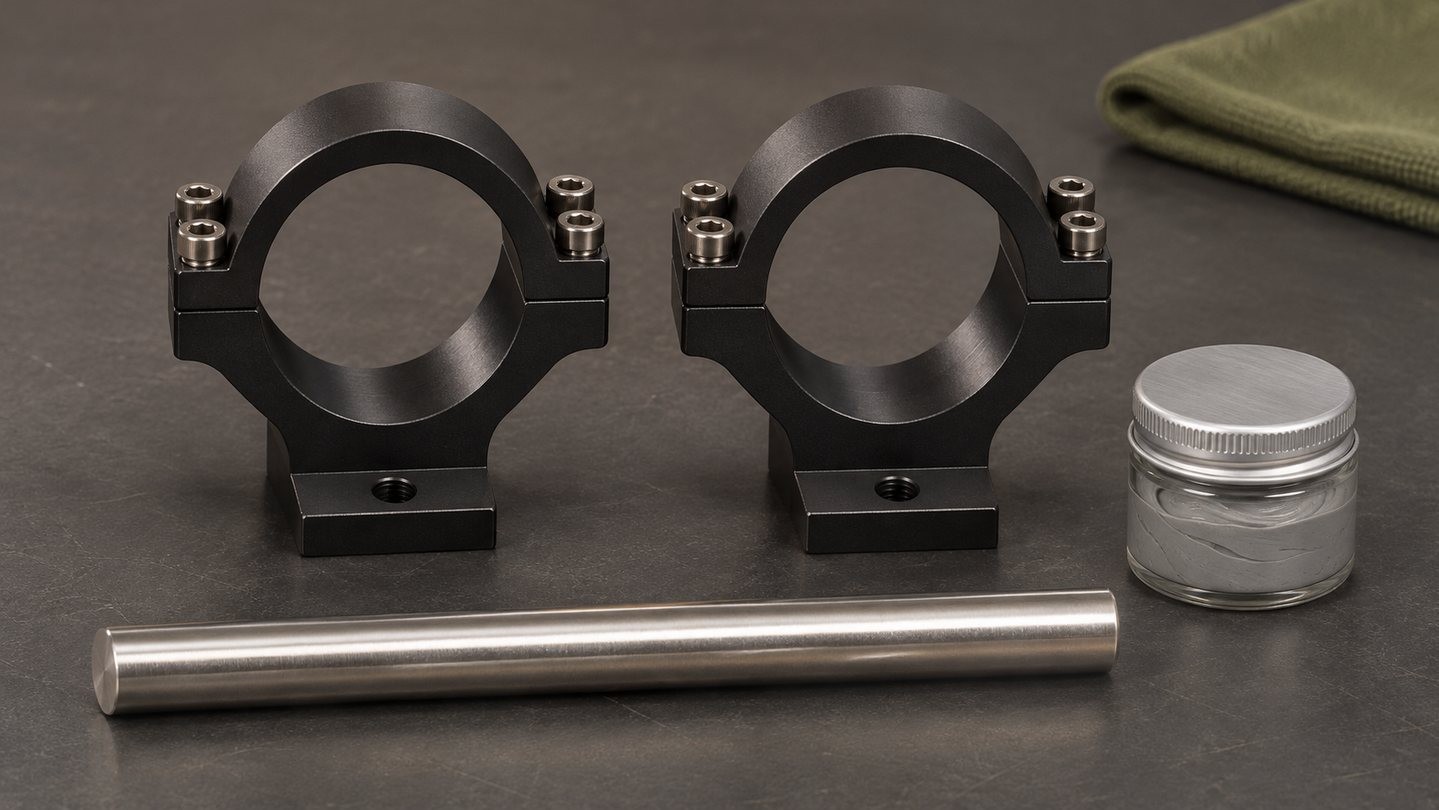
Before choosing, look at the whole ring:
- Tube diameter: 1 inch, 30 mm, 34 mm and other sizes are not interchangeable.
- Base interface: Picatinny, Weaver, dovetail and proprietary bases use different geometry.
- Ring height: the scope needs real clearance for the objective housing, lens cap and nearby controls.
- Clamp design: a crossbolt, recoil lug or dovetail must fit and seat as intended.
- Cap layout: screw count alone does not prove strength; even support and correct tightening are more important.
- Published weight: compare a complete pair, not a single ring against a pair.
- Manufacturer instructions: use the specified sequence and torque for that exact product.
If you are still deciding between separate rings and an integrated mount, start with our guide to one-piece scope mounts versus separate rings. It explains the geometry and flexibility differences before material enters the decision.
Fit and alignment matter more than the material debate
A good mounting system should support the scope tube evenly without forcing it into place. If the rings are misaligned, tightening the caps can place unwanted stress on the tube. Uneven cap gaps, cross-threaded screws and an unstable base cannot be fixed by choosing steel instead of aluminum.
Our guide to scope-ring alignment and over-tightening covers the most common installation problems. It is worth reading before the final tightening step, regardless of the ring material.
A practical beginner’s choice
Choose aluminum when you want to reduce weight and the ring is a well-made, compatible design from a supplier that provides clear specifications and installation instructions.
Choose steel when the base system calls for it, when you prefer its traditional construction or when a specific steel design best matches your setup.
In either case, do not buy by material alone. Confirm the tube diameter, base interface, height, fastener instructions and total weight. A correctly matched aluminum ring is a better choice than an incompatible steel one, and a carefully installed steel ring is better than a poorly fitted aluminum one.
The best ring is not the one made from the material with the strongest reputation. It is the one that fits the optic and base correctly, provides the needed clearance, and can be installed according to a clear, model-specific procedure.



Leave a comment