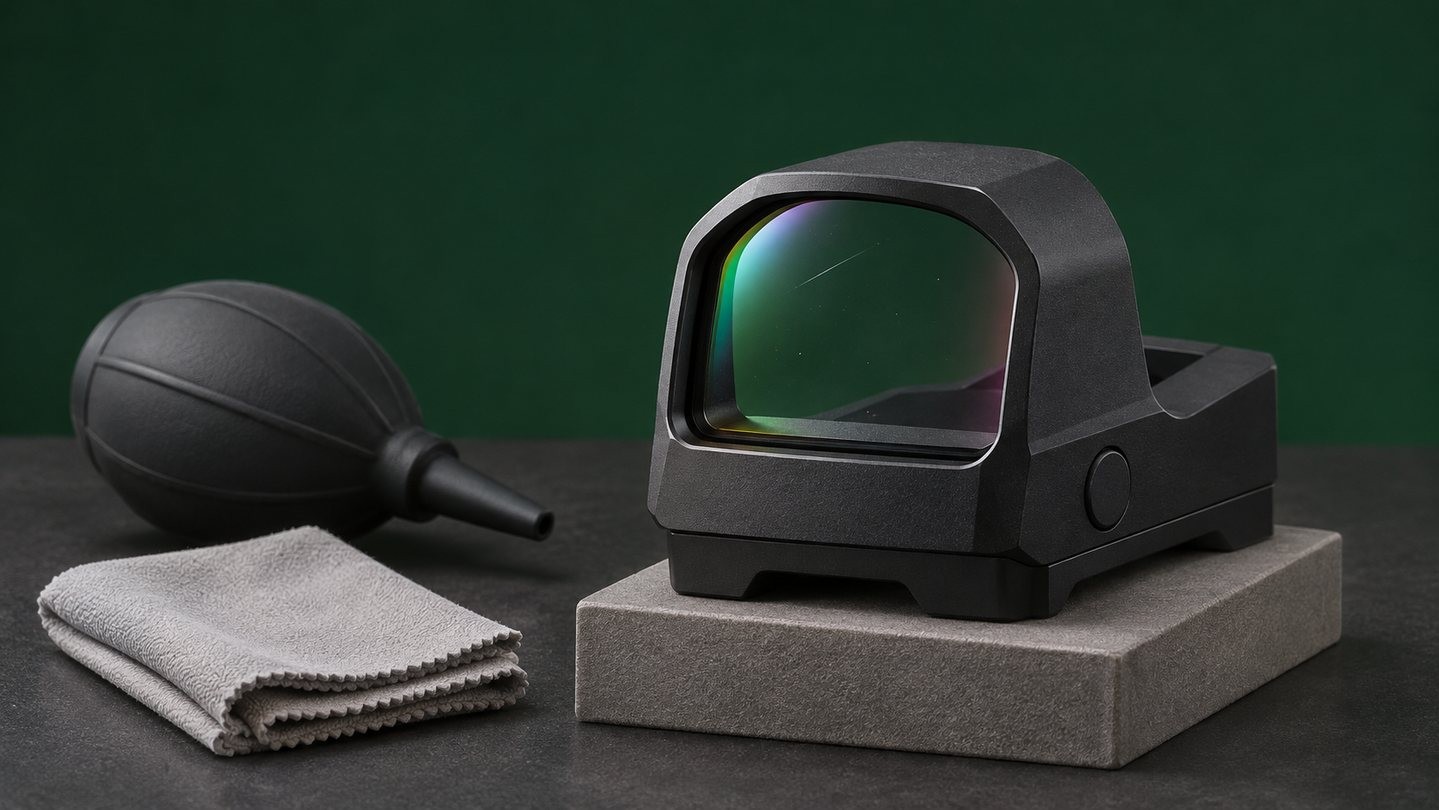
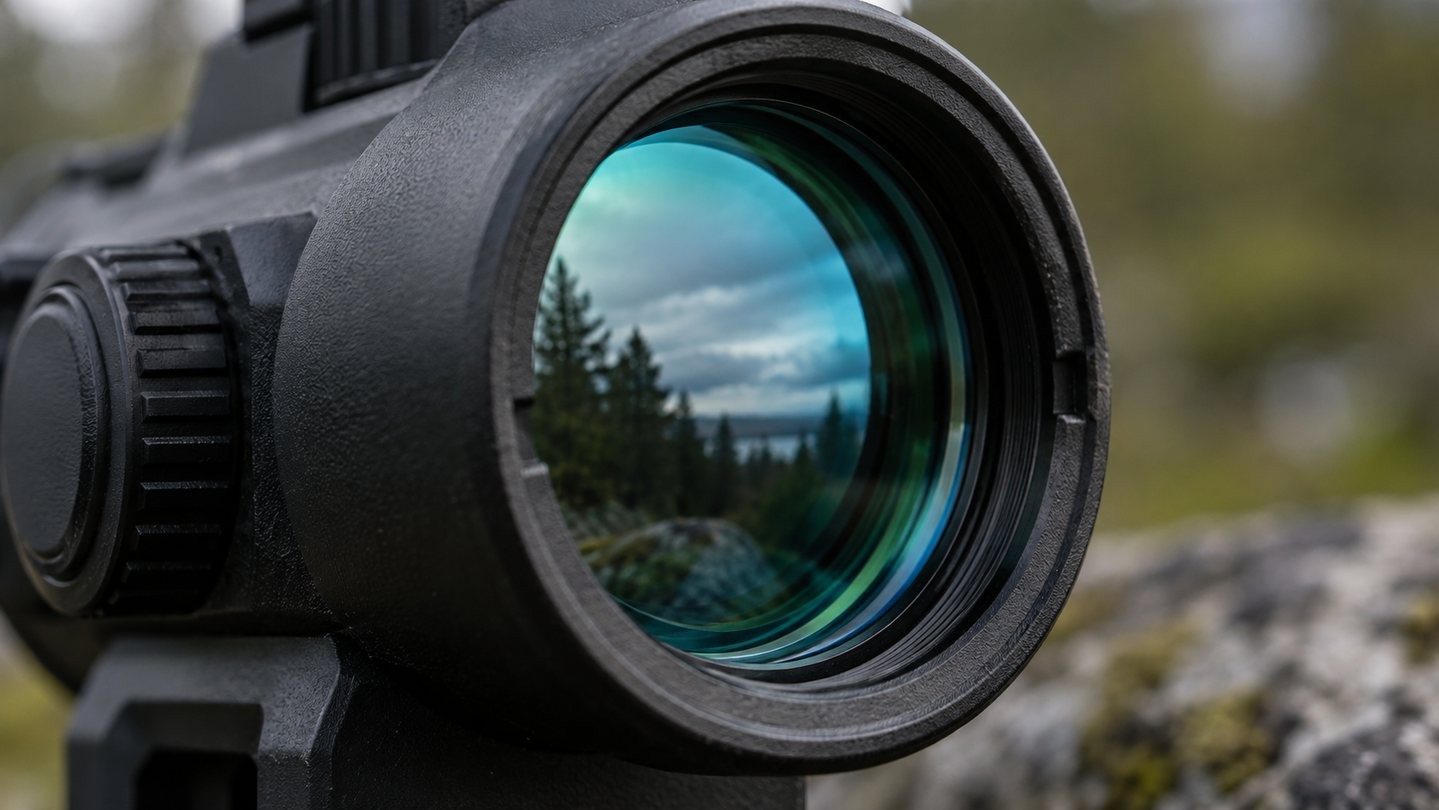
Look at the front of a red dot sight under a lamp and the lens may flash blue, green, amber or even a mix of colors. Viewed through the sight, the scene may also have a mild color cast. That appearance is not automatically damage or cheap glass.
Coatings and the emitter’s optical design deliberately manage certain wavelengths. The real test is how much the tint affects contrast, detail and comfort in normal use.
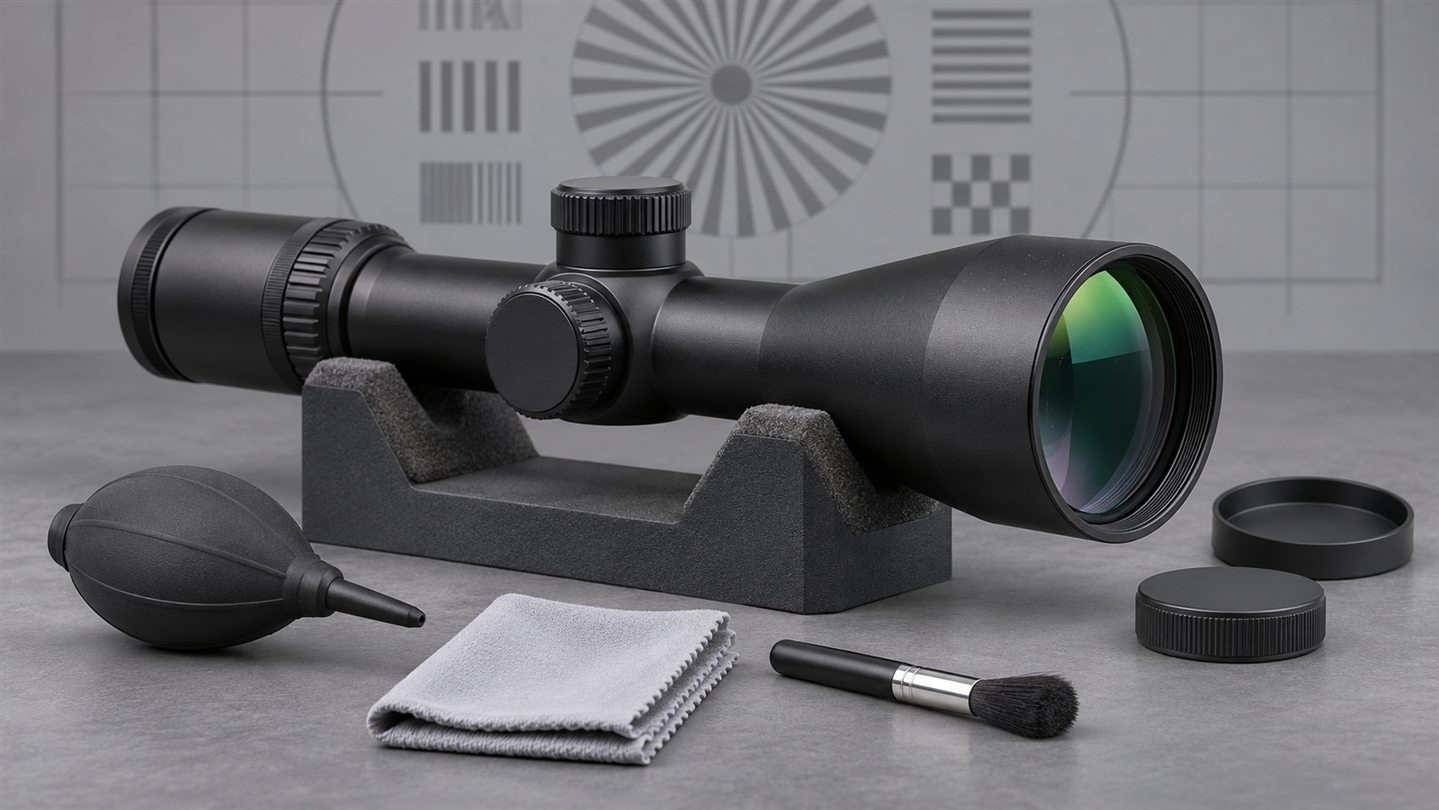
Front-surface color is usually a reflection
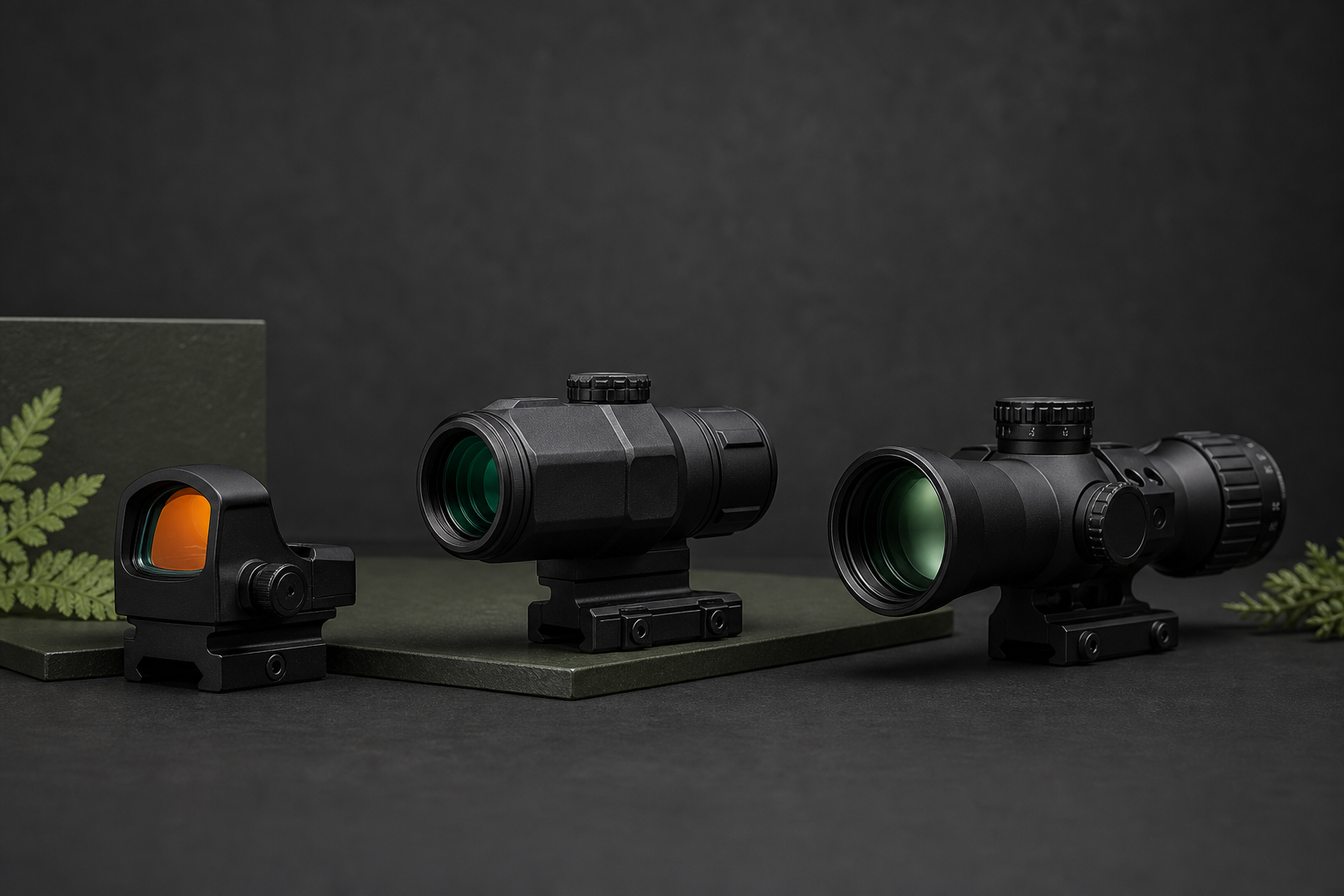
Thin optical coatings reflect some wavelengths more strongly than others. The color can change with viewing angle and the light source. A strong colored reflection from the front does not mean the scene through the lens will have the same strength of tint.
Coating appearance also varies between models. Do not use the reflected color alone to judge transmission or quality.
The viewing tint is a separate question
Looking through the optic may reveal a mild cool or warm cast. A small shift can be part of the optical design, while a heavy cast can make low-contrast details harder to distinguish. Compare the sight against the same scene with the unaided eye and with another known optic.
Our lens-coatings guide explains why coating claims need more context than one reflected color.
Brightness can exaggerate the impression
An emitter set too high can create flare inside the optical system and make the lens appear more colored or hazy. Reduce the dot to the lowest clearly visible setting before judging the glass.
Astigmatism, camera sensors and phone exposure can also make a dot or reflection look different. If the dot appears stretched, compare the checks in the red dot starburst guide.
When to inspect more closely
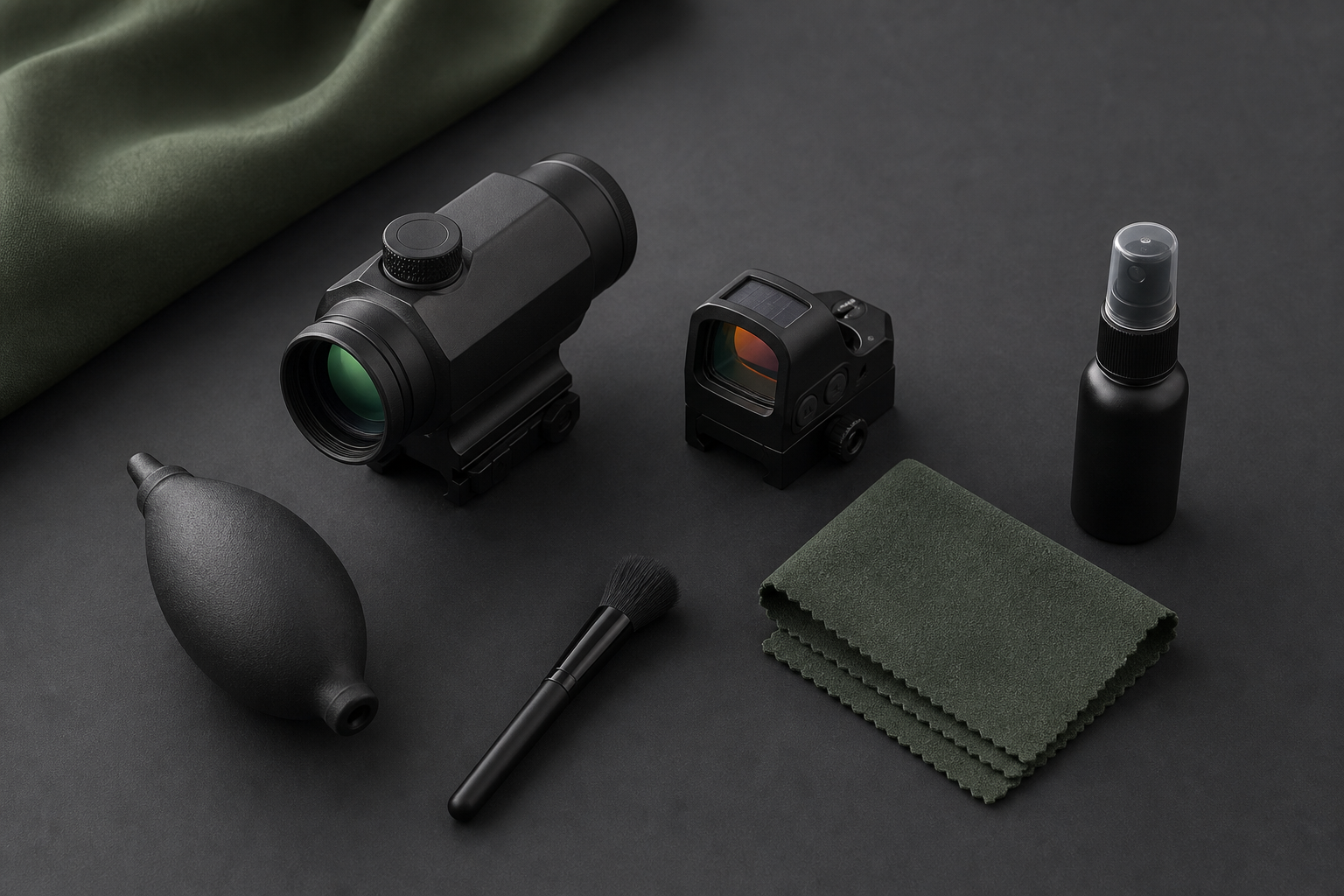
Uneven cloudy patches, a sharp boundary that does not move with viewing angle, internal haze or a reflection that changed after impact or chemical exposure deserves attention. First clean only the exterior surfaces according to the manual. Do not disassemble a sealed sight.
Phone photos are useful but not definitive
A phone automatically changes exposure, white balance and focus. It may make a mild tint look strong or turn a clean dot into a large flare. Use photographs to document a change or compare the same setup over time, but make the primary judgment with the eye under controlled lighting. Locking the phone exposure can make before-and-after images more comparable.
A fair comparison
- Use the same neutral scene and lighting.
- Set the dot only as bright as necessary.
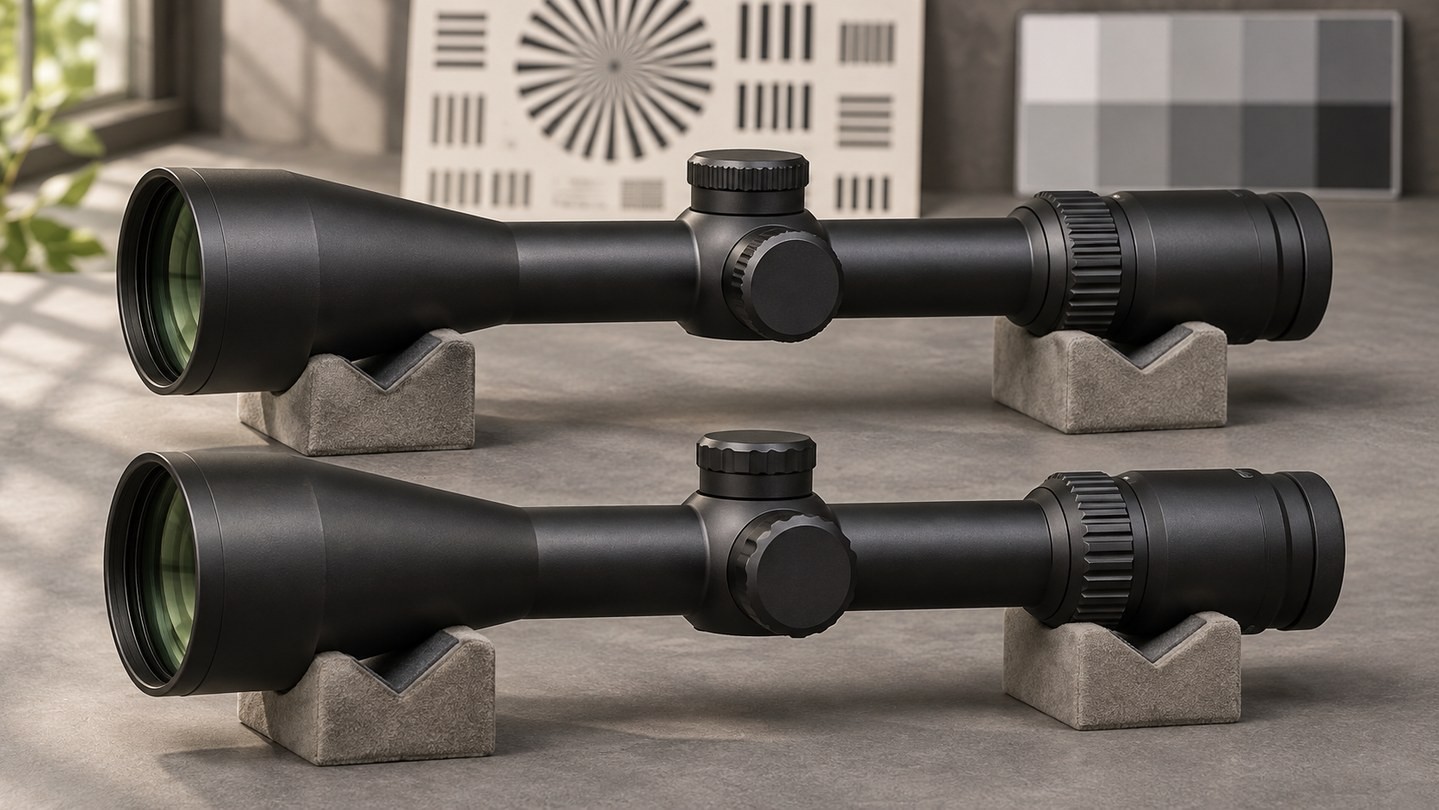
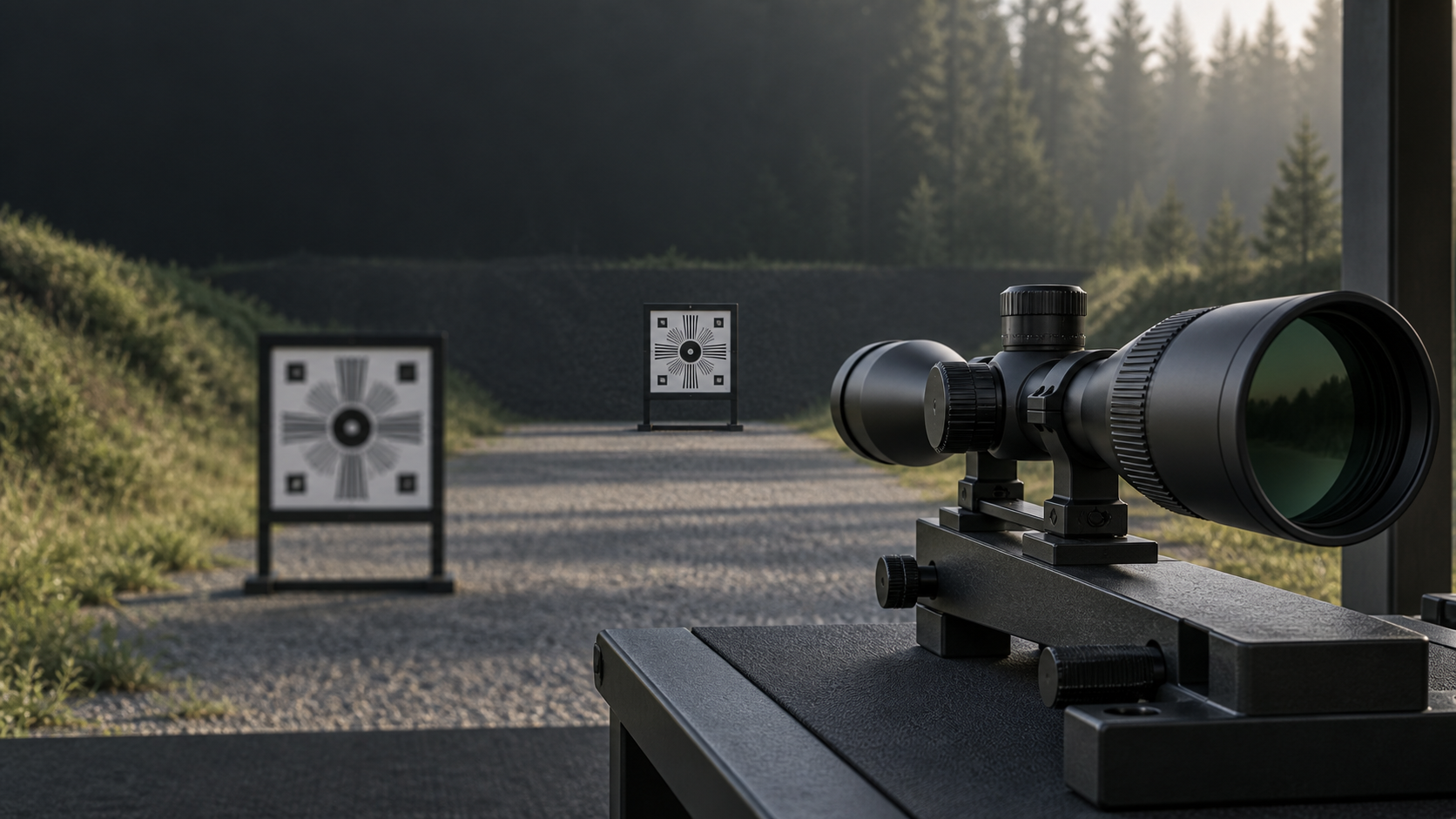
- Compare the view through the lens, not just the front reflection.
- Check several angles and both bright and subdued light.
- Photograph only as supporting evidence; a camera may change color and bloom.
A colorful front lens can be completely normal. Judge the usable view, not the coating’s most dramatic reflection.


Leave a comment