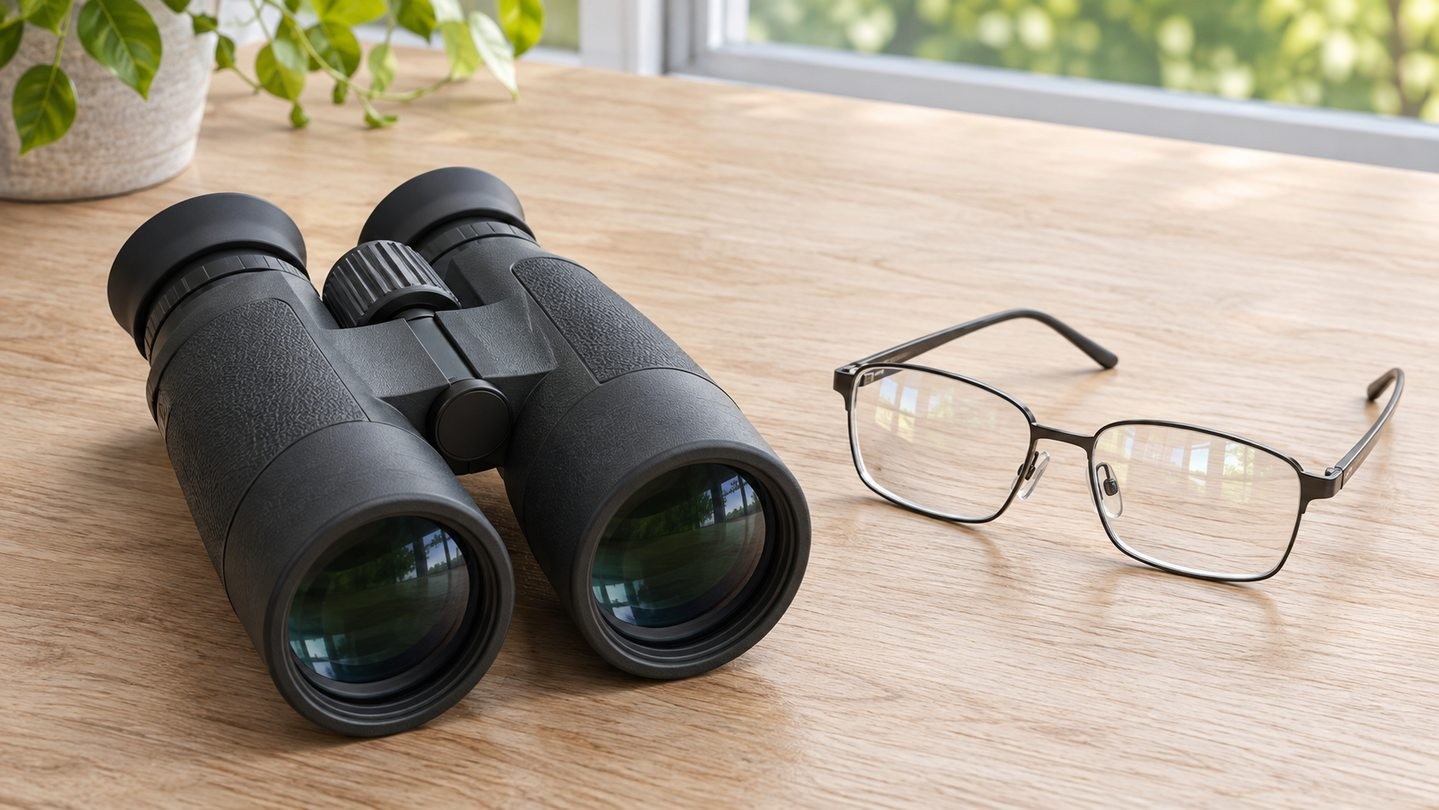
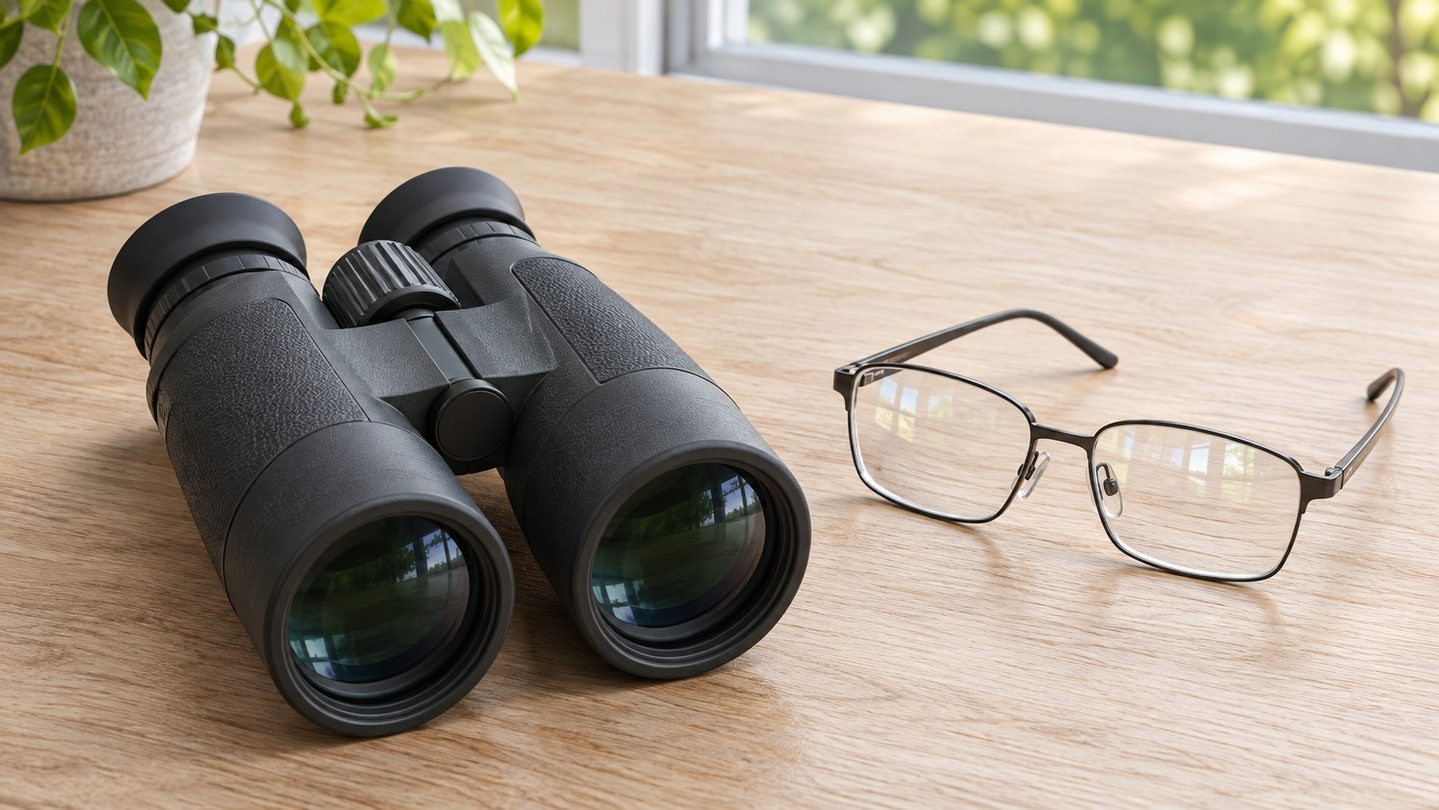
You put on your glasses, lift a pair of binoculars, and the view suddenly looks like a small circle at the end of a tunnel. The image may be sharp in the center, but the edges disappear. That usually calls for a fit check before you blame the glass. Eye relief, eyecup position, your glasses and the width between the barrels all affect how much of the view you can actually see.
What eye relief tells you
Eye relief is the distance from the eyepiece at which your eye can see the full intended field of view. The published number is a useful comparison point, but it does not measure the distance from your eye through your particular glasses. Frame shape, lens position and how the binoculars sit against your face can change the result.
Nikon advises eyeglass wearers to look for longer eye relief, giving 15 mm or more as a useful starting point in its birdwatching guide. Treat that as a shopping filter, not a promise that any 15 mm model will fit every pair of glasses. The only reliable final check is to look through the exact model while wearing the glasses you normally use.
Start with the eyecups down
Most adjustable eyecups move the eyepieces farther from or closer to your eyes. For glasses, begin with the eyecups fully retracted or folded down, as the maker instructs. Nikon's setup guide and Swarovski Optik's optics guide both recommend the inward position for eyeglass wearers. Without glasses, an extended position often helps place the eyes correctly.
Do not force an eyecup past its stop. Some designs have intermediate click positions; another position may be more comfortable if your glasses sit unusually close to your eyes. The right position is the one that shows the full field with no persistent dark ring while you hold the binoculars naturally.
Set the barrel width before judging the view
Move the two barrels around their central hinge until the two circles merge into one comfortable image. This adjusts the binoculars to the distance between your pupils. If the width is wrong, you may see overlapping circles or feel tempted to shift your head from side to side. That can be mistaken for inadequate eye relief.
Now bring the eyepieces toward your glasses gently. Avoid pressing hard against the lenses or letting a rough eyecup scrape a coating. With both eyes open, look at a detailed subject at a sensible distance. Check whether the edge of the field stays visible when you relax your grip and breathe normally.
Focus, then set the diopter
Use the center wheel to focus one eye on a clear subject, then follow the exact model's instructions to adjust the diopter for the other eye. Nikon's binocular setup guide describes this sequence. Keep your usual glasses on throughout the test if you intend to use the binoculars with them. Repeat the focus check after you have adjusted the hinge width and eyecups; those changes can make a rushed first impression unreliable.
A diopter control fine-tunes the difference between your eyes within the instrument's adjustment range. It is not a cure for missing field of view caused by poor eye position. If the image is sharp but you still see black edges, return to the eyecup and eye-relief check instead of repeatedly turning the focus wheel.
Test for comfort, not just a clear center
Hold the binoculars for a minute or two. Can you see the entire field without pushing your glasses into your face? Does the image remain usable when you make small natural movements? Do the eyecups stay in position, and can you reach the focus wheel easily? A quick glance through a store window is less useful than a calm test with your normal glasses.
If you are comparing models online, record the stated eye relief, eyecup design and field of view, then plan an in-person test or confirm the seller's return terms. Our guide to reading optics specifications explains why a single number never tells the whole story. For more on the small light circle that must meet your eye, see our exit pupil guide.
Binoculars that work with glasses should let you see a comfortable, complete field without a struggle. Start with the eyecups down, set the barrel width, focus carefully, and test the view in a natural posture. Let the published eye-relief figure narrow the choices; let your own eyes make the final decision.


Leave a comment