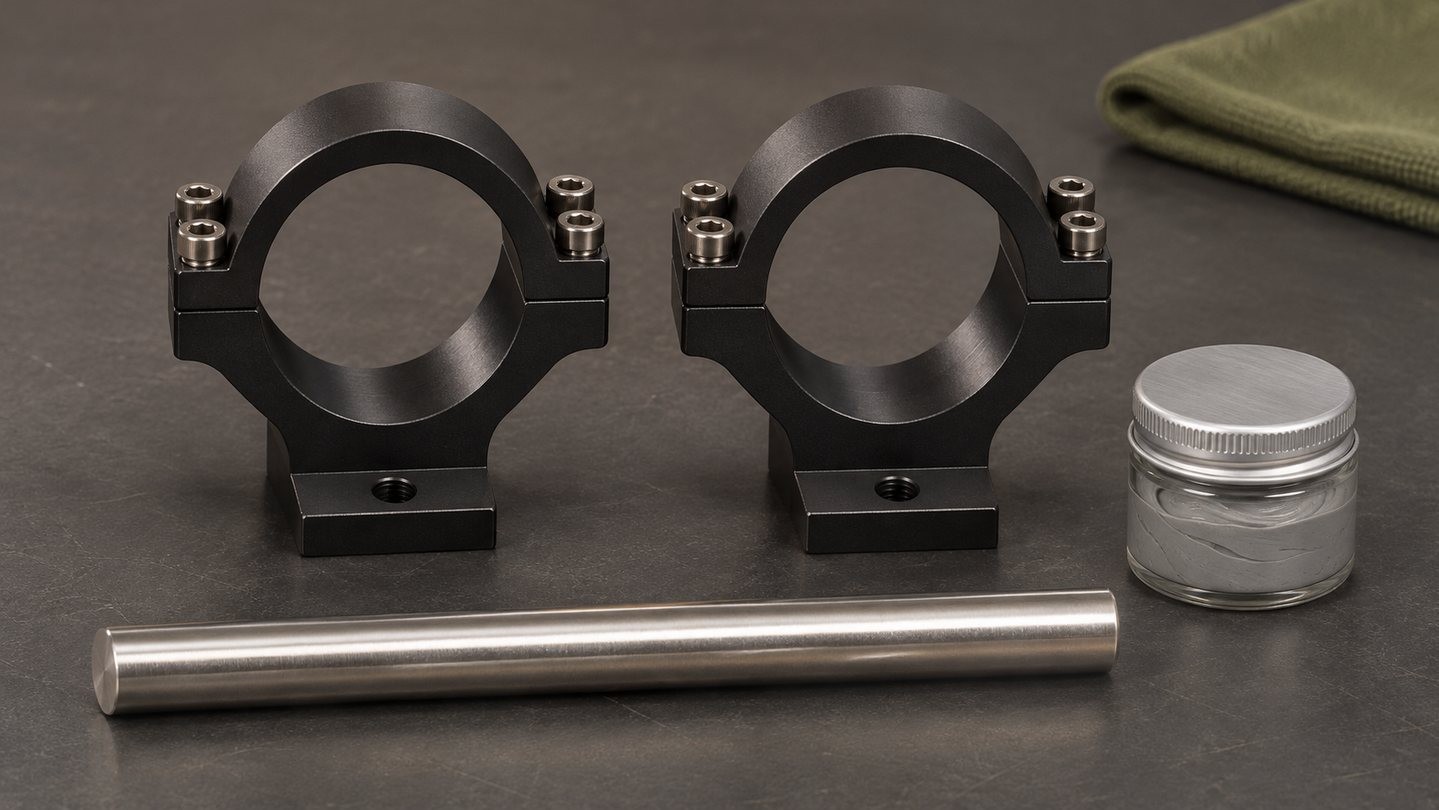
A cantilever scope mount places one or both rings forward of the section that clamps to the rail. The design is commonly used when the scope needs to move forward for eye relief but the stable mounting surface does not extend far enough in that direction.
Offset is the defining feature
Offset describes how far the ring position is moved relative to the base. More offset is not automatically better. Too little may prevent correct eye relief; too much may push the optic beyond a useful position or create clearance issues.
Height changes viewing position
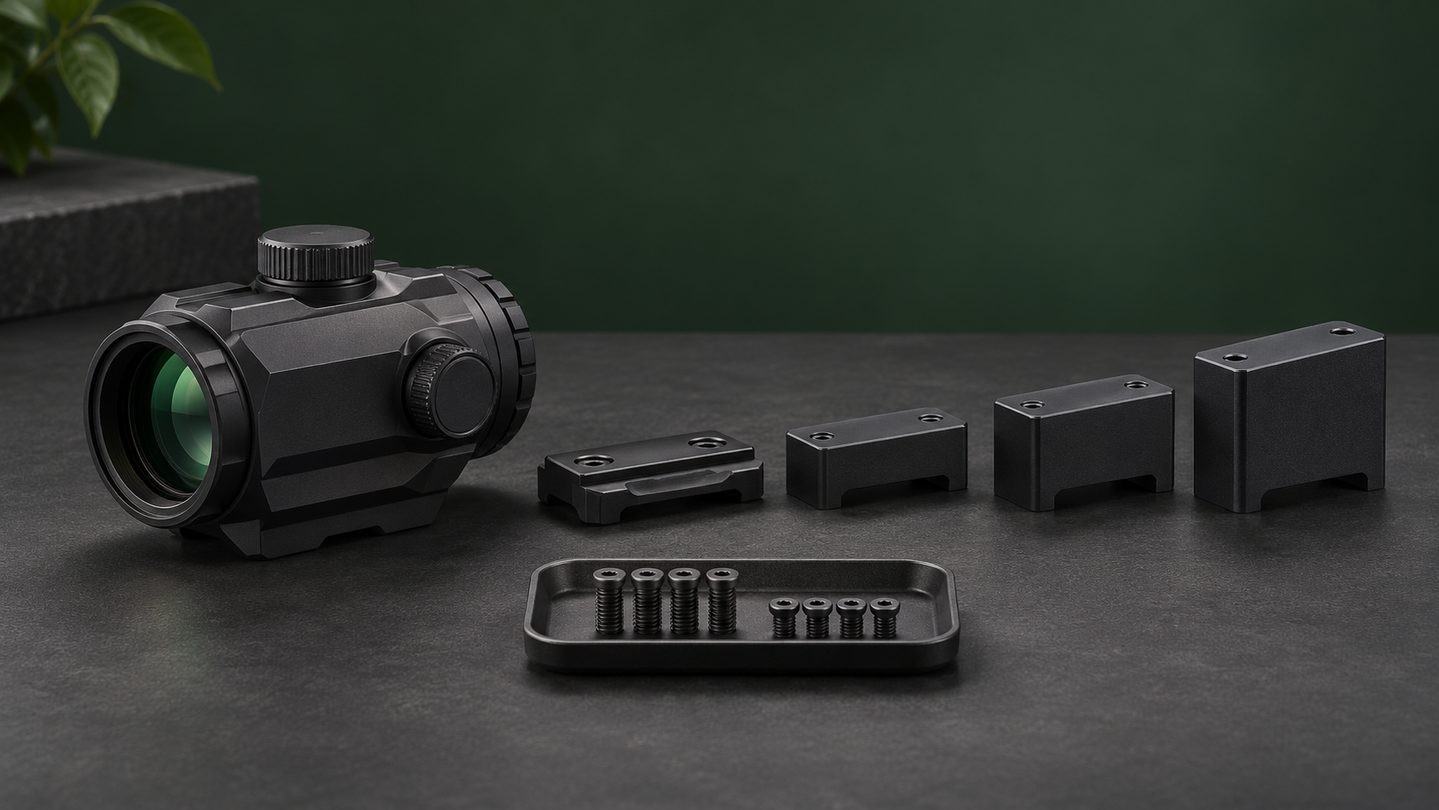
Mount height affects objective clearance and where the eye must sit. A higher mount can clear components but may require a different cheek position. A lower mount may feel more natural yet leave insufficient space for the objective, caps or controls.
Manufacturers measure height in different ways, such as rail-to-centreline or rail-to-bottom-of-ring. Confirm the reference point before comparing numbers.
Ring spacing must fit the scope
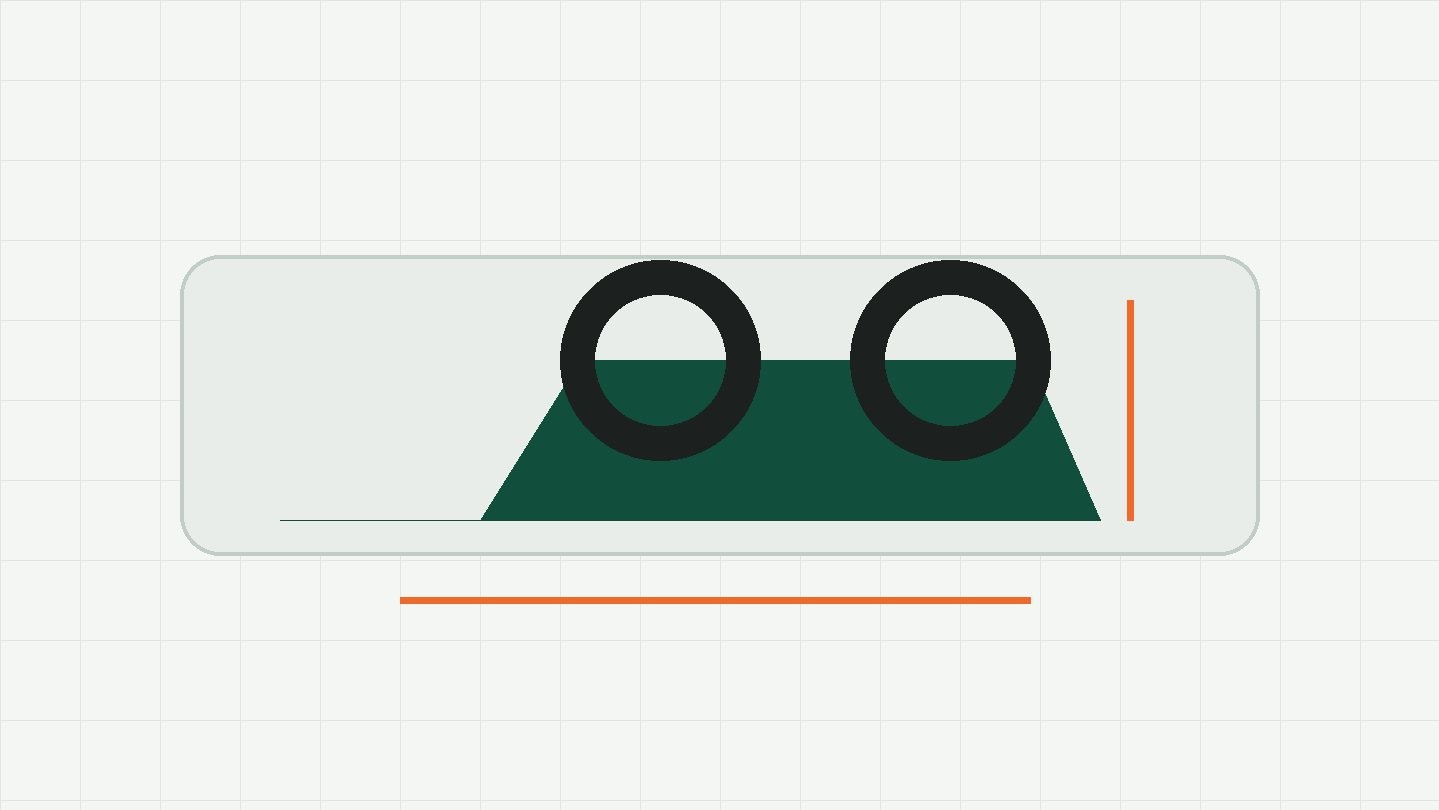
A one-piece cantilever mount has fixed ring spacing. Compare it with the straight tube sections around the turret saddle. Rings must not clamp onto a taper, turret housing or control area.
Set eye relief with the user present
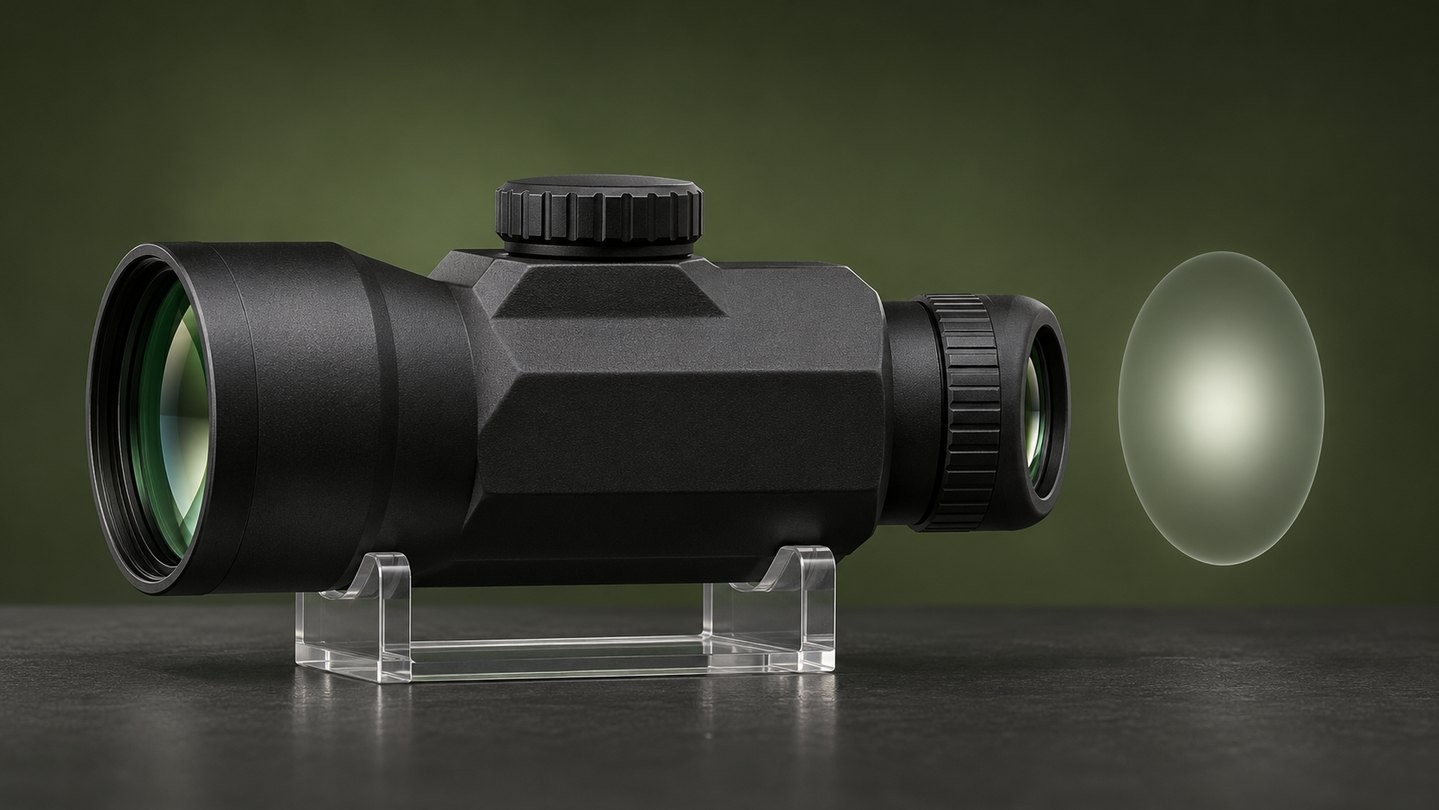
Use the normal viewing position and the magnification where eye relief is most critical. Place the optic as far forward as possible while retaining a full image. This reduces the chance of crowding the eyepiece and confirms whether the chosen offset is sufficient.
If mount geometry is unfamiliar, read our ring-height guide before selecting by appearance.
Before buying
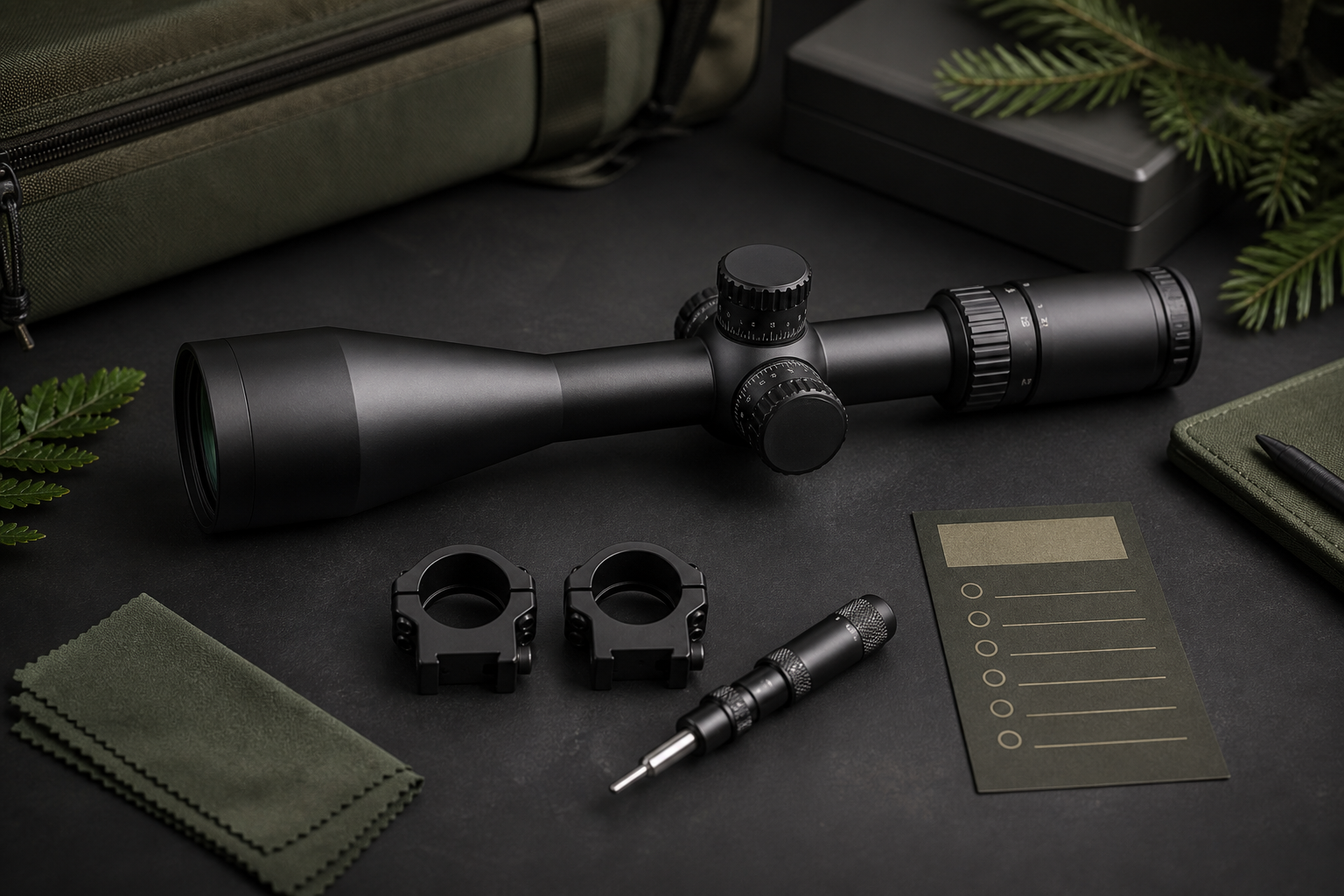
- Confirm rail or base compatibility.
- Confirm tube diameter and fixed ring spacing.
- Measure the offset actually required.
- Check height reference and objective clearance.
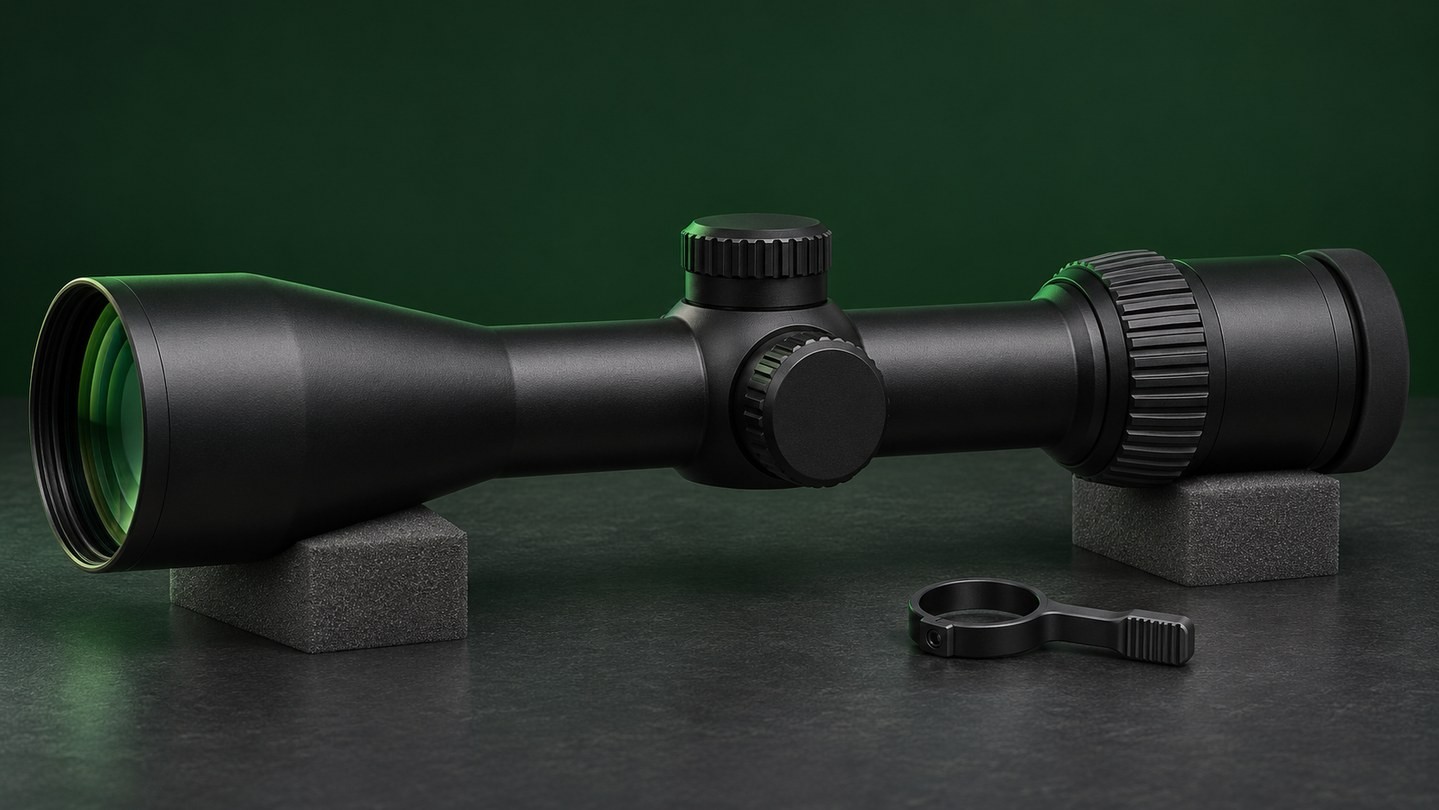
- Include caps, throw levers and nearby controls.
- Use the exact installation and torque instructions.
A cantilever mount is a geometry solution. Choose it when it places the optic correctly, not simply because the forward shape looks purposeful.
For more category-level comparisons, browse Sporting Optics or continue with the USEEIN Buying Guides.


Leave a comment